I've had a bit of experience with the 303 British, and back in the day before forums and such, I did have problems with reloading. I've sorted out the issues and in the last several years have had no issues with reloading for about 4 different 303 Br rifles.
I'd suggest searching the various 303 Br Military forums to discover the numerous issues that can be encountered.
First, each caliber has it's own reloading nuances, Stands to reason, different caliber, may not be the same as what you are accustomed to. The 303 Br is rimmed cartridge, it is also a military cartridge. There is a larger gap between the Maximum Ammunition physical specifications and the Minimum Chamber physical specifications. Something to do with the muddy conditions associated with trench warfare.
I've only used one resizing die, the one I bought new in the 70's. It will size fired brass to Minimum ammo specs. Your die may be different. If I set up my die like any other FL sizing die for any other caliber, my brass will be good for 1 reload. On the second firing there will be incipient head separation issues.
After a safety check and general mechanical integrity check this is how I load for the 303 Br.
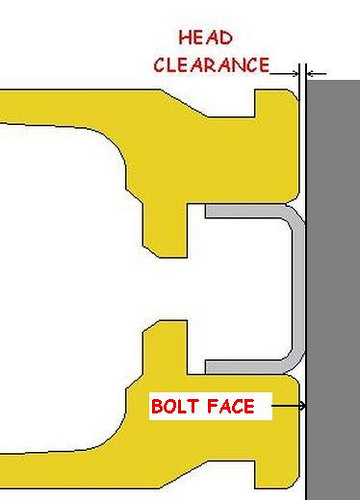
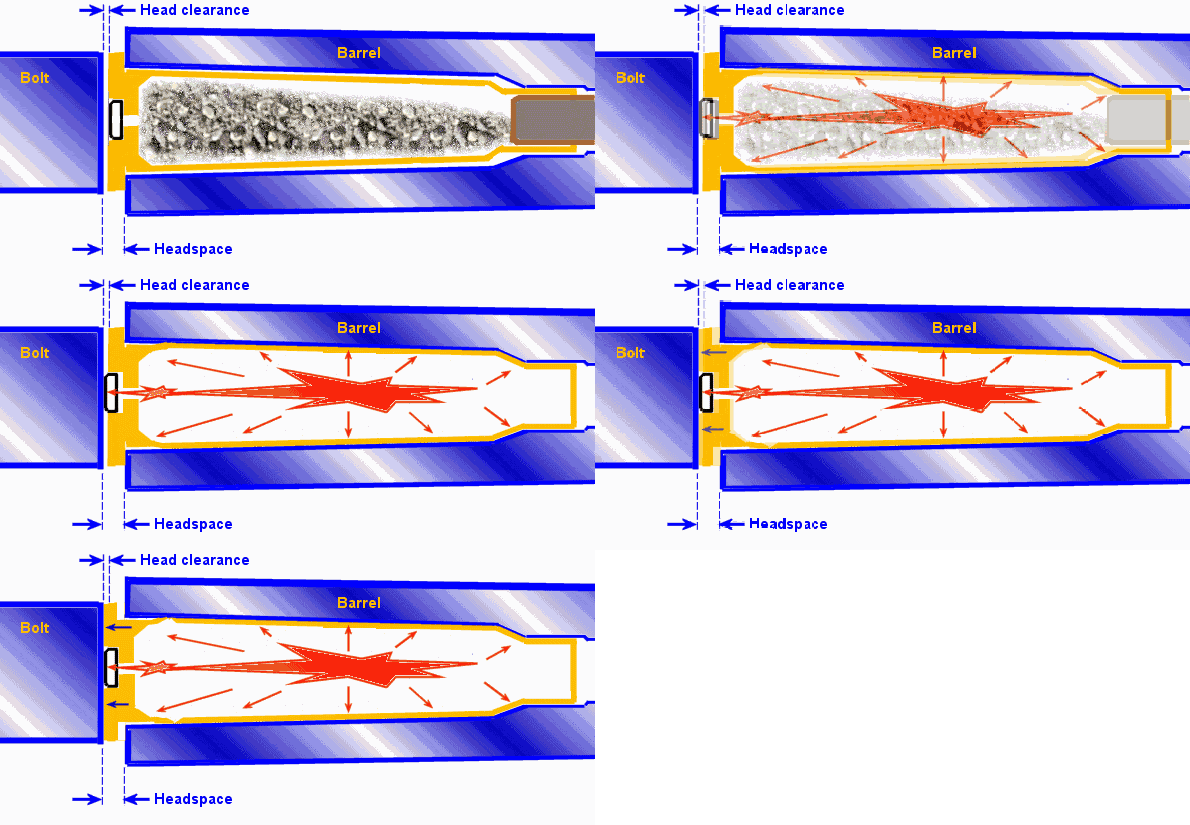
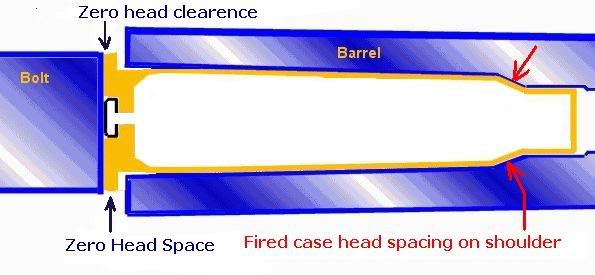
Although a rimmed cartridge, the 303 Br should be loaded as if it were a rimless cartridge. IOW, it should be loaded with an awareness of shoulder setback. I set my die for app 0.005" shoulder setback on a moderately pressured once fired case. In my setup, the FL die will be about 0.025" above the shellholder. In your usual bottleneck cartridge this would result in a neck sized case. In the 303 Br, this will usually still set the shoulder back somewhat.
I don't make a habit of endorsing products, but this setup is made a whole bunch easier if you have a Hornady Lock-N-Load® Headspace Comparator & Anvil Base Kit. I consider this to be an essential tool for the handloader.
If you set up your dies for a minimum of shoulder setback, the remainder of the reloading steps as fairly standard. The Lee Enfield has rear locking lugs, it is a strong action, but it is a bit springy. I've shot some South African mill spec ammo and when I measure the "headspace" on these, the shoulder is a bit further out there. My handloads are closer to the less intense North American factory fodder.
I prefer 150 grain bullets and I've found the Speer and Sierra bullets to be accurate. They are .311, but in my experience they work fine and a bit better than the 312 ones.
My powder choice for the 150's is Varget, 41 grains, with a WLR primer, (a F210 may be worth trying). I load to an OAL of 2.89, as I prefer to have the bullet fully supported in the neck.
For a collectable rifle, I'd load down, or even shoot cast. There is no need to duplicate military ammo for target shooting and plinking. The milsurp I have is hot, IMHO it's better suited for machine gun use.
Lee Precision makes collet dies for sizing the neck, I've read that this is the ticket for loading the 303 Br.
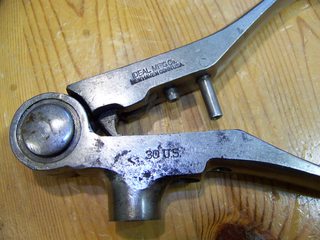
Presently I do not own a 303 Br. But for my next 303 Br I have a Lyman tong tool that I'd like to set up for it. I also have a Lee "Whack-A-Mole" set and I'd like to run some comparison tests.
I'd suggest searching the various 303 Br Military forums to discover the numerous issues that can be encountered.
First, each caliber has it's own reloading nuances, Stands to reason, different caliber, may not be the same as what you are accustomed to. The 303 Br is rimmed cartridge, it is also a military cartridge. There is a larger gap between the Maximum Ammunition physical specifications and the Minimum Chamber physical specifications. Something to do with the muddy conditions associated with trench warfare.
I've only used one resizing die, the one I bought new in the 70's. It will size fired brass to Minimum ammo specs. Your die may be different. If I set up my die like any other FL sizing die for any other caliber, my brass will be good for 1 reload. On the second firing there will be incipient head separation issues.
After a safety check and general mechanical integrity check this is how I load for the 303 Br.
Although a rimmed cartridge, the 303 Br should be loaded as if it were a rimless cartridge. IOW, it should be loaded with an awareness of shoulder setback. I set my die for app 0.005" shoulder setback on a moderately pressured once fired case. In my setup, the FL die will be about 0.025" above the shellholder. In your usual bottleneck cartridge this would result in a neck sized case. In the 303 Br, this will usually still set the shoulder back somewhat.
I don't make a habit of endorsing products, but this setup is made a whole bunch easier if you have a Hornady Lock-N-Load® Headspace Comparator & Anvil Base Kit. I consider this to be an essential tool for the handloader.
If you set up your dies for a minimum of shoulder setback, the remainder of the reloading steps as fairly standard. The Lee Enfield has rear locking lugs, it is a strong action, but it is a bit springy. I've shot some South African mill spec ammo and when I measure the "headspace" on these, the shoulder is a bit further out there. My handloads are closer to the less intense North American factory fodder.
I prefer 150 grain bullets and I've found the Speer and Sierra bullets to be accurate. They are .311, but in my experience they work fine and a bit better than the 312 ones.
My powder choice for the 150's is Varget, 41 grains, with a WLR primer, (a F210 may be worth trying). I load to an OAL of 2.89, as I prefer to have the bullet fully supported in the neck.
For a collectable rifle, I'd load down, or even shoot cast. There is no need to duplicate military ammo for target shooting and plinking. The milsurp I have is hot, IMHO it's better suited for machine gun use.
Lee Precision makes collet dies for sizing the neck, I've read that this is the ticket for loading the 303 Br.
Presently I do not own a 303 Br. But for my next 303 Br I have a Lyman tong tool that I'd like to set up for it. I also have a Lee "Whack-A-Mole" set and I'd like to run some comparison tests.
Last edited: