Does this target make sense?

Well apparently, the OP is having issues as can be seen in his groups. His 'numbers' sound reasonable but his grouping doesn't match up. Is there are correlation of ES/SD vs his groups and loads? What are your thoughts?

As we have debated many times, if a process works, it works... it repeats and is repeatable.... for you, for me, for anyone anywhere.

If a process is flawed, it might work sometimes or under some situations... but apparently, not everyone is seeing the results.

That is not a process I choose to use. The process I choose, and my team mates choose lead to the type of results I have posted. It is a process that has worked for 2 decades and one that many of my customers have used with success

pick the process that works for you... It's all good.

Jerry

Do you have your process written down anywhere?
 
I have not. Honestly, I don’t have a ton of time to reload and hit the range for all the R&D. I’m happy with something with a consistent velocity and 1/2 MOA ish. I also don’t have the tools to do seating depth tests properly. I use the cleaning rod down the bore technique to get an OAL and go from there. I aim for 20 thou but I don’t know how consistent that is.
 
I have not. Honestly, I don’t have a ton of time to reload and hit the range for all the R&D. I’m happy with something with a consistent velocity and 1/2 MOA ish. I also don’t have the tools to do seating depth tests properly. I use the cleaning rod down the bore technique to get an OAL and go from there. I aim for 20 thou but I don’t know how consistent that is.

It's easy, and it requires very little tools.

It's a simple way to get your groups dialed in. Alternatively, there are companies producing barrel tuners that work in conjunction with all the self timing muzzle brakes (if you use a brake), and some don't require any extra gunsmith work. Straight install if your muzzle is threaded. While I'm not a huge proponent of tuners, they could very well work for your application, with little need to change your loads. People use them with good success to deal in factory ammo, when they can't adjust the bullet seating depth.

Personally I'm an advocate for using bullet seating to dial in your precision, but a tuner may be the "easy button" in your specific scenario.
 
Also, the 10 shot load development method, AKA the "Satterlee method", is not a good way to develop a load, IMO. There's not enough sample size to make it statistically relevant. I used to do the ladder test, until I one day decided to load up two identical ladders - the so-called "nodes" never lined up between the two ladders. I've since gone away from that method, and have had much better results. Looking back, none of the "nodes" I found in a ladder was a real so-called node.

Use a ladder to find velocities per charge, and to find any pressure. From there, load up 5 shot rounds of a few charges that are comfortably below pressure. Shoot those 5 round groups over a chrono to find the best ES/SD. Use bullet jump to tune in precision - this can be done when you are breaking in the barrel, the barrel will take ~100-200 rounds before speed stabilizes, perfect time to test bullet seating depth.

It takes a little bit of work on your first barrel and cartridge, but once you get an idea of what speed your projectile likes, you can carry forward that same target velocity in future barrels. For example, I've found that 6.5mm 140 Berger Hybrids like the speed ~2830 fps out of a 24" barrel. Next barrel I just find the powder charge that gets me that speed. Using a projectile that you are comfortable with and is easy to tune/very predictable makes the process easy as well - for me, that happens to be Berger Hybrids. If I jump them 5 to 20 thou from the lands, I know they will shoot. This has held true from 6mm to .30 cal projectiles.




I think this is the best advice that I have seen that kthomas has ever posted.

He is describing how to isolate the factors that influence accuracy.

Once you find a load that produces a low ES, then you tweak the seating depth to effect the accuracy result.

It's clean, clear and relatable. It's essentially what I've been doing for 30 years.

I have noticed however that jump will usually affect velocity spreads as well as accuracy, so it will probably not work out all that clean in a single effort. You may need to repeat a few times as you tweak the seating depth.

What I have found is that two things happen at the same time as the seating depth is adjusted...

Too much jump will have more velocity spread and poor accuracy. As the seating depth is increased, accuracy will generally improve as the velocity spread gets lower. Eventually as the seating depth is increased past a certain point, accuracy and velocity spreads will degrade and you know you have past the sweet spot. Once you find that sweet spot for one load, chances are it will be about the same for other loads.

We can think of it like this... If the bullet has a long way to go to plug the barrel and create a pressure seal, pressure will blow around the bullet and the brass until it creates a seal. The brass doesn't swell to the chamber and create a seal there either. That's why too much jump will have greater velocity spreads. When the load jams the lands too hard, there is a slight pressure spike as pressure builds high enough to initiate forward movement of the bullet. All this happens in a micro second, but you can detect the result. If the jump is idealized, you will find a balance between the two extremes. Just keep in mind that throat erosion will occur and you will need to extend the seating depth slighly every few hundred rounds, depending on the cartridge.

When the Magneto speed is attached directly to your barrel it affects barrel harmonics and for that reason it is not what I would recommend for load development. Don't expect to soot your best groups with a magnetos speed attached to the barrel. I have seen where guys fabricate a tube attached to the fore end to support the Magneto speed in a way that it does not contact the barrel and that is a worthwhile effort.

magnetomount2-500x500.jpg
 
Last edited:
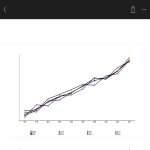
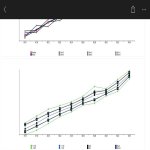
Where would you go from here? I’m at 43.4gr of H4350 under 140s with no pressure signs and slower speeds than I expected. Here’s my data so far:

785D21F4-71E8-4E53-ABB4-B4DB759E9456.jpg

82C46738-5E97-4C9F-AA3E-81BB33396422.jpg

67095ED5-5D7E-45A6-94EE-6886845F08A6.jpg
 

Attachments

  • 785D21F4-71E8-4E53-ABB4-B4DB759E9456.jpg
    785D21F4-71E8-4E53-ABB4-B4DB759E9456.jpg
    48.7 KB · Views: 79
  • 82C46738-5E97-4C9F-AA3E-81BB33396422.jpg
    82C46738-5E97-4C9F-AA3E-81BB33396422.jpg
    14.5 KB · Views: 78
  • 67095ED5-5D7E-45A6-94EE-6886845F08A6.jpg
    67095ED5-5D7E-45A6-94EE-6886845F08A6.jpg
    21.9 KB · Views: 79
Factory barrels on Tikka rifles are notoriously slow. Besides the OEM stocks, that's one of the few critiques of the Tikka system. On the bright side, they generally are shooters, and at the end of the day, precision wins out over velocity.

43.0 looks like a promising charge. In all honesty, they all look like good charges. There's no point in trying to find a "node" so to speak, but more importantly is how consistent you and your equipment is at throwing the charges.

If it was me, I would load up ammo at 43.0 grains, and invest in micrometers and ogive measuring tools, and do a bullet seating test to dial things in and find out how far the bullets like to be from the lands. I'm not sure how jump tolerant your projectiles are, but one of the main reasons I use Berger Hybrids in everything is because of how jump tolerant they are. I generally start off ~10 to 20 thou off the lands, and never have to change the bullet seating depth throughout the life of the barrel.

There's a really good podcast I listened to today on reloading, The Every Day Sniper episode with the Applied Ballistics/Berger crew. This may be worth checking out if you are into podcasts, the Applied Ballistics guys know a thing or two.
 
I do like my podcasts. Thanks for the tip!

I was expecting way more in the way of “nodes”. I get that it’s a small sample size the numbers at least tell me that reloading process is fairly dialed in when it comes to consistency. I’m also think I’ll just load 43.0 and go shoot. Nice easy number and no more messing about.
 
I could not possibly disagree with this statement more.

I know there are lots of guys who think the target at long range provides the ultimate answer, but that is from people who do not understand proper analysis.

The farther you shoot, the more environmental factors will influence the end result. Not to mention the accuracy of the rifle and ammo.

If you are testing for one thing, then test for that one thing.

Dont look for an answer to one thing based on results that were acquired based on 20 other possible variables.

Yes... In the end, the load that groups best at long range is the best but you will never find a better aggregate group at long range with a 50 FPS ES than the same bullet at similar velocity with 10 FPS ES.


This!
 
I do like my podcasts. Thanks for the tip!

I was expecting way more in the way of “nodes”. I get that it’s a small sample size the numbers at least tell me that reloading process is fairly dialed in when it comes to consistency. I’m also think I’ll just load 43.0 and go shoot. Nice easy number and no more messing about.

Sometimes we like to make reloading seem like some sort of voodoo magic. It can easily get overcomplicated.

At the end of the day, when it comes to things such as reloading, it's best to keep things simple and consistent. The more I learn about reloading, the simpler my process becomes.

 
Sometimes we like to make reloading seem like some sort of voodoo magic. It can easily get overcomplicated.

At the end of the day, when it comes to things such as reloading, it's best to keep things simple and consistent. The more I learn about reloading, the simpler my process becomes.


Couldn’t agree more. My time is limited and thus valuable, not to mention the $$$ of reloading components. I’ve already fired 70 rounds to gather the data I have so far. I’m not shooting benchrest and would be more than happy with .5MOA and low ES.
 
Back
Top Bottom