












































You are using an out of date browser. It may not display this or other websites correctly.
You should upgrade or use an alternative browser.
You should upgrade or use an alternative browser.
Reloading for semi 223 opposite of what I expected to happen
- Thread starter Munkey1973
- Start date

- Location
- Somewhere on the Hudson Bay Coast
I've been reloading for F Class T/R for quite some time now, but I have no experience reloading for black rifles.
If you're familiar with Sierra 77 MKs, you will know that they do not have cantaloure (spelling ?) rings so you can't crimp the case mouth.
My black rifle seems (to me) to have a very strong spring that really slams hard into battery.
I made a few dummy rounds as I wanted check the Cartridge Base To Ogive CBTO before and after they peel off the mag and go into battery.
My expectation was that if anything was to change in CBTO, then it might get shorter.
Thinking maybe the gun won't ramp/feed quite right and in the worst case scenario, the bullet tip might hit the chamber on the way into position and shorten it up.
This was not the case at all.
One round increased in CBTO by 0.002, another increased by 0.003, and a third was completely unchanged.
Why is this happening?
Is just like the effects of using an inertia hammer to separate projectiles ?
Can I possibly correct this with more neck tension (again, can't crimp Match Kings)?
I usually induction anneal my brass... but I have read an NRA article regarding semi reloads and they advise against annealing for semi... thoughts on this aspect as well?
The base of your bullet is tight against the powder column, so it cannot be pushed any deeper into the case with energy of chambering the round. When the round is violently chambered in a gas gun, an uncrimped bullet can slip forward until it jams into the lands. If that round is subsequently unloaded, it could partially pull back out of the neck., resulting in a slightly longer COL.

Most people don't have an issue with it if they hose out the carbon regularly. Undersized brass is useful when you don't have time to keep a direct impingement rifle sparkly clean in matches or heavy use.I had no issues reloading .223 with regular RCBS FL dies in a mini 14 and an AR15 ?

Munkey1973
CGN frequent flyer
- Location
- Regina, SK
You could spin the expander ball in a drill and use emery paper to reduce the diameter, thus increasing neck tension.
Thanks Ganderite.
That is great idea, and I know first hand this concept works, as I've done exactly this with some 308 dies.
In my current situation with the 223s, I'm using a Redding Body Die and a Lee Collet.... but I suppose the concept could still apply I could chuck up the Lee's mandrel in a drill press and take an additional 0.001 or 0.002. with some 600 grit paper and polish with 1000.
I wouldn't have to go the full length of the mandrel -just at the point where it compresses the neck.
Bringing the mandrel's diameter from 0.221 to 0.220 or 0.219 might solve this problem !

BattleRife
CGN Ultra frequent flyer
- Location
- of No Fixed Address
Where does this data come from? Is it Rockwell B or one of the superficial scales?
Regardless, I find it rather hard to believe. There's no way there is so much variation in properties of cases that are intended for the same application.
I use to shoot a lot of .223 in my now parked JP AR15. Never crimped any of my bullet even the heavy weight such as the 75 grains Hornady. What is the point of getting match bullet and imprint them with a Lee collet die ?
Even with a 1-7 twist, my gun loved the 52 SMK. Again no crimp.
Redding SB bushing die, .003 under loaded round neck diameter. With proper neck tension , never ever found a need for it.
Even with a 1-7 twist, my gun loved the 52 SMK. Again no crimp.
Redding SB bushing die, .003 under loaded round neck diameter. With proper neck tension , never ever found a need for it.
I doupt it too.
Brass cartridge composition is quite uniform. SAMI specs. Military brass is thicker - if it was harder, it will not need to be. Cartridge case need to be ductile to seal the chamber. It is is main job with holding the components..
Thickness vary along with consistency among brass manufacturer. Thats is well know.
Brass cartridge composition is quite uniform. SAMI specs. Military brass is thicker - if it was harder, it will not need to be. Cartridge case need to be ductile to seal the chamber. It is is main job with holding the components..
Thickness vary along with consistency among brass manufacturer. Thats is well know.

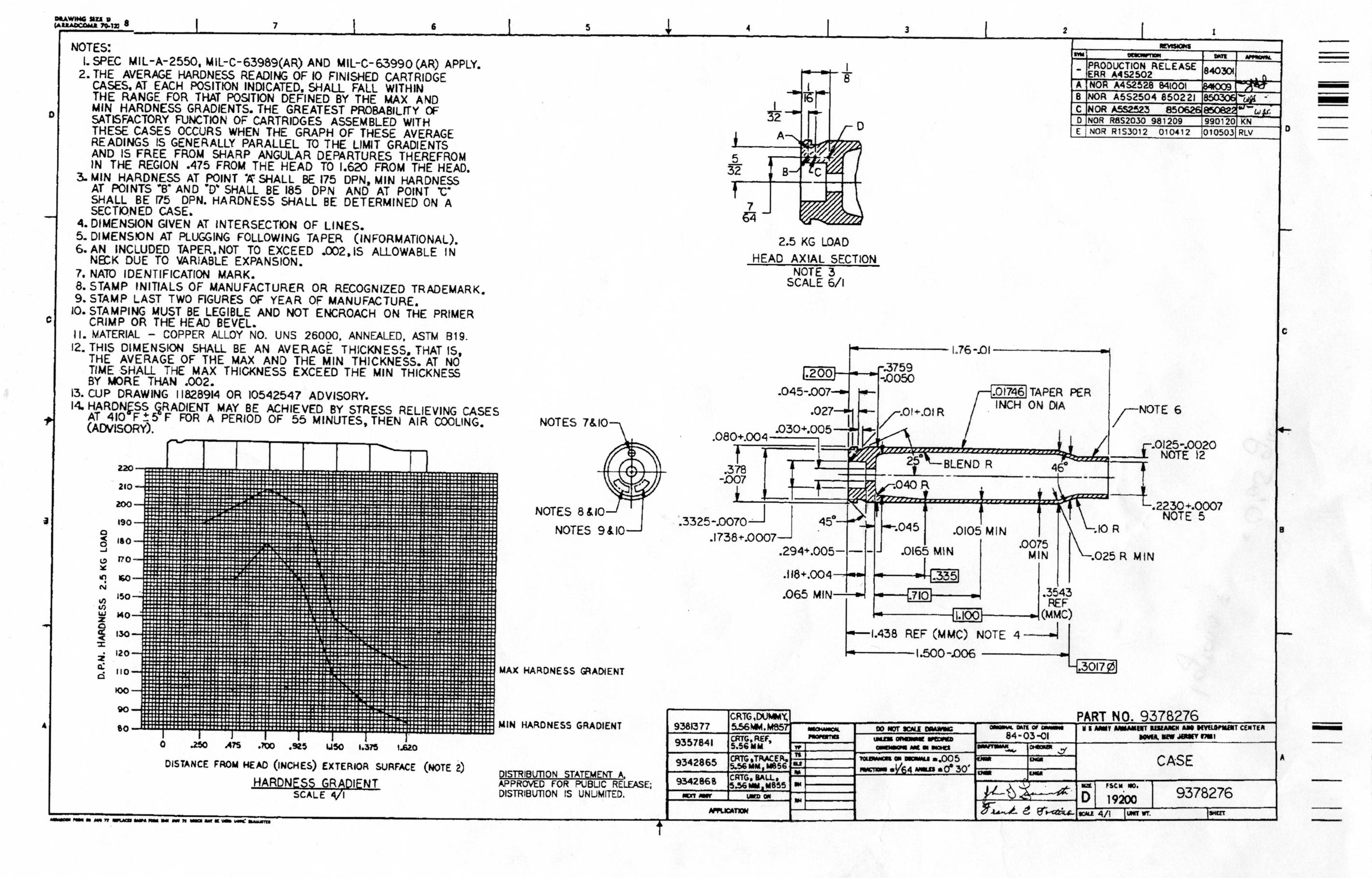
During the 1968 Congressional Hearings on the M16 rifle jamming problem, it was found the cases were too soft. The military hardness and design standards for the 5.56 case was increased above commercial .223 standards. The Lake City 5.56 ammunition and commercial contract ammunition for the military must conform to Mil-Spec standards. The Lake City cases are made of harder brass and not thicker brass to increase their strength.
This information is from the book below and mil-spec drawings and written standards.
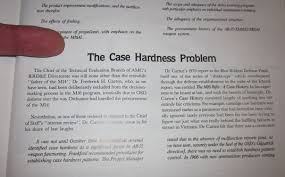
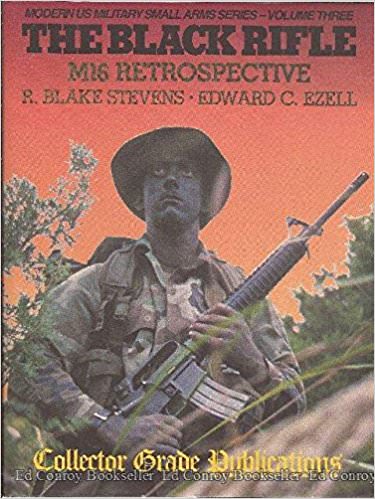
Below you can see the 5.56 case side walls have harder and not thicker brass. And this is very important with ammunition fired in machine guns to prevent jamming.
How Hard is Your Brass? 5.56 and .223 Rem Base Hardness Tests
http://bulletin.accurateshooter.com/2014/05/how-hard-is-your-brass-5-56-and-223-rem-base-hardness-tests/
NOTE, in the past military cases, were made of thicker brass, but this would cut down excessively on the 5.56 case capacity. And if you read the link above CatShooter did the Rockwell testing to end a "discussion" I was having over what brass was hardest. And Lake City has been using harder brass for over 40 years in its 5.56 and newer 7.62 cases.
Save $$ By Using Lake City 5.56x45mm Once-Fired GI Brass
http://bulletin.accurateshooter.com/2019/10/save-by-using-lake-city-5-56x45mm-once-fired-gi-brass/
"GI brass has an excellent attribute, worth noting — it is virtually indestructible. Due to its NATO-spec hardness, the primer pockets last much longer than most commercial brass when using loads at appropriate pressures."
This information is from the book below and mil-spec drawings and written standards.
Below you can see the 5.56 case side walls have harder and not thicker brass. And this is very important with ammunition fired in machine guns to prevent jamming.
How Hard is Your Brass? 5.56 and .223 Rem Base Hardness Tests
http://bulletin.accurateshooter.com/2014/05/how-hard-is-your-brass-5-56-and-223-rem-base-hardness-tests/
NOTE, in the past military cases, were made of thicker brass, but this would cut down excessively on the 5.56 case capacity. And if you read the link above CatShooter did the Rockwell testing to end a "discussion" I was having over what brass was hardest. And Lake City has been using harder brass for over 40 years in its 5.56 and newer 7.62 cases.
Save $$ By Using Lake City 5.56x45mm Once-Fired GI Brass
http://bulletin.accurateshooter.com/2019/10/save-by-using-lake-city-5-56x45mm-once-fired-gi-brass/
"GI brass has an excellent attribute, worth noting — it is virtually indestructible. Due to its NATO-spec hardness, the primer pockets last much longer than most commercial brass when using loads at appropriate pressures."
Last edited:
They also changed powder at that time ,which upped the ROF all the while stressing low maintenance and cleaning .So it became a jammo-matic by ignorance and neglect.
The Army did not want a civilian made rifle and then have to close down the military Springfield armory. And the Army did everything it could to slow down and stop the M16 rifle from being produced. The first rifles sent to Viet Nam for testing did not even have cleaning rods or any type cleaning equipment. It wasn't ignorance and neglect it was simply the Army didn't want civilians telling them what rifle they had to use. And the Army was the cause of the early M16 problems by dragging its feet and requesting changes that slowed production and needed improvements.
Robert S. McNamara was the Secretary of Defence who had been a professor at Harvard Business School in the early 1940s; an executive at Ford Motor Company for 15 years. And McNamara wanted to communalize military acquisition of military equipment. The end result was a rifle that did not work well due to infighting between the U.S. Army and civilian politicians.
I'm 70 years old and all the M16 rifles in the military I fired jammed, "BUT" these rifles were the early rifles before the changes were made. I have two AR15 rifles today and none of them jam but it took a lot of research before I even thought about getting one. I'm old fashioned, I like bolt action rifles and revolvers and still do not like firearms that throw perfectly good brass away and make you go look for them.
BattleRife
CGN Ultra frequent flyer
- Location
- of No Fixed Address
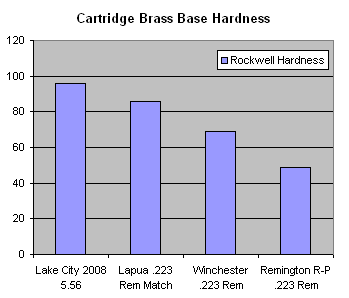
NOTE, in the past military cases, were made of thicker brass, but this would cut down excessively on the 5.56 case capacity. And if you read the link above CatShooter did the Rockwell testing to end a "discussion" I was having over what brass was hardest. And Lake City has been using harder brass for over 40 years in its 5.56 and newer 7.62 cases.
So looking at that link it is Rockwell B, as measured with a portable hardness tester.
Using the ASTM hardness conversion tables for 70/30 brass, the HRB numbers on that chart convert to about 200HV for the Lake City, Lapua 170HV, Winchester 126HV, and Remington 92HV.
It's not the high hardness of the Lake City I question, it's the low hardness of the Winchester and Remingtons. 90HV is the hardness of a fully annealed neck on a brand new factory cartridge. 120HV is the hardness of a neck after it has been fired and reloaded twice. This chart is telling me Remington is selling .223 cases with the heads the same hardness as the annealed necks. I don't believe that.





















