How much value does an antique lose when rechambered or ''re''-finished

Rating - 0%
0   0   0
I've been noticing quite a few antiques popping up on EE, #######, and other websites, advertised as recently/intentionally being rechambered in "convenient" calibres; or with clear signs of a recent nickeling (e.g., fresh nickel finish over old pits on a gun that was never nickeled).

How much value - both monetary, and historical collector value - is lost when they are "touched up" like this?
 
Re-nickeling - Major harm to antique/collector value.
Alteration of caliber... Might be desirable to someone wanting a no-paper shooter.
If the rules change - and they surely will - such bubba alterations are going to really hurt collector value and appeal.
 
Depends on the collector.Some collectors are purists and the least little change from original condition ( no alterations ) put them off and some people are ok with it if it is something they want but normally the big money is gone.For example I bought a really nice 22 martini sold by J vennables & Son that was in real nice shape with the exception someone drilled a couple of holes into the barrel rib to mount a scope and I was able to get a real nice price on it because of this even though the rifle was in great shape and had features like having an ovate barrel with a full length rib and express sights plus a great bore.To me the scope mounting holes didn’t t matter as I was looking for a nice shooter and in fact it they helped me out by keeping the collectors from snatching the martini up before I could get my hands on it
 
Something not mentioned so far, is the condition of the gun to start with. Many of my cartridge firearms were bought in "frame only" condition and I have repaired, sometimes rebarreled, and often restocked them. As such they started out more or less undesireable to collectors and finished as shooters worth considerably less than a good condition original but cheaper than many reproductions, assuming reproductions exist. My interest is mechanical rather than a pristine original. The higher priced originals are usually too expensive to shoot and I am not particularly interested in owning a shiny original that will only hang on the wall or sit in the safe
A problem which Tiriaq commented on is that the RCMP keep changing their interpretation of the written law and many handguns, including ones with RCMP letters, no longer meet the criteria of antiques. They currently sell for high prices because of their antique status at the time of purchase but the big question is ; what happens to them and their owner, when they come to the attention of the RCMP?

cheers mooncoon
 
Something not mentioned so far, is the condition of the gun to start with. Many of my cartridge firearms were bought in "frame only" condition and I have repaired, sometimes rebarreled, and often restocked them. As such they started out more or less undesireable to collectors and finished as shooters worth considerably less than a good condition original but cheaper than many reproductions, assuming reproductions exist. My interest is mechanical rather than a pristine original. The higher priced originals are usually too expensive to shoot and I am not particularly interested in owning a shiny original that will only hang on the wall or sit in the safe
A problem which Tiriaq commented on is that the RCMP keep changing their interpretation of the written law and many handguns, including ones with RCMP letters, no longer meet the criteria of antiques. They currently sell for high prices because of their antique status at the time of purchase but the big question is ; what happens to them and their owner, when they come to the attention of the RCMP?

cheers mooncoon

This indeed.

If you take a piece of absolute crap and polish it and refinish it, it went from useless to useful. It wasn't worth anything before.
Take a gun that wasn't of any real note as an antique, and repair it and refinish it, pretty much same deal.

Take a pristine example and tack weld scope rails on to it, and that is a whole different story.

The "Experts" tell people to leave it the frick alone, because a lot of people out there are dumb, and have no idea what appropriate means to an end are.

I differ in opinion to Mooncoon, in that I understand that the RCMP has changed their POLICY, not the actual LAW. By policy, they will no longer de-register a Prescribed Antique that meets all the criteria in the Law. Since the way they go about the process is to first make you register it, them tell you it does not need to be, you are pretty hoopered if you need to go through that. It is, in the end, just another registry, although it only really affects the guy that went through the process, as there is no controls on them after they change hands.
And yeah, one day someone is gonna kick the legs out from under the whole Prescribed Antique thing, and they are likely just going to be guns again.

 
.

I differ in opinion to Mooncoon, in that I understand that the RCMP has changed their POLICY, not the actual LAW. By policy, they will no longer de-register a Prescribed Antique that meets all the criteria in the Law. Since the way they go about the process is to first make you register it, them tell you it does not need to be, you are pretty hoopered if you need to go through that. .

the issue of what the written law says is somewhat unimportant because in a trial, the court would ask an expert witness to define the law and that expert witness would be an RCMP officer who would state the law is what their policy says it is. Further of concern is that if the gun started as a pre 1898 prohib handgun, modified to become antique (rebarrel and/or rechamber) then deleted from the registry and you asked for an official letter, policy says it remains prohbited and would have to be destroyed because registering it again amounts to creating a new prohib which is prohibited

cheers mooncoon
 
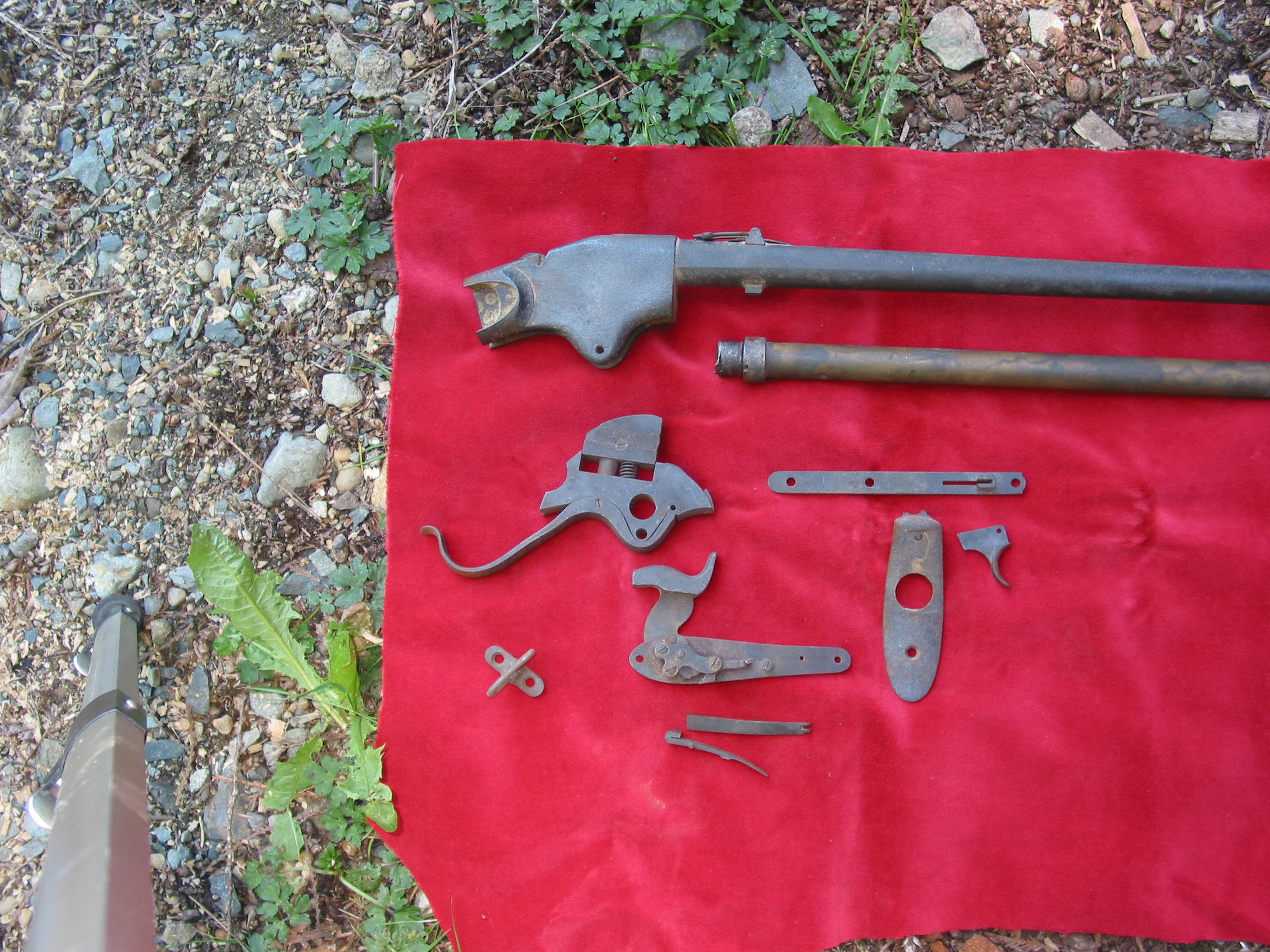
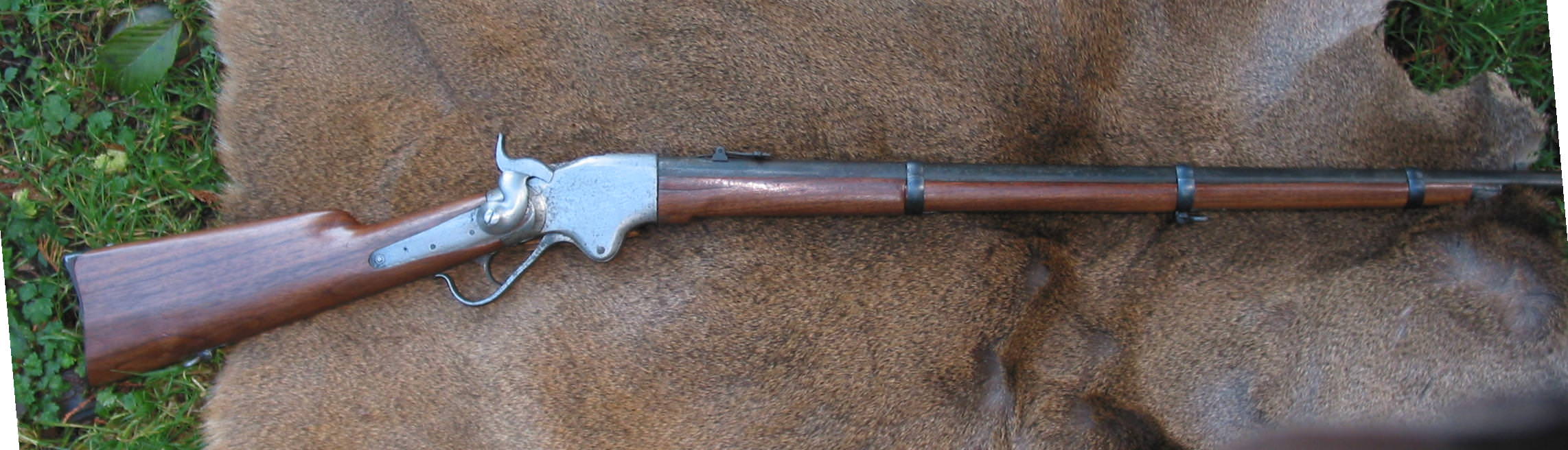
to put some perspective on refinishing from low value to useful; the two images below, hopefully illustrate what I am describing

yclpMvn.jpg


ckvOhQF.jpg


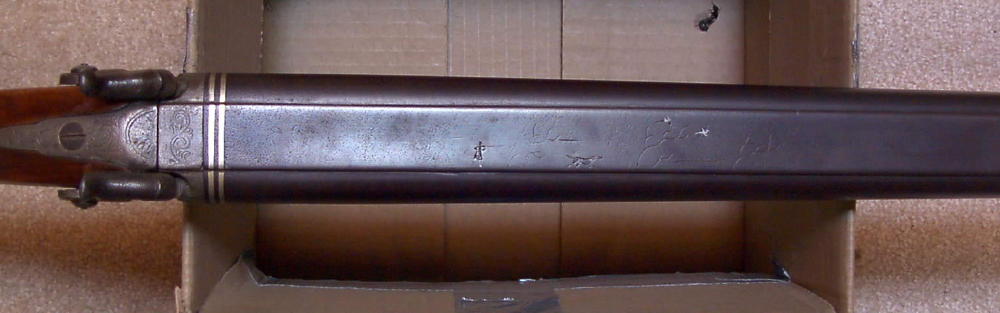
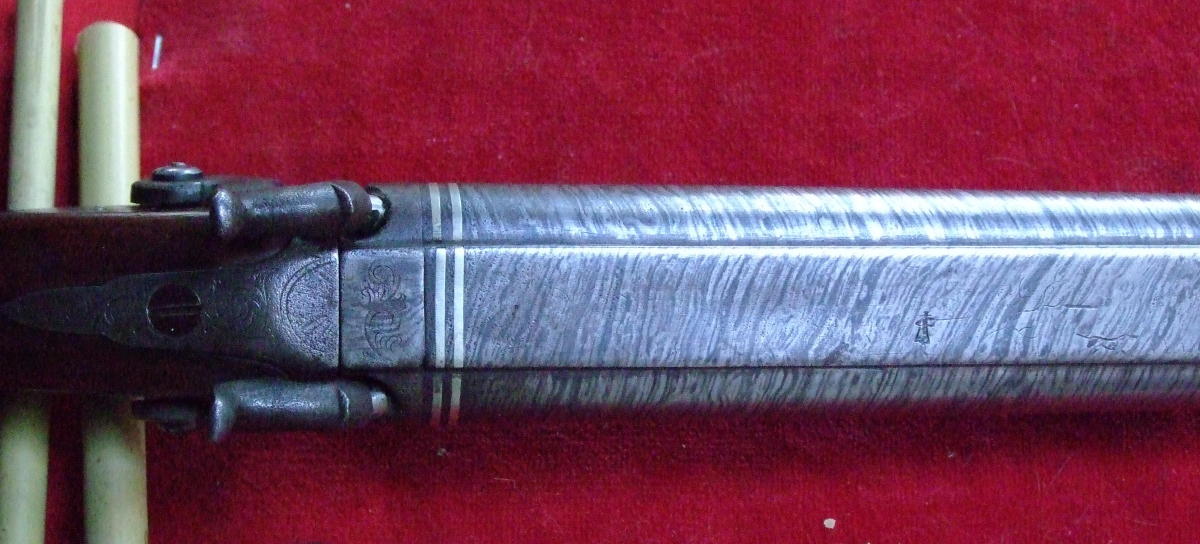
more open for debate is refinishing damascus shotgun barrels from uniform dark brown/black patina to something closer to how they originally started out

YgO98fy.jpg


X7V7A8e.jpg


My personal preference is to be able to appreciate the attractiveness of how the barrels left the manufacturer and if refinishing changes their value up or down a small amount, that is unimportant to me because I am not refinishing them for resale. My intention is to enjoy the pleasure of shooting them

cheers mooncoon
 
Last edited:
I've been noticing quite a few antiques popping up on EE, #######, and other websites, advertised as recently/intentionally being rechambered in "convenient" calibres; or with clear signs of a recent nickeling (e.g., fresh nickel finish over old pits on a gun that was never nickeled).

How much value - both monetary, and historical collector value - is lost when they are "touched up" like this?

Never "re-touch" or alter a bona fide antique. Collectors want them in original condition.........key word being "original" as in untouched. A friend has a Winchester '73 .44-40 made in 1880 that's been appraised as "fine" condition at $5500USD. The appraiser advised that if the rifle hadn't been cleaned,it may have been appraised higher.
 
As far as antique pistols go, many Canadian buyers are willing to pay a premium for something they can shoot in relative freedom, rather than something collectible in an impractical chambering. And sellers are happy to cash in on that inflated value.
 
There are a few "quirks" out there. Swiss Vetterlis are Antiques so long as it they have an unaltered rimfire bolt (or no bolt at all). Place a modified (to centrefire) bolt in it and you lose that status. You'll generally fetch more for a Swiss Vetterli with modified bolt than without, the best of both worlds being one sold with the original unaltered bolt and a modified bolt taken from a relic or sporter.
 
As far as antique pistols go, many Canadian buyers are willing to pay a premium for something they can shoot in relative freedom, rather than something collectible in an impractical chambering. And sellers are happy to cash in on that inflated value.

Totally true IMO. I've had a few Consultants at work express interest in the Antique thing. None seemed to follow up... but most definitely interested.
As far as pristine condition antiques, I can never afford them. The slightly dycked with one's... my price range there.
Never had a converted one mind you...so am not chiming in on that.
 
As far as pristine condition antiques, I can never afford them. The slightly dycked with one's... my price range there.
.

that raises the question of "at what level of condition is the break even point between losing value and the price does not change between restoration and unrestored ? ". I don't think there is any easy answer to that question. I think those collectors who pay very high dollars for guns in pristine condition probably never shoot their guns and probably rarely buy guns in 50 % condition much less rusted piles of parts

cheers mooncoon
 
that raises the question of "at what level of condition is the break even point between losing value and the price does not change between restoration and unrestored ? ". I don't think there is any easy answer to that question. I think those collectors who pay very high dollars for guns in pristine condition probably never shoot their guns and probably rarely buy guns in 50 % condition much less rusted piles of parts

cheers mooncoon

"Rusted piles of parts?' you mean a good patina, LoL?
I shoot mine actually. Only two versions in my stable,; one's I can shoot and one's that I still working on to get so I can shoot them.
 
There seems to be (at least) "insurance value" and "what people will pay for it" value; the difference between the two - where it exists - it important to discern and understand...
 
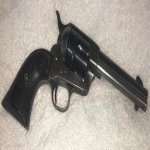
A gun's value is what it is worth to you. I have many antiques. Most original but one of mine is a Colt SAA that had a cylinder and barrel change by Colt in the 1950's to 38 special. It isn't always about historical accuracy or authenticity. Sometimes it's about convenience. I enjoy all my antique handguns and I enjoy this one no less. A lot of folks believe that a change of gun legislation might alter a guns value. I agree. It might in fact make all of them worthless regardless of what state they are in as they may all very well become prohibited or banned. No one knows for sure what changes in firearm legislation will bring to antique handgun values. If buying them is purely to watch them grow as an investment then sure, I get it. Me however am in it for just me and my enjoyment. I do love this old Colt as much as the other pure guns in the safe with her.

SAA.jpg

Cheers
Moe
 

Attachments

  • SAA.jpg
    SAA.jpg
    83.7 KB · Views: 255
Last edited:
If the antique is worn with a sewer pipe than collector value is close to nought. Then we look at value of action. New barrel, extractor, any worn internals, and replacement stock. We now have a rifle for our use. Ie: a worn Hepburn into a new BPCR silhouette rifle.
 
Like any firearm collectors there are purists who prefer the patina and those who like a gun as it came new out of the factory just like the custom muzzleloader builders who have clients that prefer an aged gun compared to a new looking gun.Myself when it comes to a custom built muzzleloader I prefer the new look as if it is going to get some wear on it I will be the one doing it lol.
 
Collector value as opposed to user value, sentimental value, rarity and others is driven by condition, always. The variations or degrees of condition are quantifiable and given a percentage of possible value as in the Blue Book Of Gun Values. In the collecting world original condition always trumps other values. Refinishing or enhancing original antiques, be they guns, violins, paintings or dinner plates will always affect value, sometimes up, sometimes down, depending on many factors such as current condition, original quality, rarity, historical significance, the quality of the work and many other factors. However as stated, as the condition of a hypothetical firearm lowers it's value lowers and at some point the value is low enough that any decent work done to it can only enhance the value. It's a very experienced judgement call on a firearm by firearm basis but remember you can't usually go back and the changes, alterations and enhancements you make are usually forever. You can 'improve' almost anything but you can only be original once. Time for Chris Dawe and some other restoration experts to ring in.

 
Last edited:
Back
Top Bottom