












































You are using an out of date browser. It may not display this or other websites correctly.
You should upgrade or use an alternative browser.
You should upgrade or use an alternative browser.
At least there is no brass to anneal.
- Thread starter diopter
- Start date

HasegawaYamato
Regular
- Location
- Great Vancouver
You can pretty much do the same thing to your rifles, just ram the projectile into the chamber and dump in some powder bags, and add a small brass cup with primer in the end to seal the chamber, like the old german naval guns in the world wars.
So after you done these complicated thing, you can finally forget about annealing the brass! lol
Sorry for the trolling, here is the pic of the german stuff Im talking about.
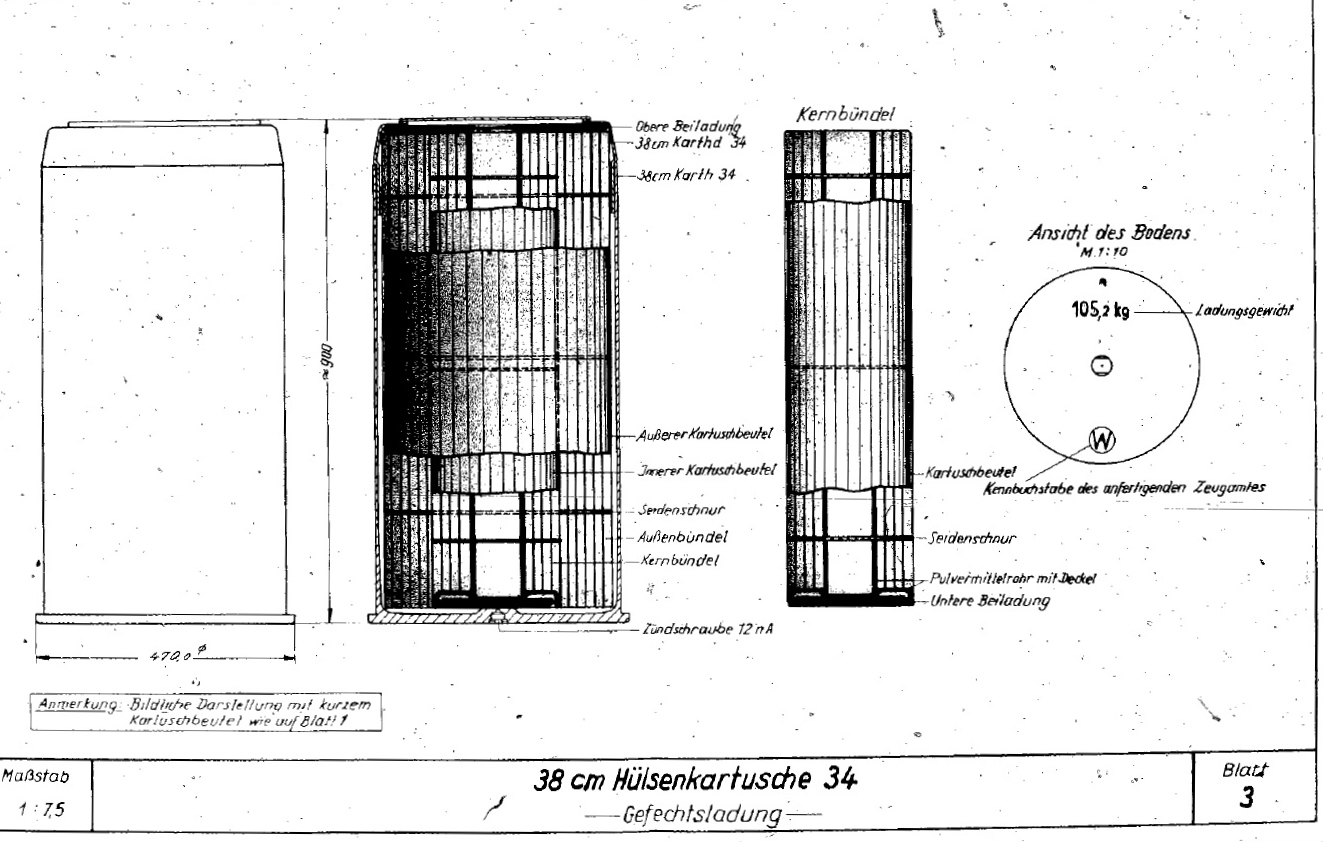
So after you done these complicated thing, you can finally forget about annealing the brass! lol
Sorry for the trolling, here is the pic of the german stuff Im talking about.

Fascinating video! Thanks for posting it! All new historical info to me. And being a reloader myself, I find this info is really interesting.
That WWII battleship 16 inch gun powder charge per round was cited as 660 lb's. At 7,000 grains per pound, that's...uh...4,620,000 grains powder per round!!! Wow!
Back in the day they sure knew how to manufacture powder in bulk! Today us sport shooters scramble during this powder shortage to buy a pound of powder here, or an 8 lb jug there. In WWII for those 16 inch guns they were shooting 660 pounds per round! And they had a huge surplus after the war!
An urban legend around our club is that we are still buying repackaged WWII rifle powders disguised in new containers with new names. I tend to think this legend is false with chemical degradation and all, and surely militaries would have used it all up by now, and then some.... but its sort of fun to imagine we are still shooting surplus powder from WWII.
That WWII battleship 16 inch gun powder charge per round was cited as 660 lb's. At 7,000 grains per pound, that's...uh...4,620,000 grains powder per round!!! Wow!
Back in the day they sure knew how to manufacture powder in bulk! Today us sport shooters scramble during this powder shortage to buy a pound of powder here, or an 8 lb jug there. In WWII for those 16 inch guns they were shooting 660 pounds per round! And they had a huge surplus after the war!
An urban legend around our club is that we are still buying repackaged WWII rifle powders disguised in new containers with new names. I tend to think this legend is false with chemical degradation and all, and surely militaries would have used it all up by now, and then some.... but its sort of fun to imagine we are still shooting surplus powder from WWII.

Gunnerlove
CGN Ultra frequent flyer
- Location
- Vancouver Island
One of our militaries pressing concerns is how to burn all the propellant from the ammo they destroy. Also training ammo allotments are being cut to help thd self balancing budget.


BattleRife
CGN Ultra frequent flyer
- Location
- of No Fixed Address
An urban legend around our club is that we are still buying repackaged WWII rifle powders disguised in new containers with new names. I tend to think this legend is false with chemical degradation and all, and surely militaries would have used it all up by now...
Military users along with American shooters and reloaders. The whole basis of the Hodgdon powder company was buying surplus powders from WWII and selling them to handloaders, and many train carloads were consumed this way. Then, during the Vietnam war Olin Corp found a way to recycle old single-based stick powder into new double-based ball powder to fill the millions of rounds of ammo being expended in SE Asia. I would guess the last of the WWII powders was gone by 1970, and that whoever is perpetuating this story at your gun club is therefore at least 50 years out of touch with reality.

When I first began reloading, there was a gunshop in my hometown with a savvy gunnut running it.
He sold war surplus 4831 [no H or IMR in the day. just 4831] The container we got our powder in was
a plain, heavy brown paper bag. Cost: $0.75/lb. He bought his powder in large containers made of
metal. Interesting guy to talk to, A wealth of knowledge to us budding shooter/reloaders. Dave.
He sold war surplus 4831 [no H or IMR in the day. just 4831] The container we got our powder in was
a plain, heavy brown paper bag. Cost: $0.75/lb. He bought his powder in large containers made of
metal. Interesting guy to talk to, A wealth of knowledge to us budding shooter/reloaders. Dave.
Military users along with American shooters and reloaders. The whole basis of the Hodgdon powder company was buying surplus powders from WWII and selling them to handloaders, and many train carloads were consumed this way. Then, during the Vietnam war Olin Corp found a way to recycle old single-based stick powder into new double-based ball powder to fill the millions of rounds of ammo being expended in SE Asia. I would guess the last of the WWII powders was gone by 1970, and that whoever is perpetuating this story at your gun club is therefore at least 50 years out of touch with reality.
Well, I was purchasing it directly from the Hogdon's storage sheds, mostly in 25-50 pound, press board drums, covered in tar backed, white paper, stencilled with its contents, back in 1980, which was close to the last run I made. They still had plenty of it left, as the half ton or so I purchased barely put a dent into their stockpile.
- Location
- Western Manitoba
What I find incredible is reading about some of those war-time encounters - WWI and WWII - those naval gunners were firing at target 10 miles or more away - often they were moving - and they would hit them, sometimes. Just incredible, I think!!!






















