Primer troubles CCI small pistol PLOT TWIST on post 20.

ipscgraz

CGN Ultra frequent flyer
Rating - 100%
46   0   0
Good morning

I had a chance to get to the range yesterday and burned up maybe 200 + rounds of 9MM. I must have had 5 or 6 misfires, with good firing pin indentation on each one.

Primers are stored in a wood box on the gun room floor (cement with a cheap rug on it, so cool all the time with no temp swings) These might be 10 or 12 years old as I don't use small pistol primers all that much and buy in large quantities. The only batch number I can see is DO7R imprinted on each primer sleeve...wonder if that is the year of manufacture.

Anybody else have any issues with this in the past?
 
Last edited:
CCI small pistol have been virtually 100% reliable for me in Glock, CZ Shadow and Ruger carbines. But- none of it is old stock. I get them in and I load them and they are shot within a few months.
 
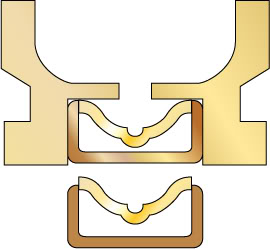
A primer must be "armed". The three little legs of the primer protrude slightly from the bottom of the primer. They must be pushed pushed into the primer, when it is seated, so that the anvil is tight against the pellet of compound. To do this, the primer must be pushed into the primer pocket deep enough that the primer is below the case head. That is, the primer is not just flush with the case head, but below it.

Many striker fired guns have just enough energy in the striker to fire a primer. If the primer strike is cushioned a bit because the striker has to finish seating the primer, it can misfire.

This is why I like to use a hand primer. I can feel the primer bottoming.
 
^^^

I was shooting a Browning hi power. Poor thing has to have about 90 K rounds through it.

I brought a couple of the failures home. I can check primer seating before I pull the bullets. Once the lead and powder are gone I can try to shoot the primer in another gun.

Going to load some more and take TWO hi powers to the range. Plus when I load this time I will use the MTM ammo boxes that force you to look at the primers.

Maybe I will load some with small rifle as well, and see if the problem reappears. So I will have 2 batches to shoot, in 2 different guns.
(I know that small rifle worked just fine in the past, in all the handguns I have tried it in.)
 
^^^

I was shooting a Browning hi power. Poor thing has to have about 90 K rounds through it.

I brought a couple of the failures home. I can check primer seating before I pull the bullets. Once the lead and powder are gone I can try to shoot the primer in another gun.

Going to load some more and take TWO hi powers to the range. Plus when I load this time I will use the MTM ammo boxes that force you to look at the primers.

Maybe I will load some with small rifle as well, and see if the problem reappears. So I will have 2 batches to shoot, in 2 different guns.
(I know that small rifle worked just fine in the past, in all the handguns I have tried it in.)

You reported only a few misfires. This suggests a seating depth issue, since that problem is often a 5 in 100 type problem.

Look at a handful of loaded ammo and see if you have any where the primer looks flush. That is the rounds that can be a dud.

You can't tell by looking at the dud rounds, because the hammer blow will have seated the primer.
 
A primer must be "armed". The three little legs of the primer protrude slightly from the bottom of the primer. They must be pushed pushed into the primer, when it is seated, so that the anvil is tight against the pellet of compound. To do this, the primer must be pushed into the primer pocket deep enough that the primer is below the case head. That is, the primer is not just flush with the case head, but below it.

Many striker fired guns have just enough energy in the striker to fire a primer. If the primer strike is cushioned a bit because the striker has to finish seating the primer, it can misfire.

This is why I like to use a hand primer. I can feel the primer bottoming.


Id go with what this Gentleman said . I had a buddy tell me many years ago that he had problems with CCI primers . I remember this distinctly. I've used CCI primers without any problems. I've heard people wine about Federal primers being too soft . whatever. as this Gentleman said make sure that they are seated firmly and let us know what happens.
 
Check the head stamps. If many of the duds are S&B, this would suggest the primers were not seated all the way. I find S&B pockets to be tight and when using the hand primer I can feel that it takes extra effort to get them to bottom out.
 
A primer must be "armed". The three little legs of the primer protrude slightly from the bottom of the primer. They must be pushed pushed into the primer, when it is seated, so that the anvil is tight against the pellet of compound. To do this, the primer must be pushed into the primer pocket deep enough that the primer is below the case head. That is, the primer is not just flush with the case head, but below it.

Many striker fired guns have just enough energy in the striker to fire a primer. If the primer strike is cushioned a bit because the striker has to finish seating the primer, it can misfire.

This is why I like to use a hand primer. I can feel the primer bottoming.

never knew this, great advice
 
As stated by Ganderite the primer must have a preload or fully seated to set off the primer compound.

oiIRxun.jpg
 
You have to admire the depth of knowledge on this site.

My original intent was to ask if anyone else had trouble with that particular brand of primer(looks like that was not the issue), and many replies led to other possibilities, including primer seating.

My first reaction to that was that I had loaded thousands and thousands and thousands of pistol rounds on my Dillon 650, with just about no problems (worn primer pockets being the most common hiccup). Plus, in an attempt to train my oldest son how to load years ago, I had to toss a lot of ammo with improperly seated primers which should have been a good reminder to me to push the handle all the way forward.

Anyway, being human, it is entirely possible that this is the root cause. I am just glad that this was with practice ammo and not at something like a provincial or national match.

Going to see if the next batch behaves better. Thanks to all for the detailed replies, and I bet this thread will be used eventually by someone else who had trouble.
 
I’ve had this issue with CCI primers when shooting DA in all my revolvers. Switched to Federal and it never happened again. CCI were fine in single action revolvers.
 
Ok; so after all this, I loaded up some 9MM last night, very conscious of making sure the primer was fully seated.

Part way through the run, one primer didn't feel quite right. Stopped and pulled the brass out of Station 2 (priming/charging on a Dillon 650). The OLD primer was still in the brass case...even though it had gone through the sizer die fully.

Toss the brass back in the hopper, and it happens again; old primer in the case and the new primer sitting all sad and lonely on the priming stud. I pulled this piece out and marked it with a felt marker, and dropped it into the feed tube. Sure enough, that piece of brass eventually shows up in Station one, and the priming stroke is almost zero force required. Pull that same piece of brass out of Station 2, and sure enough, the felt marker ink was there, and so was the old primer. This little surprise happened about 5 times over 175 rounds loaded.

I suspected the decapping pin was pushing the old primer +almost+ out of the primer pocket, and when that piece of brass rotated into the priming station, the old primer was pushed back into place by the new primer sitting on the priming stud. I Measured the decapping pin protrusion at 0.278". Measured the other decapping pins on other caliber tool heads and they vary from 0.300" to 0.340".


Oddly enough, this was only with Winchester brass. Even more odd, the force required to push the old primer back into the pocket was very similar to the force required to seat a new primer. Huh...

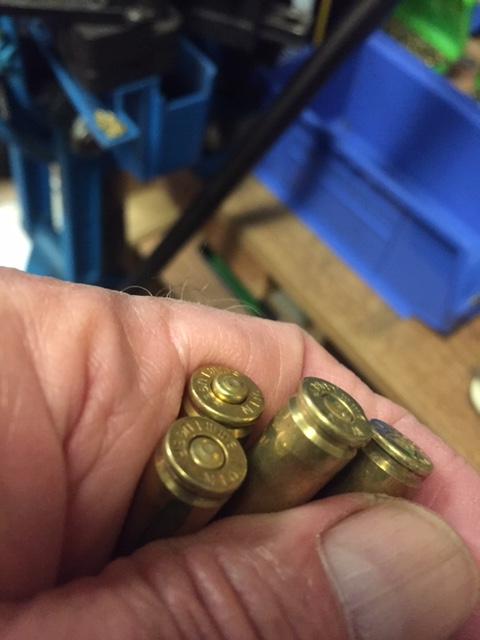
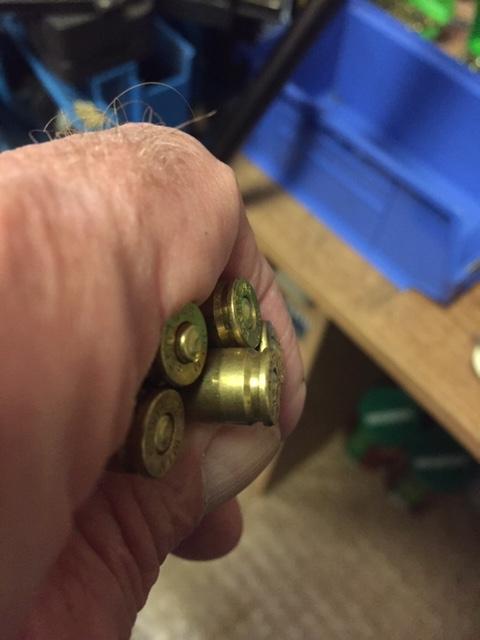
In the pics you can see the fired primer sitting fully re-inserted in the primer pocket, with the exception of one that I caught in station 1 before the priming stud and new primer pushed it back into place.

zZzylDB.jpg
MXdyJxC.jpg


And here I was blaming CCI...
 
Back
Top Bottom