40sw

dearslayer

Regular
Rating - 100%
11   0   0
Location
On The Edge

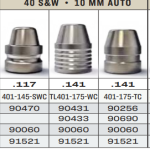
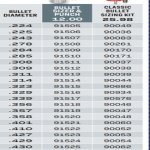
Recently purchased a 6 cavity mold for 40SW from Higginson's ( TL401-175-WC ) and I want to make sure I order the correct sizing kit if I'm powder coating. I'm guessing it would be .401 PT# 90060? Can someone confirm?
 

Attachments

  • Capture.PNG
    Capture.PNG
    85.1 KB · Views: 185
  • sizing.jpg
    sizing.jpg
    34.5 KB · Views: 184
Recently purchased a 6 cavity mold for 40SW from Higginson's ( TL401-175-WC ) and I want to make sure I order the correct sizing kit if I'm powder coating.

What does the color blue smell like in November?

What I'm getting at is this: what dimension of sized bullet works best in whatever firearms you are shooting these bullets in? Do you know that yet? Just starting out, you probably can't.

You cast, then powder coat, then size the powder coated bullets to the same size they would have been if you'd sized as cast with conventional lubes.

Casting, then sizing, then powder coating afterwards will give you a finished bullet (depending on how you PC) of about .0015" or so larger than the sizer that you chose. Which may give better results - or less. Or just the same.

Until you try bullets where you vary the finished diameters by different sizing, you can't really tell whether you are going to get the optimal results with that bullet or not. If the bullets are mostly for close range tin can killers and paper targets, you probably don't really care.

One more variable that the jacketed bullets only majority of reloaders don't have to deal with. And then there is bullet hardness - which powder coating helps to minimize as a factor as velocities go up.

 
What does the color blue smell like in November?

What I'm getting at is this: what dimension of sized bullet works best in whatever firearms you are shooting these bullets in? Do you know that yet? Just starting out, you probably can't.

You cast, then powder coat, then size the powder coated bullets to the same size they would have been if you'd sized as cast with conventional lubes.

Casting, then sizing, then powder coating afterwards will give you a finished bullet (depending on how you PC) of about .0015" or so larger than the sizer that you chose. Which may give better results - or less. Or just the same.

Until you try bullets where you vary the finished diameters by different sizing, you can't really tell whether you are going to get the optimal results with that bullet or not. If the bullets are mostly for close range tin can killers and paper targets, you probably don't really care.

One more variable that the jacketed bullets only majority of reloaders don't have to deal with. And then there is bullet hardness - which powder coating helps to minimize as a factor as velocities go up.

paper targets is correct... I dont have the experience beyond this yet to necessitate major precision.
 
paper targets is correct... I dont have the experience beyond this yet to necessitate major precision.

Well as you kinda, sorta, guessed at the size you want to load your cast bullets at (because you don't have the actual measurements from your barrel), you have two sizes to choose from when loaded:

1. Powder coated and then sized.

2. Sized, and then powder coated. i.e. somewhere between .001" to .002" above sized dimensions.

Best guess is first choice is more likely to give better results: the manufacturers try for the dimensions that give the best results in the most firearms. Of course, it depends what you're using for alloy; that will also have some say on final dimensions.

Unless you're shooting something more precision oriented like PPC or Bullseye, reasonably good results shouldn't be too hard. PC has made life a lot easier... or at least I think it has.
 
Well as you kinda, sorta, guessed at the size you want to load your cast bullets at (because you don't have the actual measurements from your barrel), you have two sizes to choose from when loaded:

1. Powder coated and then sized.

2. Sized, and then powder coated. i.e. somewhere between .001" to .002" above sized dimensions.

Best guess is first choice is more likely to give better results: the manufacturers try for the dimensions that give the best results in the most firearms. Of course, it depends what you're using for alloy; that will also have some say on final dimensions.

Unless you're shooting something more precision oriented like PPC or Bullseye, reasonably good results shouldn't be too hard. PC has made life a lot easier... or at least I think it has.


Hey Rick... yes PC and then sized.... honestly I had no idea reloading and casting were as involved as it is. I have a new respect for those that know what the heck they are doing. Right now I'm struggling with trying to cast for ..40. can't seem to get a decent boolit to save my soul. At first I thought it was Zinc in my melted COWW, but now I think ( besides my inexperience ) I have other issues going on making me more and more frustrated. You guys make this stuff look easy.
 
Hey Rick... yes PC and then sized.... honestly I had no idea reloading and casting were as involved as it is. I have a new respect for those that know what the heck they are doing. Right now I'm struggling with trying to cast for ..40. can't seem to get a decent boolit to save my soul. At first I thought it was Zinc in my melted COWW, but now I think ( besides my inexperience ) I have other issues going on making me more and more frustrated. You guys make this stuff look easy.

It is easy - after you get over the initial learning curve. And it isn't as complicated as it looks. Although, once you've made it easy - that's when you start voluntarily making it complicated again: what should I flux with? when should I flux? What temperature/hardness/etc is best, etc. Particularly if you cast for rifles, verssus handguns.

The dedicated cast bullet forum probably has all the answers to every question you have right now - probably answered a dozen times already. That, as well as the Cast Bullet Association forum, which has been overtaken and surpassed in membership and posts by the other cast bullet forum. All my moulds are iron or brass; I don't have any aluminum moulds so I have no experience or background with them. But assuming you're sure your COWW alloy is not contaminated with metals like zinc or copper, and not knowing exactly what's wrong with your results so far:

  • Have you ensured your mould has been obsessively cleaned of any contaminates like cutting oils from the manufacturing process?
  • Are sure your alloy is hot enough to get proper fillout?
  • Is your mould hot enough to be at proper operating temperature for fillout?
  • Are you pouring a big enough sprue puddle - or trying to keep them small and neat?
That's where I'd start looking if your bullets aren't good enough yet.

I don't smoke or use any other kind of mould release agent on my iron and brass moulds' bullet cavities. Others swear by doing that; maybe that's worth doing if aluminum moulds are the ones in question. I store them closed in ziplock bags and some dessicant with the last bullets cast still in the cavities. It's pretty dry here, but storing them that way in ziplock bags only takes a few extra seconds - I have time for that bit of overkill.

And, BTW, unless they're complete disasters... just size/PC them (in whatever order you choose), load them, and shoot them at the average distance you intend to be killing paper at, and see just how good/bad they are. They may be good enough for most of your purposes - keeping you shooting while you continue working on figuring out how to produce even better bullets.

If you want some reference material at your fingertips, rather than on the Internet, the CBA's handbook on bullet casting has grown from the original one volume to a three set volume complete with CD's, Excel tables, etc. I only have the original handbook Joe Brennan compiled and offered to members long ago, but apparently it is even more comprehensive now. They offer different levels of purchase at prices that are competitive with Lyman's cast bullet handbook. The Lyman handbook is a valuable one, but I think the CBA manual has a lot more to offer to those beginning to cast who don't have a local mentor to help them with their teething programs.

https://cbastore.castbulletassoc.org/cast-bullets-for-beginner-and-expert
 
It is easy - after you get over the initial learning curve. And it isn't as complicated as it looks. Although, once you've made it easy - that's when you start voluntarily making it complicated again: what should I flux with? when should I flux? What temperature/hardness/etc is best, etc. Particularly if you cast for rifles, verssus handguns.

The dedicated cast bullet forum probably has all the answers to every question you have right now - probably answered a dozen times already. That, as well as the Cast Bullet Association forum, which has been overtaken and surpassed in membership and posts by the other cast bullet forum. All my moulds are iron or brass; I don't have any aluminum moulds so I have no experience or background with them. But assuming you're sure your COWW alloy is not contaminated with metals like zinc or copper, and not knowing exactly what's wrong with your results so far:

  • Have you ensured your mould has been obsessively cleaned of any contaminates like cutting oils from the manufacturing process?
  • Are sure your alloy is hot enough to get proper fillout?
  • Is your mould hot enough to be at proper operating temperature for fillout?
  • Are you pouring a big enough sprue puddle - or trying to keep them small and neat?
That's where I'd start looking if your bullets aren't good enough yet.

I don't smoke or use any other kind of mould release agent on my iron and brass moulds' bullet cavities. Others swear by doing that; maybe that's worth doing if aluminum moulds are the ones in question. I store them closed in ziplock bags and some dessicant with the last bullets cast still in the cavities. It's pretty dry here, but storing them that way in ziplock bags only takes a few extra seconds - I have time for that bit of overkill.

And, BTW, unless they're complete disasters... just size/PC them (in whatever order you choose), load them, and shoot them at the average distance you intend to be killing paper at, and see just how good/bad they are. They may be good enough for most of your purposes - keeping you shooting while you continue working on figuring out how to produce even better bullets.

If you want some reference material at your fingertips, rather than on the Internet, the CBA's handbook on bullet casting has grown from the original one volume to a three set volume complete with CD's, Excel tables, etc. I only have the original handbook Joe Brennan compiled and offered to members long ago, but apparently it is even more comprehensive now. They offer different levels of purchase at prices that are competitive with Lyman's cast bullet handbook. The Lyman handbook is a valuable one, but I think the CBA manual has a lot more to offer to those beginning to cast who don't have a local mentor to help them with their teething programs.

https://cbastore.castbulletassoc.org/cast-bullets-for-beginner-and-expert

Thanks so much Rick for this info. It's been a couple days since I've been on here. I appreciate the link. I've cleaned the mold again but as most on another forum have suggested that my mold isn't hot enough and nor is my sprue puddle big enough. I have another hot plate now instead of an electric steak grill to heat the mold so gonna see if that makes the difference.
 
Yes, as above. I cast for years, just using the casting process to finally get the moulds up to temperature to where they dropped good bullets. I knew it could be done faster, but the reloading bench was crowded so I didn't want a hot plate to get it even more cluttered. I finally clued in I could preheat the mould, mostly, on a hotplate that wasn't located on the bench.

Either way, too hot is better than too cool.

And pour a big ass sprue puddle, you'll eventually figure out just how big they have to be to reliably throw good bullets. A PCL for your pot (and mould if you want to get anal) makes getting the temperatures right much easier. About 99% of my casting is for centerfire rifles, so like most who are really picky with cast bullet grouping ability out to 200 yards or so, I really have to pay attention to the details to produce the best cast bullet loads. Less than that and I end up with tin can killer bullets.

Once you get it figured out, for whatever level of accomplishment you're looking for, it's pretty easy. One of my friends that runs a big eight cavity gang mould for his .45 ACP is happy with bullets I would never find acceptable. They meet his needs, however, and he can cast a LOT of bullets in just a couple of hours.
 
The LEE 145 TC mold looks interesting but as only offered in a dual cavity mold it is very discouraging. I have found that 40S&W really shines with bullets similar in weight to 38Special SWC’s. Like 155 & 165 grain bullets.
The 175 grain LEE molds don’t interest me as 40S&W is snappy enough in that bullet weight, might as well fire 45acp. Im disappointed that LEE doesn’t offer a lighter 40 six(6) cavity mold, but that’s LEE. In all my eleven (11) attendances at the *SHOT SHOW* LEE has never showed up, had a booth or any pretext of attending. Just Not Performance.
 
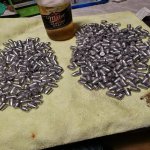
I haven't been back in a while so I thought I'd report back with some progress. After following the advise offered by everyone here as well as Castboolits ( mainly getting the mold up to temp) I managed to cast some what I think are decent boolits. These were cast about a week ago I guess
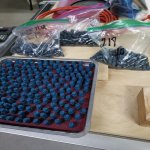
I still haven't got the sizing kit from Lee yet but will order one soon. I did powder coat all of around 700 today. I mixed white/ black/ and blue at different amounts to get some nice looking finishes I think.
 

Attachments

  • IMG_20211125_203622.jpg
    IMG_20211125_203622.jpg
    123.4 KB · Views: 33
  • IMG_20211204_122850.jpg
    IMG_20211204_122850.jpg
    99 KB · Views: 32
Those look pretty good. I have a Magma Engineering Master caster. I hit my molds with a propane torch to warm up the mold.I just wave it over the mold a little, then start casting. It just shortens the amount of time it takes to get nice bullets to drop at the start.

Auggie D.
 
Well as you kinda, sorta, guessed at the size you want to load your cast bullets at (because you don't have the actual measurements from your barrel), you have two sizes to choose from when loaded:

1. Powder coated and then sized.

2. Sized, and then powder coated. i.e. somewhere between .001" to .002" above sized dimensions.

Best guess is first choice is more likely to give better results: the manufacturers try for the dimensions that give the best results in the most firearms. Of course, it depends what you're using for alloy; that will also have some say on final dimensions.

Unless you're shooting something more precision oriented like PPC or Bullseye, reasonably good results shouldn't be too hard. PC has made life a lot easier... or at least I think it has.


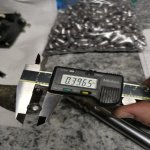
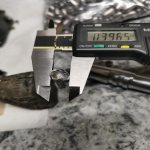
So I finally took the leap ( was a little nervous about it getting stuck etc ) and slugged the barrel on the .40. measured .3965. so now that I know that measurement which sizing kit should I order?
Would it be .401?
 

Attachments

  • IMG_20211206_204559.jpg
    IMG_20211206_204559.jpg
    67.8 KB · Views: 18
  • IMG_20211206_204622.jpg
    IMG_20211206_204622.jpg
    59.2 KB · Views: 18
  • IMG_20211206_204631.jpg
    IMG_20211206_204631.jpg
    52.8 KB · Views: 18
Back
Top Bottom