I was never a fan of the 38 S&W. At age 10 I shot it for the first time. It was my father’s issue Smith M&P, shooting military issue ammo. A friend of his in the Army gave him a case of ammo, so we would occasionally plink at the local garbage dump.
My opinion of the 38S&W was formed when we posted targets on a small sheet of ¾” plywood. When we took the target down, the bullet were all stick out of the wood, like darts. In hindsight, I am now suspicious that the plywood was hardwood plywood (is there such a thing?)
In addition to the ubiquitous bucket of old chrome plate, break-action Ivor Johnsons, I have 5 real revolvers in that caliber. Three Webleys (2 4” and one 2”), a Smith Victory 5” and a Smith M33 4”.
I decided to develop a load for them. I picked up a box of un-sized DRG 158SWC in addition to the usual DRGs, sized .358” The unsized ran around .361”
The 38 S&W is supposed to have a .361” barrel, unlike the 38Spl which is .357”. A crude exam of my guns suggests that the M33 and the Webleys have the larger bore and I think my Victory has a .357” barrel.
So I was wondering which bullet would work best. Maybe the .361” barrels would do better with the fatter bullets?
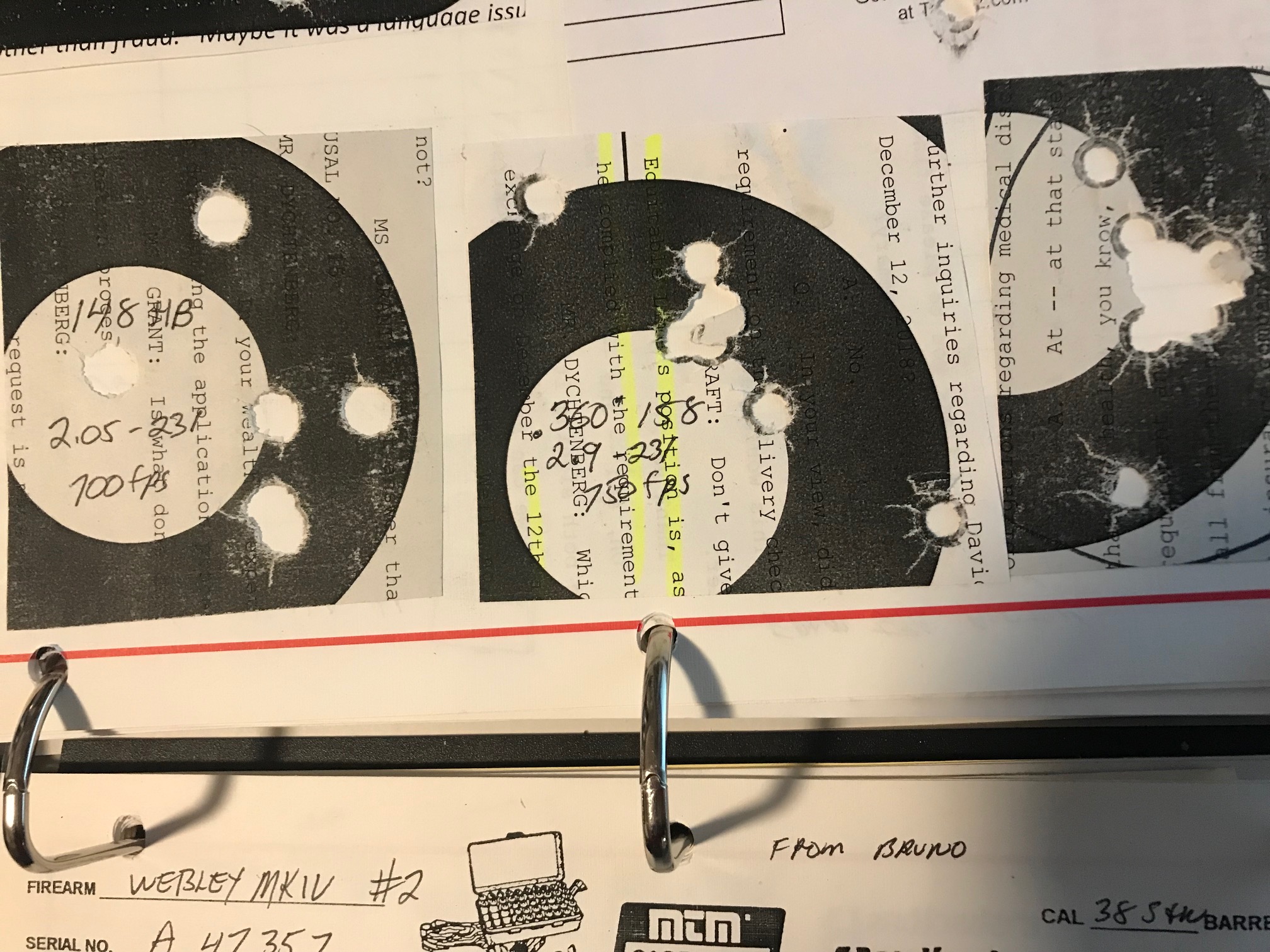
I made 50 of each load. I loaded 2.3, 2.6 and 2.9gr of Win231 for each bullet (6 different loads) plus I tried some expensive lead 148 hollow base wad cutters. I hoped the hollow base would expand to obdurate in each barrel size. (It did.)
The 2.3 gr load was very light. (500 fps) The 357 bullet was erratic velocity in the Victory, but the .361” bullet shot very well. So the fatter bullet sealed better in the bigger bore.
But with the hotter loads of 2.6 and 2.9, both size bullets worked well in both size barrels. They produced groups I scored a Good or very Good in each gun. The Webley seemed to prefer the standard 357 bullets and the Victory did slightly better with the .361”. This was counter intuitive, but I don’t argue with my guns when they tell me what they prefer.
So, if you want to load for a 38S&W, you can just buy the cheaper regular diameter bullets.
I found that 2.6 gr of Win 231 (HP38) gave a velocity of 660 fps, which is about right for that caliber. The 2.9 gr load gave 755fps, which is about the same as a 38Spl.
I loaded the 148 HBWC with 2.2gr of Win 231, and they shot very well in all the guns. This would be my "universal" load, except that it an expensive bullet. The lead DRGs 158SWC are only $40/500.
I found that by looking at that dinky little case as a “9mm Rimmed”, it got a little more respect. The 9mm and the 38S&W cases are almost identical. I crimped the bullet into the crimp groove of the bullet. Some crimp is important because the .357 bullet is not a super tight fit in the case.
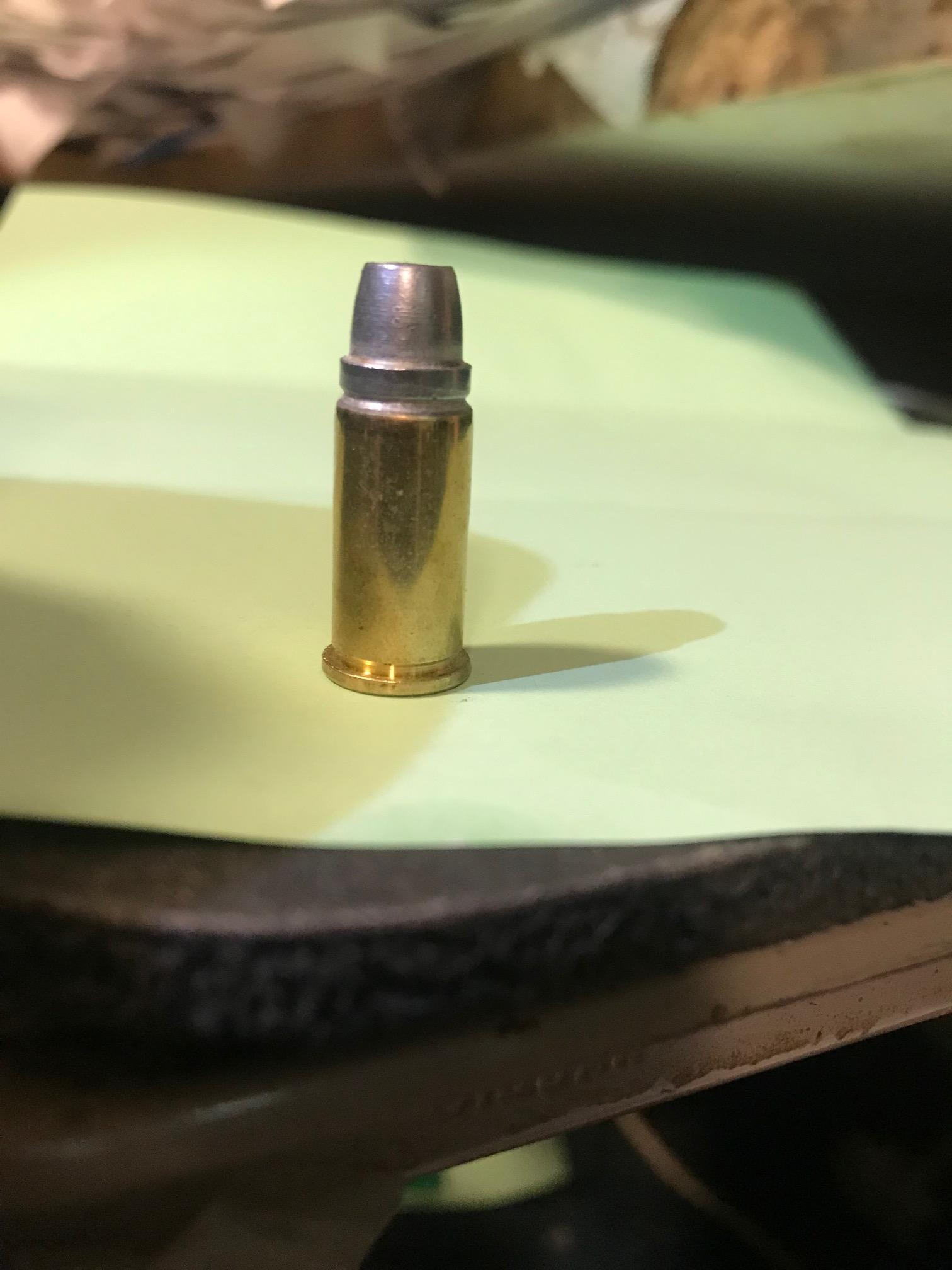
Part way through sizing my bucket of brass, I broke the little decapper pin in my Lyman 38S&W sizing die, and as luck would have it, it was my last pin. No other decapper pin brand will fit a Lyman die.
So I installed a Hornady 9mm Makarov die and carried on. It does not size the case quite as much, but enough to guarantee the case will fit each on my guns.
I loaded the ammo on my Dillon, using the 9mm dies, without the 9mm sizer. The cases were all sized and primed in advance. Since the 38S&W is about the same size as a 9mm, this set up works perfectly, with a small change in the mouth flare and crimp.
My opinion of the 38S&W was formed when we posted targets on a small sheet of ¾” plywood. When we took the target down, the bullet were all stick out of the wood, like darts. In hindsight, I am now suspicious that the plywood was hardwood plywood (is there such a thing?)
In addition to the ubiquitous bucket of old chrome plate, break-action Ivor Johnsons, I have 5 real revolvers in that caliber. Three Webleys (2 4” and one 2”), a Smith Victory 5” and a Smith M33 4”.
I decided to develop a load for them. I picked up a box of un-sized DRG 158SWC in addition to the usual DRGs, sized .358” The unsized ran around .361”
The 38 S&W is supposed to have a .361” barrel, unlike the 38Spl which is .357”. A crude exam of my guns suggests that the M33 and the Webleys have the larger bore and I think my Victory has a .357” barrel.
So I was wondering which bullet would work best. Maybe the .361” barrels would do better with the fatter bullets?
I made 50 of each load. I loaded 2.3, 2.6 and 2.9gr of Win231 for each bullet (6 different loads) plus I tried some expensive lead 148 hollow base wad cutters. I hoped the hollow base would expand to obdurate in each barrel size. (It did.)
The 2.3 gr load was very light. (500 fps) The 357 bullet was erratic velocity in the Victory, but the .361” bullet shot very well. So the fatter bullet sealed better in the bigger bore.
But with the hotter loads of 2.6 and 2.9, both size bullets worked well in both size barrels. They produced groups I scored a Good or very Good in each gun. The Webley seemed to prefer the standard 357 bullets and the Victory did slightly better with the .361”. This was counter intuitive, but I don’t argue with my guns when they tell me what they prefer.
So, if you want to load for a 38S&W, you can just buy the cheaper regular diameter bullets.
I found that 2.6 gr of Win 231 (HP38) gave a velocity of 660 fps, which is about right for that caliber. The 2.9 gr load gave 755fps, which is about the same as a 38Spl.
I loaded the 148 HBWC with 2.2gr of Win 231, and they shot very well in all the guns. This would be my "universal" load, except that it an expensive bullet. The lead DRGs 158SWC are only $40/500.
I found that by looking at that dinky little case as a “9mm Rimmed”, it got a little more respect. The 9mm and the 38S&W cases are almost identical. I crimped the bullet into the crimp groove of the bullet. Some crimp is important because the .357 bullet is not a super tight fit in the case.
Part way through sizing my bucket of brass, I broke the little decapper pin in my Lyman 38S&W sizing die, and as luck would have it, it was my last pin. No other decapper pin brand will fit a Lyman die.
So I installed a Hornady 9mm Makarov die and carried on. It does not size the case quite as much, but enough to guarantee the case will fit each on my guns.
I loaded the ammo on my Dillon, using the 9mm dies, without the 9mm sizer. The cases were all sized and primed in advance. Since the 38S&W is about the same size as a 9mm, this set up works perfectly, with a small change in the mouth flare and crimp.