Pitch Angle

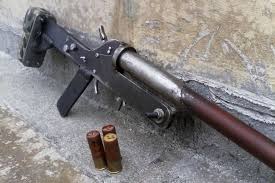
What model of Remington is that in the picture? I don't ever recall seeing that catalogued but then you have a few years on me... so maybe that one was available while I was still just a gleam in my fathers eye! ;)

No remington there but one of your high end face slapping replacements
Remingtons don't slap your face even if fat or skinny LOL
A gleam LOL maybe a dim flicker :)
 
No remington there but one of your high end face slapping replacements
Remingtons don't slap your face even if fat or skinny LOL
A gleam LOL maybe a dim flicker :)

So can I bother you for the stock dimensions on a target model 870 ? A Skeet and Trap model if you have them. As a a kid I shot a Wingmaster hunting and although it bruised me up a little, I found it to be fine. Now I find it all but useless. Too short, too much drop and all but useless for me as a target gun. Currently in the process of acquiring an aftermarket Trap stock to try.
 
Have them both Skeet / hunting is no different I know of but trap was slightly
This should help post 12 and 17 but not recoil pad angle
Fix the link
https://ww w.trapshooters.com/threads/monte-carlo-trap-stocks.890425/
 
Last edited:
Spank may fool some but many of us know his problem with slap started when he sold his last remington and went to some higher end trap guns :)

8xLHO3z.jpg

Ahh early "space gun" I believe
 
Spank,

Did the thinning out of your face (when you lost weight) contribute to your stock fit issues? Curious here.

Alan
 
I have experimented with pitch for my shotguns for several decades and agree with above comments that it can affect consistency of mounting, comfort under recoil as well as POI. Just so we are all talking the same language I measure pitch in degrees, not inches. It is the angle in degrees off a line through the butt plate that is perpendicular to the sighting plane/top of the vent rib. I have found that many factory guns are about 5 degrees down pitch and I have learned through much experimentation that for my shape and size ( 6' 3" and 210 lb ) that 8 degrees down pitch is more consistent for a good gun mount and POI for me. Furthermore, a long LOP trap gun always shot at relatively low angles above horizontal can benefit from a less down pitch (resulting in a slightly higher POI under recoil) than a skeet or sporting gun that may be shot from horizontal angles to much higher angles/almost straight up. Same goes for a game gun used the same way, providing more like a 50/50 POI on clays and birds. Also, many women find a shotgun with a bit more down pitch to be more comfortable because the toe of the buttplate or recoil pad does not dig in as much in the upper chest area. My conclusion from all of this is that Pitch is every bit as important as Length of Pull and Drop at Comb if you want your shotgun to really fit for the type of shooting you do with it.

 
I have experimented with pitch for my shotguns for several decades and agree with above comments that it can affect consistency of mounting, comfort under recoil as well as POI. Just so we are all talking the same language I measure pitch in degrees, not inches. It is the angle in degrees off a line through the butt plate that is perpendicular to the sighting plane/top of the vent rib. I have found that many factory guns are about 5 degrees down pitch and I have learned through much experimentation that for my shape and size ( 6' 3" and 210 lb ) that 8 degrees down pitch is more consistent for a good gun mount and POI for me. Furthermore, a long LOP trap gun always shot at relatively low angles above horizontal can benefit from a less down pitch (resulting in a slightly higher POI under recoil) than a skeet or sporting gun that may be shot from horizontal angles to much higher angles/almost straight up. Same goes for a game gun used the same way, providing more like a 50/50 POI on clays and birds. Also, many women find a shotgun with a bit more down pitch to be more comfortable because the toe of the buttplate or recoil pad does not dig in as much in the upper chest area. My conclusion from all of this is that Pitch is every bit as important as Length of Pull and Drop at Comb if you want your shotgun to really fit for the type of shooting you do with it.


Excellent post and agree 100%
Cheers
 
I have experimented with pitch for my shotguns for several decades and agree with above comments that it can affect consistency of mounting, comfort under recoil as well as POI. Just so we are all talking the same language I measure pitch in degrees, not inches. It is the angle in degrees off a line through the butt plate that is perpendicular to the sighting plane/top of the vent rib. I have found that many factory guns are about 5 degrees down pitch and I have learned through much experimentation that for my shape and size ( 6' 3" and 210 lb ) that 8 degrees down pitch is more consistent for a good gun mount and POI for me. Furthermore, a long LOP trap gun always shot at relatively low angles above horizontal can benefit from a less down pitch (resulting in a slightly higher POI under recoil) than a skeet or sporting gun that may be shot from horizontal angles to much higher angles/almost straight up. Same goes for a game gun used the same way, providing more like a 50/50 POI on clays and birds. Also, many women find a shotgun with a bit more down pitch to be more comfortable because the toe of the buttplate or recoil pad does not dig in as much in the upper chest area. My conclusion from all of this is that Pitch is every bit as important as Length of Pull and Drop at Comb if you want your shotgun to really fit for the type of shooting you do with it.

Thanks for the informative post. From experimenting with shims, I am coming to the same conclusion on the 5 to 8 degree adjustment.
 
I hate shooting shotgun's with little pitch. They do not fit my 180# 5'10" body at all. Measuring them "off the door frame" with the butt flat on the floor and the action tight against the vertical door frame the muzzle edge (front bead) needs to be out about 2-3/4" to 3" from the door frame. Anything less and gun does not come up well for me shooting gun down sporting and skeet not to mention bird hunting. Had to adjust more than one stock on the chop saw and re-grind the pad....always well worth the time on a shotgun I was previously looking to sell.

Never measured this in degrees like the 'Ol Flinter but suspect I would fall into his preference.....seems an easy way to measure this might be to stand the gun flat on the floor with the butt flat, then measure the degree off vertical as measured along the rib or barrel as applicable. I have an iPhone app that will do just that...will give it a try.
 
Blockcaver: Your measuring technique will accomplish the exact same result as my way but measuring the distance of the muzzle from the vertical door jamb will give different results, depending on the length of the barrel and action: the distance from the rear of the receiver where it touches the jamb to the muzzle so the latter is not a reliable/consistent technique. I too experiment with washers as shims to get the fit I want then make it permanent with saw and/or spacers.
 
I used the iPhone app to quickly measure pitch angle on some of my favorites...and least favorites today. I found that 6.5* to 7* (the largest pitch I have) are my favorites. And one checkered wood butt plate on a SxS that I don't like to shoot is less than 2.5*. It is a candidate for the chop saw and a recoil pad. Always hated to cut it as it is a really nice round body side lock SxS....but it needs the pitch adjusted plus a recoil pad.

I did realize the door jam to bead (or end of rib) was a bit crude with barrels from 26" to 30" and all shotgun action types except for a bolt gun. But at least it gave some crude data to work with prior to cutting a stock for more pitch.
 
I rigged a simple measuring device using a couple of feet of 0.5" aluminum angle and a cheap protractor for checking pitch on my shotguns. The longer arm, that lays along the rib, can also be used for measuring drop at comb, heel and toe.
 
Your device sounds good. I use simple "inside" bore dia tools (Chinese) to measure drop at comb and (sometimes heel too, but usually a 6" Johnson square) using a dial caliper to measure the tool. Use them on chokes, barrel wall thickness, etc. Very repeatable and tells me what i need to know. On the comb/heel I just stand the shotgun on the rib with the front sight off the counter and measure the drops. Center bead means I have to shim a bit and account for it.

The iPhone app I use is called "Bubble Level" and is very useful and I think free....or used to be. Includes a bubble level that reads the degrees off plumb or level, a surface level (use it to level the camper), a plumb line that reads degrees off plumb...would work for pitch measurements too. Also a compass that will read true or magnetic north and give bearings in * off north and a "gyroscope" I never use. Pretty good app I've had for 8 or more years.

 
Back
Top Bottom