From Henry Krank (UK):
The Unlikely Alliance of Pineapples and Guns
What do pineapples and guns have in common? Absolutely nothing, but tell that to the gunmakers of the early 19th century. Pineapples were the thing to have in the late 18th and early 19th centuries, and their difficulty to grow in Great Britain meant they were expensive, and a sure sign of luxury.
As with all (arguably tasteless) symbols of wealth, they were used to adorn things in the most incongruous way. They’re a decoration on guns you might have looked at a thousand times before and simply brushed over them, however it is a singularly interesting and entirely pointless design choice that they maybe deserve space in this weekly epistle.
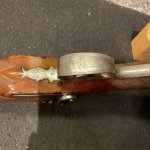
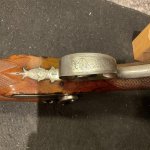
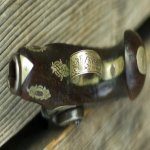
The finial is the term given (on antique guns) to the piece of metal extending immediately forward of the trigger guard. In the past (Pre Pineapple), the finials were any number of different designs, from acorns (common in Britain) to simple plain carvings. What makes the pineapple particularly worthy of mention is that they were absolutely ubiquitous on English sporting guns, and yet are so broad in size and design.
Pineapples today (in the UK at least) are usually fairly standard, but this was less true 200 years ago, and there were a great variety in the size and shape of this particular fruit. This led to such a wide range of different shaped pineapple finials, some very recognizable, others obviously being carved and engraved by craftsmen who, skilled as they were, had obviously never seen one.
This fad sadly lasted only until the age of the breech loading, where the finial once again became a useful part of the gun, and was entirely relegated to history. The next time you feel inspired to take a look at your antique guns, take a look at the pineapple and have a chuckle that vanity never truly changes.
The Unlikely Alliance of Pineapples and Guns
What do pineapples and guns have in common? Absolutely nothing, but tell that to the gunmakers of the early 19th century. Pineapples were the thing to have in the late 18th and early 19th centuries, and their difficulty to grow in Great Britain meant they were expensive, and a sure sign of luxury.
As with all (arguably tasteless) symbols of wealth, they were used to adorn things in the most incongruous way. They’re a decoration on guns you might have looked at a thousand times before and simply brushed over them, however it is a singularly interesting and entirely pointless design choice that they maybe deserve space in this weekly epistle.
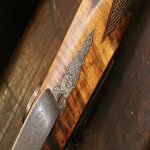
The finial is the term given (on antique guns) to the piece of metal extending immediately forward of the trigger guard. In the past (Pre Pineapple), the finials were any number of different designs, from acorns (common in Britain) to simple plain carvings. What makes the pineapple particularly worthy of mention is that they were absolutely ubiquitous on English sporting guns, and yet are so broad in size and design.
Pineapples today (in the UK at least) are usually fairly standard, but this was less true 200 years ago, and there were a great variety in the size and shape of this particular fruit. This led to such a wide range of different shaped pineapple finials, some very recognizable, others obviously being carved and engraved by craftsmen who, skilled as they were, had obviously never seen one.
This fad sadly lasted only until the age of the breech loading, where the finial once again became a useful part of the gun, and was entirely relegated to history. The next time you feel inspired to take a look at your antique guns, take a look at the pineapple and have a chuckle that vanity never truly changes.