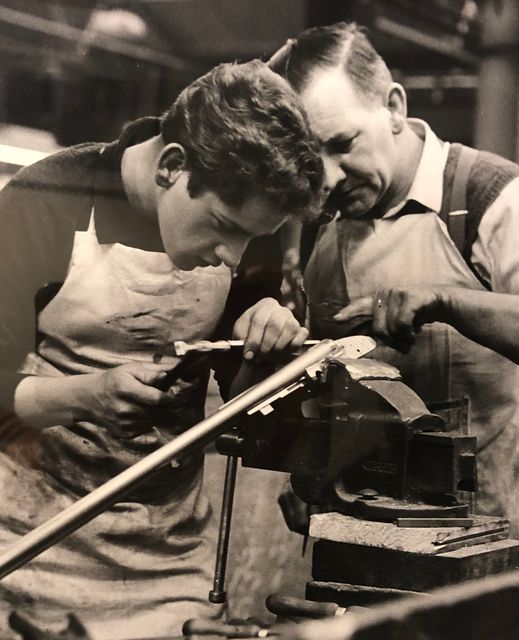
Here we are, the beginning of a new year, with perhaps a bit of time to read a good gun book or two and to ponder about the guns we treasure. Sure, we have CGN threads on fine double guns, engraving, wood stocks, and even the cases guns are found in. But there is little about how guns are made. My interests are in 19th-century guns, so you know I’m going to start there, but the methods and techniques have evolved through the 20th century and are still evolving and improving now.
Forging is the technique of shaping metal using heat and force, often with a hammer. Iron and steel have been forged for over 6,000 years; the Mesopotamians might have been the first to figure out the process, and by about 3,000 years ago, forging techniques and metals had spread throughout the Old World. In the 19th century, modern-day forging techniques were developed, helped by the invention of the steam-powered hammer in 1842 by the Scottish engineer James Hall Nasmyth. Steam-powered forging hammers are still used today, along with hydraulic and electric-powered hammers. Forged steel has a finer grain structure and more tensile strength than, say, a casting. Open die forging is the process of deforming a piece of metal between multiple dies that do not completely encapsulate the material; the metal is shaped by the action of the dies that hammer the material through a series of movements until the required shape is achieved. Closed die forging is a process in which the dies move towards each other and cover the workpiece in whole or in part; one of the first industrial instances of closed die forging was making parts for Samuel Colt’s revolver in 1862. Small parts can be cast from molten steel, resulting in less work to get to the finished shape. Then, there is cold stamping of sheet metal, using dies, into various parts. There are many ways to get to the raw building blocks of a gun.
For today, I’m going to limit myself to double-gun actions. Components of the locks, various small metal parts, and the all-important barrels I’ll leave for another day. There is a lot involved with the making of these, then and now.
I expect most modern gun actions are now made by CNC (Computer Numerical Control) machines, in which computer software dictates the operation of the tools and milling processes. The history of milling machines to work metal is interesting; some credit Eli Whitney, inventor of the cotton gin, as the inventor of the first metal milling machine in 1818, while others credit Henry Maudslay of London as the founding father of machine tool technology, having developed around 1800 a metal lathe to manufacture standard screw thread sizes. Milling takes skilled workmen, and the more complex parts require many steps to reach the finished part. The complicated milling eventually made guns like the Winchester Model 12 simply too expensive to make for the available market, leading to simplified designs and cheaper materials. Machining is also a process for a factory set-up, not so much the simple workbenches that produced the magnificent guns of the 18th and 19th centuries. These were made with hand tools: cold chisels, files, rasps, and drills.
Starting with a blank received from the forge, like this one...:
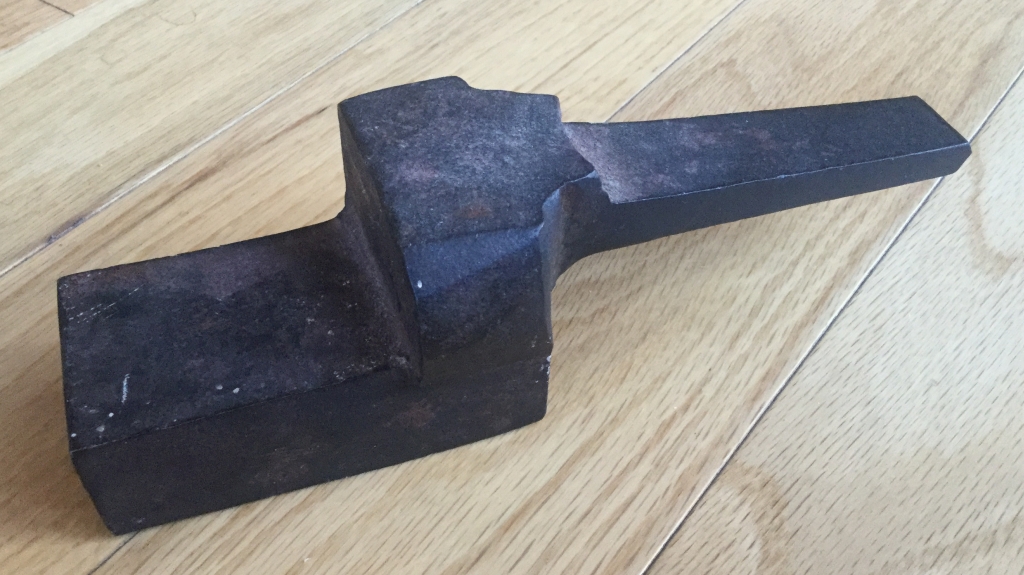
… the craftsman will file, chisel and drill away the unwanted metal, to end up with a beautifully shaped action, ready to have the barrels fitted, and ultimately to be engraved, case-hardened, and finished. Look close-up at the action of a fine double gun, and you will see subtle curves and shaping throughout. Before the days of factory machining, all of these curves were done by hand, coordinated by eye. Shaping metal in this way is a reductive process, i.e. you take away. Take away too much, and you have to start all over again. It would take years of practice and guidance before an apprentice would be allowed to work on a customer’s gun, lest a costly mistake be made! Workmen, be they journeymen or contracted outworkers, developed reputations based on their skill and often signed their work with a mark or initial, independent of the ‘maker’s’ name proudly engraved on the barrel rib. It was not unusual to have the exact same pair of hands building and fitting an action for a gun that would eventually carry a name from any of the top makers. There was little difference in quality, if any, between the top makers, as they bought their component parts from the same sources, and often used the same workmen. But you might have differences in style, and the amount of time and effort in shaping the various metal parts. A ‘best’ gun should not show any compromise towards cheaper manufacturing, and each part should be as perfect as can be attained. Sometimes the small attention to detail can be astounding.
Steel and the final finish wear down over time, more quickly in guns made with perhaps lesser quality forgings. In these three actions you can see the wavy grain flow left over from the forging process, now visible:
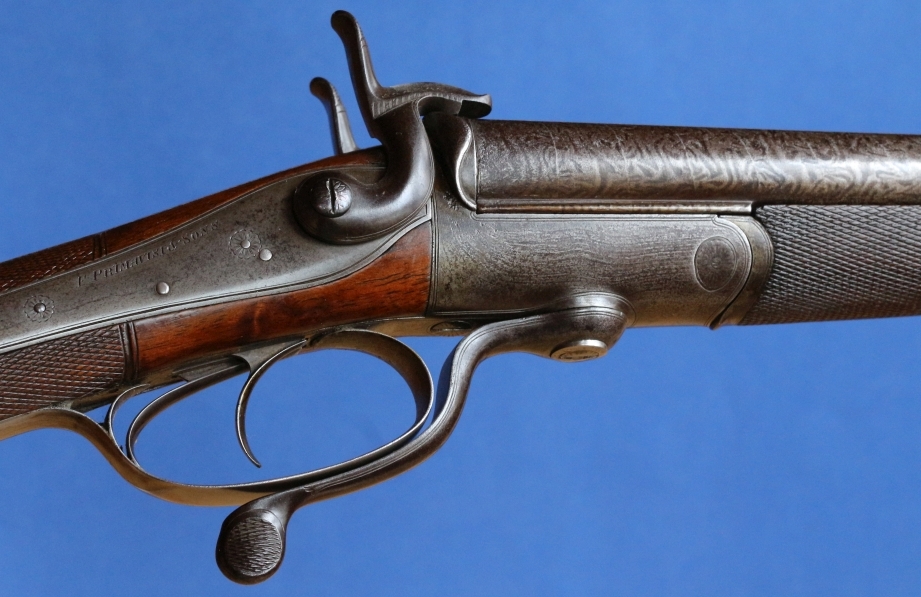
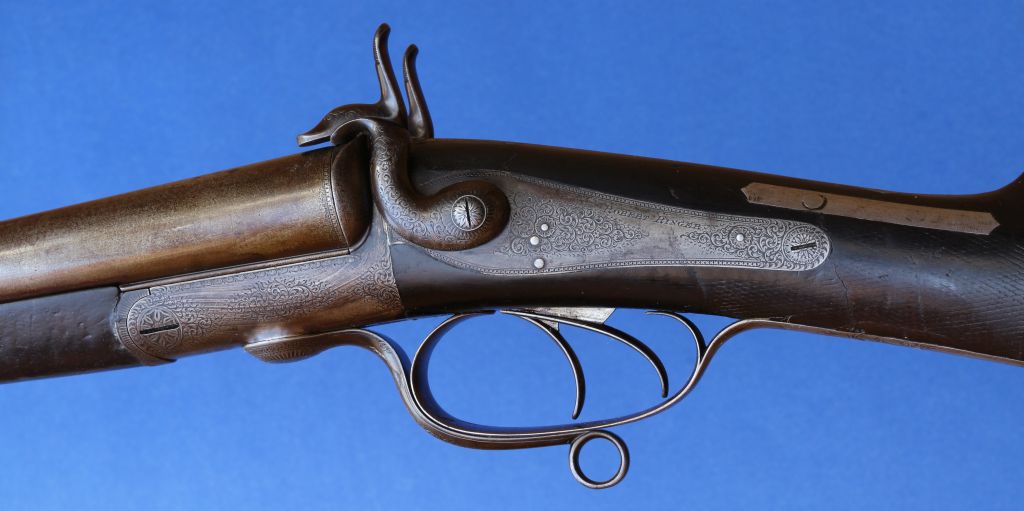
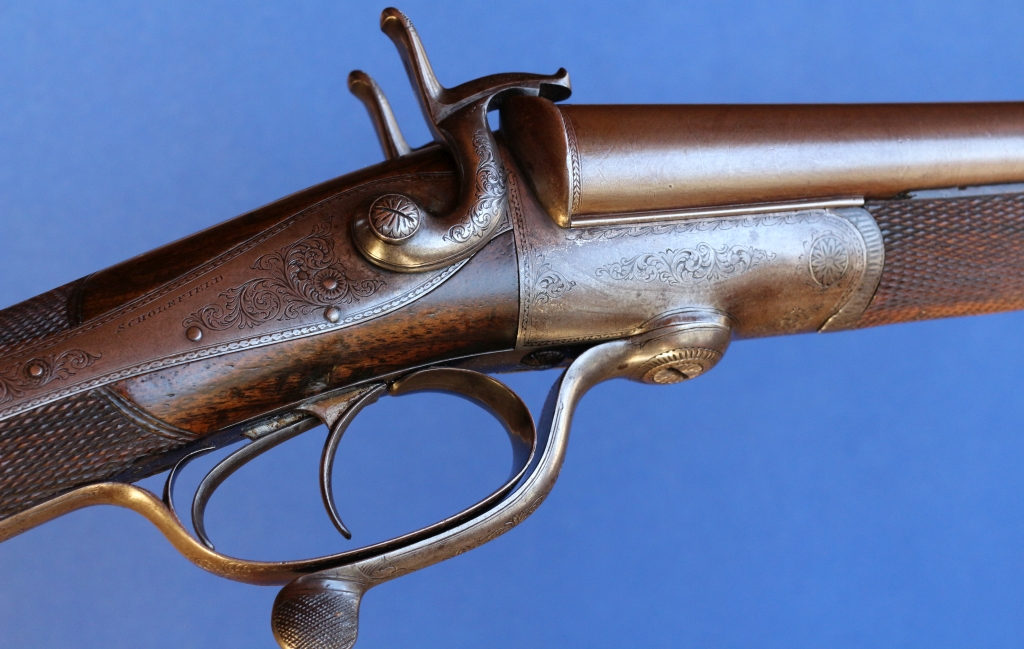
It always surprises me that double gun actions are sculpted. As long as the chisel is harder than the steel it is pushed through, the process almost looks like the sculpting of wood. This allowed action makers to sculpt the beautiful ball-like fences (some call detonators), along with whatever additional flourish they might deem to add:
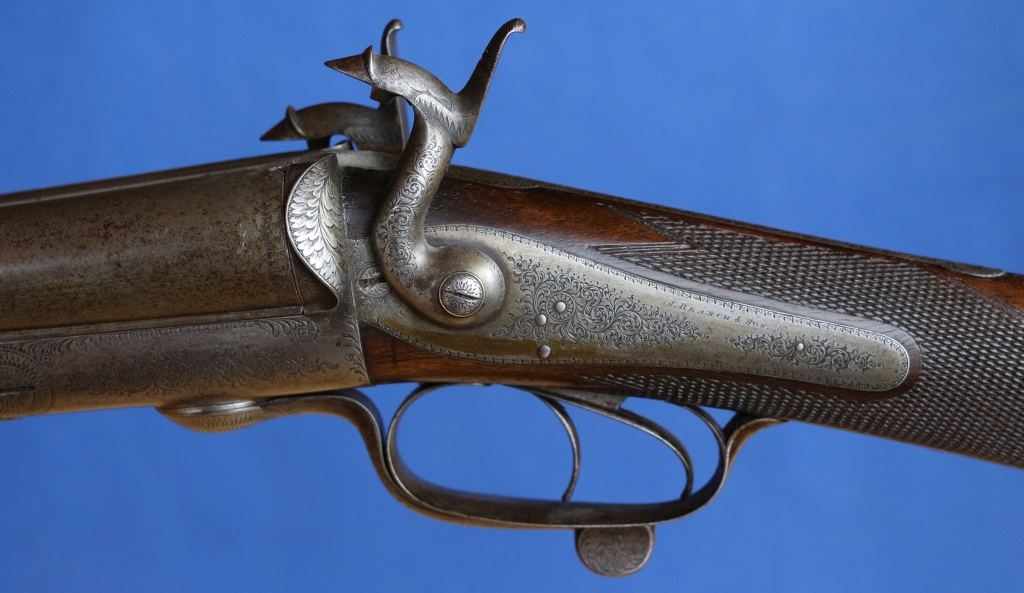
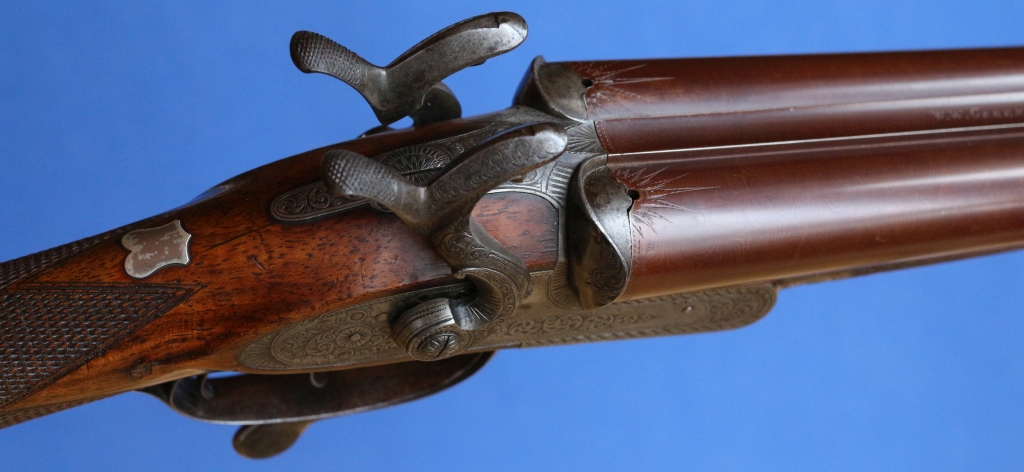
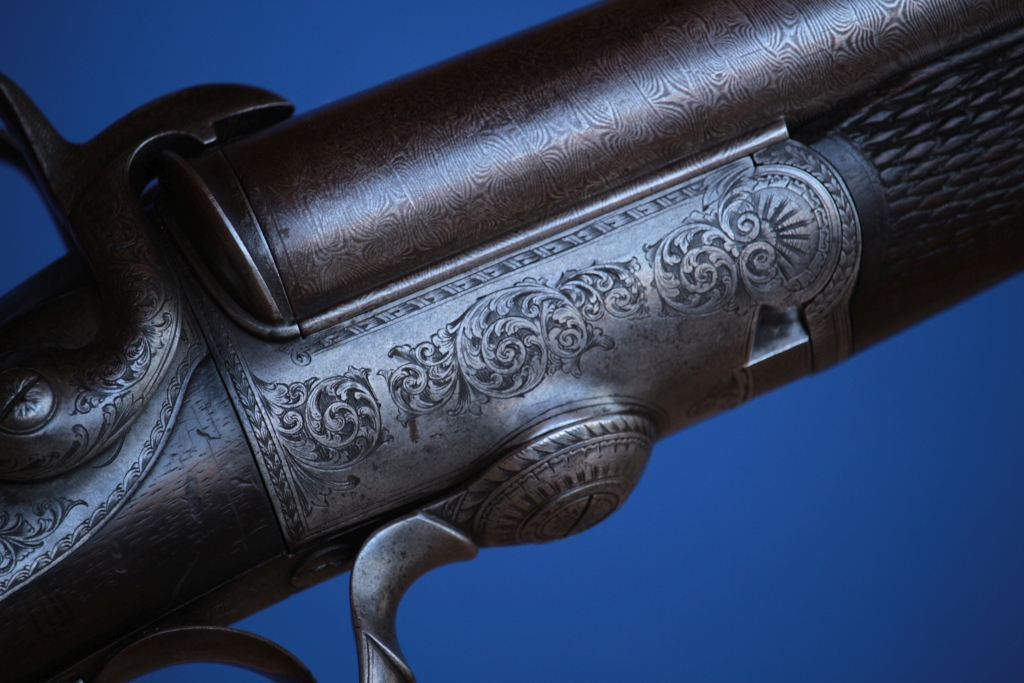
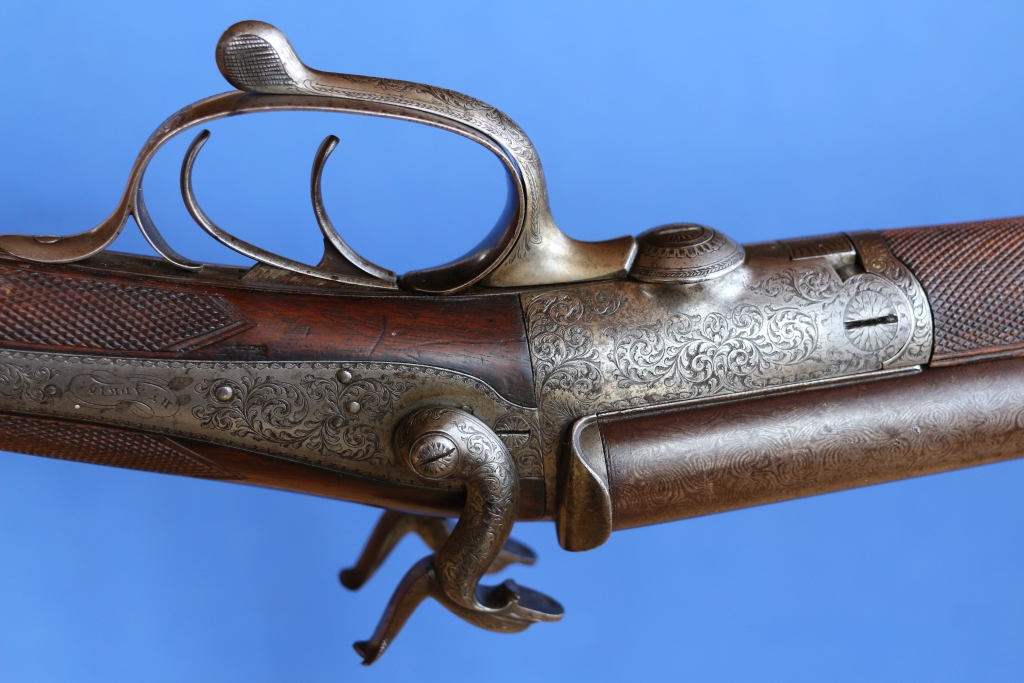
The action bodies themselves often show subtle curves, from chisels and files, where one might expect to see flat surfaces:
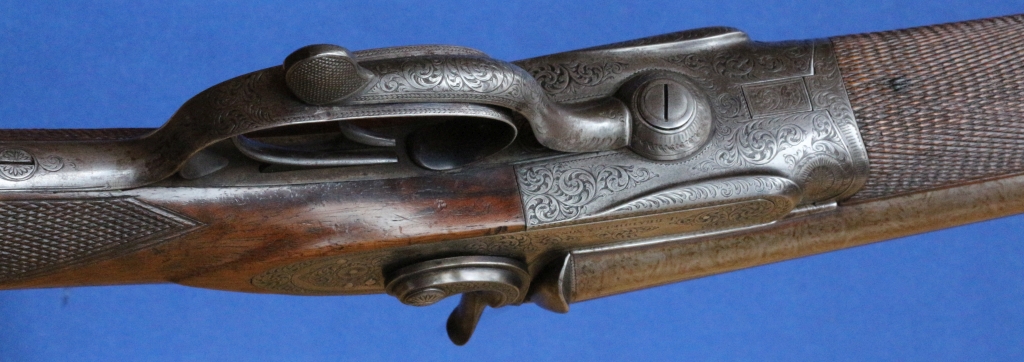
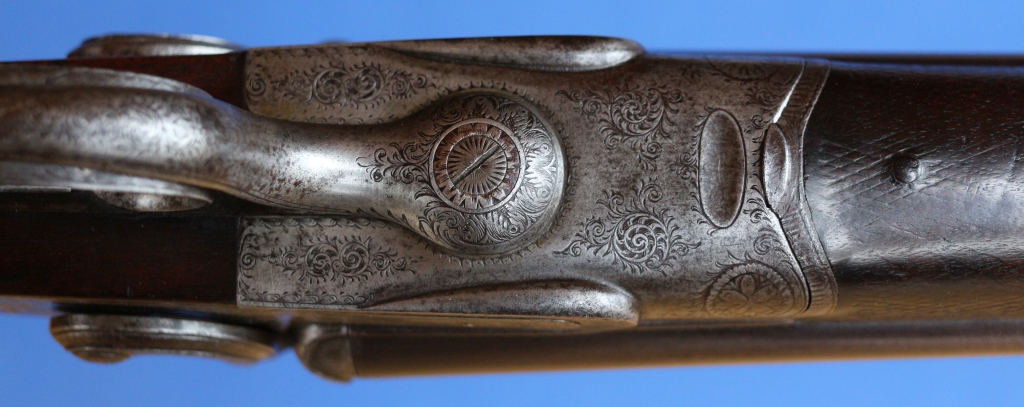
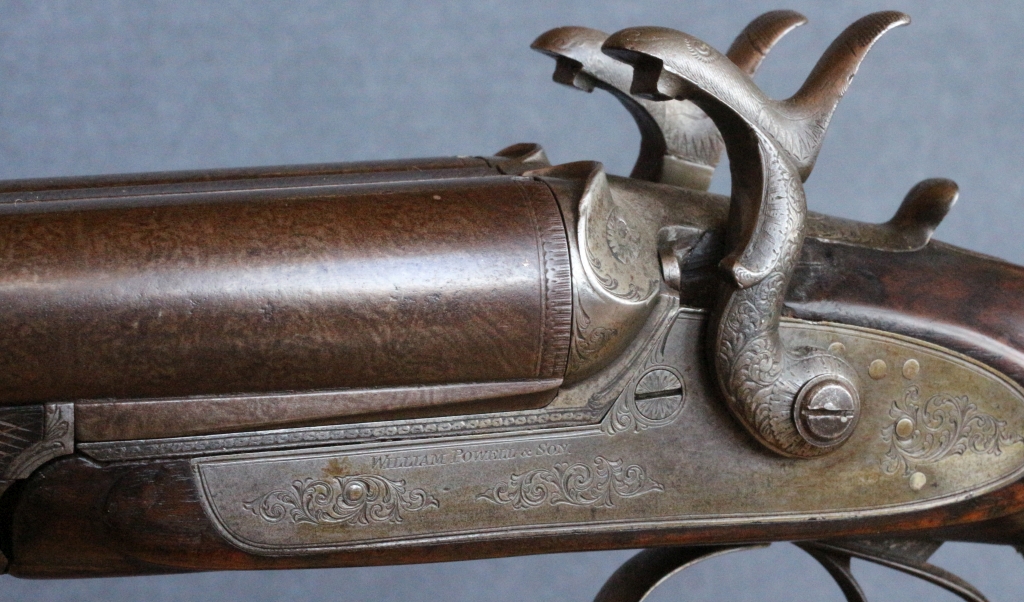
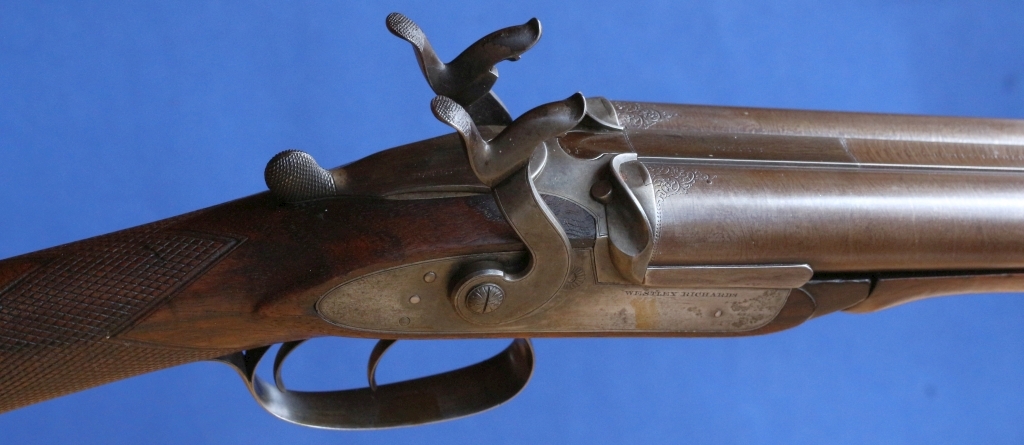
Sometimes you have to look at various angles, to appreciate the subtle curves the makers decided to include:
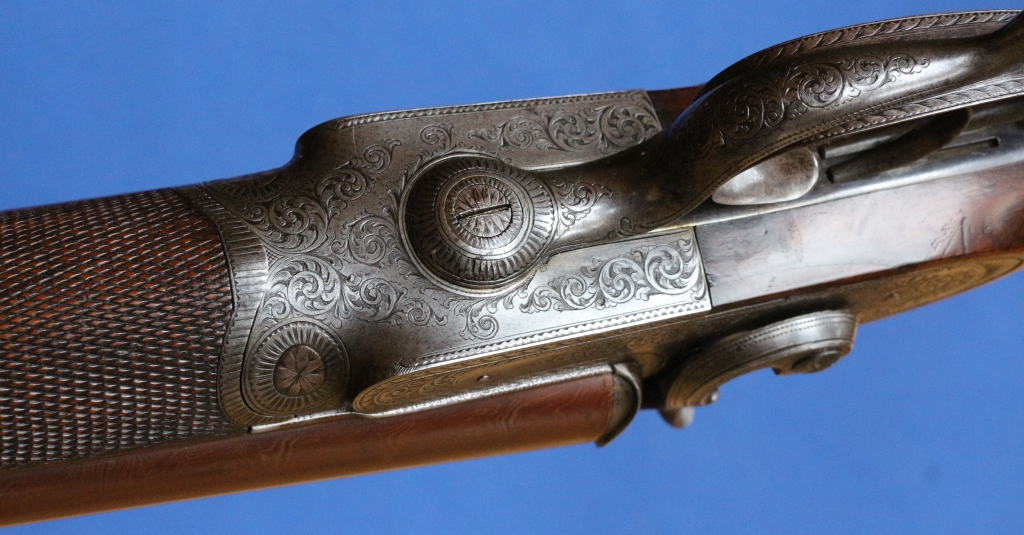
The classic round-body form of the action bar was the mainstay on back-action guns; nowadays it is a ‘feature:’
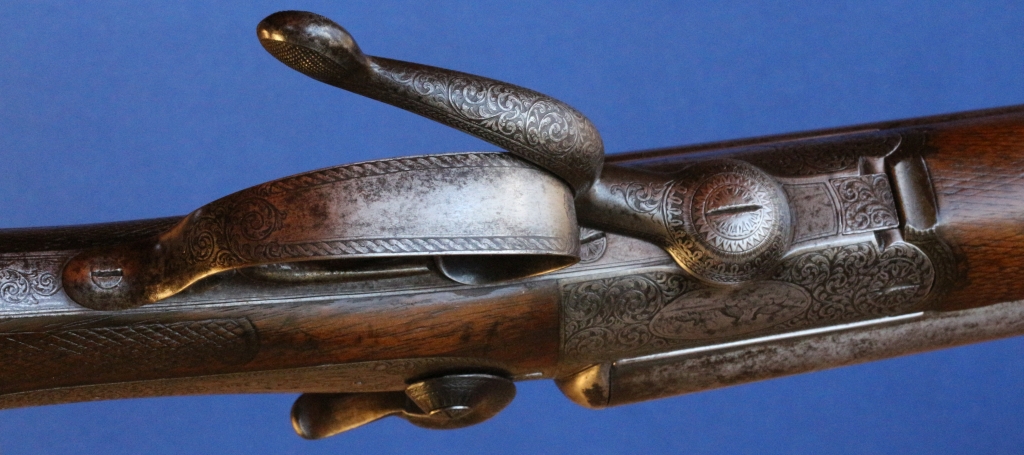
(Note: a ‘round-action’ refers to John Dickson & Son’s original trigger-plate action; a ‘round-body’ is simply a rounding of otherwise square edges, which are nice to look at and more pleasant to carry.)
So, take a moment to consider the skill that went into making double-gun actions out of steel, particularly before, and in the early days of powered machining. Unlike military weaponry at the time, sporting guns were made in small numbers, mostly by hand, and with a care to proportion and geometry that is less common today. Modern doubles tend to imitate the Anson & Deeley boxlock, or the classic sidelock, which is essentially a bar-lock hammer gun with the hammers moved inside. Variations exist, of course, with side-plated boxlocks, elegant trigger-plate actions, and sidelocks with different spring arrangements – there is an exception to everything in gunmaking. But steel is where it all starts, and forging is the very first step of the process, then and now.
Forging is the technique of shaping metal using heat and force, often with a hammer. Iron and steel have been forged for over 6,000 years; the Mesopotamians might have been the first to figure out the process, and by about 3,000 years ago, forging techniques and metals had spread throughout the Old World. In the 19th century, modern-day forging techniques were developed, helped by the invention of the steam-powered hammer in 1842 by the Scottish engineer James Hall Nasmyth. Steam-powered forging hammers are still used today, along with hydraulic and electric-powered hammers. Forged steel has a finer grain structure and more tensile strength than, say, a casting. Open die forging is the process of deforming a piece of metal between multiple dies that do not completely encapsulate the material; the metal is shaped by the action of the dies that hammer the material through a series of movements until the required shape is achieved. Closed die forging is a process in which the dies move towards each other and cover the workpiece in whole or in part; one of the first industrial instances of closed die forging was making parts for Samuel Colt’s revolver in 1862. Small parts can be cast from molten steel, resulting in less work to get to the finished shape. Then, there is cold stamping of sheet metal, using dies, into various parts. There are many ways to get to the raw building blocks of a gun.
For today, I’m going to limit myself to double-gun actions. Components of the locks, various small metal parts, and the all-important barrels I’ll leave for another day. There is a lot involved with the making of these, then and now.
I expect most modern gun actions are now made by CNC (Computer Numerical Control) machines, in which computer software dictates the operation of the tools and milling processes. The history of milling machines to work metal is interesting; some credit Eli Whitney, inventor of the cotton gin, as the inventor of the first metal milling machine in 1818, while others credit Henry Maudslay of London as the founding father of machine tool technology, having developed around 1800 a metal lathe to manufacture standard screw thread sizes. Milling takes skilled workmen, and the more complex parts require many steps to reach the finished part. The complicated milling eventually made guns like the Winchester Model 12 simply too expensive to make for the available market, leading to simplified designs and cheaper materials. Machining is also a process for a factory set-up, not so much the simple workbenches that produced the magnificent guns of the 18th and 19th centuries. These were made with hand tools: cold chisels, files, rasps, and drills.
Starting with a blank received from the forge, like this one...:
… the craftsman will file, chisel and drill away the unwanted metal, to end up with a beautifully shaped action, ready to have the barrels fitted, and ultimately to be engraved, case-hardened, and finished. Look close-up at the action of a fine double gun, and you will see subtle curves and shaping throughout. Before the days of factory machining, all of these curves were done by hand, coordinated by eye. Shaping metal in this way is a reductive process, i.e. you take away. Take away too much, and you have to start all over again. It would take years of practice and guidance before an apprentice would be allowed to work on a customer’s gun, lest a costly mistake be made! Workmen, be they journeymen or contracted outworkers, developed reputations based on their skill and often signed their work with a mark or initial, independent of the ‘maker’s’ name proudly engraved on the barrel rib. It was not unusual to have the exact same pair of hands building and fitting an action for a gun that would eventually carry a name from any of the top makers. There was little difference in quality, if any, between the top makers, as they bought their component parts from the same sources, and often used the same workmen. But you might have differences in style, and the amount of time and effort in shaping the various metal parts. A ‘best’ gun should not show any compromise towards cheaper manufacturing, and each part should be as perfect as can be attained. Sometimes the small attention to detail can be astounding.
Steel and the final finish wear down over time, more quickly in guns made with perhaps lesser quality forgings. In these three actions you can see the wavy grain flow left over from the forging process, now visible:
It always surprises me that double gun actions are sculpted. As long as the chisel is harder than the steel it is pushed through, the process almost looks like the sculpting of wood. This allowed action makers to sculpt the beautiful ball-like fences (some call detonators), along with whatever additional flourish they might deem to add:
The action bodies themselves often show subtle curves, from chisels and files, where one might expect to see flat surfaces:
Sometimes you have to look at various angles, to appreciate the subtle curves the makers decided to include:
The classic round-body form of the action bar was the mainstay on back-action guns; nowadays it is a ‘feature:’
(Note: a ‘round-action’ refers to John Dickson & Son’s original trigger-plate action; a ‘round-body’ is simply a rounding of otherwise square edges, which are nice to look at and more pleasant to carry.)
So, take a moment to consider the skill that went into making double-gun actions out of steel, particularly before, and in the early days of powered machining. Unlike military weaponry at the time, sporting guns were made in small numbers, mostly by hand, and with a care to proportion and geometry that is less common today. Modern doubles tend to imitate the Anson & Deeley boxlock, or the classic sidelock, which is essentially a bar-lock hammer gun with the hammers moved inside. Variations exist, of course, with side-plated boxlocks, elegant trigger-plate actions, and sidelocks with different spring arrangements – there is an exception to everything in gunmaking. But steel is where it all starts, and forging is the very first step of the process, then and now.