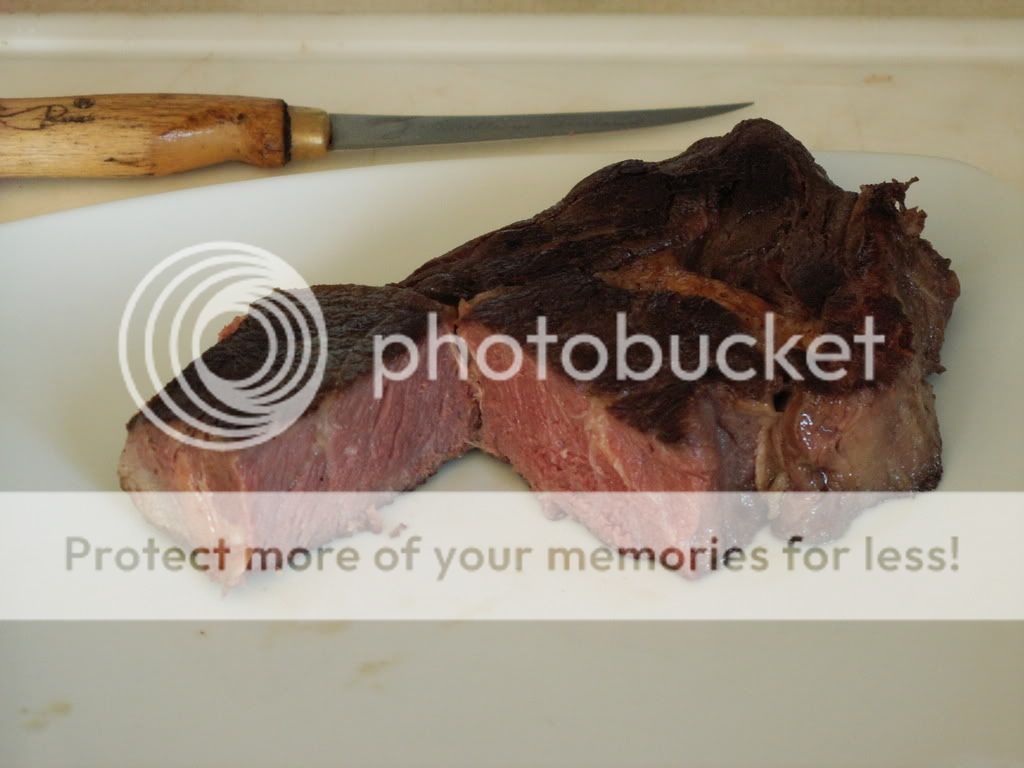
"new" way of cooking game

sjemac

CGN Ultra frequent flyer
Rating - 0%
0   0   0
Sous vide is what it's called. You take a vacuum packer and seal in the meat and flavourings (venison, salt, pepper, olive oil, red onion and hot pepper powder in this case).
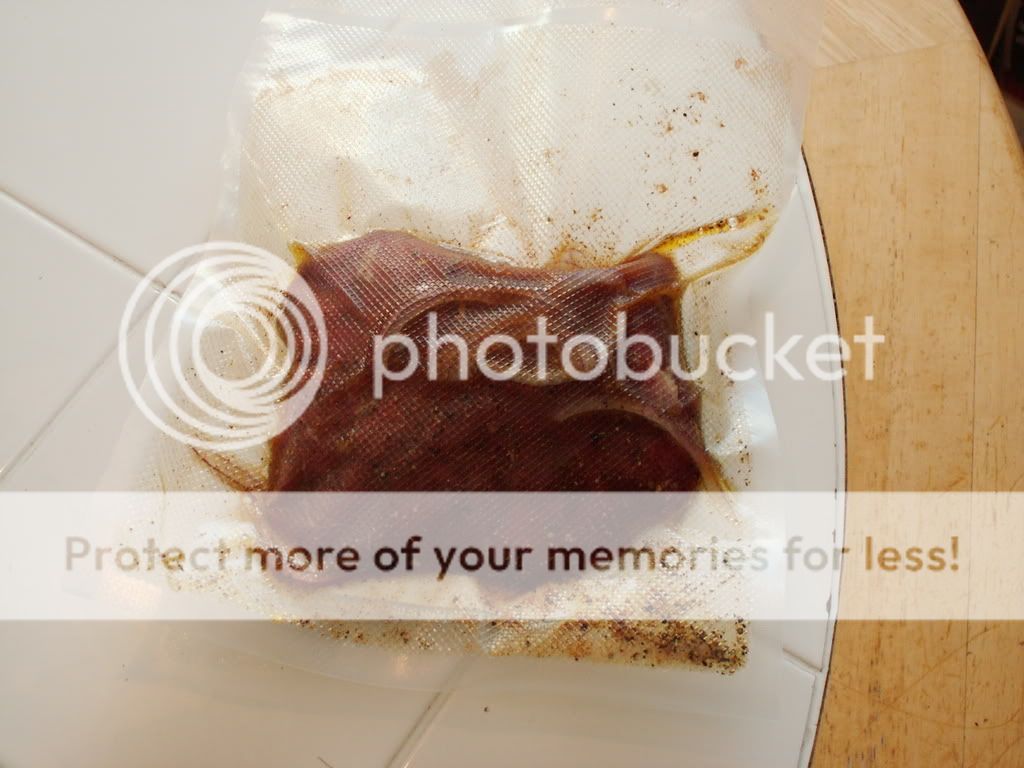
PICT0169.jpg

You use a big pot of water and an immersion circulator that can maintain constant temp for ever. Got this one off e-bay for $50.00. Set the circulator to the desired temp and place the pouch inside. Go watch TV, read a book, mastur ---- err clean the yard -- whatever. It won't matter because the meat will never cook to more than the temp you set.
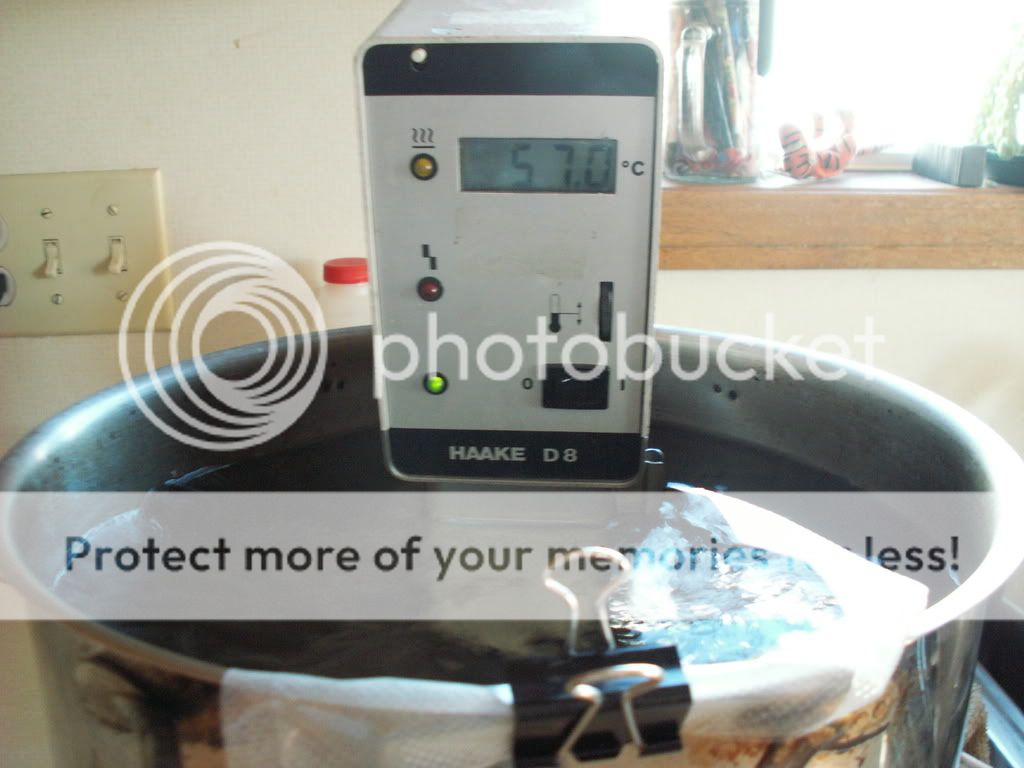
PICT0171.jpg


Sear off in a hot pan (max heat for 20-30 seconds a side), slice and serve (with sauteed oyster mushrooms here). Notice that the meat is med-rare from edge to edge with no grey areas. Amazing flavor, juicy and fork tender.
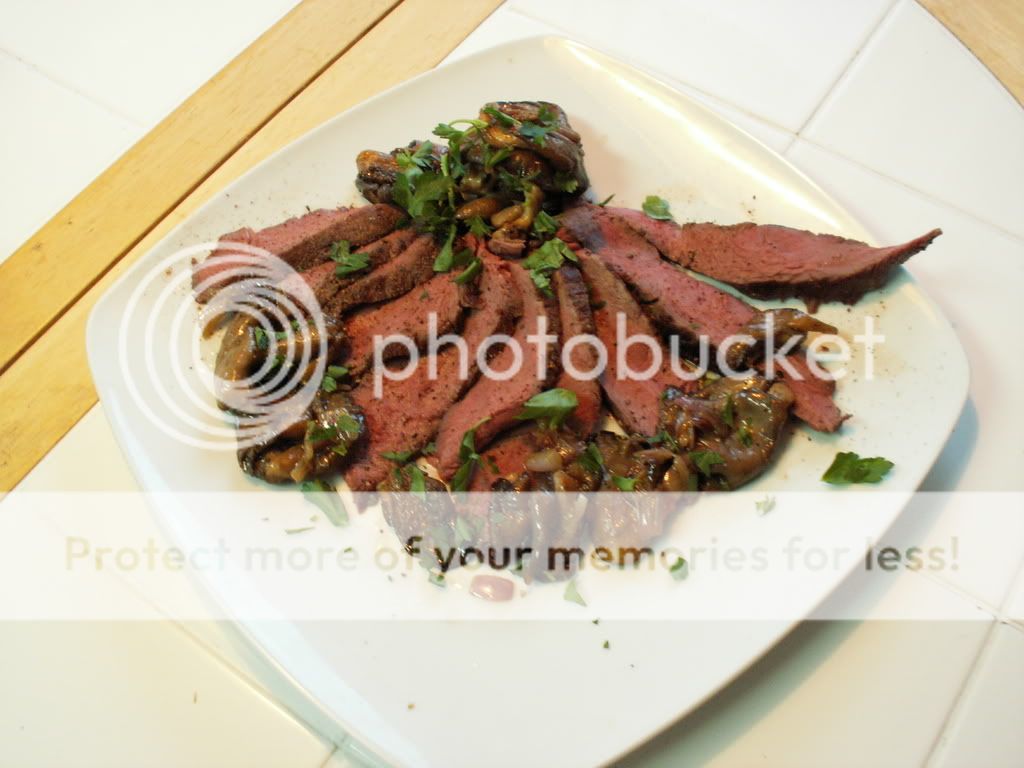
PICT0174.jpg
 
That technique has been used for years overseas. It was invented as a better way to infuse food with flavour and reduce the shrinkage during cooking.

"The sous vide method of preserving and cooking in laminated plastic film sachets is
generally credited to Chef Georges Pralus. Chef Pralus discovered sous vide cooking in
1967 while trying to reduce shrinkage on a foie gras terrine at Restaurant Troisgros in
Roanne, France. He discovered that by packaging the foie gras in a vacuum sealed
plastic pouch and submersing it in a heated water bath with precisely controlled
temperatures, he could reduce shrinkage from 40% to 5%. In addition to the reduced
product loss, Chef Pralus discovered that the sensory properties were significantly
enhanced. The plastic film formed a barrier which prevented the loss of flavor ketones
through evaporation, and the low temperature minimized the destruction of protein."

It was actually feature on Iron Chef on the Food Network back in the orginal episodes with the voice overs.

Very cool ! What made you try it?
 
Last edited:
Very cool ! What made you try it?

I bought a commercial grade vac sealer and when I was researching which one to get I stumbled upon the technique.

Did some trials with simmering water on the stove top and decided the results were good enough to invest in a circulator.

Found 2 used ones on e-bay that I was able to get at the last second because they were labelled incorrectly. Ran some bleach water and then some vinegar through them and then rinsed them up really well.

So far I've done salmon at 110 Farenheit for 45 minutes. If comes out looking raw but having a cooked taste and texture. Eggs for two hours at 60 celsius come out just set from end to end.

I did short ribs at about 55 C and kept them there for 36 hours. They were still pink and med-rare but very tender, just need a quick char and some sauce on the grill.

Chicken at 145 for 2 hours is actually safer than chicken cooked to 160 conventionally and is much more tender.

You use a lot less flavorings because they are always in direct contact with the meat and the scents and flavors don't get vaporised into the air.

Does this require any special kind of plastic that works with the vacuum sealer?

I use Food Saver bags and because you never actually boil them, the temps don't get high enough to cause any leaching. Most cooking is done below 65 degrees C.
 
Yes that certainly does look delicious. I work in the food industry and you can bet I'll be asking our product development cheff (### as he is:rolleyes:) about the method and if we have any equipment stashed away to try it. If not I'll build it cuz that's what I do there;) We prepare frozen entres for large companies like M&M and a few more similar outfits in the US including Walmart and Sam's Club. We do have a vacume pack and seal machine that is collecting dust that I know because I've had to steal the vacume pump of of it for a vacume tumbling drum that infuses spices in chicken breasts. We also recieved a vacum and gas replacement unit that is still in the plastic wrap last week. It removes anbient air and replaces it with Nitrogen then seals it in a microwaveable bowl:D
sjemec you may have created a monster:D:D. Down the road a year or so if you should see a prepackaged and spiced frozen entre that you need only boil slowly at low temerature on the shelf at A&P , M&M or Northern Stores thank sjemec for planting the seed:D
 
Recommended Minimum Internal Cooking Temperature for Venison and Poultry

Type of meat Temperature (°F)

Ground venison, sausage, 165°
Fresh venison (chops, steaks, roasts) 165°

Game Birds/Waterfowl

Breast 170°
Whole bird 180°

This information is from my Wild Game Cookbook. This controlled temp. method of cooking looks very interesting. As others have mentioned, I would be a bit worried about the transfer of plastic toxins to the food.

George
 
Recommended Minimum Internal Cooking Temperature for Venison and Poultry

Type of meat Temperature (°F)

Ground venison, sausage, 165°
Fresh venison (chops, steaks, roasts) 165°

Game Birds/Waterfowl

Breast 170°
Whole bird 180°

This information is from my Wild Game Cookbook. This controlled temp. method of cooking looks very interesting. As others have mentioned, I would be a bit worried about the transfer of plastic toxins to the food.

George

Wondered when the food police would appear?

Those temps are really high even compared to the FDA guidlines and would basically be shoe leather in my house. I wouldn't cook deer meat past 140 EVER unless I was making stew or a chili where I want the meat to fall apart. Chicken breast would be fried or grilled to 150.

Anyway safe food is a matter of both time AND temp

Here's a chart that shows temps and how long food needs to be held at that temp to kill all the micro-organisms

Minimum Internal Minimum processing time in
Temperature minutes or seconds after
minimum temperature is reached


F C Range
130 54.4 112 min. 121 min.
131 55.0 89 min. 97 min.
132 55.6 71 min. 77 min.
133 56.1 56 min. 62 min.
134 56.7 45 min. 47 min.
135 57.2 36 min. 37 min.
136 57.8 28 min. 32 min.
137 58.4 23 min. 24 min.
138 58.9 18 min. 19 min.
139 59.5 15 min. 15 min.
140 60.0 12 min. 12 min.
141 60.6 9 min. 10 min.
142 61.1 8 min. 8 min.
143 61.7 6 min. 6 min.
144 62.2 5 min. 5 min.
145 62.8 4 min.* 4 min.*
146 63.3 169 sec. 182 sec.
147 63.9 134 sec. 144 sec.
148 64.4 107 sec. 115 sec.
149 65.0 85 sec. 91 sec.
150 65.6 67 sec. 72 sec.
151 66.1 54 sec. 58 sec.
152 66.7 43 sec. 46 sec.
153 67.2 34 sec. 37 sec.
154 67.8 27 sec. 29 sec.
155 68.3 22 sec. 23 sec.
156 68.9 17 sec. 19 sec.
157 69.4 14 sec. 15 sec.
158 70.0 0 sec.** 0 sec.**
159 70.6 0 sec.** 0 sec.**
160 71.1 0 sec ** 0 sec.**


You'll see that any meat cooked past 158 is safe period. But that even chicken breasts held at 130 for 2 hours are safe -- and much less dried out.
 
Great post. I've got a foodsaver (kicks butt for storing things like partially used Armacoat bottles, or extra trigger groups, etc by the way!) and I think I'll give this a try.
 
I hope that you have never microwaved any food in a plastic container if you are worried about a vacuum bag also made for storing and heating food.
u know the saying, <get old to soon, get smart to late>
do a google search of, dangers of dioxins with teflon
frying pans. waters poiluted with dioxins have fish that
canot reproduce, fish that have both male and female
organs and all kinds of defects. the fats in foods leech
the dioxins out of the plastics at elevated temps,
i forget the exact temps but i only use cat iron pans.
 
I've been lookign at sous vide for awhile now. 2 things hold me back- cost of equiptment and health dept nazis, who assure everyone that sous vide will give them botulism.:)

Still, sous vide would certainly gie me an excellent product, and all the cool chefs are doing it.:cool:
 
Back
Top Bottom