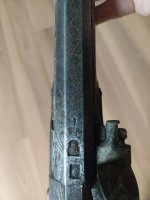
Here's an interesting musket. This one jumped out at me over the latest Switzer auction, as I don't see Spanish firearms of that era very often in Canada.
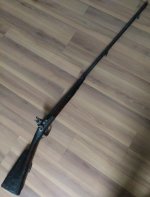
This is a .56 caliber Catalonian made "escopeta" or hunting shotgun. This one is done up in a distinctly French style. I believe the lock to be inspired from a French model 1728 musket. I haven't been able to find the maker yet but it was proofed in Barcelona. Not too sure on age but it's very likely mid to later 18th century, possibly early 19th century at the latest.
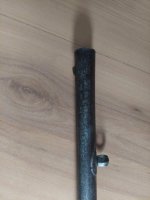
It's missing the frizzen spring, the ramrod and the middle sling hanger. Nothing major, it'll present well on a wall once I get that ugly varnish off the stock and the silver paint off the lock.
Here's a bunch of pictures, let me know what you think.
View attachment 1002872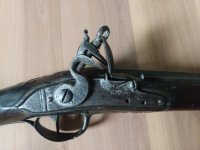
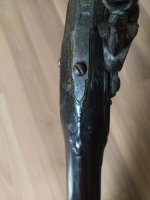
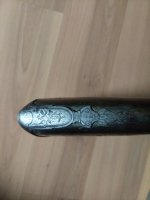
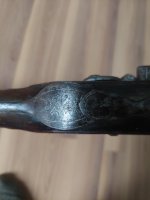
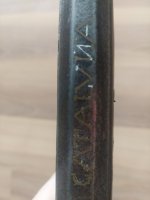
This is a .56 caliber Catalonian made "escopeta" or hunting shotgun. This one is done up in a distinctly French style. I believe the lock to be inspired from a French model 1728 musket. I haven't been able to find the maker yet but it was proofed in Barcelona. Not too sure on age but it's very likely mid to later 18th century, possibly early 19th century at the latest.
It's missing the frizzen spring, the ramrod and the middle sling hanger. Nothing major, it'll present well on a wall once I get that ugly varnish off the stock and the silver paint off the lock.
Here's a bunch of pictures, let me know what you think.
View attachment 1002872