
Maple Leaf Up













































You are using an out of date browser. It may not display this or other websites correctly.
You should upgrade or use an alternative browser.
You should upgrade or use an alternative browser.
Winchester 1895 Carbine
- Thread starter Bigcrigger
- Start date
I have my grandfather's civilian version 1895 that is chambered in 30 U.S. (30/40); it was manufactured in 1898. This is that rifle with him and two mulies up the Bull River, circa 1940.

I often wonder how my grandfather was able to align that razor blade thin front blade in the notch in the rear sight. When I inherited it from my father, I had Bill Leeper fabricate an identical appearing front sight about the thickness of the blade front sight on a Lee Enfield No.4 Mk1 to go with a replica of the Lyman no-drill aftermarket rear sight.
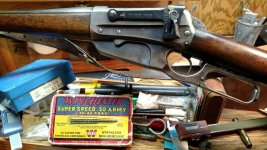
I hunted with it a bit as a kid from time to time and remembered my father telling me he couldn't get much for grouping ability from it with either commercial loads or handloads. Once Dad died and it passed to me, I tried fixing the problem my Dad hadn't solved.
The short story is that after a lot of failure I slugged the barrel and it is almost like they took a barrel destined for the .303 Savage rifles and then chambered it in 30 US and put it on this rifle. As soon as I ran a .303 Lyman M die into the case necks and seated .303 caliber bullets, the grouping issues were cut in half.
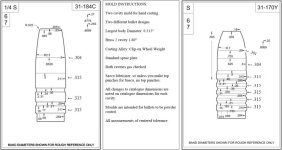
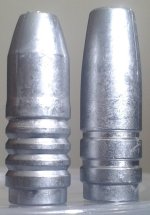
I expanded on that finding by slugging and measuring the chamber's bore seat and lead, and then had Accurate Moulds cut a custom mould for a WFN bullet design for hunting. That resulted in 2 MOA groupings with 2200 fps at the muzzle, out to 200 yards with that rifle and the aperture sights off the bench. Problems solved.
I'm not much of a lever action guy, but I would probably like the 1895 even if this one wasn't my grandfather's. I take it out hunting once or twice a year in the riparian bottomlands along the same Bull River that my grandfather hunting. It worked just as well as any other rifle in my gun safe on the deer that I have an opportunity to shoot with it.
I often wonder how my grandfather was able to align that razor blade thin front blade in the notch in the rear sight. When I inherited it from my father, I had Bill Leeper fabricate an identical appearing front sight about the thickness of the blade front sight on a Lee Enfield No.4 Mk1 to go with a replica of the Lyman no-drill aftermarket rear sight.
I hunted with it a bit as a kid from time to time and remembered my father telling me he couldn't get much for grouping ability from it with either commercial loads or handloads. Once Dad died and it passed to me, I tried fixing the problem my Dad hadn't solved.
The short story is that after a lot of failure I slugged the barrel and it is almost like they took a barrel destined for the .303 Savage rifles and then chambered it in 30 US and put it on this rifle. As soon as I ran a .303 Lyman M die into the case necks and seated .303 caliber bullets, the grouping issues were cut in half.
I expanded on that finding by slugging and measuring the chamber's bore seat and lead, and then had Accurate Moulds cut a custom mould for a WFN bullet design for hunting. That resulted in 2 MOA groupings with 2200 fps at the muzzle, out to 200 yards with that rifle and the aperture sights off the bench. Problems solved.
I'm not much of a lever action guy, but I would probably like the 1895 even if this one wasn't my grandfather's. I take it out hunting once or twice a year in the riparian bottomlands along the same Bull River that my grandfather hunting. It worked just as well as any other rifle in my gun safe on the deer that I have an opportunity to shoot with it.

Bigcrigger
Regular
What a story! Incredibly interesting. It’s great to see a rifle handed down from generation to generation like that.I have my grandfather's civilian version 1895 that is chambered in 30 U.S. (30/40); it was manufactured in 1898. This is that rifle with him and two mulies up the Bull River, circa 1940.
View attachment 1024661
I often wonder how my grandfather was able to align that razor blade thin front blade in the notch in the rear sight. When I inherited it from my father, I had Bill Leeper fabricate an identical appearing front sight about the thickness of the blade front sight on a Lee Enfield No.4 Mk1 to go with a replica of the Lyman no-drill aftermarket rear sight.
View attachment 1024662
I hunted with it a bit as a kid from time to time and remembered my father telling me he couldn't get much for grouping ability from it with either commercial loads or handloads. Once Dad died and it passed to me, I tried fixing the problem my Dad hadn't solved.
The short story is that after a lot of failure I slugged the barrel and it is almost like they took a barrel destined for the .303 Savage rifles and then chambered it in 30 US and put it on this rifle. As soon as I ran a .303 Lyman M die into the case necks and seated .303 caliber bullets, the grouping issues were cut in half.
I expanded on that finding by slugging and measuring the chamber's bore seat and lead, and then had Accurate Moulds cut a custom mould for a WFN bullet design for hunting. That resulted in 2 MOA groupings with 2200 fps at the muzzle, out to 200 yards with that rifle and the aperture sights off the bench. Problems solved.
View attachment 1024663
View attachment 1024664
I'm not much of a lever action guy, but I would probably like the 1895 even if this one wasn't my grandfather's. I take it out hunting once or twice a year in the riparian bottomlands along the same Bull River that my grandfather hunting. It worked just as well as any other rifle in my gun safe on the deer that I have an opportunity to shoot with it.
I missed on an estate 40-72 being sold in town for a few hundred dollars. Dad was still alive so I didn't have Grandpop's Model 95 yet, and I figured I would have fun with the 40-72 by loading it down with Unique or something similar and bulk commercial .40 pistol bullets. A different way of going gopher hunting during the summer.What a story! Incredibly interesting. It’s great to see a rifle handed down from generation to generation like that.
The worst thing about missing that rifle is that the guy who bought it had no idea what he'd gotten his hands on, he just wanted a truck rifle and as it sold with about ten boxes of ammunition, I guess he figured he was good for a while. I tried to track him down through the seller, but never did come up with a name.
The bore in this 95 of my Grandpop's is pretty pristine, despite the corrosive primers of those days. He was a fitter and turner by trade who immigrated here from Scotland to work for the railroads here, so my assumption is that he knew of the damage that the corrosive primers of the day could do, and used a machinist's care to properly clean and oil the bore after firing. A lot of 1895's from back then (i.e. circa 1898 on to the first part of the 1900s) are likely to have damaged bores due to inadequate cleaning from ammunition with those corrosive primers.
The way out of spec ball seat, leade, and .303 dimension bore may or may not be common in 1895 rifles of any caliber; a Winchester collector might have more knowledge of that. But it's a reality for my rifle.
One way to deal with grouping problems if the bore is bad or out of spec on these or other older rifles, including milsurps like Lee Enfields, is to use a bullet mould that drops bullets that give you a good tight fit. That is one advantage they have over jacketed bullets when you find your barrel is out of normal spec for the caliber it is chambered in. Powder coating makes bullet casting so easy peasy these days, once you understand the relationship between the bullet's fit into the ball seate/leade and matching Brinell hardness to your reloads' operating pressures.
Bigcrigger
Regular
My pistol grip 1895 was originally in 38-72 but has since been rebarreled for .303 brit. I’ve thought about getting a 38-72 barrel for it and loading for it but for how accessible .303 is I just can’t complain.I missed on an estate 40-72 being sold in town for a few hundred dollars. Dad was still alive so I didn't have Grandpop's Model 95 yet, and I figured I would have fun with the 40-72 by loading it down with Unique or something similar and bulk commercial .40 pistol bullets. A different way of going gopher hunting during the summer.
The worst thing about missing that rifle is that the guy who bought it had no idea what he'd gotten his hands on, he just wanted a truck rifle and as it sold with about ten boxes of ammunition, I guess he figured he was good for a while. I tried to track him down through the seller, but never did come up with a name.
The bore in this 95 of my Grandpop's is pretty pristine, despite the corrosive primers of those days. He was a fitter and turner by trade who immigrated here from Scotland to work for the railroads here, so my assumption is that he knew of the damage that the corrosive primers of the day could do, and used a machinist's care to properly clean and oil the bore after firing. A lot of 1895's from back then (i.e. circa 1898 on to the first part of the 1900s) are likely to have damaged bores due to inadequate cleaning from ammunition with those corrosive primers.
The way out of spec ball seat, leade, and .303 dimension bore may or may not be common in 1895 rifles of any caliber; a Winchester collector might have more knowledge of that. But it's a reality for my rifle.
One way to deal with grouping problems if the bore is bad or out of spec on these or other older rifles, including milsurps like Lee Enfields, is to use a bullet mould that drops bullets that give you a good tight fit. That is one advantage they have over jacketed bullets when you find your barrel is out of normal spec for the caliber it is chambered in. Powder coating makes bullet casting so easy peasy these days, once you understand the relationship between the bullet's fit into the ball seate/leade and matching Brinell hardness to your reloads' operating pressures.

Still gotta find a proper butt plate for it.
I had an 1895 built in 1910 a few years back, the rifling was pretty worn down but the barrel was still 30” long, so it had plenty of time to stabilize the projectile.
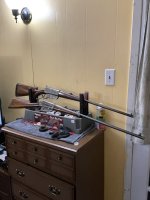
I haven’t gotten into reloading yet but once I do get a little room put together for it I’m sure your advice will come in handy. The flatside does decent groups and the carbine isn’t too bad either but I feel like doing what you did would certainly help out.
I haven’t gotten into reloading yet but once I do get a little room put together for it I’m sure your advice will come in handy. The flatside does decent groups and the carbine isn’t too bad either but I feel like doing what you did would certainly help out.
Reloading adds a world of possibilities to shooting old rifles, particularly in old calibers where you don't find the ammunition at your local WalMart.
Particularly if you want to shoot a lot. At the price of factory ammunition, for the old calibers I think it is a no brainer. Even for calibers fairly still easy to buy like .303 British. And when you have bores that allow you to use bulk pistol bullets of a similar bore diameter, for just plinking away in the back 40 with mild loads, it doesn't get better than that for minimizing the expenses of doing a lot of shooting.
I've seen some friends living in one bedroom apartments doing some pretty advanced reloading and bullet casting in postage stamp size places using something like one of those Workmate work benches to mount their equipment on. Watching them, it isn't actually a handicap - it's just a pain in the azz that, first they have to set it up, and then when they're done they have to take everything down and store it away in some sort of storage space that isn't subject to freezing temperatures and moisture.
To cross over into reloading, after 50+ years of using assorted presses from Hollywood and Bair to begin with, then RCBS, I have come to the conclusion that I could pretty much buy the rest of my reloading equipment used at gun shows and save a fair amount of money if my wallet was tight. But I would still go out and buy another one of the Bonanza (now Forester) Co-Ax presses that I have been using ever since those early days of using conventional presses. There's a reason you so seldom see them for sale used...
The ease of rapidly switching back and forth between dies by sliding them in and out rather than screwing them in and out just makes life so much easier, especially when doing different operations. That, and the universal shell holder... I'm sold for life on the Co-Ax press.






















