The coolest 9mm ever!

Feasible I guess but how much would that cost to do under $20,000 do you think?

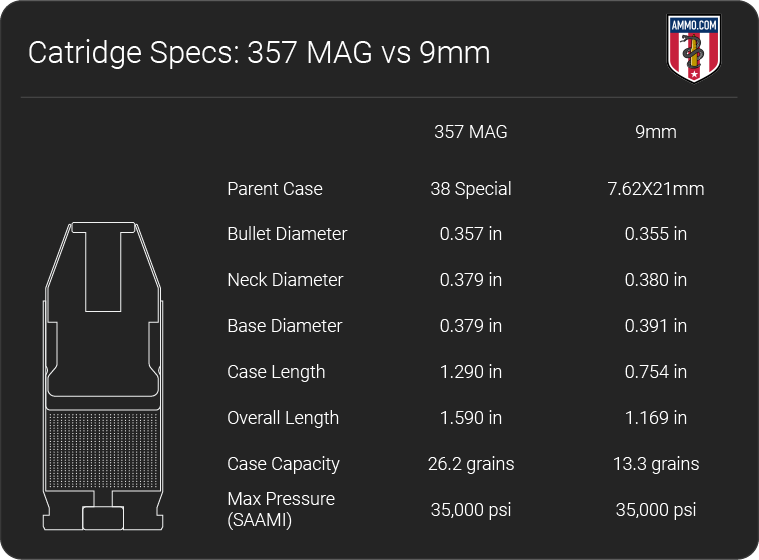
Plus, unless you want to throw away that $20,000 investment you would still need to handload the 9mm down to basically the same power as a French Model 1892 8mm Lebel revolver that come up for sale at around $2000 as an antique Colt SAA is only safely rated to regular use at about 12,000 PSI compared to a 9mm at 35,000 PSI (same as a .357 mag) or close to 3 times it's limit.

So this is basically irresponsible advice that few smart enough should follow.


updated-357-MAG-vs-9mm-dimension-chart.png

Honest question for you

If it's a new manufacture ie modern steel barrel and cylinder, why wouldn't the frame handle it? Isn't the cylinder and barrel the pressure bearing components?

As well, they were made in 45lc back in the day. That has to be a fairly high pressure as well, yet it was safe with pre 1900 steel?

Personally, even with modern guns, I load light. Im only shooting paper so why kick the #### out of the gun
 
Last edited:
If it’s actually 20k ish to get everything done, I’d be able to shoot a lot of expensive billets with the 10k I saved on conversion lol.

Not that I have 10k to start with
 
If it’s actually 20k ish to get everything done, I’d be able to shoot a lot of expensive billets with the 10k I saved on conversion lol.

Not that I have 10k to start with
In my view, it's worth it to have a gun that you can readily get components for, that you can actually use and pass onto your children so they can enjoy our sport
 
Honest question for you

If it's a new manufacture ie modern steel barrel and cylinder, why wouldn't the frame handle it? Isn't the cylinder and barrel the pressure bearing components?

As well, they were made in 45lc back in the day. That has to be a fairly high pressure as well, yet it was safe with pre 1900 steel?

Personally, even with modern guns, I load light. Im only shooting paper so why kick the #### out of the gun
Frames on these old malleable iron (less strong than even mild steel) black powder era Colts stretch very easily shooting hot smokeless powder loads, let alone ones generating 35,000 psi.

Malleable iron is a type of cast iron that has been heat-treated to make it more durable, ductile, and tough, similar to low grade mild steel. It is made by heating brittle white cast iron to decompose its iron carbide into iron and carbon, resulting in a microstructure of tempered carbon nodules.

Frame stretch on an original black powder Colt SAA is the risk of deformation and potential failure when shooting it with smokeless powder, which is a much more powerful propellant than black powder. These original "iron frames" were made with older metallurgy not designed for the sudden, explosive pressure of smokeless powder, and using it can cause the frame to stretch or even break. To prevent frame stretch, it is crucial to use only black powder or black powder equivalents in antique guns with frames made before 1900.

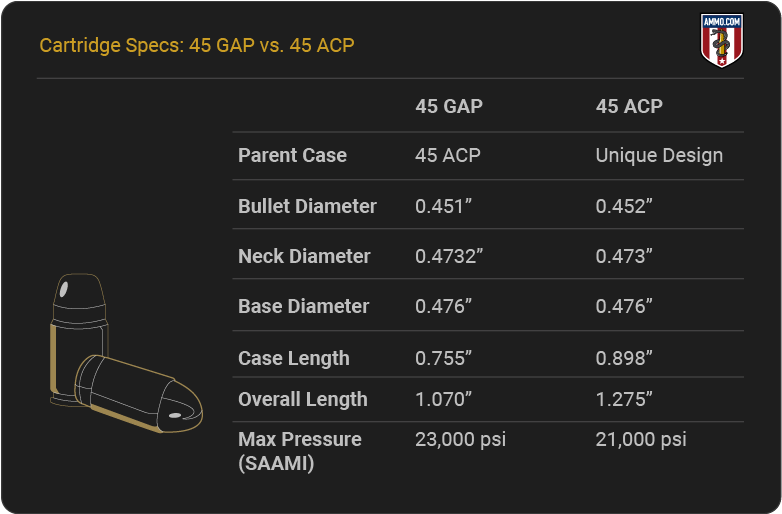
I know a fellow who bought an antique one back when you used to be able to buy them a lot cheaper and get them changed to a not prohibited calibre and he also got a new .45 ACP cylinder and barrel for it. Well he started to shoot smokeless .45 ACP ammo which is only about 21,000 psi and after a while he started to notice the cylinder binding and then stop turning altogether. Plus he had also noticed it was now emitting a lot of flame from the cylinder gap while shooting.

He took it too a gunsmith who told him it is now junk as the frame had bent and stretched way far too much to ever repair it.

45-gap-vs-45-acp-cartridge-specs.png
 
Frames on these old malleable iron (less strong than even mild steel) black powder era Colts stretch very easily shooting hot smokeless powder loads, let alone ones generating 35,000 psi.

Malleable iron is a type of cast iron that has been heat-treated to make it more durable, ductile, and tough, similar to low grade mild steel. It is made by heating brittle white cast iron to decompose its iron carbide into iron and carbon, resulting in a microstructure of tempered carbon nodules.

Frame stretch on an original black powder Colt SAA is the risk of deformation and potential failure when shooting it with smokeless powder, which is a much more powerful propellant than black powder. These original "iron frames" were made with older metallurgy not designed for the sudden, explosive pressure of smokeless powder, and using it can cause the frame to stretch or even break. To prevent frame stretch, it is crucial to use only black powder or black powder equivalents in antique guns with frames made before 1900.

I know a fellow who bought an antique one back when you used to be able to buy them a lot cheaper and get them changed to a not prohibited calibre and he also got a new .45 ACP cylinder and barrel for it. Well he started to shoot smokeless .45 ACP ammo which is only about 21,000 psi and after a while he started to notice the cylinder binding and then stop turning altogether. Plus he had also noticed it was now emitting a lot of flame from the cylinder gap while shooting.

He took it too a gunsmith who told him it is now junk as the frame had bent and stretched way far too much to ever repair it.

45-gap-vs-45-acp-cartridge-specs.png
What if it was one of the so called "smokeless" frames? I know that term isn't technically correct, but my understanding on these was when they changed the cylinder retention system, they also went away from iron and started using steel?
 
What if it was one of the so called "smokeless" frames? I know that term isn't technically correct, but my understanding on these was when they changed the cylinder retention system, they also went away from iron and started using steel?
The real "smokeless" Colt SAA "steel" frames did not gradually appear until around 1903 the historians and experts say or claim, even the early ones with the button to remove the cylinder pin are still malleable iron and not safe for the more sudden and higher pressure smokeless powder.

Plus they still had stocks of the older malleable iron to use up before they switched manufacture over completely. They did use the newer what is today low grade mild steel in parts like the barrels and cylinders first. the receivers generally were the last to switch over. S&W and Remington did not fully switch over until even later on all their models.

One of Remington's first to switch was their rolling block receivers manufactured with a switch from using malleable iron to forged steel only around the early turn of the 20th century to accommodate the higher pressures of early smokeless full powder rifle cartridges. Some claim this was started in 1902.

BTW, the original .45 Colt BP load was only 11,000 psi.

Even the modern smokeless SAAMI spec stuff is only rated at 12,000 psi just in case someone fires a few in a older BP Colt. You can do it, but after awhile you will wear the gun out way faster than if you were sticking to softer on the gun BP loads.
 
What if it was one of the so called "smokeless" frames? I know that term isn't technically correct, but my understanding on these was when they changed the cylinder retention system, they also went away from iron and started using steel?
You would be outside of the antique status date to get a “smokeless” frame

Edit Mkrnel beat me to it with a much more thoughtful response
 
Here's another thought. What part of the 1873 SAA is considered the firearm? If it is somehow (which i doubt very much) the grip and trigger guard portion, that may open up this discussion a bit more
 
Here's another thought. What part of the 1873 SAA is considered the firearm? If it is somehow (which i doubt very much) the grip and trigger guard portion, that may open up this discussion a bit more
The receiver, not the trigger guard and backstrap.

Malleable iron or wrought iron for the receivers? I thought the receivers were forged wrought iron, not cast malleable iron.
 
I'm definitely getting one of these if we can ever buy/sell handguns again.
Taylor's and Company TC-9 revolver.
An 1873 Colt clone chambered in 9mm Luger. It would be fun and cheap( ish) to shoot.
Also, way prettier than a Glock or Sig.View attachment 1040351
SAAs are unique and I think that everyone who has one would recommend owning one! Fun to shoot, beautiful to look at and great to hold.
 
The receiver, not the trigger guard and backstrap.

Malleable iron or wrought iron for the receivers? I thought the receivers were forged wrought iron, not cast malleable iron.
BP 1st gen Colt's single-action Army revolvers used a malleable iron frame construction.

Malleable iron was a common material for the frames or receivers of most firearms during that era due to its strength and ability to be easily cast, forged and then machined, making it suitable for early production processes. True steel frames in Colt revolvers were introduced much later in the manufacturing process, becoming standard among most firearm makers in the early 20th century.

Cast iron is a class of brittle iron–carbon alloys with a carbon content of more than 2% and silicon content around 1–3%. Its usefulness derives from its relatively low melting temperature. The alloying elements determine the form in which its carbon appears: while cast iron has its carbon combined into the iron carbide compound cementite, which is very hard, but brittle, as it allows cracks to pass straight through.

Malleable iron is cast as white iron, the structure being a metastable carbide in a pearlitic matrix. Through an annealing heat treatment, the brittle structure as first cast is transformed into the malleable form. Carbon agglomerates into small roughly spherical aggregates of graphite, leaving a matrix of ferrite or pearlite according to the exact heat treatment used.

Malleable iron was used as early as the 4th century BCE, and archaeologists have found malleable iron artifacts made in China between 4th century BCE and 9th century CE. By the Tang dynasty, the use of malleable iron in China waned, although there are malleable iron artifacts dating to the 9th century. Malleable iron is first mentioned in England in a patent dating to the 1670s. Réaumur conducted extensive research on malleable iron in 1720. He discovered that iron castings which were too hard to be worked could be softened by packing them into iron ore or hammer slag and exposing them to extreme high temperature for a number of days. Creating malleable iron began in the United States in 1826 when Seth Boyden started a foundry for the production of harness hardware and other small castings.

Three basic types of malleable iron are recognized within the casting industry: blackheart, whiteheart, and pearlitic. malleable iron still has a legitimate place in the design engineer's toolbox. Malleable iron is a good choice for small castings or castings with thin cross sections (less than 0.25-inch, 6.35 mm).

Malleable iron also exhibits better fracture toughness properties in low temperature environments than other nodular irons, due to its lower silicon content. The ductile to brittle transition temperature is lower than many other ductile iron alloys. It is still often used for small castings requiring good tensile strength and the ability to flex without breaking (ductility). Uses include electrical fittings, hand tools, pipe fittings, washers, brackets, fence fittings, power line hardware, farm equipment, mining hardware, and machine parts.

The word "wrought" is an archaic past participle of the verb "to work", and so "wrought iron" literally means "worked iron". Wrought iron is a general term for the commodity, but is also used more specifically for rough finished iron goods, as usually manufactured by a blacksmith. It was used in that narrower sense in British Customs records, such manufactured iron was subject to a higher rate of duty than what might be called "unwrought" iron. Cast iron, unlike wrought iron, is brittle and cannot be worked either hot or cold.

Wrought iron is now accepted as a form of commercial iron containing less than 0.10% of carbon, less than 0.25% of impurities total of sulfur, phosphorus, silicon and manganese, and less than 2% slag by weight.

Wrought iron contains approximately 250,000 slag inclusions, or stringers, per square inch, giving it properties not found in other forms of ferrous or cast metal. A fresh fracture shows a clear bluish color with a high silky luster and fibrous appearance.

Wrought iron also lacks the carbon content necessary for hardening through heat treatment, Wrought iron can be melted and cast; however, the product is no longer wrought iron, since the slag stringers characteristic of wrought iron disappear on melting, so the product resembles impure, cast, Bessemer steel. There is no engineering advantage to melting and casting wrought iron, as compared to using cast iron or steel, both of which are cheaper.

For several years after the introduction of the Bessemer process and open hearth steel, there were different opinions as to what differentiated iron from steel; some believed it was the chemical composition and others that it was whether the iron heated sufficiently to melt and "fuse". Fusion eventually became generally accepted as relatively more important than composition below a given low carbon concentration. Another difference is that malleable iron and steel can be surface and core hardened by heat treating.

In historical contexts (pre-20th century), some early gun components, mostly barrels, were made from wrought iron. This was before modern steel alloys were widely available and understood. Early frames and receivers were often made of malleable iron (a form of cast iron that was heat-treated to make it more malleable). However, these materials were intended for lower-pressure black powder loads. The transition to steel for receivers did not fully occur until the early 1900s to accommodate the higher pressures of smokeless powder.

The use and demand for wrought iron reached its peak in the 1860s, being in high demand for ironclad warships and railway use. However, as advances in ferrous metallurgy improved the quality of malleable iron and steel, and as the Bessemer process and the Siemens–Martin process made mild steel and malleable iron much cheaper to produce, the use of wrought iron declined.

By the late 19th century, when metallurgists were finally able to better understand what properties and processes made good iron, iron in most use and in steam engines was being displaced by steel, whilst the old cylindrical boilers with fire tubes were displaced by inherently safer water tube boilers.




 
Last edited:
The receiver, not the trigger guard and backstrap.

Malleable iron or wrought iron for the receivers? I thought the receivers were forged wrought iron, not cast malleable iron.
The real weakness of the SAA is not the frame, it is the cylinder and barrel.
Colt (and Christy) rebarreled and recylindered many first gen (including first year SAAs) in 45Colt and .38 Special into approx 1960.

The available repair invoices DO NOT restrict their use.
Wisdom and a BP pressure level of 12,000-14,000 psi should be the cut off in my opinion.

Colt always used the best available materials. They imported British steel for the 1848 Dragoons, and famously claimed that their ability to downsize the Dragoon to the 1860 Army was thru the use of newly developed "silver steel".


They are all the best forged steel available of the day - ASME might disagree today.

In the SAA there was a material change approx 1882, and the next change is approx 1890, then 1897ish and the date they "warranted" smokeless is DEBATED between 1901,1903 and 1906.

According to knowledgable collectors the first changes to deal with smokeless may not have been materials.
In approx 1896/1898 the chamber dimensions of (38-40, 44-40 and) 45 Colt were changed in production from .451 to the "sloppy" .454 to .456 chamber mouths currently found on most production firearms.
 
Last edited:
Back
Top Bottom