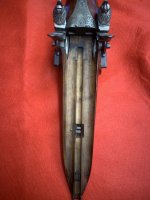
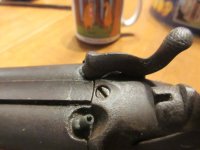
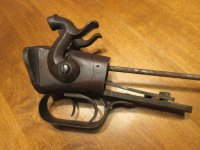
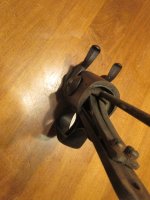
This is a factory made gun using an iron frame, rather than the usual configuration.
I think it might be a Whitney variant. Whitney made iron framed single and double barreled percussion muzzleloading shotguns ca. 1870. The Whitney design was similar to this, but somewhat different. Not a Whitney - see Post 23. The Whitney patent date is from the same time period as this one, although the dates are different..
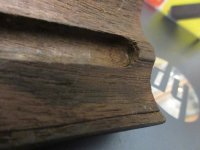
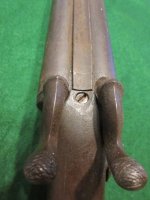
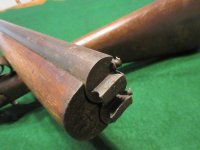
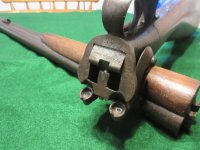
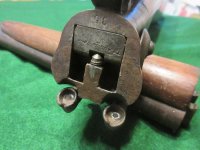
The barrels hook into the iron receiver, and then a screw down from the top forces a locking arm which engages semi circular cuts on the bottom of the barrel lugs to draw the barrels back against the frame, locking them to the receiver. Loosen one screw and the barrels can be removed. The ramrod channel in the forend was cut with a router. Simple forend attachment.
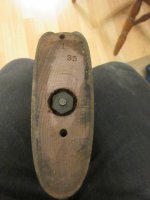
Serial number 35. Patent date Aug. 25, 1868.
I'm confident the gun was American made with an eye to economy working gun market.
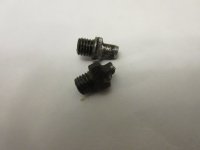
Nipples need replacement. The gun needs a good, respectful cleaning. Bores at the muzzle are about .715".
Any suggestions?
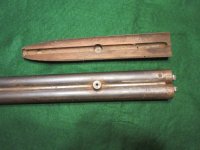 Tight
Tight
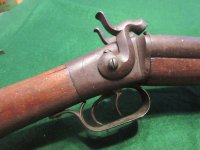

I think it might be a Whitney variant. Whitney made iron framed single and double barreled percussion muzzleloading shotguns ca. 1870. The Whitney design was similar to this, but somewhat different. Not a Whitney - see Post 23. The Whitney patent date is from the same time period as this one, although the dates are different..
The barrels hook into the iron receiver, and then a screw down from the top forces a locking arm which engages semi circular cuts on the bottom of the barrel lugs to draw the barrels back against the frame, locking them to the receiver. Loosen one screw and the barrels can be removed. The ramrod channel in the forend was cut with a router. Simple forend attachment.
Serial number 35. Patent date Aug. 25, 1868.
I'm confident the gun was American made with an eye to economy working gun market.
Nipples need replacement. The gun needs a good, respectful cleaning. Bores at the muzzle are about .715".
Any suggestions?
Tight
Last edited: