You are using an out of date browser. It may not display this or other websites correctly.
You should upgrade or use an alternative browser.
You should upgrade or use an alternative browser.
30-06
- Thread starter Rob
- Start date


huntingfamily
CGN Regular
- Location
- In the fields and forests


I would have taken the pic with just the axe, way better story then.


Waits served in the US Coast Guard. Any guesses as to which rifle the USCG was using during his time in?

I love how the Americans took the 7x57mm Mauser and turned it into the .30-06!
.30-03 & .30-06 Springfield
The Spanish-American War taught the U. S. War Department a valuable (albeit bloody) lesson about the merits of Mauser pattern bolt action rifles and the vastly superior 7x57mm cartridge. The result was the .30-03 Springfield cartridge, basically an enlarged version of the 7x57mm Mauser cartridge that was used by Spanish troops to wreak havoc on American soldiers.
During the Spanish-American War, US troops armed with .30-40 Krag and a small number of .45-70 rifles were massively outclassed by Spanish troops using 7x57mm Mausers.
The qualities of the 7×57mm as a military round were shown in the Spanish–American War of 1898. At the commencement of the American assault on the strategic Cuban city of Santiago, a small detachment of 750 Spanish troops defended positions on San Juan and Kettle hills. The attacking force numbered approximately 6,600 American soldiers, most of them armed with new smokeless-powder Krag–Jørgensen rifles in .30-40 Krag caliber, and supported by land and ship based artillery and Gatling gun fire.
Though the assault was successful, the Americans suffered more than 1,400 casualties, nearly 20 per cent of their forces. A U.S. board of investigation later concluded that the casualties were primarily due to the vastly superior firepower of the clip fed Spanish Model 1893 Mauser rifles and their 7x57mm round.
The .30-06 Springfield: The experience prompted the US to develop the 1903 Springfield rifle and the .30-03 cartridge, which was quickly improved into the legendary .30-06 Springfield.
The .30-03 was introduced by the famous U.S. arsenal whose name it bears in 1903. (.30 caliber, 1903--get it?) Was nothing more than a 7x57mm case stretched out a bit and then necked down to .30 caliber as the USA had recently invested heavily in 1892 on new manufacturing machinery to make .30-40 caliber Krag rifles and wanted to reuse and not waste this new equipment.
This new .30-03 cartridge used the same bullet as the .30-40 Krag but matched and very slightly exceeded the performance of the similar round nosed 7x57mm Mauser round used at the time by the Spanish and many other army's of the world. The US even kept the exact same cartridge base and external diamensions as the German 7x57mm it copied.
But Germany was one jump ahead of the U.S. and in 1905 introduced the JS version of their 8x57mm Infantry cartridge. The 8x57mm itself was a evolution of the 1892 7x57mm cartridge, and the 7x57mm was an evolution of the short lived 1888 Patrone 88 German commission cartridge. This improved 8x57mm fired a 150 grain spitzer bullet at about 2800 fps and made the new American .30-03 obsolete overnight.
Not to be outdone, the Springfield arsenal shortened the neck of the .30-03 case 0.10" and loaded a 150 grain spitzer bullet at about 2700 fps. Thus was born the .30-06 Springfield. It is worth noting that both the .30-03 (220 grain bullet) and .30-06 (150 grain bullet) cartridges were offered in sporting rifles for several years.
As a side note, during the Second Boer War in South Africa, British authorities were obliged to re-evaluate their rifle and ammunition designs and tactics after facing Boer sharpshooters and snipers armed with 7x57mm Mauser Model 1893 rifles and Mauser Model 1895 rifles firing the same 7×57mm rounds as the Spanish used with withering effectiveness, easily outranging the .303 British cartridge as regarding accurate long-range fire and causing far more British causilites than their own.
The .303 British cartridge at that time was still using cordite propellant, in contrast to the Mauser's higher-performance ballistite type smokeless powder, and this led the British to investigate and design a similar rimless round to the .30-06 but in .276 Enfield (7×60mmRB) to be used in their also new 1895 Mauser derived Pattern 1913 Enfield rifle.


- Location
- Southern Vancouver Island
Cartridge choices always spur feisty discussions on the web & in the shop. It be the same way with vehicles etc.
Time fer a tune I reckon.
Time fer a tune I reckon.


Remarkable that a man keeps a 20 year old photoshop pic of another man available on his computer. It's flattering, I suppose. But I doubt you are my type, so maybe you should look elsewhere to fulfil your fantasies.
Last edited:

Seeing an 1895 in the field gives me the fizz. How has the hubting experience been against a smaller lever or bolt?
It was EPIC!Remarkable that a man keeps a 20 year old photoshop pic of another man available on his computer. It's flattering, I suppose. But I doubt you are my type, so maybe you should look elsewhere to fulfil your fantasies.
Be happy it does not show the pink too-too
It s one of my favourite levers and one I will never sell.Cycling the action is smooth as butter.I had a 92 win carbine in 44mag that was nice but I didn’t like the way the lever smacked my fingers every time I shot it,same as the Ruger no 3 in 44mag I use to own.Seeing an 1895 in the field gives me the fizz. How has the hubting experience been against a smaller lever or bolt?

dgradinaru
CGN frequent flyer
- Location
- British Columbia
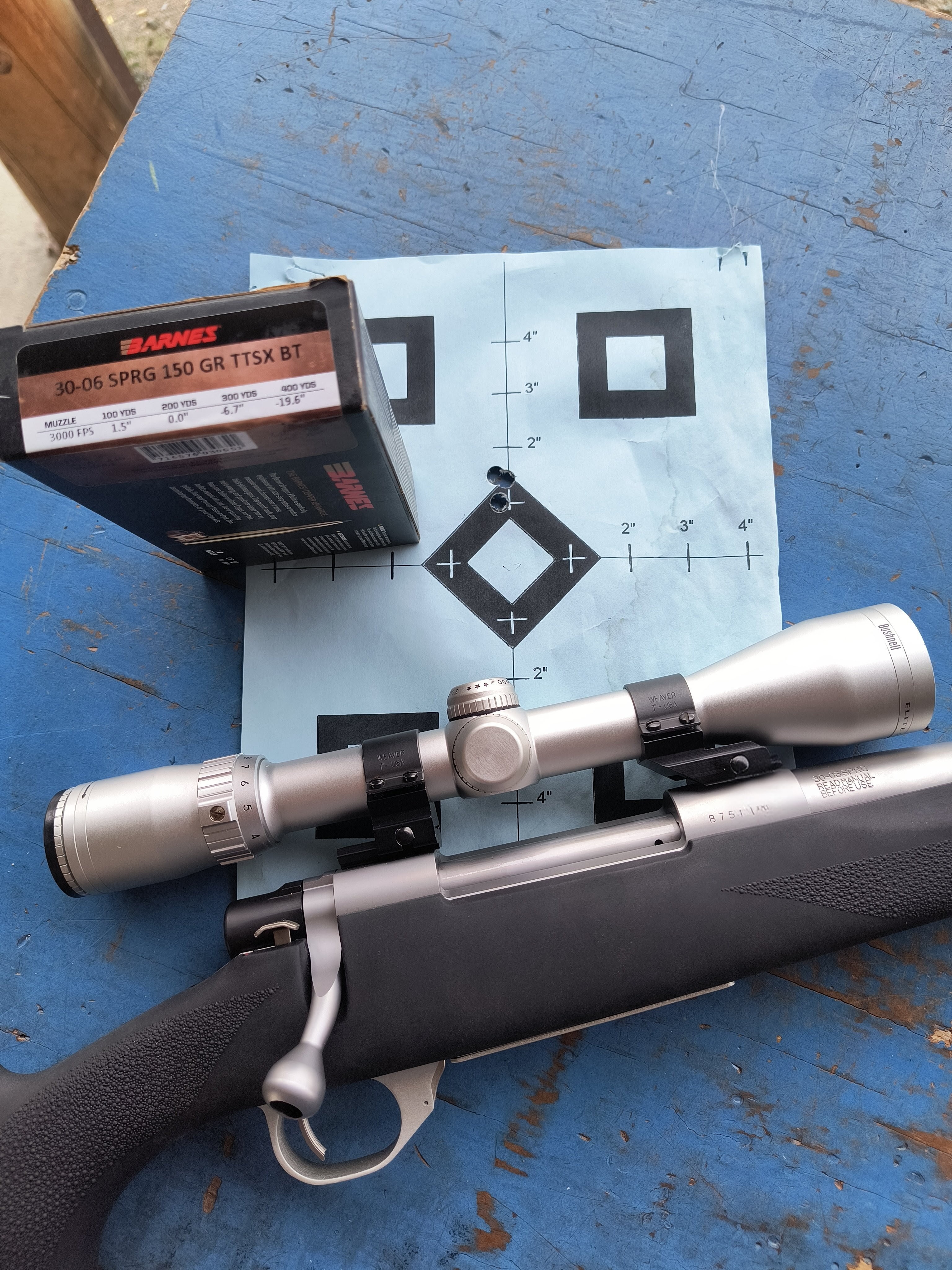
One of the most versatile cartridges out there. Have a few. Here's a good shooter, muzzle velocity was recorded by my Garmin at 3030 fps out of 22 inch barrel.