BSA-1917

BassAckwards

Member
Rating - 0%
0   0   0
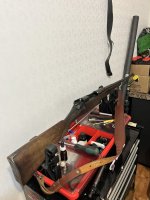
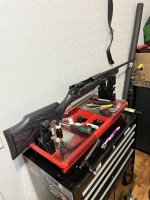
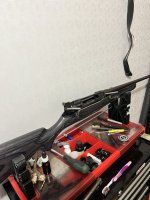
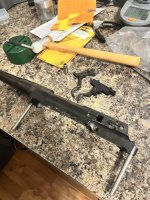
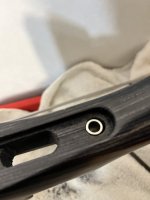
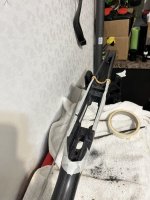
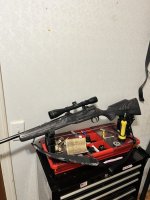
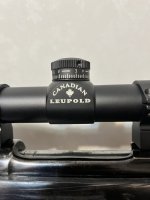
Well, I finally did an upgrade that I've been planning for years! It's my first rifle that my dad gave me when I was 15. He bought the 30/06 not long after coming back from overseas after the 2nd war. Apparently he took a few moose and deer with it over the years. I have dragged that big piece of iron up mountains for mulies, through salal thickets for blacktails, and shot several of my first moose with it. I still fondly remember shooting my first little spike blacktail with it, then turning it into a backpack and hiking back out several miles of old logging road. Put her into a new Boyds prairie hunter stock, made up some stainless pillars and bedded it, also purchased a Timney trigger, and finally put on the Leupold Canadian scope I've had squirreled away for this project for years. Anyways, just wanted to share my excitement about this project with all.
Thanks...Bass
 

Attachments

  • IMG_7094.jpeg
    IMG_7094.jpeg
    113.1 KB · Views: 72
  • IMG_7093.jpeg
    IMG_7093.jpeg
    125.8 KB · Views: 72
  • IMG_7092.jpeg
    IMG_7092.jpeg
    112.6 KB · Views: 69
  • IMG_7095.jpeg
    IMG_7095.jpeg
    212.9 KB · Views: 67
  • IMG_7097.jpeg
    IMG_7097.jpeg
    57.2 KB · Views: 68
  • IMG_7100.jpeg
    IMG_7100.jpeg
    116.5 KB · Views: 71
  • IMG_7101.jpeg
    IMG_7101.jpeg
    106.6 KB · Views: 73
  • IMG_7103.jpeg
    IMG_7103.jpeg
    67.2 KB · Views: 75
Great update to a great rifle! I imagine the Boyd's stock with recoil pad is a bit easier on the shoulder than the steel buttplate. I've owned 3 BSA sporterized M1917s and 3 P14s, they have all shot great and have never had an issue with any of them. Heavy and solid. I guess I did have to replace an ejector on one of the M1917s, but other than that they are pretty hard to break. Hang on to it!
 
Great update to a great rifle! I imagine the Boyd's stock with recoil pad is a bit easier on the shoulder than the steel buttplate. I've owned 3 BSA sporterized M1917s and 3 P14s, they have all shot great and have never had an issue with any of them. Heavy and solid. I guess I did have to replace an ejector on one of the M1917s, but other than that they are pretty hard to break. Hang on to it!
Oh ya, it shoots pretty nice now. It always shot pretty well, but my first time back out with it I had three out of a five shot group touching.😊 And I'm hoping to give it to the grandson one day, he's only eight, but I had him out at the range with his .22 and let him try the Howa mini 7.62x39 for a first big rifle. He did pretty well with it, however, I think it'll be a few more years before the 30/06. And thanks for the comments everyone!
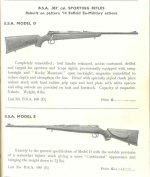
 
BSA only started to make sporter .30-06 M1917 Enfield's after 1950-53 when they then got approval to buy surplus British military surplus Home Guard rifles from the UK MOD stocks.

According to the BSA history the guntrade was offered some 14,000 assorted P-14 and US rifle Model 1917 rifles in various states of repair by the MOD in late 1949. BSA Initially turned it down before a manager later took it up and they purchased them and then proceeded to sort through them and grade them before scrapping about half of them for parts only and as unsuitable. The remained were converted into the BSA Models A through E. The Model 1917's were either left at .30-06 Springfield or fitted with new barrels of BSA Manufacture in .270 Winchester.

These rifles were all built upon surplus U.S. Model 1917 (Enfield) actions, which were purchased by BSA from the British Ministry of Defence in 1950, many of which had been used by the Home Guard during WWII. Grades: BSA produced these converted sporters in several grades (A, B, C, D, and E).

BSA also bought .303 Pattern 14 Enfield's at a similar time and converted them as well into the same model range.

They competed with their own line of in house Lee Enfield action made and designed sporters.

None reached Canada or North America until the late 1950's and early 1960's and well after the war ended and troops had returned home.

They were still on sale new up until the late 1960's in gun shops in Canada.


1950's BSA catalogue ad -


BSA M1917.jpg
 
How'd ya fit the rear scope base?
Kevin, the BSA sporters were set up with the rear lugs ground off on the action, and Weaver , Leuold and Burris all supplied bases for them, I am not sure of the number , but I have a 1917 that had that modification.
The barrel came asunder at the hands of my trapper buddy's wife one winter, and my father rebarreld it with a Douglas barrel in 280. I put a Bishop stock on it, it's a fine rifle.
Cat
 
Kevin, the BSA sporters were set up with the rear lugs ground off on the action, and Weaver , Leuold and Burris all supplied bases for them, I am not sure of the number , but I have a 1917 that had that modification.
The barrel came asunder at the hands of my trapper buddy's wife one winter, and my father rebarreld it with a Douglas barrel in 280. I put a Bishop stock on it, it's a fine rifle.
Cat
The rear base is ground differently on every m1917 sporter action. Weaver bases don't align. Not sure about Leupold or Burris either. The correct bases for the BSA are some unobtainium Parker Hale bases afaik. Many people epoxy the bases to align. On mine I used to have I used pop can shims and lots of Loctite between all mating surfaces.
 
I used some Talley light weights for a Weatherby MK V. There is a gap under the mount, but the line up worked fine. Will probably bed them in epoxy, or put the steel Redfeild base with the Leupold rings back on. I was just trying to shave a little weight off, and modernize it a little. šŸ¤·šŸ»ā€ā™‚ļø
 
For many years I carried a Century Arms P'14 chambered in 300 WM. A previous owner had installed a black plastic stock, maybe Bell and Carlson. The top of the receiver had been ground down and a strip of Weaver rail installed. It dropped many whitetail and mule deer for me. Its advantages were I never worried about breaking the stock or getting it muddy. But, the top load box magazine meant it was slow to load and clanky to unload.

The only part I'd worry about on a P14/M'17 is the ejector finger. It is tiny compared to all the other parts and I did have one fail on me.
 
For many years I carried a Century Arms P'14 chambered in 300 WM. A previous owner had installed a black plastic stock, maybe Bell and Carlson. The top of the receiver had been ground down and a strip of Weaver rail installed. It dropped many whitetail and mule deer for me. Its advantages were I never worried about breaking the stock or getting it muddy. But, the top load box magazine meant it was slow to load and clanky to unload.

The only part I'd worry about on a P14/M'17 is the ejector finger. It is tiny compared to all the other parts and I did have one fail on me.
Apparently even with millions issued during WW1 trench warfare fighting it was never viewed as a major problem or even needing a redesign or fix.
 
Apparently even with millions issued during WW1 trench warfare fighting it was never viewed as a major problem or even needing a redesign or fix.
Maybe the service didn't see it as a problem, but 75 years after WW1 I had on break. So that is my experience with that type of action.
 
Maybe the service didn't see it as a problem, but 75 years after WW1 I had on break. So that is my experience with that type of action.
Lot of people have had Mauser extractors break as well 75 or more years later but does not mean it is a faulty design either!

What was considered a bigger problem by the US military was 1903 Springfield firing pins breaking.

Broken firing pins in 1903 Springfield rifles is a common issues which often often occurs at the junction where the two-piece firing pin rod and striker meet, rather than at the tip. While the 1903 is designed for the striker (the pointed part) to be easily replaced, frequent breakage is typically attributed to either the heat-treating (too hard and brittle) to harden or extend the life of the pin tip or damage caused by excessive dry firing.

Pins that are too brittle will break upon impact, while those that are too soft can mushroom, wedge in the bolt, and subsequently snap.

The firing pin striker tip is considered a consumable part and because of this it was mass produced and is often still available for replacement purchase in NOS surplus parts (roughly $28).

To prevent damage, use snap caps always during dry fire practice to cushion the firing pin's impact.


s-l1200.jpg


Springfield-1903-A3-Firing-Pin-Striker-Used.webp
 
Last edited:
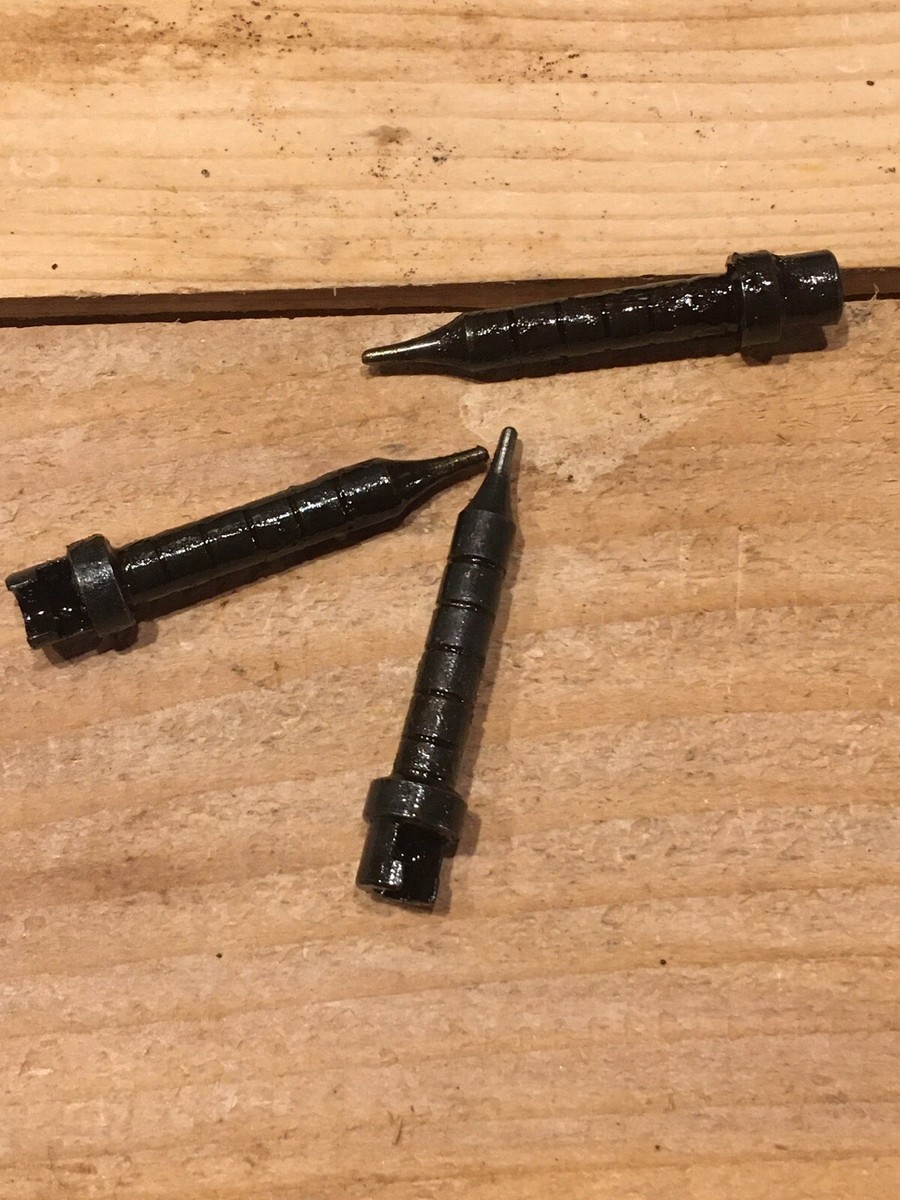
There is circa four or five broken ones here - each came out of a rifle that showed up - some had pencil erasers jammed in to give some sort of movement after the little spring tail broke off. Circa 1950, gunsmith Roy Dunlap (Dunlop?) came up with a work around using a coil spring and a couple notches - for several years, you could buy similar from Numrich - I have one, which I intend to use as a pattern when I next need one - I think the coil springs came from China for a few cents per hundred on Amazon.ca. When using those coil springs and making up the extractor - the body width is a bit more that the original - but I suspect the "fix" would work for an original as well. I do not know - but a broken ejector spring does not tie up the rifle - the feed, fire and extract functions work fine - it is the ejection step that doesn't work well - I had heard that simply rolling the rifle to the right would let that fired case fall off the bolt face - and ready to go for the next shot.
 
There is circa four or five broken ones here - each came out of a rifle that showed up - some had pencil erasers jammed in to give some sort of movement after the little spring tail broke off. Circa 1950, gunsmith Roy Dunlap (Dunlop?) came up with a work around using a coil spring and a couple notches - for several years, you could buy similar from Numrich - I have one, which I intend to use as a pattern when I next need one - I think the coil springs came from China for a few cents per hundred on Amazon.ca. When using those coil springs and making up the extractor - the body width is a bit more that the original - but I suspect the "fix" would work for an original as well. I do not know - but a broken ejector spring does not tie up the rifle - the feed, fire and extract functions work fine - it is the ejection step that doesn't work well - I had heard that simply rolling the rifle to the right would let that fired case fall off the bolt face - and ready to go for the next shot.

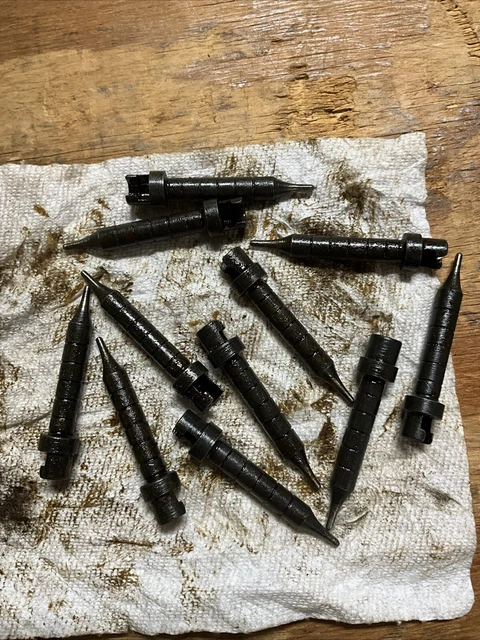
Yeah, they were easy to mod but I never needed to. About 20 years ago while down in the USA at a gunshow a fellow had a table with a box full of NOS replacement ones (probably at least a few hundred), that he was selling for $3 each. I bought 10 off him for $30 cash and even after selling and giving some away I still have 2 left which I am keeping just in case I need one for my own 2 M1917's.


424153-576816e2b589836aab9607ed2614d0b7.jpg


3465-4e8ab974999be11ca7179348e80740cd.jpg


Millions were made a spares during and after WW1 and WW2!

Marstar was even selling NOS ones not that long ago, but they appear to be sold out now.

This is from the webpage - htt ps://marstar.ca/product/ejector-only-for-p17/

P14-003.webp


Still lots of them for sale NOS in the USA, just Google and you will find them.

Best chance of getting one is from some guy off Ebay posting one up.

Or getting one off Numrich for $16.95

U.S. MILITARY ENFIELD 1917 Ejector


$16.95


Firearm MfgrU.S. MILITARY
Firearm ModelENFIELD 1917
Product No.1268890
 
When we replaced the ejector on my 1917, Dick284 and I found out pretty quick that the P14 and P17 use different ejectors!
Some judicious dremel work fixed it though.
Cat
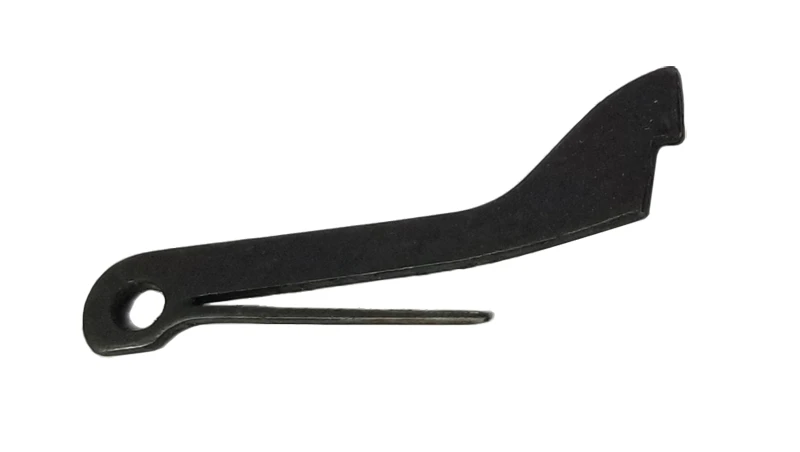
Pattern 14 ejectors are longer, and because the Model 1917 is using a longer rimless .30-06 case instead of a shorter rimed .303 case, it is slightly shorter.

The M1917 ejector is closer to the original rimless .276 Enfield rimless round Pattern 13 rifle one.

The .276 used a 60mm long case compared to the .30-06 63mm case.

P14Ejector1P14001__89055.1568734399.jpg


Pattern 14 .303 ejector
 
I really like p14 /usm1917 when they are sportered well. Great action. I have a BSA model D. Good shooter with 150 interlocks and a pretty full case of ramshot hunter. Its a 300savage at that point.
 
Back
Top Bottom