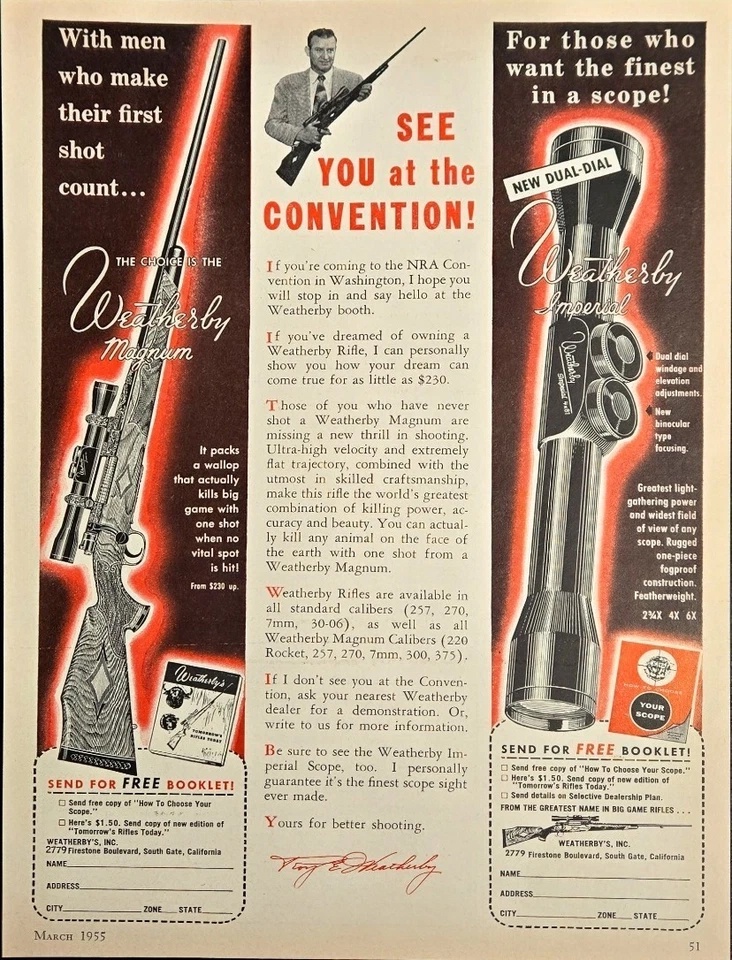
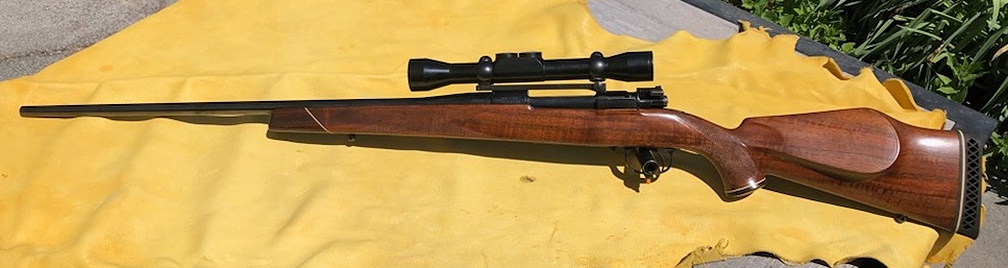
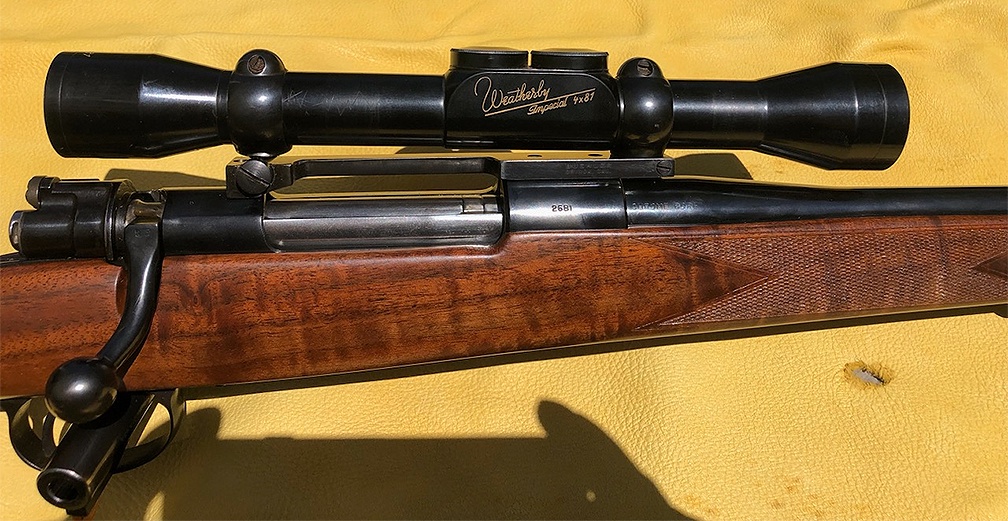
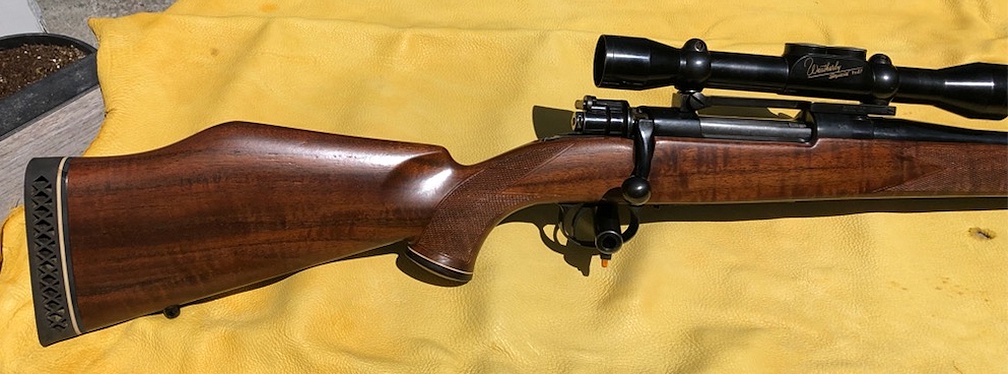
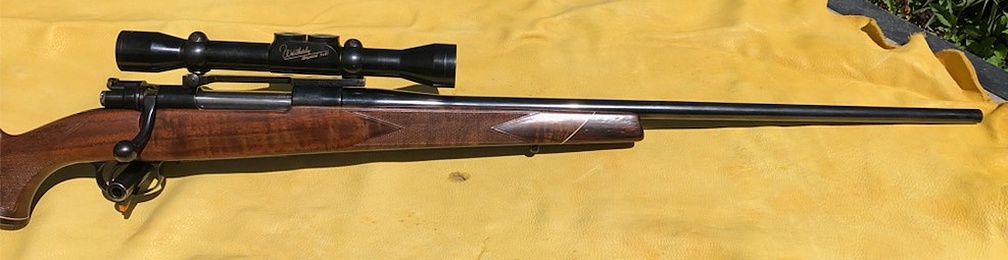
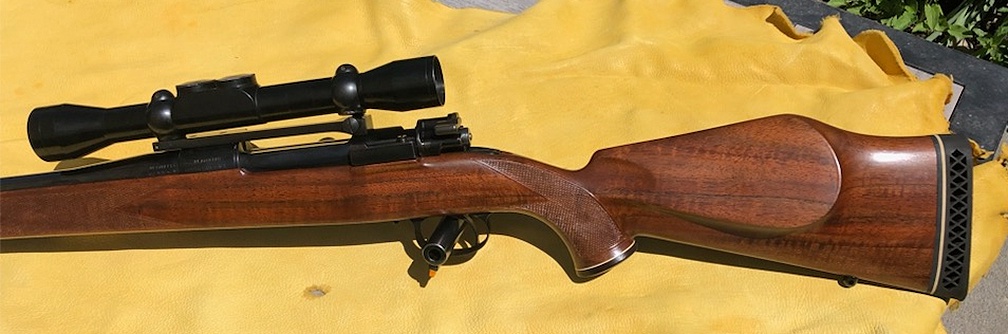
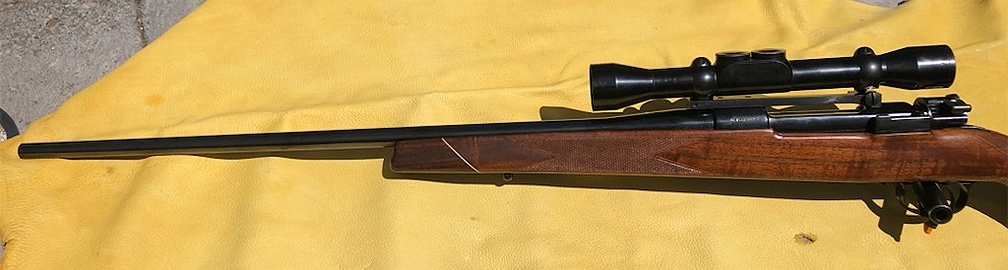
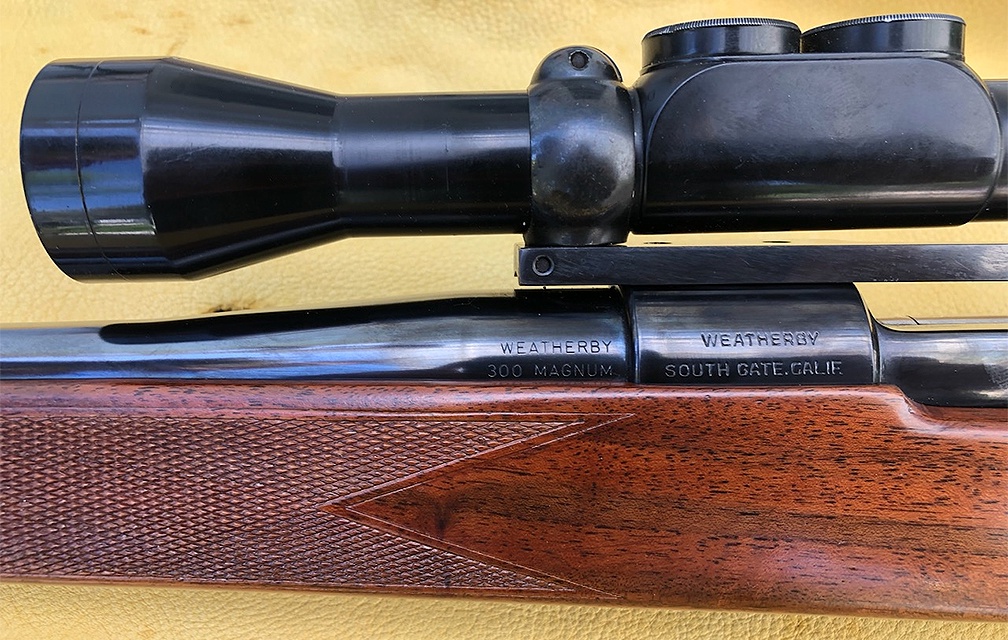
1955 300 Weatherby Magnum

IronNoggin

CGN frequent flyer
Rating - 100%
5   0   0
4J3jjhG.jpeg


Developed by Roy Weatherby in 1944, the .300 Weatherby Magnum revolutionized the firearms industry by ushering in the era of ultra-high-velocity cartridges. Created by blowing out the .300 H&H Magnum case, it features Weatherby's signature double-radius shoulder, allowing it to drive 180-grain bullets past 3,150 fps.

History of the .300 Weatherby Magnum

The Wildcat Era (1944): Roy Weatherby sought a high-capacity cartridge to outperform standard factory calibers like the .30-06 Springfield. By removing the body taper and reshaping the shoulder of the .300 H&H Magnum, he significantly increased powder capacity.

Commercial Release (1945): The cartridge was formally launched for commercial sale right at the end of World War II, quickly gaining a reputation as the most powerful commercial .30 caliber.

Reigning Supreme: For nearly 40 years, it was the fastest commercially available cartridge, remaining largely unchallenged until the release of the .300 Remington Ultra Magnum in 1999.

Development and Design Features

Case Design: The Weatherby was built on the belted .300 H&H Magnum or .375 H&H case. Roy Weatherby kept the belt as a marketing tool, even though his redesigned cases headspaced at the shoulder for better accuracy.

Modern Ballistics and Legacy

Despite decades of new magnum cartridge developments (such as the .300 Winchester Magnum in 1963, and modern variants like the .300 PRC or .300 Nosler), the .300 Weatherby Magnum remains one of the top five most powerful .30 calibers.

Prior to 1958, Weatherby designed his rifles around FN Mauser actions. The Mark V action was produced initially in 1958.

Here is Roy himself in a historical film wherein he demonstrates the power of the 300 Weatherby Magnum rifle by conducting comparative firing tests against traditional ammunition. These tests showcase the weapon's destructive capabilities on various targets, illustrating its effectiveness for large game hunting.


Continued...
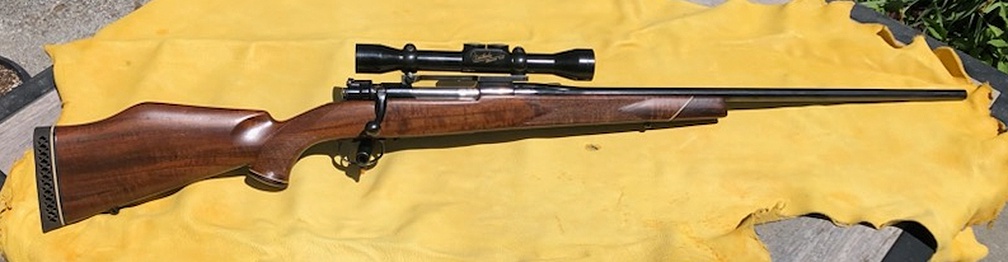
 
Nice classic rifle!! And the scope is really cool, I would use the kit as is and get some game with it, unless the scope is unusable.

I toyed with that thought, but my old eyes are not really prepared to run a fixed 4 by 81 scope.
I will NOT modify the original in any way, and the scope will go back on it following hunting season.

Cheers
 
  • Like
Reactions: DGY
4x81? That doesn't look anything close to an 81mm objective? Im thinking I'm missing something here?...

Interesting scope either way though. Does it have both L/R and up/down adjustments on the top?

And pretty rifle too!
 
Lovely rifle, and in incredibly good condition!

I've had lots of Weatherby rifles over the years but never an FN model for some reason. A friend of mine had a 7mm Wby on an FN action and I bid on it at his estate sale but couldn't compete with a guy who had more money to spend than I did.
I collected Wby rifles for a few years and sold the collection some time back, a MkV in 270 Wby was the only one I kept. I do love the 270 which was the first Wby cartridge and pre-dates the 300 by a couple of years.
 
4x81? That doesn't look anything close to an 81mm objective? Im thinking I'm missing something here?...

Interesting scope either way though. Does it have both L/R and up/down adjustments on the top?

And pretty rifle too!
4x81 right on the scope. Pretty sure it’s not referencing the objective size. Not sure how it was done back then. Cool old rifle.
 
4x81? That doesn't look anything close to an 81mm objective? Im thinking I'm missing something here?...

Interesting scope either way though. Does it have both L/R and up/down adjustments on the top?

From Google:

Weatherby branded "Imperial" scopes in 1955 were premium, German-crafted optics renowned for exceptional clarity and durability. They were highly regarded for a patented dual-dial external adjustment system, which relied on the mount itself rather than delicate internal mechanics to make windage and elevation adjustments.

Key Specifications & Features

Manufacturer: Manufactured in West Germany by the esteemed optics firm Hertel & Reuss.

Optics Design: Featured coated lenses, delivering high light transmission for low-light hunting conditions.

Adjustments: Unlike modern scopes with internal turrets, Imperial scopes required the use of external mount adjustments (often Buehler or Jaeger mounts) for zeroing windage and elevation.

Models & Power Configurations: The lineup included popular fixed powers such as the 2.75x, 4x, 6x, and a highly regarded variable 2\(\frac{3}{4}\)

Objective Lens Sizes: The most sought-after variants featured precise objective lens diameters, most notably the 81mm and 90mm outer bell diameters (e.g., the 4x81 or 2 frac{3}{4}.

Reticle Options: Available with distinct European-style reticles, including traditional fine crosshairs, target dots, and post-style crosshairs.

Because of their external adjustment mechanism and outstanding glass quality, these vintage scopes remain highly sought-after by collectors to pair with historical Belgian FN Mauser Weatherby rifles.
 
4x81 right on the scope. Pretty sure it’s not referencing the objective size. Not sure how it was done back then. Cool old rifle.
Yeah I saw that. At first I figured Noggin had a typo but nope. I agree that it's pretty obviously NOT the objective diameter like you'd expect from modern scopes... but then what is it?...

81mm is possibly the circumference??🤔
Cat
That would be a ~26mm objective, which seems a bit small for what I'm looking at?

Maybe it's the tube circumference?
 
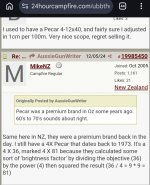
I did some googling and I have found multiple forum posts where people claim the 81 is about light transmission, not lens size.

This post is referencing Pecar scopes but it seems to be the same "measurement" used with the Imperial scopes. (I did find a direct reference to an Imperial scope on a Ruger forum, but searching for info on 4x81 Pexar scopes seemed to get me more traction.)

1000030061.jpg
 
Beautiful rifle and in such great condition. My son has one identical. It was gifted to him from his father-in-law, which was given to him by his father. It's chambered in the 270 Weatherby magnum, 26" barrel.
 
4x81? That doesn't look anything close to an 81mm objective? Im thinking I'm missing something here?...

Interesting scope either way though. Does it have both L/R and up/down adjustments on the top?

And pretty rifle too!
The adjustments are internal not in the mount as someone stated here. The forward turret has an inner and outer ring for windage and elevation. The rear is for focus. Good german glass especially for the the time.
The Bausch and Lomb scopes were solid tubes with adjustments in the mounts.
 
The adjustments are internal not in the mount as someone stated here. The forward turret has an inner and outer ring for windage and elevation. The rear is for focus. Good german glass especially for the the time.
The Bausch and Lomb scopes were solid tubes with adjustments in the mounts.
Very cool. Thanks for the info.
 
Nice early model Weatherby.
However the in the photos the rear scope ring appears to not be captured by the windage screws and is riding on top of them.
 
Nice early model Weatherby.
However the in the photos the rear scope ring appears to not be captured by the windage screws and is riding on top of them.

The scope was off the rifle when I got down there.
Simply positioned on top for the photo-op.

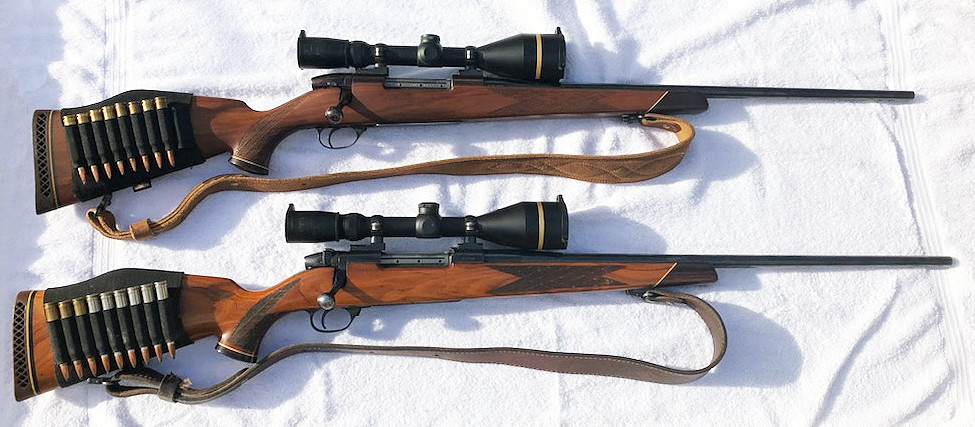
My other 2 Weatherbys.

Top one was made in 1960 - first year of production in Germany (Actually stamped Mark V Patent Pending).
Chambered in 270 Weatherby Magnum, and extremely accurate.

Bottom one is another German Mark V made in 1972.
Chambered in 300 Weatherby magnum.
On it's second barrel (Belgium Cold Rolled) and very accurate as well.

Image


Cheers
 
Back
Top Bottom