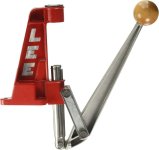
Absolute beginner to reloading - My intent is to NOT waste your time.

Rating - 0%
0   0   0
I want to get started with reloading 44mag, 44spcl and 6.5PRC. I reckon this question's been answered a million times by now, so if there's a link or two for newbies like myself to learn from, I'd appreciate the advice. I'll do my best to learn the terminology. I don't mind used stuff, but I will cough up the cash for quality new equipment. I especially want to be accurate as a beginner can when reloading 6.5PRC.

Thanks, all!
 
I want to get started with reloading 44mag, 44spcl and 6.5PRC. I reckon this question's been answered a million times by now, so if there's a link or two for newbies like myself to learn from, I'd appreciate the advice. I'll do my best to learn the terminology. I don't mind used stuff, but I will cough up the cash for quality new equipment. I especially want to be accurate as a beginner can when reloading 6.5PRC.

Thanks, all!
Best advice i can give you is to pick up the latest Lyman or Hornady loading manual and read it several times over!
That, and trying to search out a member of your range that you know is experienced and you can get along with, and possibly get them to mentor you.
The internet is full of both really bad and really good advice, sifting through tge good and bad is difficult at times even for an experienced hand loader
Cat
 
I liked the Lee book as well.
But any of these will work.
Read them a few times, form a plan on equipment vs. Budget and share.
Everyone with experience has gone down this road and will likely be more than happy to share their equipment pitfalls.
If you follow some of that advise and keep thumbing through those manuals you will likely have questions (or results) that are not in the books; share those if the search process dries up and those same guys will likely chuckle (because it’s something they had to overcome) and offer their solutions.
It’s a great hobby in and of itself but start with reading a manual, maybe more than one and re-read them.
 
All great advice.

Good (free) info from bullet manufactures online: Speer, Nosler, Sierra, Campro
Good (free) info from powder manufacturers online: VV, Alliant, Hodgdon (Wincheters, IMR, Accurate, Western, etc)

Some (free) info from reloading equipment manufacuters: Redding, Lee, Lyman, Hornady.

As others said, buy a book and read the intro section twice. Note that each company pushes their stuff. All (IMHO) will work fine. I have 6 Lee presses but my dies are from Lee, Hornady, C4H, Redding, Lyman, and (ha ha) Pacific.

For straight-walled pistil cartridges like your 44 Mag/Spc, I personally recommend a turret press. I have loaded thousands of rounds on my Lee Value Turret.

YMMV
 
I liked the Lee book as well.
But any of these will work.
Read them a few times, form a plan on equipment vs. Budget and share.
Everyone with experience has gone down this road and will likely be more than happy to share their equipment pitfalls.
The thing I really like about the Lee manual is that Lee themselves as a company do not do any powder testing as such, but publish data from the major manufactures so you can compare Seirra's and Speer's results for example , against Hodgdon's and Alliant's results.
Cat
 
I want to get started with reloading 44mag, 44spcl and 6.5PRC. I reckon this question's been answered a million times by now, so if there's a link or two for newbies like myself to learn from, I'd appreciate the advice. I'll do my best to learn the terminology. I don't mind used stuff, but I will cough up the cash for quality new equipment. I especially want to be accurate as a beginner can when reloading 6.5PRC.

Thanks, all!
Hi Terminally,

I am in the process of setting myself up for 6.5 prc reloading for precision long-range (I've never reloaded before so have little experience). The past year or so has been homework, lots of it, and getting my gear. I picked up a couple reloading manuals to get started on understanding the data in them. Lyman 51st and the latest Hornady manual (digital via their app; I bought the reload data for 6.5 prc only which was like a couple bucks).

I watched a lot of Ultimate Reloader (only for first introductions to hand loading and to learn which equipment is out there), but the best online source I recall was from Little Crow Gunworks when they had their entire Precision Rifle reloading series on Youtube:
. It was like a 17-part series where he had picked a Sierra MatchKing bullet for .308 and tested several powders using sub-par brass to demonstrate what really matters when reloading. His argument, among others, was: pick a bullet, stick with it, and make it shoot (meaning you should settle on the bullet you need/want and change other components as needed). I think he ended up shooting sub-moa consistently at 1000 yards with no vertical spread, I recall correctly.

These videos have since moved to Patreon and are now under "Pragmatic Precision", available on a monthly subscription. I learned so much from this series, so, highly recommended.

Not sure where you're located, but I also took the Silverdale reloading course a couple months back: https://silverdalegunclub.com/product/reloading-course-basic-metallic-cartridge/. It was good, but there's room for some improvement on the course delivery. Still though, being around those who are also learning and those with a lot of reloading experience was really helpful! I'd recommend pairing with someone willing to teach you or to find a class you can sign-up for. Hands-on is key where you can ask questions as you go; not just theory.

There's also a really great intro on taking a basic statistical approach to load development that someone shared on here awhile back: Evidence-based load development by Justin Reeves: https://www.canadiangunnutz.com/forum/threads/data-driven-reloading-course.2555833/. If that link doesn't work, try the direct link: https://reevesjustin.github.io/data-driven-reloading/. A lot of is centred on understanding sample-size.

I'd also say consider getting familiar with Gordon's Reloading Tool if you're not already (it's not actively supported, but I think there's a Discord where users are submitting new data to keep it fresh): https://grtools.de/doku.php?id=grtools:en:doku:install. This is a great way to learn about all the inputs that potentially affect internal ballistics and pressure and to figure out which powders may be appropriate for your scenario - I leave it to others to expertly comment on GRT and how it works in detail based on experience. Point is, it was very cool to see in GRT the pressure curve output as you combined and manipulated different bullets and powders for a cartridge (and to know which combinations will hypothetically blow up your gun, lol). It helps you visualize many of the things you need to keep in mind.

I am not an expert in GRT, but I do intend on using it this season hopefully. (There is also Quickload, but it's pricey, and I've never used it.). Ultimately, these tools provide you with mathematical models only, which, although can be calibrated close to real performance output from the range, remains theoretical, so be careful and learn how to spot pressure signs on your brass!

I've practiced a bit on my press by making dummy rounds from once-fired brass, cheap bullets, and cut-down rubber O-ring stock for primers to get a feel for it, how the dies work, etc. This might be a good thing to consider before actually reloading with powder - if anything to spare you from ruining good components while learning (ask me how I know - too much Imperial die wax, anyone?)

Anyway, FWIW!

 
Im still relatively new to reloading, but here is some of the quirks / kit I later discovered was worth having from the start:

-Get the Lyman 51st reloading book, I've looked thru many others and the Lyman ones is by far the most diverse.

-Use wax based case sizing lube. I bought the Hornady One Shot version after experiencing TONS of hardship trying to get generic spray bottle case lube to work. The wax lube applies easily by finger and works FLAWLESSLY.

-Use a wet tumbler (one that uses stainless media) it isn't dusty, it isn't too noisy and most importantly is very cost effective. The media lasts forever, to perfectly polish another load of brass only costs you a couple liters of tap water, a squirt of dish soap and maybe a tablespoon of citric acid to get extra shine. Oven dry the brass afterwards for 20min @ 200 degrees F.

-Use a well reviewed hand priming tool. Far more reliable and less hassle then setting up a *basic* press mounted one.

-Get a universal de-capping die so you can pop out primers before running the brass thru the tumbler. It saves you having to clean and debur primer pockets. The decapping die allows you to perform this task without pumping the dirty brass thru your sizing dies. The stainless media will not plug up primer pocket toucholes.

-Buy die sets and or bullet seaters that have a sleeve or plunger guide design to help hold the bullet more concentric with the case as you seat it. Most Hornady sets seem to come with these, I recently bought a Forster brand seating die for .308 that has a spring loaded plunger and it is sooooo nice to use. Most bullet seating dies obviously will do a good amount of centering regardless. But its nice to use ones that start that process far enough down that all you really need to do is just set the bullet on the case facing the right way and if the sleeve / plunger moves properly, you'll know that bullet was seated pretty darn straight. The sleeves I've noticed will also help to catch and signal some bullet anomalies before they are even pressed into the case. My Hornady brand 45-70 bullet seating die has caught the occasional deformation on Campro bullets.
 
Start with a high quality single stage, used is fine (i would recommend green, or orange, but not red). You will never wear out a quality single stage, and will continue to use it as long as you reload.

Dont even think about a progressive until you are confident in reloading on a single stage, definitely not a lee progressive.

There are ways that you can blow up your gun, or worse seriously injure yourself. Always verify what powder you are using (especially if you have pistol powder and rifle powder on hand). With pistol watch out for no charges or double charges.

Edit: I guess I forgot about the other red presses, and YMMV, but personally I have never had luck with Lee gear. Buy once cry once.
 
Last edited:
I want to get started with reloading 44mag, 44spcl and 6.5PRC. I reckon this question's been answered a million times by now, so if there's a link or two for newbies like myself to learn from, I'd appreciate the advice. I'll do my best to learn the terminology. I don't mind used stuff, but I will cough up the cash for quality new equipment. I especially want to be accurate as a beginner can when reloading 6.5PRC.

Thanks, all!

Some nice old presses for sale. Replacing the broken Lee c press with an older Lyman Spartan. Less money and looks to be much better quality. Being shipped tomorrow
 
I lean towards the RCBS # 9366 kit, there are some cheaper kits around, but, it has the least number of things you'll hate using and the least upgrades that a person may want to do. It comes with a beam scale, which can be used for teaching yourself about elec scales before spending any big bucks on one, Amazon has lots of cheap elec scales you can learn on. And that way you'll always have a reliable backup scale around to double check elec ones with. It also has a good handprimer and a good powder thrower. Usual upgrade to it would be a case prep center and a Chargemaster type powder dispenser. You would need a trimmer for the 6.5PRC, Giraud 3way drill driven unit would be a good way to start, trims, chamfers and deburrs in one shot. Also recommend a Derraco comparator kit, for cases and bullet, for doing brass and seating measurements, allows you to do one of the first things to do before ever reloading a case, check a factory round, check a fired case and record that info, then you have a base to work from when troubleshooting, and will know where things went wrong, simply and quickly. Calipers are req'd, I prefer old style dial type over digital. Cheap 0-1" micrometer is nice to have around, too, may have need of it with a PRC. Can also recommend Imperial case sizing wax and either Lyman or Forster dry lube case neck brush kits, helps with pulling cases over sizer buttons. Less mess, easy case cleaning.
 
I want to get started with reloading 44mag, 44spcl and 6.5PRC. I reckon this question's been answered a million times by now, so if there's a link or two for newbies like myself to learn from, I'd appreciate the advice. I'll do my best to learn the terminology. I don't mind used stuff, but I will cough up the cash for quality new equipment. I especially want to be accurate as a beginner can when reloading 6.5PRC.

Thanks, all!
You didn't ask a question. 🤷‍♂️

Its kinda tough to answer a question that wasn't asked.
 
I dont recommend the Lee C press for your main press. Maybe for some light tasks. Just broke the base doing depriming sizing. Just a heads up if you're looking at buying a first press
I use the C press for depriming. A Lee universal depriming die lives there
 
The hornady kits have been on sale a lot lately and I think they're ok. I would just get a single stage press to start. You're in luck with 6.5 prc as it's very easy to get very accurate loads with very low sd's. And the load data for it seems very accurate from what ive seen. Some of the older cartridges (think 7mm rem mag in particular) the data is all over the place.

I would also advise against a stainless tumbler to start. You really dont need to clean your brass much at all even just a wipe with brake clean is fine to get the lube off. I dont even bother cleaning primer pockets anymore. I also wouldn't encourage a newer reloader to be getting his cases wet. A tiny bit of moisture in the brass would be quite detrimental.

Theres lots of good YouTube content and some not so good. It's very important to follow published load data from the bullet or powder manufacturer.

A chronograph can be a very useful piece of kit along with learning to identify pressure signs. A quality caliper will last you forever. I prefer digital as its easier to zero and less prone to be read incorrectly. Good luck and have fun. It can be a bit intimidating but it is rewarding when you get the hang of it.
 
Back
Top Bottom