Would You Restore this Parker?

Cow Town Bill

Regular
Super GunNutz
Rating - 100%
66   0   0
Location
Calgary
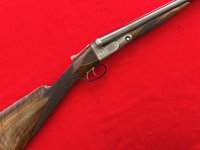
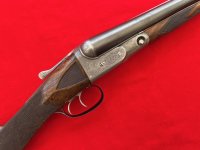
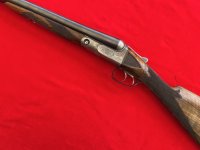
I recently posted pics of a Parker VH grade that had been lovingly and expertly restored. There was a positive response and several people brought up the question of when or if a gun should be restored. Following that theme, I'm posting pics of a higher grade Parker---a BHE---which is a fairly rare gun---only about a thousand hammerless BHE's were made over the long history of Parker Bros---the majority of Parker's were made in Trojan and VH(and VHE) grades.
This Parker BHE which was made in 1905 has had the stock and forend expertly re-finished but the rest of the gun is original. If one wanted a full restoration he would have it re-case coloured and the barrels re-blacked. Mechanically, the gun functions perfectly. It is a trap gun with 32" barrels, double triggers and ejectors and WITHOUT safety which is common with target guns. One might want to add a recoil pad but that would destroy the beautiful checkered butt.
So, would you complete the restoration?
IMG_3768.jpegIMG_3769.jpegIMG_3770.jpeg
 
as far as original it is not being a high grade gun i would do the metal doing the metal is the last work needed to bring it to the proper configuration
besides colour case harding and bluing is in exspensive compared to the cost of wood and wood work labour
bluing and case colouring cost 1000-1500$ depending on who does the work
A BH grade deserves to be completely done
 
An interesting discussion. By definition, restoration means bringing something back to its original state. In the case of the restored BHE pictured, the result is perfect, to be sure. An object to be admired. In a hunting sense, bravo, virginity has been restored! But does that mean you wouldn't take it afield, so as to maintain its perfection? Or do you wear away the case hardening with sweaty hands and rough gloves, and dull and nick the stock through the hunting experience, through decades of reliable use, then go through the restoration process again? If it is part of a cycle, I'm all for it. If it is just to own and admire it, I'm also OK with that, but the restoration has to be balanced. Perfect wood and worn metal, or vice versa, doesn't look right to me. The BHE pictured at the beginning of this thread looks fine and balanced, which is why I'd leave it as-is.

I'm also for a gun that shows honest wear and tear, and competent repairs. Guns do not stay new for long, and I associate wear with companionship and good hunting memories. The Superposed I plan to shoot this weekend is 96 years old. It is not pristine, but in no need of restoration either. Someday it might. Something on it might break someday, too, but I don't expect it to in my lifetime.

The Victorians were practical. After the shooting season, guns often went back to their makers for cleaning, lubrication, repairs, and barrel refinishing, if required. There is a reason why Victorian and Edwardian guns in their cases often look pristine, even if they were put to hard use, at many thousands (and sometimes tens of thousands) of shots per season. They were carefully maintained. Of course, it was easier to have new parts made, new barrels refitted etc. back then. That expertise is rare nowadays.

Finally, there is the matter of cost. Is it worth it? Yes, if you can afford it. No, if you can't. Having it done right is expensive. Fixing someone's mistakes is even more expensive. When it comes to gun restoration, a 'no' decision is better than a bad 'yes.'

Condition is important when making choices. But to those who think "I'll just wait for the next one to come along," they almost never do. Sometimes putting up with some honest signs of use is better than waiting for the perfect one.

Just some thoughts.
 
Personally I would leave it as is. Nothing wrong with an honest gun. The gun is beautiful as is. From a financial viewpoint there is nothing to be gained in restoring the metal to factory new.
Being an American gun, attitudes are different amongst collectors of American guns as opposed to British guns. The wealthy in Great Britain returned their guns often to the maker for refurbishment. American gun collectors place a premium on factory original finishes. Its like comparing apples and oranges.
 
Just how important is the originality? If for investment purposes it is very important when you consider the eventual re-sale of the gun as those who buy to invest or are serious collectors consider originality everything but for those like me who are interested mostly in a nice shooter originality plays a lesser degree.
I like a gun to be in as much of an original configuration as possible meaning no adjustable chokes, adjustable stocks, incorrect style recoil pads etc but a gun restocked to more modern dimensions and lovingly refinished is a-ok in my books hence why I have sent a couple I've acquired out to be refinished.
If my plan was to use that BHE for trap on a regular basis then I'd likely have the metal refinished and a new stock made with a period correct recoil pad so I did not have to cut the butt off the original stock to add a recoil pad.
 
An interesting discussion. By definition, restoration means bringing something back to its original state. In the case of the restored BHE pictured, the result is perfect, to be sure. An object to be admired. In a hunting sense, bravo, virginity has been restored! But does that mean you wouldn't take it afield, so as to maintain its perfection? Or do you wear away the case hardening with sweaty hands and rough gloves, and dull and nick the stock through the hunting experience, through decades of reliable use, then go through the restoration process again? If it is part of a cycle, I'm all for it. If it is just to own and admire it, I'm also OK with that, but the restoration has to be balanced. Perfect wood and worn metal, or vice versa, doesn't look right to me. The BHE pictured at the beginning of this thread looks fine and balanced, which is why I'd leave it as-is.

I'm also for a gun that shows honest wear and tear, and competent repairs. Guns do not stay new for long, and I associate wear with companionship and good hunting memories. The Superposed I plan to shoot this weekend is 96 years old. It is not pristine, but in no need of restoration either. Someday it might. Something on it might break someday, too, but I don't expect it to in my lifetime.

The Victorians were practical. After the shooting season, guns often went back to their makers for cleaning, lubrication, repairs, and barrel refinishing, if required. There is a reason why Victorian and Edwardian guns in their cases often look pristine, even if they were put to hard use, at many thousands (and sometimes tens of thousands) of shots per season. They were carefully maintained. Of course, it was easier to have new parts made, new barrels refitted etc. back then. That expertise is rare nowadays.

Finally, there is the matter of cost. Is it worth it? Yes, if you can afford it. No, if you can't. Having it done right is expensive. Fixing someone's mistakes is even more expensive. When it comes to gun restoration, a 'no' decision is better than a bad 'yes.'

Condition is important when making choices. But to those who think "I'll just wait for the next one to come along," they almost never do. Sometimes putting up with some honest signs of use is better than waiting for the perfect one.

Just some thoughts.

Great script.
How many years do we have left before the expertice of gun restorations simply vanish?

I’m in the lever alone bunch.
 
Last edited:
Another no vote. That gun is in fantastic original condition with honest wear on it. There would be no point to restoration unless you want a pristine looking safe queen you're scared to take outside.


Mark
 
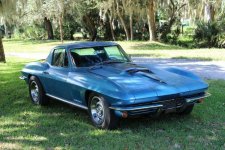
Not sure if it's a one-or-the-other choice... I think refurbished wood against an original finish has its own aesthetic, which balances nicely the idea of appreciation for the old and original, with the necessity of renewal. I guess I just wouldn't be so sure that this represents an "incomplete" restoration: I think it might be perfectly restored already. Have you ever seen pictures of Neil Armstrong's Corvette? A guy found it in the back of a garage where it had been sitting for decades, lost. He did what was necessary to make it run, and then he put new tires on it; everything else was left as-found. And it's beautiful that way.
 

Attachments

  • 1200x0-2461056737.jpg
    1200x0-2461056737.jpg
    167.3 KB · Views: 7
Back
Top Bottom