












































Old Labradar and .22LR

jimbo14

CGN Ultra frequent flyer
Rating - 100%
35   0   0
Location
GVRD
I had a problem with my labradar not picking up .22LR and tried a few things, but then found a way to reliably get it to read. It always works now.

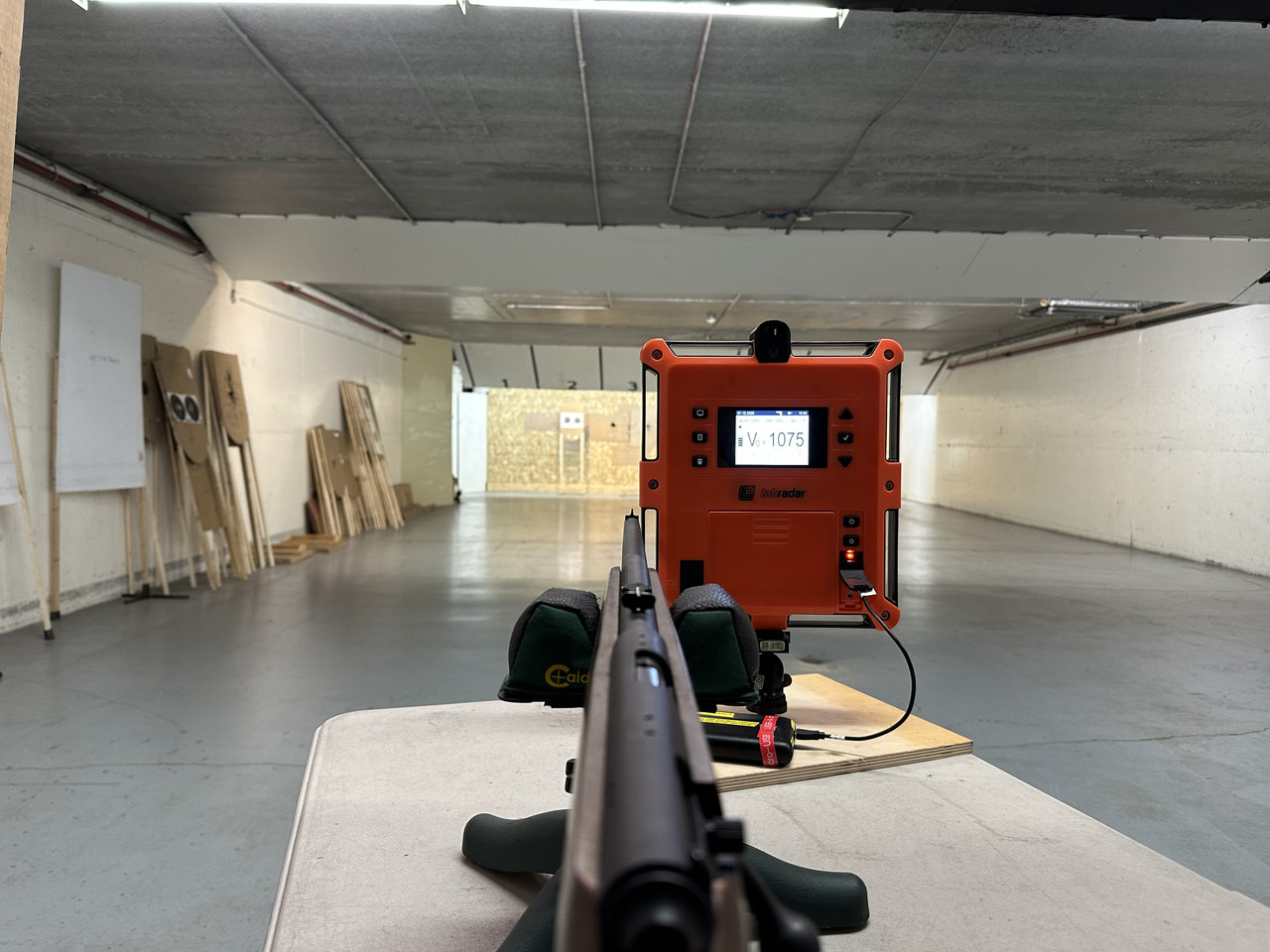
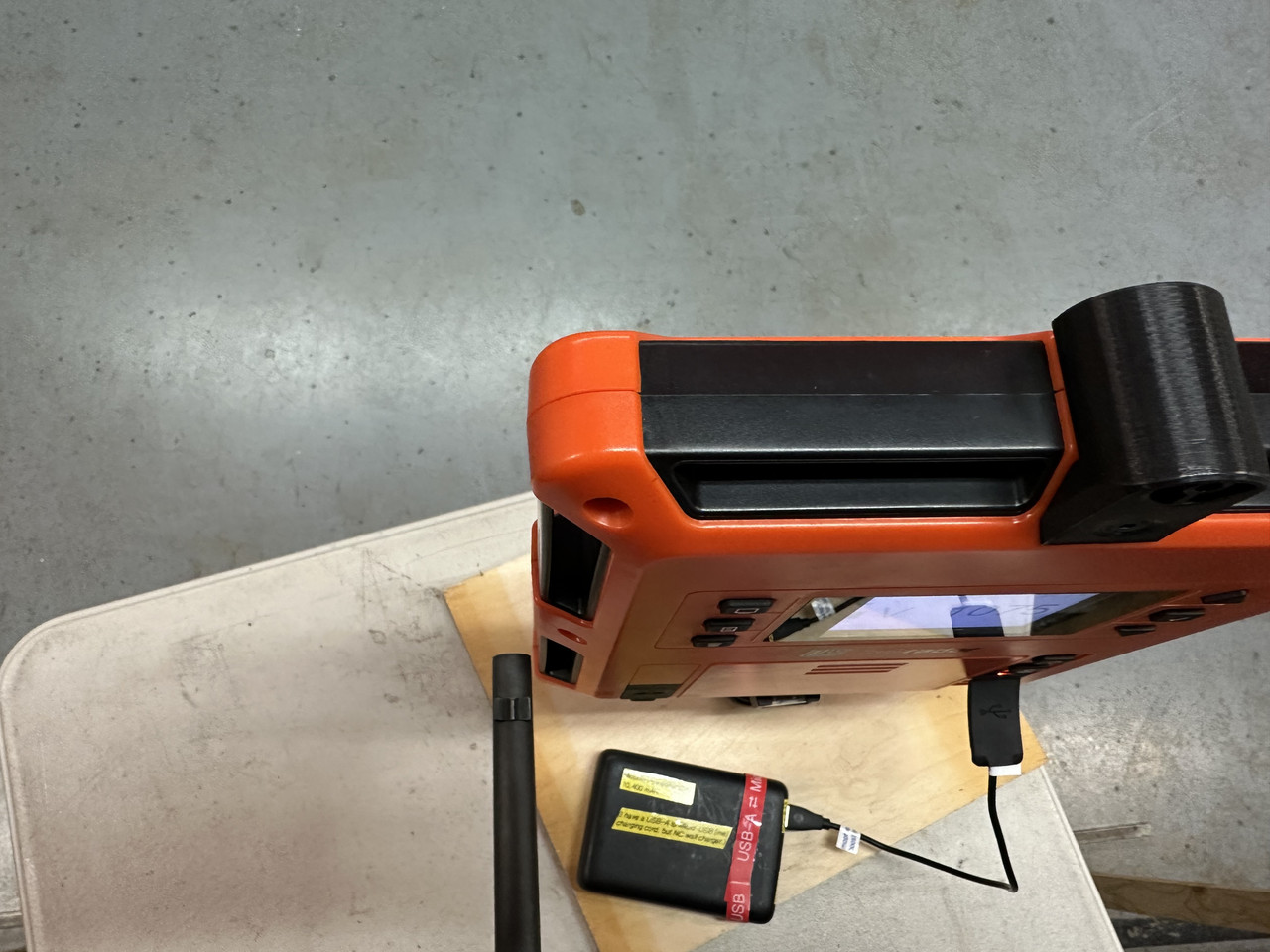
1) get your muzzle to be lined up with the orange protrusion on the side, not the open black parts.
IMG-9001.jpg


2) put the muzzle just before the labradar
3) use the handgun speed range and the highest sensitivity
IMG-9002.jpg


That should work for you. I’ve seen people dumping these for as low as $350 because they won’t work with .22LR, so grab a deal and try this method.

The new gen of chronos are nice. Easy to use, etc, but in this time where money is tight for some, I hope this helps.
 
Then you either don't have the offset distance set correctly or your aim to target is off. Both affect what it considers to be your bullet. If you are only using it for rimfire you can increase the mic sensitivity by taking it apart and seeing where to drill holes to directly lead to the mics. The problem with rimfire and an original LabRadar is rounds are so quiet compared to centrefire, and the mics are shielded by the plastic so much that it makes hearing 22 LR rounds difficult for it. The plastic housing does a great job of isolating the mics from the small report of a 22 LR round, which is why it is so fussy at actually triggering it. Drilling a 1/4" hole to give the report a direct path to the mics should increase that sensitivity immensely. If you take the unit apart and inspect it near the location where you've been holding your muzzle you should be able to identify the mics and also see the housing features that are actually reducing sensitivity.

I'd rather not drill holes in mine, so I use doppler triggering and make sure I set it up properly. I've shot thousands and thousands of rounds past it and it works great. I have lots of sessions where I shoot hundreds of rounds without it missing a single one. But you must have it set up properly. If you set it for a 12" offset distance you must make sure your muzzle is indeed about 12" away from it. If you set it for a 6" offset distance you must make sure your muzzle is indeed about 6" away from it. It matters because of the math it does concerning the relationship between the bullet and the unit. The fact that there is only a 6" difference between the two settings should illustrate how important it is to have the distance set correctly and to actually be at that distance. And you must make sure it is aimed pretty well at your target. That 3D printed sight you have should suffice for that.

Don't some use an external trigger?
Yes, they sell external mics. They use a 3.5 mm stereo plug with the mic's + and - terminals wired to the left + and right + wires to try to make it seem like their own mic is somehow special. But it isn't. It's just wired strangely to make it seem like it is somehow different. Beyond the wiring, it really isn't. You can also use vibration/inertial switches wired up the same way if your gun is light enough to move a fair bit during firing. But I've found doppler triggering to be better because the vibration/inertial switches trigger false positives while you work the bolt and/or fidget around with your rifle's position.
 
I tried all the offsets. Muzzle in front, in line, behind. Tried so many combos I got sick of it.

Tried the RAT. A buddy did the mic. Never read in the manual to drill a hole so never did that. lol!

It works 100% right now, so I’m good.

…and I have seen a Garmin miss a couple shots. I’ve done enough of this. lol!
 
Well, it uses mics to hear the reports. Muzzle in front would never help because the mics are facing the front of the unit. The mics are basically sealed inside these oblong rectangular chambers inside the unit with the opposite end of the chamber being the face of the unit. I presume this sealed nature is to help keep them safe from large centrefire reports, though I don't know if that's even necessary, frankly. And if all you're ever using is 22 LR it probably wouldn't be an issue to expose the mics to the 22 LR more directly by introducing holes at the ends of those chambers so it can listen more directly. If you're concerned about centrefire exposure from adjacent benches I can't see that being a problem. If you're still going to be shooting some centrefire yourself you could try with a very small drill bit first and see if that's enough, and move up a step if it didn't help enough until it does. I'll show you the chambers.


Now that I'm thinking about it, perhaps I'll do this mod to my own and just print up some TPU plugs for when using centrefire. Maybe even print up a jig to ensure the holes are centred in those chambers.
 
I bought a Labradar years ago and it was defective right from the get go. Replaced without any hassle but bought the magnetospeed in the interim. Sold the Labradar on Nutz as soon as it arrived. Bought the Garmin and sold the Magnetospeed. My take was Labradar is huge, difficult picking up rimfire(for me) and a PIA to set up. The magneto was much more compact, bit of a pain setting up, worked for the rimfire but risk of shooting it and needed Arca bracket for testing groups. Garmin is small, easy setup and picks up anything everytime. Great for pellet rifles and rimfires!
 
But the Garmin only gives you muzzle velocity. If that's all you want, that's great. I like having velocities every 1 or 2 ms all the way downrange until the bullet disappears. Gives you more data to do more with.
 
Thanks for the video. Appreciate it. 🍻

On Tuesday the Labradar will be listening to my 300PRC, so I’ll leave it alone.
The frustrating thing is, they could fix this so easily just by fixing the software. All that's wrong with 22 LR detection is they didn't make the highest sensitivity setting sensitive enough. That's just a software volume knob, basically. 10 seconds to fix it. Buggers. But I get the feeling they just farmed out the programming and don't know how to fix anything themselves. I looked into creating some custom firmware for it, or even just patching the existing firmware, but unfortunately that would be more tricky than I hoped because they're cryptographically signed. Doesn't make it impossible, but makes it difficult. Too bad they wouldn't make it open source.
 
I have quite a collection of ‘vintage’ chronographs…many donated and most with embarrassing unexpected encounters with bullets. Buddies will come up to the farm with a few toys and a crono so I get to see the pain and suffering of setups and failures. Labradors are a major PIA and the new Garmins all seem to work flawlessly even for guys that don’t read instructions.
I don’t sweat the velocity game anymore, my coyotes can’t tell the difference between plus or minus 100 ft/sec when they get hammered by a Vmax.
 
But the Garmin only gives you muzzle velocity. If that's all you want, that's great. I like having velocities every 1 or 2 ms all the way downrange until the bullet disappears. Gives you more data to do more with.
Well my understanding was only 5 distances and only to 100yards and that was dependant on projectile size. So I’m not sure how your getting readings every 1-2ms? I got a sour taste with the Labradar so I ditched it. No regrets! I don’t really care how fast my bullets going at ??Yards but is it 4.2 or 4.3 up. All my info is thru actual shooting to verify and whether the bullets going 1800or 2100 fps is irrelevant to me for my purposes. I’m pleased you like your Labradar.
 
Last edited:
The frustrating thing is, they could fix this so easily just by fixing the software. All that's wrong with 22 LR detection is they didn't make the highest sensitivity setting sensitive enough. That's just a software volume knob, basically. 10 seconds to fix it. Buggers. But I get the feeling they just farmed out the programming and don't know how to fix anything themselves. I looked into creating some custom firmware for it, or even just patching the existing firmware, but unfortunately that would be more tricky than I hoped because they're cryptographically signed. Doesn't make it impossible, but makes it difficult. Too bad they wouldn't make it open source.
I understand more than you think. 😉 I’m an old school assembly language programmer. That was my full time job in the 80’s/90’s until we moved to C.
 
Well my understanding was only 5 distances and only to 100yards and that was dependant on projectile size. So I’m not sure how your getting readings every 1-2ms? I got a sour taste with the Labradar so I ditched it. No regrets! I don’t really care how fast my bullets going at ??Yards but is it 4.2 or 4.3 up. All my info is thru actual shooting to verify and whether the bullets going 1800or 2100 fps is irrelevant to me for my purposes. I’m pleased you like your Labradar.
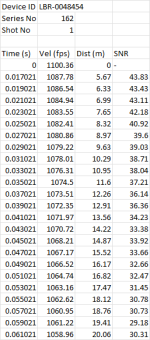
In handgun mode it records data every 2 ms, and in rifle mode it records data every 1 ms. For each measurement period you get the time, velocity, distance, and signal to noise ratio. How far away it can still see the bullet depends on the size of the bullet. For 22 LR you start running into signal to noise issues somewhere in the 75 m range. It can often still see the bullets out to about 100 m, but the signal to noise ratio starts becoming problematic by then. With larger bullets it can see it for a lot longer.

1783903020660.png

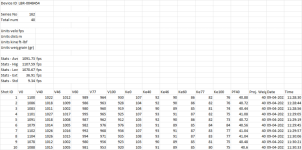
All of these radar-based chronographs work by very frequently taking measurements and then back-calculating what the velocity was at the muzzle. But it seems only the old school LabRadar actually lets you see all the measurements. It keeps a file like this one for every shot it takes, and it also keeps a file like this for each series.

1783903199133.png

You only get to see the calculated muzzle velocity plus up to four downrange distances on the unit's built-in display, but if you copy the files off the SD card then you can see every single measurement.

Why would you care about seeing more than just the muzzle velocity? Maybe you would, and maybe you wouldn't. Do you care about the standard deviation of the BC? Does it matter to you how alike all the bullets from a given lot are? Or are you fine if they are all quite different from each other? Would it be helpful to be able to determine your corrections to the advertised BC? Or is the advertised BC close enough for your needs? Would it be helpful to know that of the four lot numbers of bullets that you have to choose from to load up and go shoot at this year's nationals event there is one lot number that has bullets that are much more alike compared to the other three lot numbers? Or are they all just killing gophers and coyotes? Everybody's got different needs, and different things that matter to them. Some things matter for squeezing every last point out of your equipment at the big match, and not all those things matter when your target is 0.25 metres squared or whatever.
 
I understand more than you think. 😉 I’m an old school assembly language programmer. That was my full time job in the 80’s/90’s until we moved to C.
Cool. I only know enough to get things crudely done, hehe. Started "poking" around as a kid with the Apple II and Commodore PET. Never took it anywhere, though. Wish I did. I wanted to go into programming after high school at the end of the 1980s but didn't get to make it happen.
 
Cool. I only know enough to get things crudely done, hehe. Started "poking" around as a kid with the Apple II and Commodore PET. Never took it anywhere, though. Wish I did. I wanted to go into programming after high school at the end of the 1980s but didn't get to make it happen.
lol! You’ll love this: I wrote a disassembler for the Apple ][ and put the kernel into a file. Then edited it so I could build my own kernel. Ripped out the cassette stuff, and other things I didn’t need. Turned it into an…. Ummmm…. No need to specify here. lol!

Burned it onto one half of a 2732 eprom with the factory kernel in the other half. Put a switch on the upper address line.

So I could boot up software with an Apple ][+ kernel, and then when it was running, flip the switch and have my way with it. Hahahahaha!
 
I haven't use my old orange Labradar for a while but if I remember correctly, it comes with an external microphone to use with rimfire. Let me open it up to check out.
 
lol! You’ll love this: I wrote a disassembler for the Apple ][ and put the kernel into a file. Then edited it so I could build my own kernel. Ripped out the cassette stuff, and other things I didn’t need. Turned it into an…. Ummmm…. No need to specify here. lol!

Burned it onto one half of a 2732 eprom with the factory kernel in the other half. Put a switch on the upper address line.

So I could boot up software with an Apple ][+ kernel, and then when it was running, flip the switch and have my way with it. Hahahahaha!
Hehe, nice. Closest I came to that was cutting a couple of traces on a Commodore 1541 floppy drive control board that set the device ID, and wired a couple of switches to them so when visiting friends to pirate games I could change my drive's device number so floppy copying was straight from one to the other instead of having to read/swap/write. I think I was only 12 then. Grandpa's soldering lessons paid off, hah. Good thing I didn't ruin something I couldn't possibly replace, hahaha. Mom just would've said tough luck, dummy! :D

I haven't use my old orange Labradar for a while but if I remember correctly, it comes with an external microphone to use with rimfire. Let me open it up to check out.
That was an optional extra purchase when I bought mine. Certainly should've come with it instead.
 
Back
Top Bottom






















