












































You are using an out of date browser. It may not display this or other websites correctly.
You should upgrade or use an alternative browser.
You should upgrade or use an alternative browser.
Picture of the day
- Thread starter jwhc
- Start date




Dark Alley Dan
CGN Ultra frequent flyer
- Location
- Darkest Edmonton
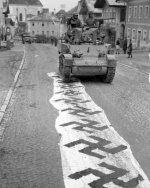
Sends a message, doesn't it?
I wonder if these were made to be the seperately printed central device on the standard nazi battle flag, the swastika-in-a-white-circle in the middle of it? Someone found a roll of 'em and laid it out in the street for exactly this purpose...
That 25 pounder could have been used by the Aussies in Viet Nam, hence the M2 helmets.View attachment 1170551
Interesting. Judging by the range cone and the recoil assembly, that's a 25 pdr. I'd read about the Australians using cut down 25 pdr guns - no shield, no muzzle brake - in the Pacific, but what about the helmets? Are these Yanks muckin' about with Aus kit?
They used them for a lot of years, and I saw some in 1969, and they were well taken care of and liked by their crews."Portuguese M5A1 Stuart light tank in Africa, 1960s. Portugal received around 70 M5 light tanks from France and Canada in the 1950's"
View attachment 1173832

Dark Alley Dan
CGN Ultra frequent flyer
- Location
- Darkest Edmonton
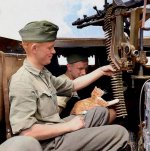
Apparently, Gary Sinese has concerns about Carey Elwes employing cats as assistant MG gunners.
Dark Alley Dan
CGN Ultra frequent flyer
- Location
- Darkest Edmonton
Good point. Those old girls had a long work history.That 25 pounder could have been used by the Aussies in Viet Nam, hence the M2 helmets.
Dark Alley Dan
CGN Ultra frequent flyer
- Location
- Darkest Edmonton
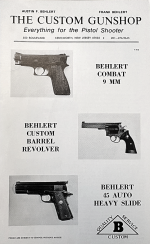
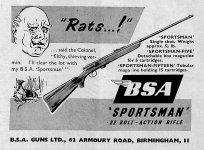
Not military connected, but a heck of an ad:

Bubba Yugga
CGN frequent flyer
- Location
- Midwestern Ontario
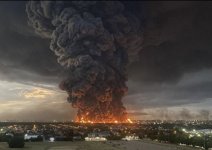
Welcome to Mordor.
Dark Alley Dan
CGN Ultra frequent flyer
- Location
- Darkest Edmonton
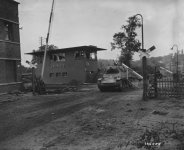
I didn't know about Flight Lieutenant Ernie Glover until this morning.
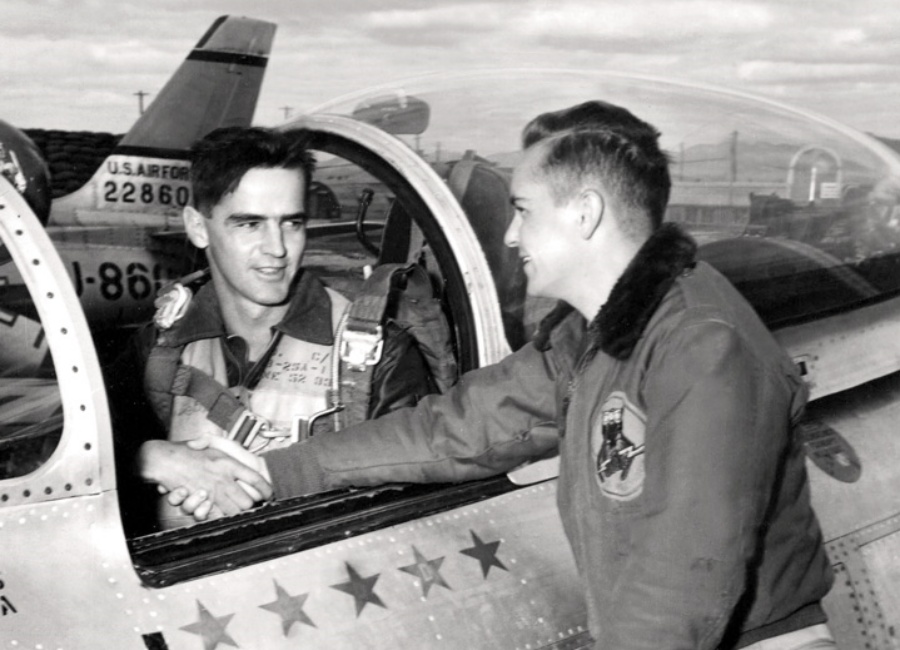
One DFC issued to an RCAF member since world war two, and it was his. Attaboy, Ernie.
Over 26,000 Canadians served during the Korean War. Often called the “Forgotten War,” Korea still represents a vital part of Canadian military history. All three branches of the Canadian military participated in Korea. Although the Royal Canadian Air Force (RCAF) served exclusively in a logistical capacity – by transporting troops, equipment, and injured personnel over the Pacific – 22 RCAF pilots volunteered with the United States Air Force (USAF) to serve in combat roles. These 22 RCAF pilots flew over 1,000 sorties during the war, and between them, were credited with nine MiG-15s destroyed, two probable kills and ten damaged whilst earning eight US Distinguished Flying Crosses, ten US Air Medals and one Commonwealth Distinguished Flying Cross. Ernest “Ernie” Glover, one of the 22 volunteers, was the last and only RCAF pilot to be awarded the Commonwealth Distinguished Service Cross since the Second World War.
Born October 20, 1922, in Niagara Falls, Ontario, Glover enlisted with the RCAF following the outbreak of the Second World War. He earned his wings in 1941 and flew almost 100 combat missions with the Royal Air Force operating both Hurricane and Typhoon fighters. Glover was shot down in 1943 during a night raid over occupied France. He was flying at extremely low altitude to strafe a freight train when an anti-aircraft crew opened fire on his plane. Glover describes the attack in an interview with John Melady saying:
“It was about four in the morning, and I was rather surprised that they were awake. I was only about fifty feet in the air when they got me. I pulled up as much as I could, but then when I knew the ship was going to go in, I blew the canopy and got the hell out of there. Fortunately, the [para]chute opened, but I was almost down to the treetops when it did.”
Like most pilots that are forced to eject over enemy territory, Glover was captured. He would spend the remainder of the war in the prisoner of war camp Stalag Luft III. Stalag Luft III was the site of “The Great Escape,” where captured Allied airmen worked together to tunnel out of the camp, though Glover was not among the 76 men who escaped through the tunnel before it was discovered.
Returning to Canada in 1945, Glover worked for the Dominion Bridge Company before reenlisting with the RCAF in 1948. As a veteran aviator, Glover was selected to train on the British-made Vampire jet in 1951, crucial experience when he later volunteered to serve with the Americans in Korea.
Glover excelled in Korea. He was an incredible dog fighter and had an unmatched knack for maneuvering his jet through the treacherous flying conditions in the Korean theatre. Most air-to-air combat in Korea occurred in “MiG Alley,” over a strip of land near the China-Korea border. Glover had 3 confirmed MiG kills, the highest of any Canadian pilots during the Korean War; he shot down two and caused a third to crash by outmanoeuvring it. He also damaged at least 3 more MiG fighters. Glover flew 58 combat missions during his time in Korea.
One DFC issued to an RCAF member since world war two, and it was his. Attaboy, Ernie.
Last edited:
Dark Alley Dan
CGN Ultra frequent flyer
- Location
- Darkest Edmonton
Today, Bookface gave me a pirated clip from the Godawful 1995 Jim Belushi remake of Sahara (1943, Bogart). Just a full-on dogsh!t America Won the War stuff.
But at one point they're strafed by a FIAT fighter of some description. Internet says it's a FIAT G.59. So I went looking. And damn, a very pretty bird, at least to my eye.
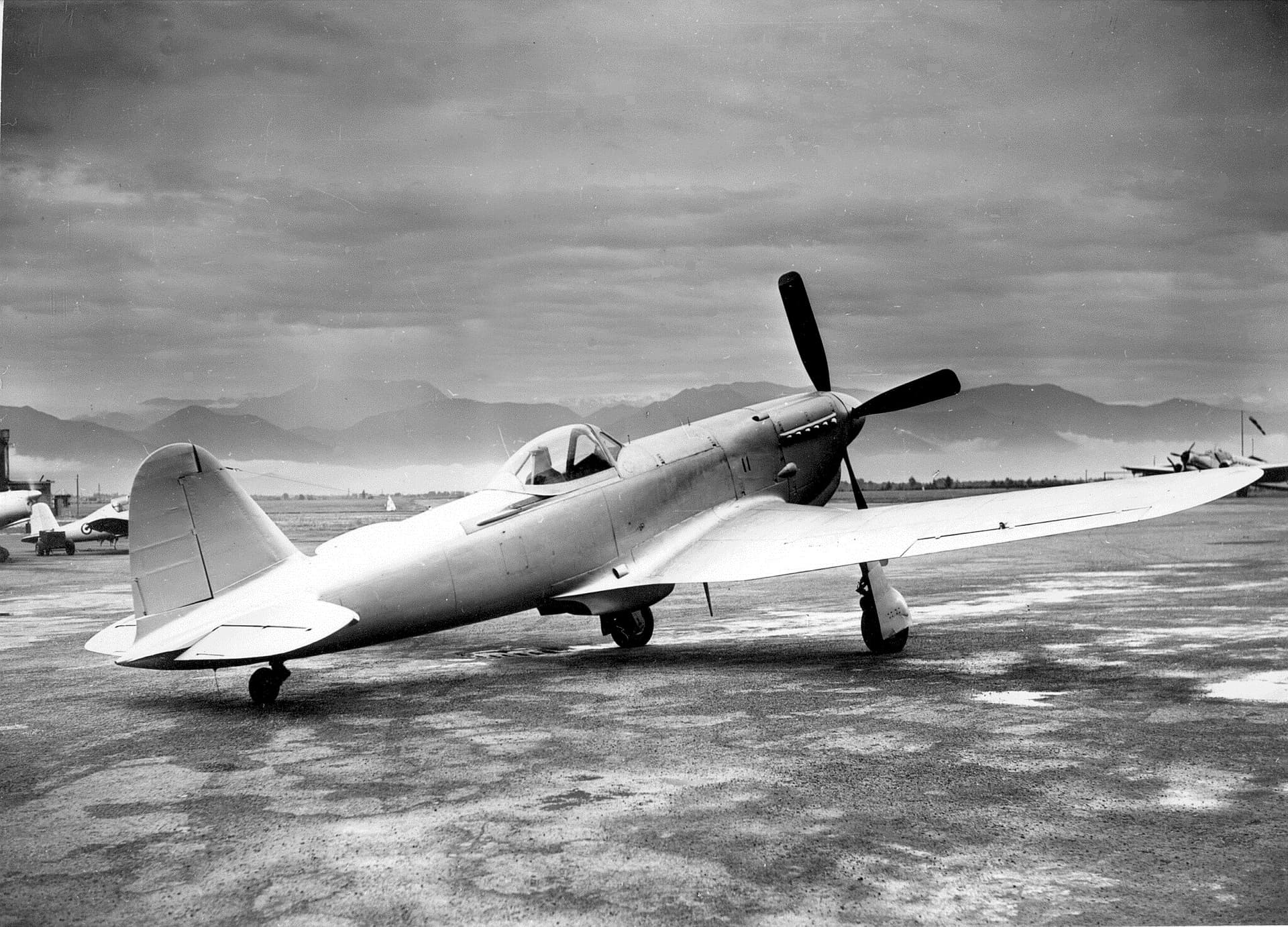
Earlier marks were razorbacks and powered by Italian clones of the DB601, but after der krieg Daimler Benz wasn't sending any more motors, so they re-engined with RR Merlins, re-jigged to make 'em with a bubble canopy, and, like a great many Italian machines, created a mechanism that's, frankly, kinda ###y.
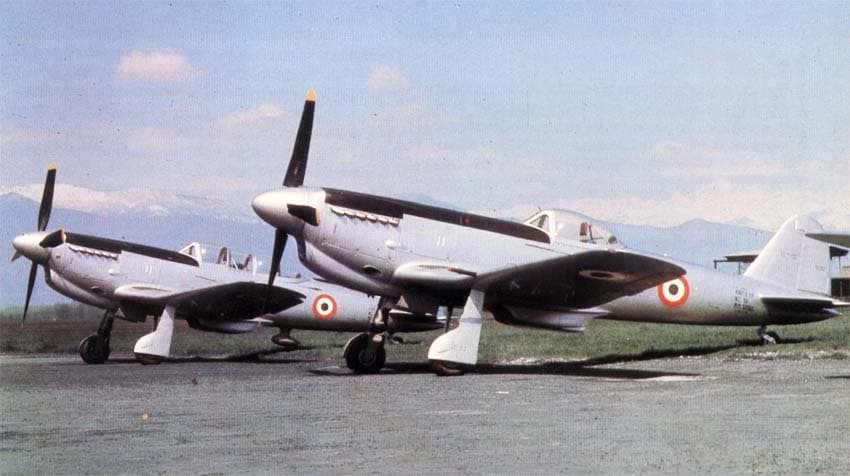
Very late war, and like the Sea Hornet, Tigercat, Bearcat, Lincoln, etc. a brilliant idea but a year too late.
Here's the 4b, the two-seat advanced trainer version.
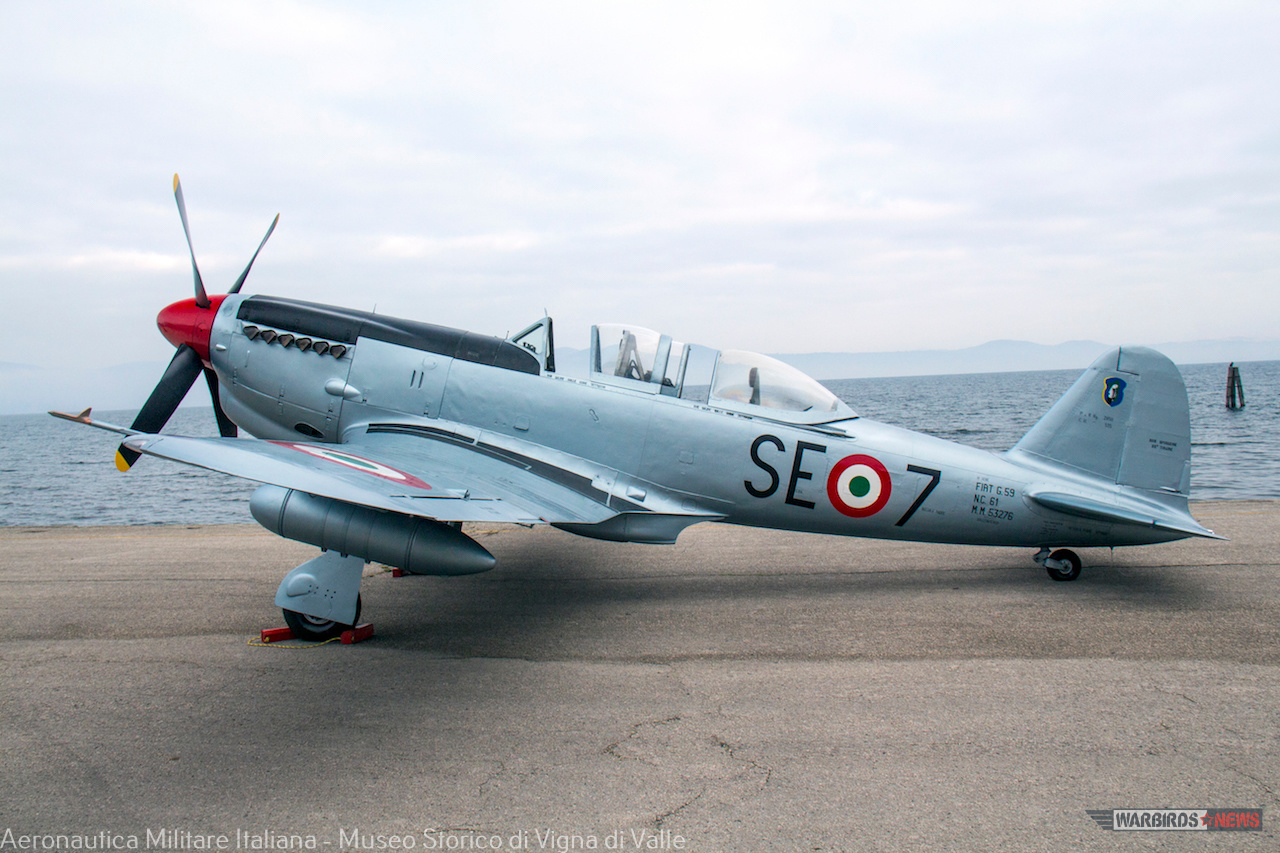
Got a couple bucks lying around? Here's one for sale: https://www.tina-fly.com/fiat-g-59-4b/
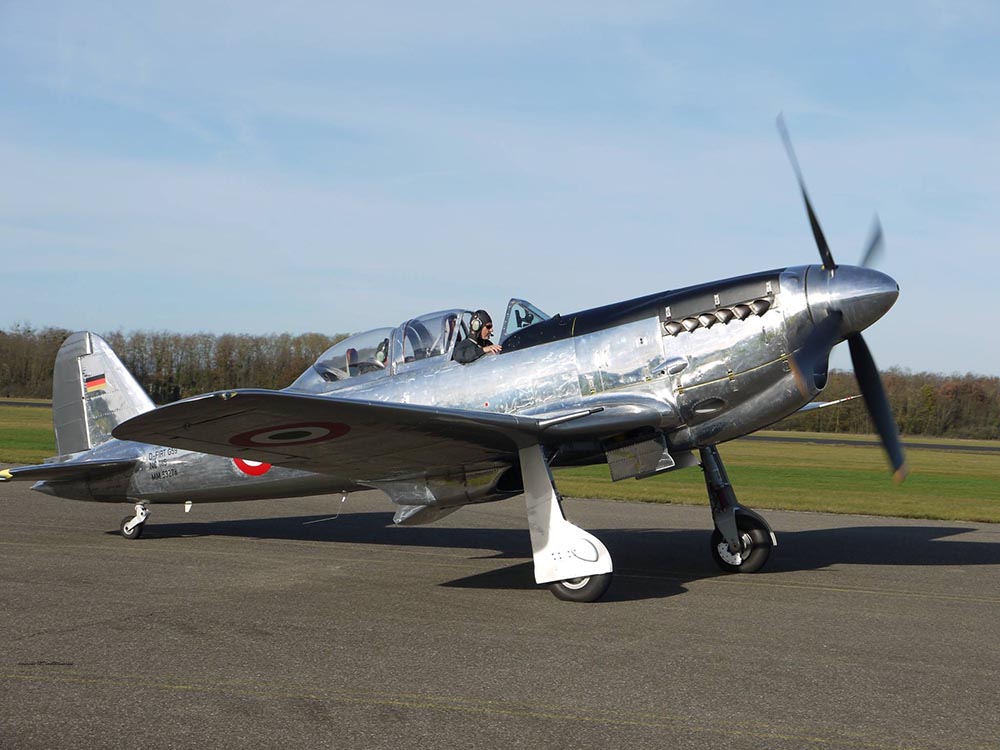
But at one point they're strafed by a FIAT fighter of some description. Internet says it's a FIAT G.59. So I went looking. And damn, a very pretty bird, at least to my eye.
Earlier marks were razorbacks and powered by Italian clones of the DB601, but after der krieg Daimler Benz wasn't sending any more motors, so they re-engined with RR Merlins, re-jigged to make 'em with a bubble canopy, and, like a great many Italian machines, created a mechanism that's, frankly, kinda ###y.
Very late war, and like the Sea Hornet, Tigercat, Bearcat, Lincoln, etc. a brilliant idea but a year too late.
Here's the 4b, the two-seat advanced trainer version.
Got a couple bucks lying around? Here's one for sale: https://www.tina-fly.com/fiat-g-59-4b/
Dark Alley Dan
CGN Ultra frequent flyer
- Location
- Darkest Edmonton
Been thinking about this one:

Looks like Dieter there on the left was in charge of determining where the signal was strongest in the X axis, while Kurt on the right was there to nail down the Y axis. Move the wheel until the sound is loudest. Then, when both agreed the signal was stongest, Unteroffizier Guenter in the middle position recorded the numbers they'd arrived at.


This from some damn place:
So simple, ever der Frauen can do it!

"Hey, baby. Wanna take a ride on my Ringtrichter Richtungshörer?"
Some detailed info here: https://www.festungswerke-cuxhaven.de/en-gb/horchgeraete Tried to find a pic of a preserved one, but I guess they're as rare as Hermann Goering's model train set. That being said, here's one:

What a gloriously complex and exceedingly German way to do this.
Looks like Dieter there on the left was in charge of determining where the signal was strongest in the X axis, while Kurt on the right was there to nail down the Y axis. Move the wheel until the sound is loudest. Then, when both agreed the signal was stongest, Unteroffizier Guenter in the middle position recorded the numbers they'd arrived at.
This from some damn place:
The acoustic locator could detect targets at distances from 5 to 12 km, depending on weather conditions, operator skill, and the size of the target formation. It gave a directional accuracy of about 2 degrees.
So simple, ever der Frauen can do it!
"Hey, baby. Wanna take a ride on my Ringtrichter Richtungshörer?"
Some detailed info here: https://www.festungswerke-cuxhaven.de/en-gb/horchgeraete Tried to find a pic of a preserved one, but I guess they're as rare as Hermann Goering's model train set. That being said, here's one:
What a gloriously complex and exceedingly German way to do this.
Last edited:
This photograph captures German soldiers operating a sound detector during World War II, a device used to locate aircraft by detecting their sonic booms. The equipment, developed in the 1930s, was part of Germany's early anti-aircraft defense systems before the advent of radar.Been thinking about this one:
Looks like Dieter there on the left was in charge of determining where the signal was strongest in the X axis, while Kurt on the right was there to nail down the Y axis. Move the wheel until the sound is loudest. Then, when both agreed the signal was stongest, Unteroffizier Guenter in the middle position recorded the numbers they'd arrived at.
This from some damn place:
So simple, ever der Frauen can do it!
"Hey, baby. Wanna take a ride on my Ringtrichter Richtungshörer?"
Some detailed info here: https://www.festungswerke-cuxhaven.de/en-gb/horchgeraete Tried to find a pic of a preserved one, but I guess they're as rare as Hermann Goering's model train set. That being said, here's one:
What a gloriously complex and exceedingly German way to do this.
Dark Alley Dan
CGN Ultra frequent flyer
- Location
- Darkest Edmonton
That's a hell of a good pic, piper. The sense of movement is brilliant.






















