











































I need annealing brass - North of 407 along 404

bigHUN

CGN frequent flyer
Rating - 100%
3   0   0
Location
Aurora/ON
I have about ~200 Win308 shot shells to anneal. Please let me know if you live close by or commuting on that route.

but, First a question:
The AMP - is the Temp adjustable and what range?
Because I would like to anneal at 500+ Celsius = 1000 Fahrenheit, and I have a BNIB Tempilac to test and measure if you need one.
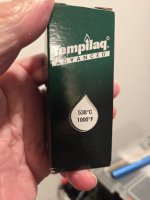
20260809_120603.jpg

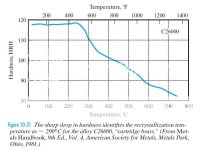
I am targetting this hardness:

c26000annealing.jpg
 
I have about ~200 Win308 shot shells to anneal. Please let me know if you live close by or commuting on that route.

but, First a question:
The AMP - is the Temp adjustable and what range?
Because I would like to anneal at 500+ Celsius = 1000 Fahrenheit, and I have a BNIB Tempilac to test and measure if you need one.

View attachment 1187638

I am targetting this hardness:

View attachment 1187639
BRASS make up is often very much OFTEN different - the AMP identifies the brass make up and heats and times the amount needed to be OPTIMAL ! your tempilaq is for BB Q ing brass with gas - BUT you knew that right :p
 
I have about ~200 Win308 shot shells to anneal. Please let me know if you live close by or commuting on that route.

but, First a question:
The AMP - is the Temp adjustable and what range?
Because I would like to anneal at 500+ Celsius = 1000 Fahrenheit, and I have a BNIB Tempilac to test and measure if you need one.

View attachment 1187638

I am targetting this hardness:

View attachment 1187639

I have not used one, but my understanding is you can set them to run any program you want. So it is adjustable in that sense.

But, based on what AMP themselves have published, their recommended procedures are all intended to achieve a hardness of 95-100 HV, which appears to be what you are looking for anyway. So probably no need.

And, when I was doing annealing tests I found that the 538°C your tempilaq is for isn't nearly hot enough to reach the hardness you claim to want anyway. AMP is probably exceeding 700C to get to that point.

Finally, it is worth considering that AMP has never provided a shred of proof or data to support the whole goal of 95HV. There are dozens of papers out there, many 100 years old, that say all the stress-relief benefits of annealing can be achieved with little or no drop in hardness. I think the 95 HV stuff is baseless.

BRASS make up is often very much OFTEN different - the AMP identifies the brass make up and heats and times the amount needed to be OPTIMAL ! your tempilaq is for BB Q ing brass with gas - BUT

This is also baseless. I have seen similar claims but never any credible evidence that any brass small arms case maker, anywhere in the world, is using anything other than C26000 brass, which is 30% zinc, +/- 1.5%.
 
Anyway, these two x100 brass probably from different batch history and need a high Temp to anneal to a closer hardness.

Ones I got to a full length sizing + neck sizing, I have an instrument to compare the torque individually and sort to my liking.

Anybody commuting to SGC along the 404 can help me with the AMP annealing?
 
Last edited:
...

Anybody commuting to SGC along the 404 can help me with the AMP?
You could clarify if you have an AMP and need help getting it set up, or if you're hoping someone else at Sharon has one and could kindly anneal your brass.

(I'm somewhere behind you, no machine or annealing experience yet but it's the next thing I need to add so I'm interested in how this goes.)
 
What is a common AMP factory temperature for Lapua W308 brass to anneal? I am seeing any codes and numbers but not the important.
My engineering brain cells cannot accept that AMP keeps that info proprietary, or cannot be over ridden.
 
Even the AMP guys themselves cannot tell you at what temperature they anneal, they have said that in interviews.

They developed their process by applying current for a period of time, then measuring hardness.
 
Here it comes.... the AMP annealer does peak 1000F.
But not by the program as per code #.
Need probably manual over ride, but people never read that portion of a Manual.

I have noticed on same Lapua brass different hardness in the past couple outsourcing. Because people go by AUTO and the machine choses ones whatever 500F or 620F or 750F and for most people that annealing is good enough. But just a closer look at the brass neck colour you can see that is bs.
 
Lapua hasn't always used the same zinc content in their bass from what ive read in some articles...as low as 25% and as high as 37% if I remember correctly from an article in 6mmbr.
 
My best understanding about the purpose of using Tempilaq is to have and pre-set the Temp ballpark. Not necessary very accurate but at least some visual indication.
No matter using whatever propane or any other heat generating guizmo.
 
the purpose of using Tempilaq is to have and pre-set the Temp ballpark. Not necessary very accurate but at least some visual indication.
If you think visual indicators and approximate temperature are more accurate than AMP, well then get a torch and have at 'er, no need to bother anybody.
Personally, I will trust my precision brass to AMP.
 
If you think visual indicators and approximate temperature are more accurate than AMP, well then get a torch and have at 'er, no need to bother anybody.
Personally, I will trust my precision brass to AMP.
No, I don't said more accurate, I said visual indicator for ballpark the machine pre-set.
I trust the AMP, only saying people didn't play with it enough out of auto settings.
For $2000+ that machine must know much more ....
 
Once you get your Az tec code for your brass, you can then customize it up or down up to three *'s . I've only done it once for someone who requested a hotter setting than what the machine suggested
 
Once you get your Az tec code for your brass, you can then customize it up or down up to three *'s . I've only done it once for someone who requested a hotter setting than what the machine suggested
Can you please elaborate what is that "AZ TEC CODE" so I can tell it to my guy if he doesn't know yet.
 
Back
Top Bottom