"Buy the Barrels, ignore everything else!"
Pretty good advice.
I realize it's easy to point someone looking for a double gun to the businesses that import second-hand guns. For one, it's not my money, and for another, not everyone's interests and purposes align. It's also easy to say that bargains are to be had (it's true), but there is a selection process to go through, and not everyone has had the chance to examine a lot of guns or learn to spot red flags.
For what it's worth, here are some of my personal guidelines in evaluating a second-hand European double from photos and descriptions (without the benefit of holding it in the hand).
Immediate deal-breakers:
- Barrels and action are loose (not on-face).
- Dented barrels.
- Bulged barrels.
- Heavily pitted barrels.
- Chambers lengthened from the original.
- Rust along ribs, or loose ribs.
- Damaged screw heads.
- Missing parts. (except for butt pads/plates, which can be easily added/replaced)
- Weak lever springs. (usually a sign of bigger problems)
- Ejectors that don't work.
- British single triggers (everyone else's are probably OK)
- Chunk of wood missing where the stock meets the action.
- Signs of 'home' gunsmithing and refinishing.
While many of these have potential remedies, they are expensive,
if you could find the right gunsmith with experience in these.
Reasons for concern, but not automatic deal-breakers:
- Small cracks in the stock. (easily fixable, if fixing is required)
- Light pitting, or discolouration in the barrels. (often just needs a good cleaning)
- Overly worn checkering (heavy wear is OK, sanding is not)
- Excess cast (might have been made to fit one person, who isn't you)
Together with the initial comment on barrels, look for signs of
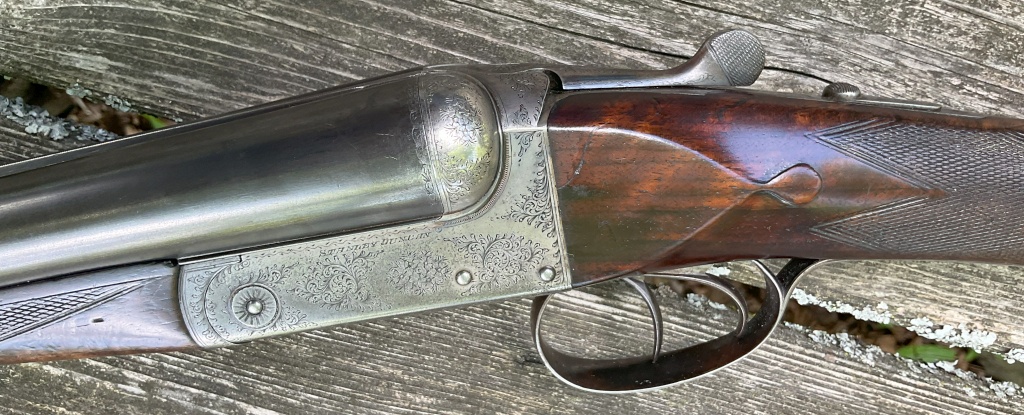
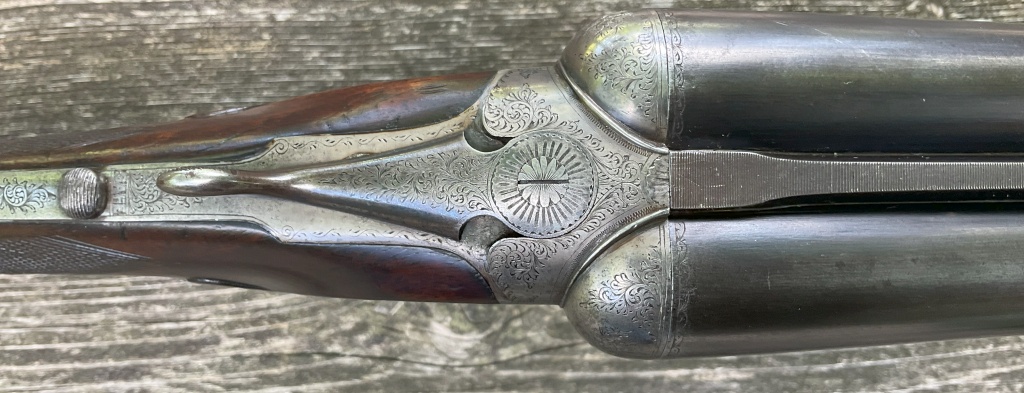
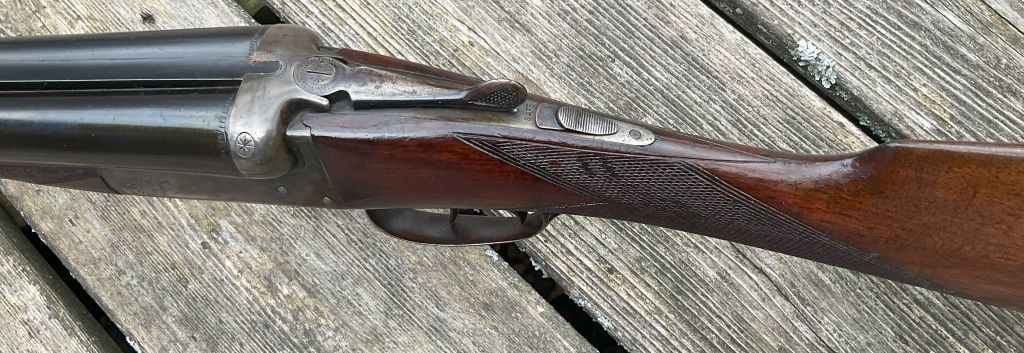
quality. A better gun is made with better materials, finished to a higher standard, and better equipped to survive years of prior use. I look for artistic shaping/sculpting of the action body, especially around the fences. This requires talented handwork, which basic guns don't get. Look for signs the gun was part of a pair (marked with a 1 or 2, usually on the toplever or upper rib); anyone ordering a pair was buying top quality, not mid- or entry-level. While not a guarantee, better guns often have better engraving. Learn how to spot better hand engraving (see the CGN sticky on engraving, for reference). Extra details on the stock, like drop points, side panels on boxlocks, etc., shaping of the comb, anything that says extra effort. For spotting a top-quality boxlock, look for an extra screw head on each side just behind the action fences, indicating intercepting sears. Some are put off by sleeved barrels (which keeps prices low), but if done right, there is nothing wrong with these; it is also a sign the original owner was ready to invest to keep a quality gun in the field.
If you can, ask for photos of the proof marks, which can tell the story of a gun (repairs, modifications etc.). Because of strict proof laws, I have no qualms about buying from an importer. I would be reluctant to buy second-hand off the EE without a lot of extra details, to avoid guns that have been modified, chambers lengthened, or otherwise messed with.
A bit of research is worthwhile, either by yourself or by asking someone with more experience. Very often the name on the gun is the retailer, not the maker. Many small-town makers bought their doubles from Webley & Scott (with their name added to them), and these can be had more cheaply than ones with the Webley & Scott name, despite the guns being of identical quality. Conversely, a Webley & Scott-marked gun might be cheaper than one engraved with a famous name, despite the latter being a rebranded W&S. I would rather have a top-quality gun by an obscure maker than a third-quality gun with a more famous name. Of course, many of the names that are little-known today were quite renowned 50-100 years ago, and recognized for their quality output. Some regions can claim a higher proportion of well-made guns (Scotland, for example). London makers/retailers often had more of a reputation to protect (even if their guns were made in Birmingham, like most everybody else's), but again this is no guarantee. Gunmakers back then were just as liable to make unwarranted claims of their superiority, just as modern gun manufacturers do today.
For top-lever guns, much is said about having to be 'right of center' to prove sturdiness. This does not apply to British guns, at least, which would have left the factory/workshop perfectly centred. A lever slightly left of center indicates some wear, but if the gun closes tight, it will probably last many more years, and possibly outlive you. New guns that are sold with the lever slightly to the right are more often than not made with lower-quality steels that will wear out much more quickly, and the manufacturers know this.
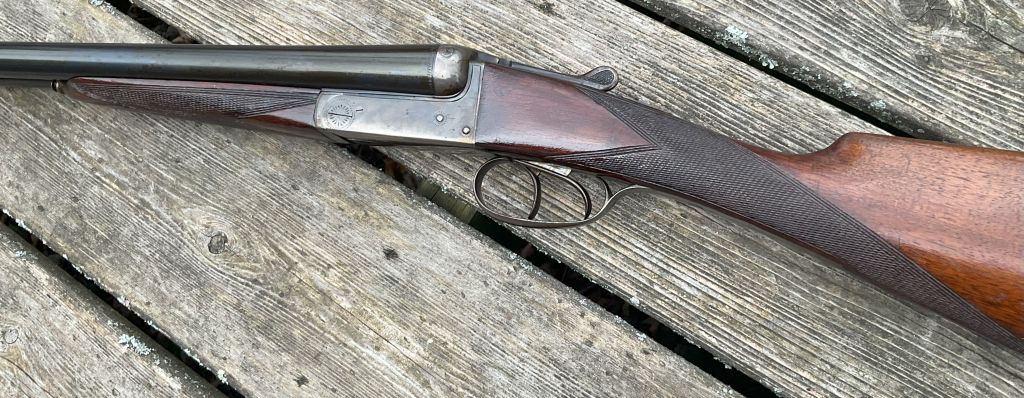
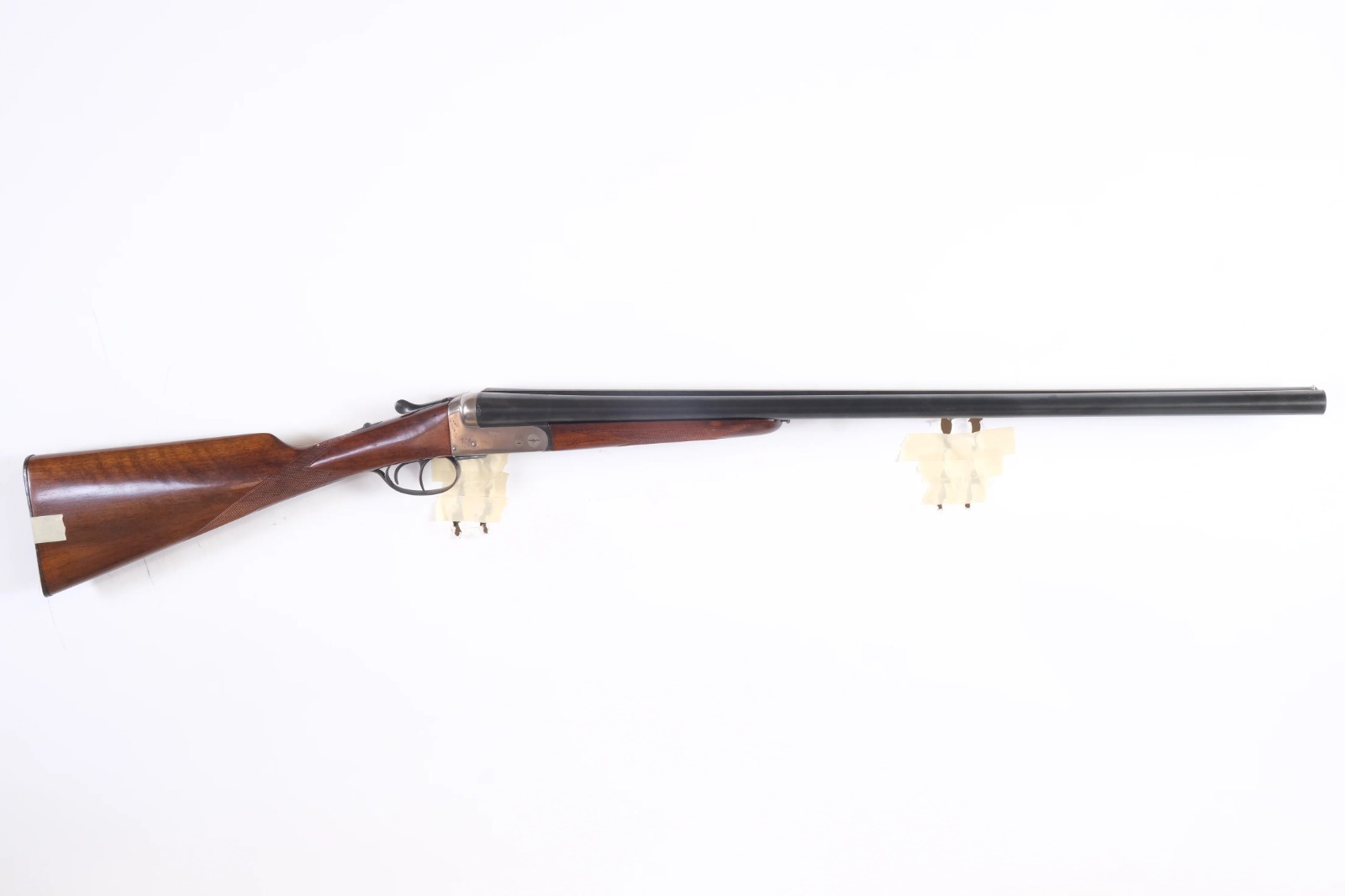
Finally, and this is subjective, but go for the beautiful gun, where all the details come together in harmony: tapered barrel tubes, perfectly laid ribs, artistic shaping of the action, neat checkering (without overruns), figured stock, balanced proportions. Find one of these, and learn to live with/adapt to whatever chamber length and choke it was made with. These last two details are
never a dealbreaker for me.

















































 .