











































7mm Rem mag fail to fire

INTIMIDATOR

Regular
Rating - 100%
4   0   0
Location
Southern Ontario
This is long winded so hang with me.

I loaded some 120gr v-max in the 7mm RM to get the newly mounted scope on paper. I bore sighted at the range and first shot went off without a problem. The second shot was click and no bang. Sat there for a couple minutes before I ejected the shell and put it in the 'bomb' disposal can. The second round had a normal firing pin dent in the primer so figured it was a dud primer. Fired the third shot and I physically heard a click, then the bang. Point of impact was maybe 1.5" lower than the other shot at 100 yards. I thought that was off as well. Tried one more and it only went click, no bang. I packed the gun up after that round sat for a few minutes and was disposed of in the safe place.

I resized the brass according to the RCBS die sheet. I can't remember what primer I had put in there as I don't have the box anymore, but I do know that they are just regular large rifle primers, not magnums. Primers were all seated all the way down in the pocket and were flush with the case head. The charge was 61 grains of H414 that was leftover from doing some Mauser loads years ago. The powder has always been kept in a cool dry place in a sealed container.

The case measurements are just a shade bigger than a factory load from the same case manufacture. The reloads chamber and eject without problems.

I came home and pulled the bullets from the remaining 10 rounds and put that powder into a separate container until I figure out what's wrong. I then took the empty primed cases and cycled them through the gun and fired them off, each one fired right off! The primer dents in these shells looked identical to the ones that didn't fire at the range.

I also took the bolt out of the gun and cleaned the bolt internally with some solvent the best I could, some crud did come out but nothing of any worry.

So my question is: Is there a possibility that the primer is not strong enough to ignite 61 grains of H414 effectively that I had 2 fail to fire rounds? The cases are obviously not full and the powder can slosh around in there and could have been in any orientation, just depending on how I loaded them in one at a time.

Thanks for staying with me through to the end, I've been scratching my head a long time over this one. I am going to get some magnum primers this weekend, but don't want to waste them on powder that isn't good anymore if that's the case

Josh
 
So my question is: Is there a possibility that the primer is not strong enough to ignite 61 grains of H414 effectively that I had 2 fail to fire rounds?
any bang from a primer would ignite that, but you said no primer ignition at all??
Can't guess at your powder condition
Would have liked to measure the dud primer depth to see if the firing pin had moved them forward at all

as matter of good habit, I always seat all primers to .004" below flush so they have enough crush to be reliable
 
I think they were federal 210 large rifle. These are the the same ones I use in my 7mm Mauser and never had an issue. I have a picture of the cases that had the primers fired without powder through the rifle. I will include it in here.
 

Attachments

  • 8ad14d15-64f5-4da1-b1a2-b88909c4d1cf.jpg
    8ad14d15-64f5-4da1-b1a2-b88909c4d1cf.jpg
    71.8 KB · Views: 28
I know that the reloadimg manuals recommend magnum primers for the 7mm Remington Magnum. It's most possible that the primers may be contaminated. I suggest that you purchase the Federal 215 and use them in you're handloads, that's what I use in my 7mm. Good Luck!!!
 
As with anything man made you can get bad product from time to time.
For a few years, Winchester had issues with primers (white box era of the 90's) failing to fire, both as components and in their ammunition.
Haven't seen it happen with Federal in the almost 40 years that I have been handloading, but it could...

And always keep your primers in the original box so you know what they are, and what generation of production they are from (manufacturers like to change packaging from time to time, and this helps identify those with issues, such as the Win white box era of manufacture)
And always label your reloads so you know exactly what components you have used (brass, primer, powder type and charge, and bullets make and weight). Good documentation will assist in consistency and repeatability!

Any time you are loading 60+ grains, it is recommended to use magnum primers for more consistent ignition.
And in colder temperatures, it they will also provide more consistency.
How cold was it when you were shooting yesterday?

While you didn't see any variation in your primer dents, it doesn't sound like a firing pin issue...
But make sure you wipe it clean before reinstalling, and using a graphite lube will ensure that any thicker oil type lubrication won't freeze it up during colder shooting/hunting conditions.

I would buy some magnum primers and try again.
 
Now that I'm home I searched the Bible of reload recipes and found the load info.

Load date - January 1st 2026
Case Trim - 2.498"
Primer - CCI 200 Large rifle
Powder - 62gr. H414
Bullet - Hornady 120gr. V-max
C.O.A.L. - 3.226"
 
Too bad you disposed of the misfires. They would have told you more. All you can do now is guess.

No bang, but primer indented properly:
bad primer, or no powder, or bad powder.

I would lean towards bad primer. Maybe the primer was contaminated, or maybe the anvil fell off. It is extremely rare that factory primers misfire from the factory without some kind of mishandling.
 
Last edited:
If the same box of primers work fine in another rifle than id be looking at the rifle. You mention thinking they were federal primers, same as you use in your 7mm Mauser without issue. But then you confirm that they're actually CCI primers. Are you using these CCI primers in your 7mm Mauser without issue?


I've got a rifle that didn't like CCI primers. Very inconsistent ignition. Primers were good though, after dismantling the ammo I hit a few with a hammer to make sure they weren't defective. My solution was to only use Federal primers in that gun, they have a reputation for being easier to ignite and they work flawlessly in the gun that doesn't like Cci primers. I've since finished the box of primers in a different rifle and had no issues with the primers themselves.

OP what kind of rifle in the 7 rem mag?
 
Too bad you disposed of the misfires. They would have told you more and all you can do now take a guess.

No bang, but primer indented properly: bad primer, or no powder, or bad powder.

I would lean towards bad primer. Maybe the primer was contaminated, or maybe the anvil fell off. It is quite rare that factory primers misfire from the factory without some kind of mishandling.
This is the logical probability for my point of view as well. If you saved the failures you could answer the question. Without the evidence, it's only speculative as to the cause. Cheers
 
If the same box of primers work fine in another rifle than id be looking at the rifle. You mention thinking they were federal primers, same as you use in your 7mm Mauser without issue. But then you confirm that they're actually CCI primers. Are you using these CCI primers in your 7mm Mauser without issue?


I've got a rifle that didn't like CCI primers. Very inconsistent ignition. Primers were good though, after dismantling the ammo I hit a few with a hammer to make sure they weren't defective. My solution was to only use Federal primers in that gun, they have a reputation for being easier to ignite and they work flawlessly in the gun that doesn't like Cci primers. I've since finished the box of primers in a different rifle and had no issues with the primers themselves.

OP what kind of rifle in the 7 rem mag?
CCI primers are one of the hardest, while Federal are one of the softest. Weaker firing pin energy that won't fire a CCI will often be enough for federal primers, and the reason why I use federal primers in some of my antiques with tired springs.

But if the indentation looks healthy then it should have fired and the weak hammer spring or firing pin strike is ruled out.
 
what does it matter dispose of the remaining primers start with a new lot and move on not everything needs a explanation you can not fix the primers
 
I am going to get some magnum primers this weekend, but don't want to waste them on powder that isn't good anymore if that's the case
You threw away the dud rounds and so have no way of knowing. Next time take the duds home and pull them apart. They aren't bombs. If the primer doesn't go within a minute or two, its not going to go.

You said the powder is old. This is where my suspicion would lie. I had an experience with powder that clearly had gone bad. It did not smell weird and it had not clumped. Physically it looked fine. However it was VERY difficult to ignite. It created a couple of slow ignitions and several rounds that simply did not go off. When I pulled the dud rounds, the powder had clumped up badly.


It sure sounds like you had some contaminated primers..
He said he fired all the primers once he had pulled the bullets and ALL of them worked. Not sure how we get to bad primers from there?

The logical conclusion is that the problem lies with the powder.


Too bad you disposed of the misfires. They would have told you more. All you can do now is guess.
Exactly and now he has to guess about three possibilities, the rifle, the powder or the primer.
 
This is long winded so hang with me.

I loaded some 120gr v-max in the 7mm RM to get the newly mounted scope on paper. I bore sighted at the range and first shot went off without a problem. The second shot was click and no bang. Sat there for a couple minutes before I ejected the shell and put it in the 'bomb' disposal can. The second round had a normal firing pin dent in the primer so figured it was a dud primer. Fired the third shot and I physically heard a click, then the bang. Point of impact was maybe 1.5" lower than the other shot at 100 yards. I thought that was off as well. Tried one more and it only went click, no bang. I packed the gun up after that round sat for a few minutes and was disposed of in the safe place.

I resized the brass according to the RCBS die sheet. I can't remember what primer I had put in there as I don't have the box anymore, but I do know that they are just regular large rifle primers, not magnums. Primers were all seated all the way down in the pocket and were flush with the case head. The charge was 61 grains of H414 that was leftover from doing some Mauser loads years ago. The powder has always been kept in a cool dry place in a sealed container.

The case measurements are just a shade bigger than a factory load from the same case manufacture. The reloads chamber and eject without problems.

I came home and pulled the bullets from the remaining 10 rounds and put that powder into a separate container until I figure out what's wrong. I then took the empty primed cases and cycled them through the gun and fired them off, each one fired right off! The primer dents in these shells looked identical to the ones that didn't fire at the range.

I also took the bolt out of the gun and cleaned the bolt internally with some solvent the best I could, some crud did come out but nothing of any worry.

So my question is: Is there a possibility that the primer is not strong enough to ignite 61 grains of H414 effectively that I had 2 fail to fire rounds? The cases are obviously not full and the powder can slosh around in there and could have been in any orientation, just depending on how I loaded them in one at a time.

Thanks for staying with me through to the end, I've been scratching my head a long time over this one. I am going to get some magnum primers this weekend, but don't want to waste them on powder that isn't good anymore if that's the case

Josh
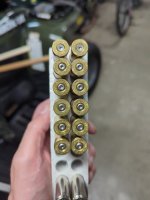
I have a possible idea as to this failure... But I need to know how you clean your cases if you even do? I'm just spitballing my thought.. How do you clean them?
 
Corncob blocked flash holes are a thing. 🤷‍♂️
As are failure to properly dry cases or over lubrication in resize.. It takes a tiny drop to ruin the primer or a few drops of fluid to contaminate some of the powder... We all have different processes and they change as we learn from mistakes or observations.. Cheers
 
It takes a tiny drop to ruin the primer
Primers are a lot more durable than most people think.

I once found a primed 9mm case in my pocket that had gone through the clothes washer. The primer had thus been soaked in water and soap and then gone through the heat of the drier. I dropped that case into the gun and the primer fired as normal.

The idea of soaking a primer in water or oil to inactivate it is both wrong and dangerous because in my experience, that won't inactivate a primer.
 
Maybe I’m thinking wrong but if the primer fired off, regardless of blocked flash hole or not lighting the main charge wouldn’t the resulting pressure create evidence of it.
I haven’t had this issue first hand in a rifle but seen lots in handguns, a squib will normally stick a bullet into the rifling or if the powder is inert it gums up the action.
I haven’t seen what happens when a flash hole is blocked but that pressure has to go somewhere and I’d be surprised if it doesn’t leave some external physical evidence of that.
So I don’t think the primer went off.
Could be the anvil fell off, could be contaminated, or could just have been old - had one card of primers that came to me that were older than dirt and appeared properly cared for but they were completely inert.
Easy solve is to use new primers for purpose with new powder but my budget can deal with that, if tight start with new correct primers for purpose.
 
Primers are a lot more durable than most people think.

I once found a primed 9mm case in my pocket that had gone through the clothes washer. The primer had thus been soaked in water and soap and then gone through the heat of the drier. I dropped that case into the gun and the primer fired as normal.

The idea of soaking a primer in water or oil to inactivate it is both wrong and dangerous because in my experience, that won't inactivate a primer.
It most certainly does deactivate primers……

I’ve disassembled numerous live rounds to make dummy cartridges for which I don’t have dies for, diligently finger twist a drill bit through the case side, enlarge said hole big enough to shake the powder out, then add a few drops of light oil, let it sit soaking into the primer over night, then give the primer a good smack with a center punch and a great big nothing happens…..
 
Back
Top Bottom