I got an enquiry from a fellow-Canadian cowboy action shooter, who also has a reproduction NWMP-pattern 1876 Winchester (Alias "Sir Charles deMoutonBlack") about how the North West Mounted Police carried their Winchester carbines, and the ammunition for them, at the time of Canada's 1885 North West Rebellion - and about how some of the irregular mounted militia units raised in the West for that conflict (who were issued with the same rifle, as needed) handled the same tasks. Since (as usual) I got a bit carried away with my response, I thought I might post it here in case anyone might find it of interest -
Howdy Sir Charles:
Seems I can never be "brief and to the point" when responding to a question like this, but I hope the following isn't too boring -
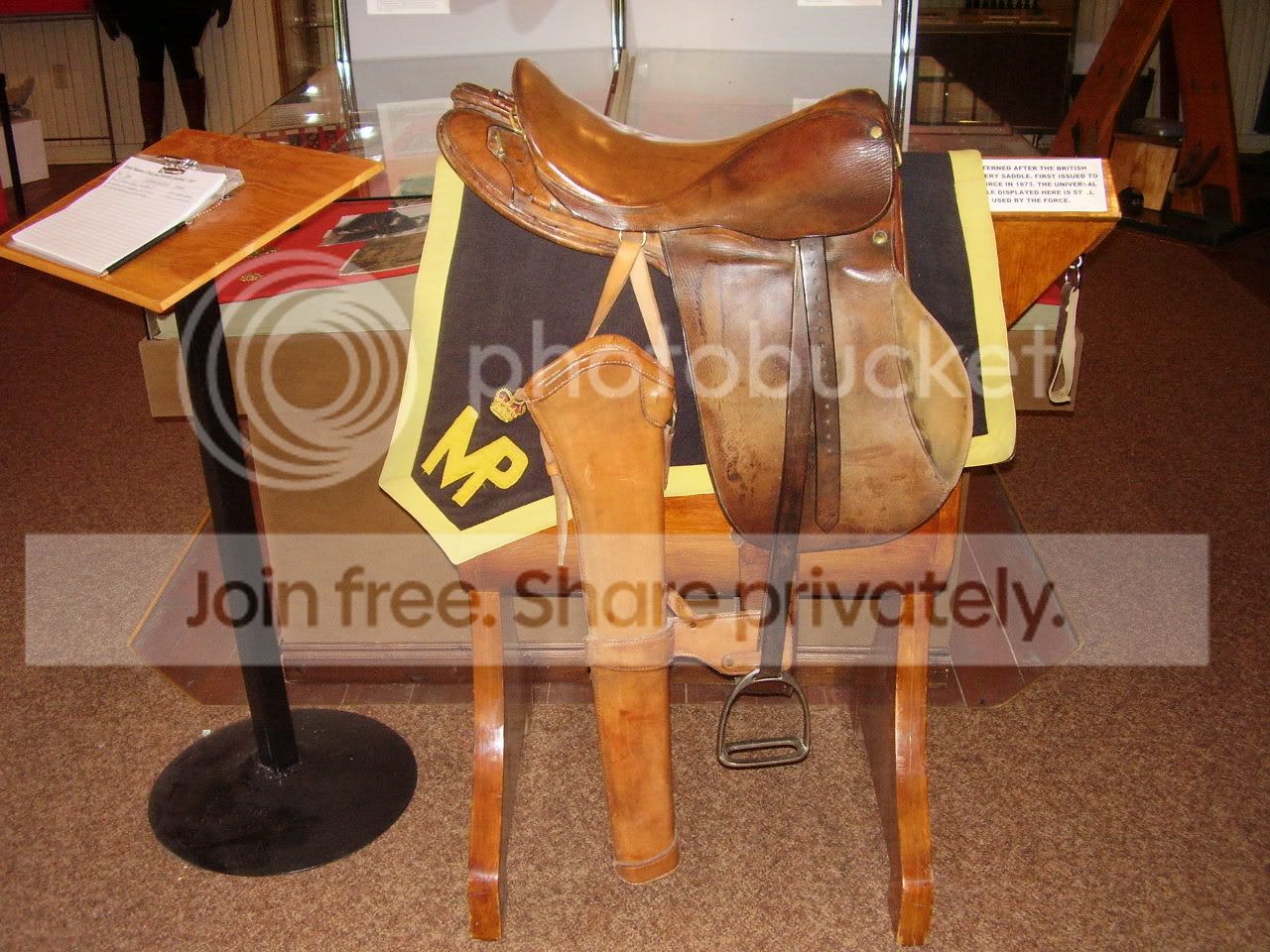
Carbine carriage:
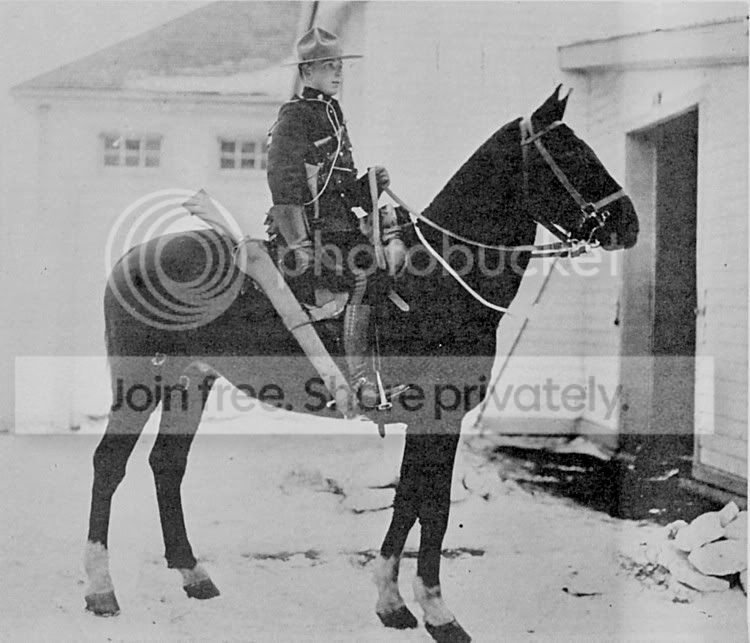
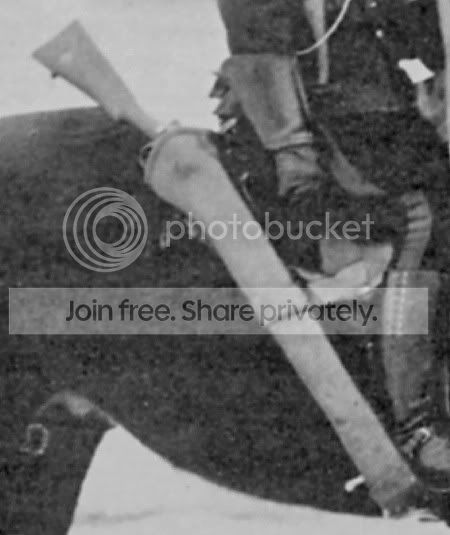
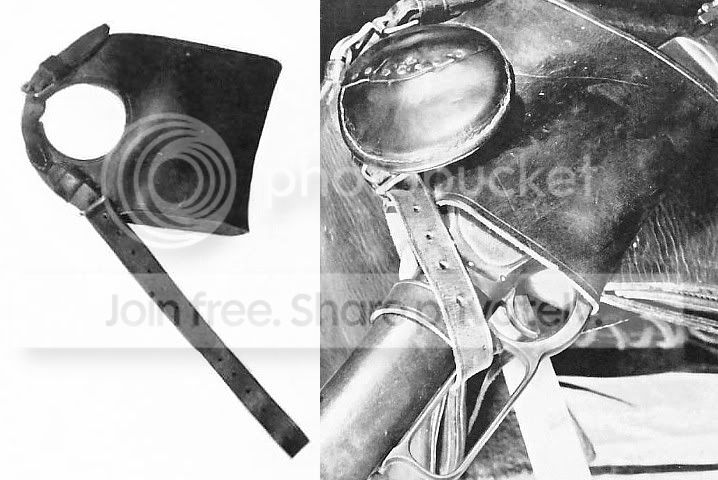
The usual method of carrying the carbine by then was in a pommel-mounted sling, as shown below. (The NWMP had begun to supplant the British cavalry pattern saddle with "California" saddles (i.e. western saddles) starting about 1878, and I gather these "western" saddles were in general use by 1885.)
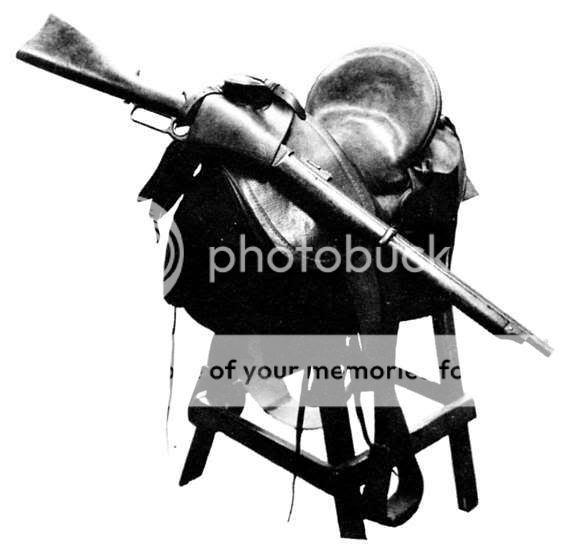
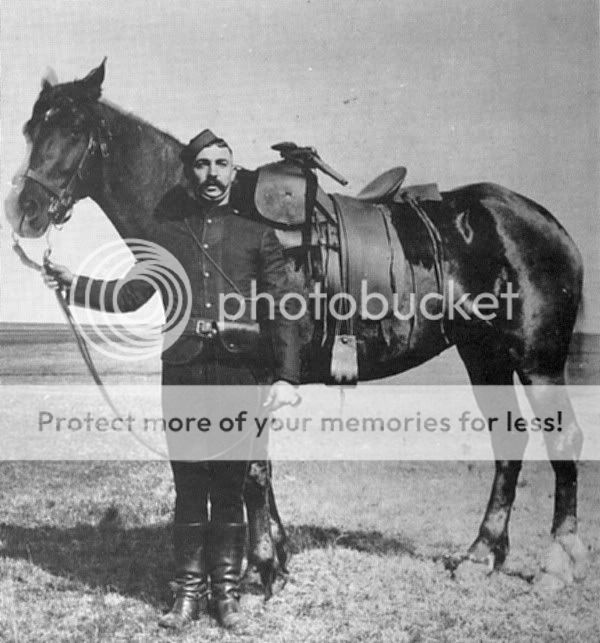
When dismounted, the Mounted Police used no sling for the rifle - any photographs I have seen show them with the rifle cradled, at "shoulder arms", with the butt grounded, etc.
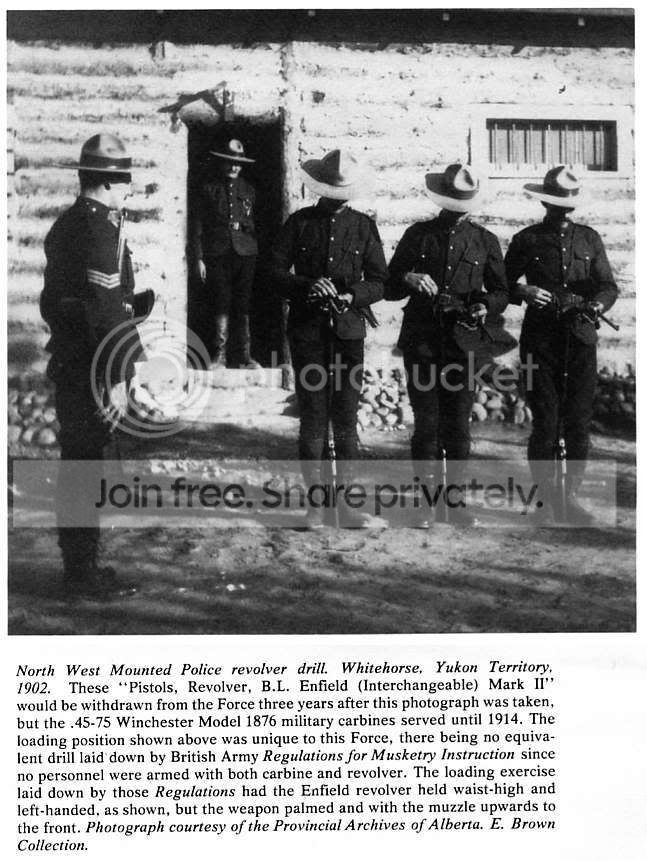
Speaking of how the carbine was handled when on foot, the NWMP Arms Drill of the Force specified a rather unique procedure for loading/unloading the revolver in those circumstances ..... i.e. holding the carbine upright between the knees -
Ammunition carriage:
"Arms & Accoutrements of the Mounted Police, 1873 - 1973" indicates that the ammunition pouches worn on the waistbelt, as issued when the Force was set up in 1874, had by 1877 given way to cartridge belts with loops for .577 Snider carbine and .450 Adams revolver ammunition, and goes on to state: "After 1878 the Force began acquiring cartridge belts to accommodate the .45-75 cartridge. .... the belts were looped to carry both carbine and revolver cartridges - normally 20 of the former and 12 of the latter."
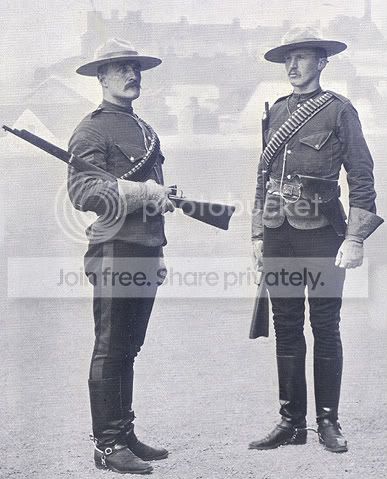
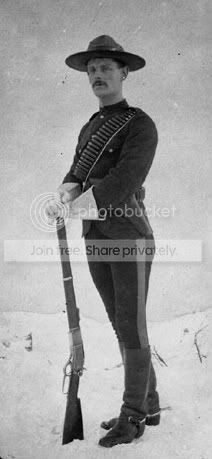
The book has no clear picture of this type of cartridge waistbelt; however, it is what the fellows in these photographs are wearing -
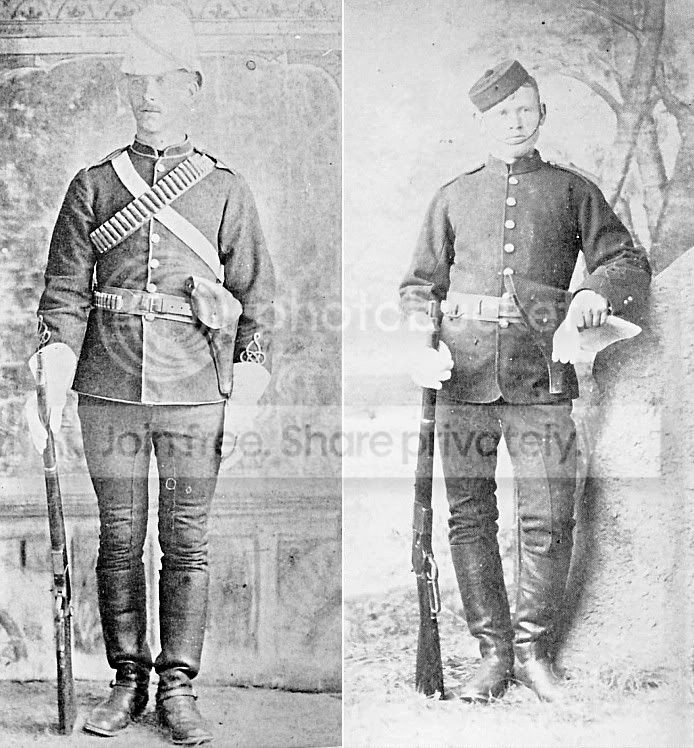
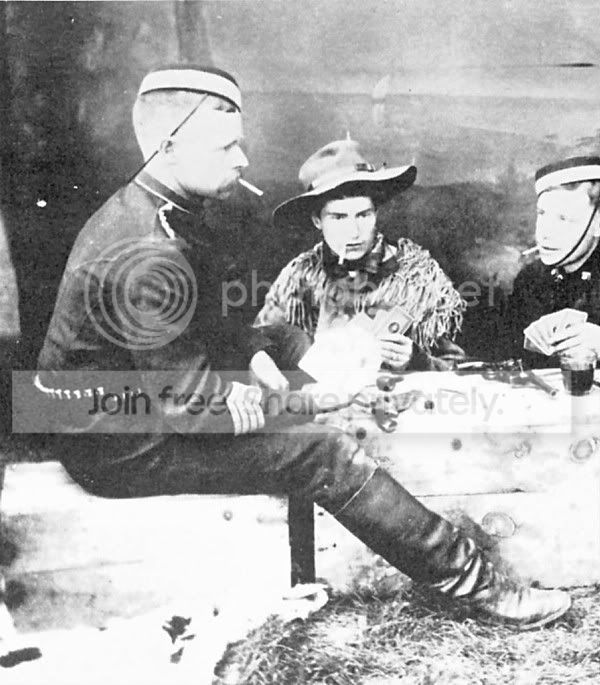
Note that there appear to be no loops at all on the left side toward the front (where the flapped holster was worn) and that the 12 revolver cartridge loops are located toward the front on the right side.( i.e. the only loops which are visible in the first two photos above), while the carbine ammunition loops started immediately behind those, going around to the back (lower photo.)
For additional ammunition, a white canvas haversack (issued 1874 - ca.1900 - see below) was used. It was ".... 11 inches wide, eight and a half inches deep and had two-inch sides. The two-inch wide shoulder strap was 44 inches long and had four double eyelets for adjustments." -
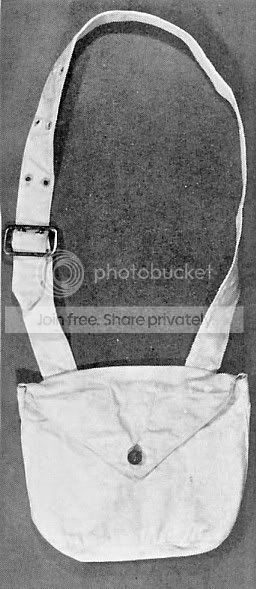
This was essentially the pattern of haversack issued to the British Army of that time period (and thus copies are available if you look.) It was worn with the strap over the right shoulder and the haversack hanging on the left, normally kept shifted out of the way toward the back - see the fellow in the left-hand studio photo above, and also check the engraving and photo below. "Arms & Accoutrements" goes on to say: "Originally, the haversack was used primarily for carrying extra ammunition on long patrols and when hostilities threatened. Mounties accompanying military elements during the North-West Rebellion almost invariably carried this accoutrement. With the adoption of bandoliers in 1887 haversacks became more of a general purpose carry-all."
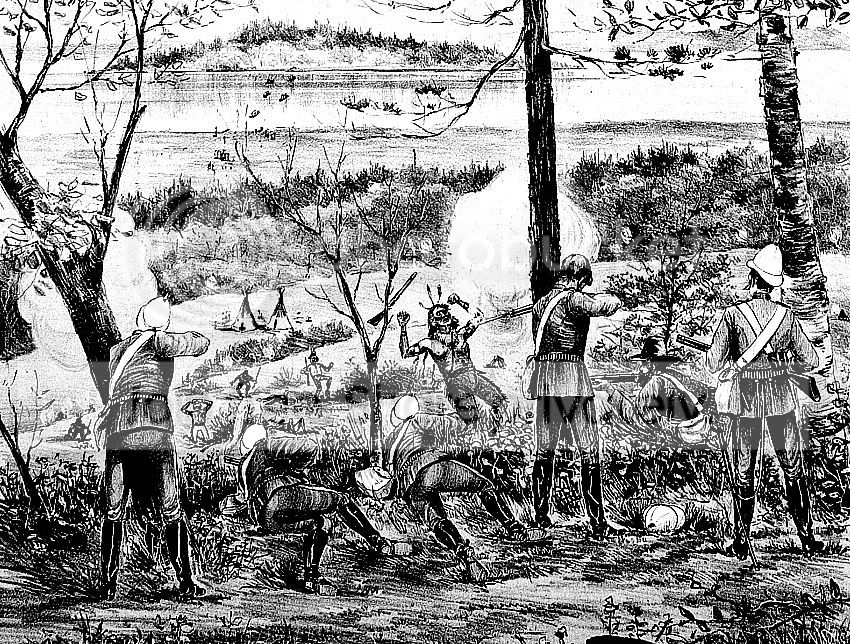
This is the cover engraving from the "Canadian Pictorial and Illustrated War News" edition of 11 July 1885, which has the following caption: "Gallant attack on Big Bear's Band by a handful of Mounted Police under Inspector Steele and Squadron Sergt.-Major Fury". It is an "artist's impression" of the action which took place between Steele's Scouts (the mounted element of Gen. Strange's Alberta Field Force, and consisting of Mounted Police, Alberta Mounted Rifles and civilian volunteers totaling about 80 men) who, during the first week of June 1885, were scouting ahead of the main force during the pursuit of Big Bear's Cree band and their white prisoners, when they came up against the Cree "rear guard". The image does a reasonable job of showing both the cartridge belt and haversack used by the NWMP - however, the illustrator sitting in Toronto clearly had to exercise a great deal of artistic license in depicting the scene from written accounts - records in fact show that all of the Mounted Police members of Steele's Scouts had substituted canvas or buckskin "field jackets" and broad-brimmed hats for their red tunics and helmets during this campaign - accordingly, they would actually have looked more like the Scout shown crouching down, second from the right.. Only Steele himself (supposedly the fellow on the far right with the sword) retained his official tunic, and even he had apparently left his helmet behind in favour of a more practical hat.
I should also mention that, although there are a lot of photos from that general time period showing Constables with Anson Mills web cartridge belts, and others with leather bandoliers (such as the chap is wearing in the left-hand studio photo above) neither of these devices would be strictly "correct" for the actual North West Rebellion period. "Arms & Accoutrements" indicates that although the wide olive-green woven-web Anson Mills belts were first received in 1885, they weren't shipped from Massachusetts until June, so my gut feeling is they might be just a bit out of place in an impression intended to depict a Mounted Policeman during the actual Rebellion hostilities, which ended that month. At any rate, hers is one Constable (photo simply attributed to "the 1880's") wearing such a web cartridge belt -
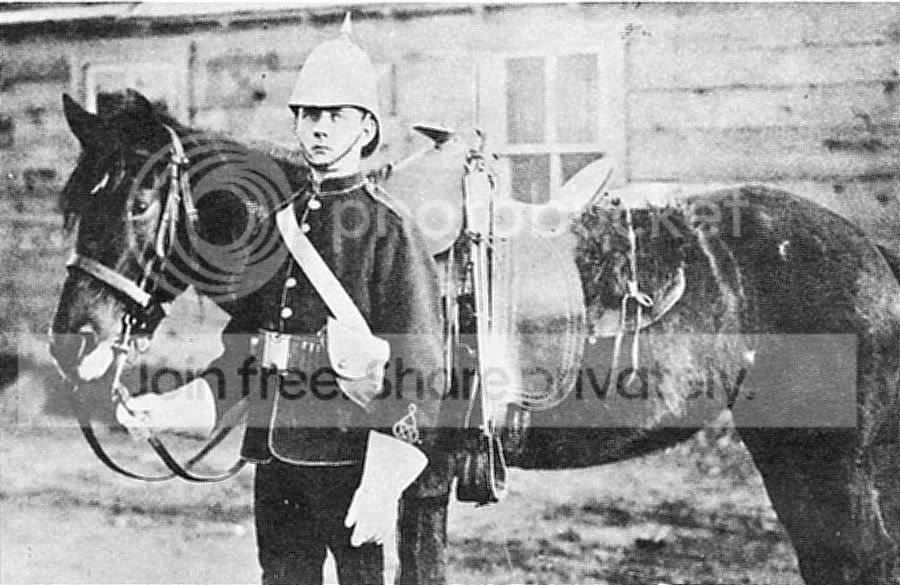
Of 200 such belts in that shipment, 150 were looped for 35 carbine cartridges and 50 were looped for 30 cartridges ..... If one nevertheless wanted to go for this bit of kit, there are reproductions of similar belts on the market for U.S. Indian Wars reenactors though I think the buckles are marked "US" on most of them ....
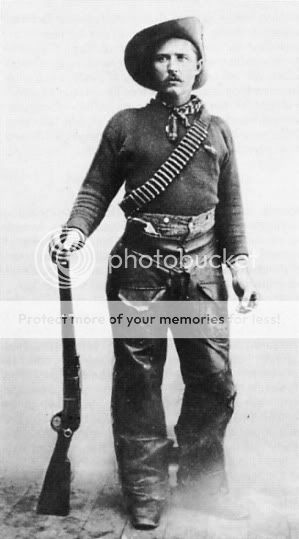
With respect to leather bandoliers, a number of 1885 images show them being worn by members of the mounted militia units raised in the west - such as the Rocky Mountain Rangers, Steele's Scouts, etc, but "Arms & Accoutrements" states that such bandoliers were not introduced as issued equipment to the NWMP until 1887 .... If the NWMP pattern would interest you, however, I can scan images showing two such bandoliers stretched out, from which it shouldn't be too difficult to have a facsimile made - each of them has 12 loops for revolver cartridges and 40 loops for carbine rounds.
As for such "unofficial" bandoliers, here is a studio photo of an unidentified Rocky Mountain Ranger with his NWMP-pattern Winchester (though for some reason the lever loop has been edited out during re-touching or the like) and cartridge bandolier -
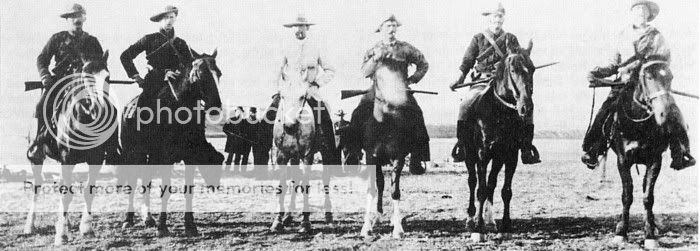
This photo shows officers of the Rocky Mountain Rangers at Medicine Hat (Chief Scout ' Kootenai' Brown on the far right, with O/C Major John Stewart next to him) - note that three or four of them are wearing bandoliers -
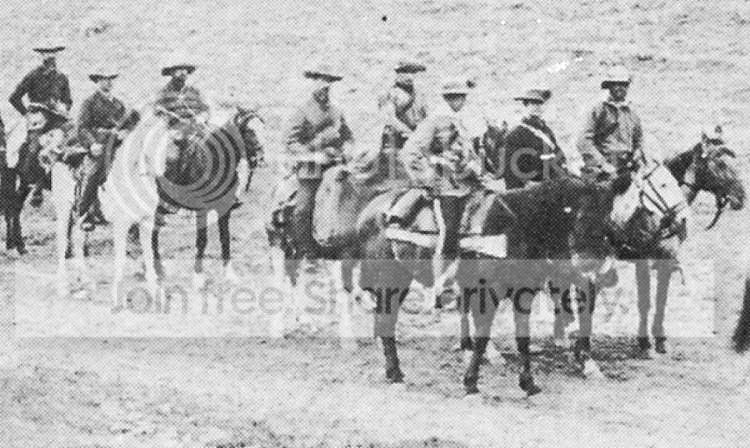
Various period photos I have seen indicate that these irregular mounted militia units tended to carry their carbines/rifles across the saddle pommel like the NWMP, as seen above and also in the following detail cropped from a photo of a Rocky Mountain Ranger patrol formed up near Medicine Hat - though clearly the fellow closest to the camera in the image below has his in a scabbard -
Grant; I'm thinkin' about leather. What did the NWMP use to carry the carbine and ammo about 1885? What about the western militia units that also used the 1876 Carbine?
Howdy Sir Charles:
Seems I can never be "brief and to the point" when responding to a question like this, but I hope the following isn't too boring -
Carbine carriage:
The usual method of carrying the carbine by then was in a pommel-mounted sling, as shown below. (The NWMP had begun to supplant the British cavalry pattern saddle with "California" saddles (i.e. western saddles) starting about 1878, and I gather these "western" saddles were in general use by 1885.)
When dismounted, the Mounted Police used no sling for the rifle - any photographs I have seen show them with the rifle cradled, at "shoulder arms", with the butt grounded, etc.
Speaking of how the carbine was handled when on foot, the NWMP Arms Drill of the Force specified a rather unique procedure for loading/unloading the revolver in those circumstances ..... i.e. holding the carbine upright between the knees -
Ammunition carriage:
"Arms & Accoutrements of the Mounted Police, 1873 - 1973" indicates that the ammunition pouches worn on the waistbelt, as issued when the Force was set up in 1874, had by 1877 given way to cartridge belts with loops for .577 Snider carbine and .450 Adams revolver ammunition, and goes on to state: "After 1878 the Force began acquiring cartridge belts to accommodate the .45-75 cartridge. .... the belts were looped to carry both carbine and revolver cartridges - normally 20 of the former and 12 of the latter."
The book has no clear picture of this type of cartridge waistbelt; however, it is what the fellows in these photographs are wearing -
Note that there appear to be no loops at all on the left side toward the front (where the flapped holster was worn) and that the 12 revolver cartridge loops are located toward the front on the right side.( i.e. the only loops which are visible in the first two photos above), while the carbine ammunition loops started immediately behind those, going around to the back (lower photo.)
For additional ammunition, a white canvas haversack (issued 1874 - ca.1900 - see below) was used. It was ".... 11 inches wide, eight and a half inches deep and had two-inch sides. The two-inch wide shoulder strap was 44 inches long and had four double eyelets for adjustments." -
This was essentially the pattern of haversack issued to the British Army of that time period (and thus copies are available if you look.) It was worn with the strap over the right shoulder and the haversack hanging on the left, normally kept shifted out of the way toward the back - see the fellow in the left-hand studio photo above, and also check the engraving and photo below. "Arms & Accoutrements" goes on to say: "Originally, the haversack was used primarily for carrying extra ammunition on long patrols and when hostilities threatened. Mounties accompanying military elements during the North-West Rebellion almost invariably carried this accoutrement. With the adoption of bandoliers in 1887 haversacks became more of a general purpose carry-all."
This is the cover engraving from the "Canadian Pictorial and Illustrated War News" edition of 11 July 1885, which has the following caption: "Gallant attack on Big Bear's Band by a handful of Mounted Police under Inspector Steele and Squadron Sergt.-Major Fury". It is an "artist's impression" of the action which took place between Steele's Scouts (the mounted element of Gen. Strange's Alberta Field Force, and consisting of Mounted Police, Alberta Mounted Rifles and civilian volunteers totaling about 80 men) who, during the first week of June 1885, were scouting ahead of the main force during the pursuit of Big Bear's Cree band and their white prisoners, when they came up against the Cree "rear guard". The image does a reasonable job of showing both the cartridge belt and haversack used by the NWMP - however, the illustrator sitting in Toronto clearly had to exercise a great deal of artistic license in depicting the scene from written accounts - records in fact show that all of the Mounted Police members of Steele's Scouts had substituted canvas or buckskin "field jackets" and broad-brimmed hats for their red tunics and helmets during this campaign - accordingly, they would actually have looked more like the Scout shown crouching down, second from the right.. Only Steele himself (supposedly the fellow on the far right with the sword) retained his official tunic, and even he had apparently left his helmet behind in favour of a more practical hat.
I should also mention that, although there are a lot of photos from that general time period showing Constables with Anson Mills web cartridge belts, and others with leather bandoliers (such as the chap is wearing in the left-hand studio photo above) neither of these devices would be strictly "correct" for the actual North West Rebellion period. "Arms & Accoutrements" indicates that although the wide olive-green woven-web Anson Mills belts were first received in 1885, they weren't shipped from Massachusetts until June, so my gut feeling is they might be just a bit out of place in an impression intended to depict a Mounted Policeman during the actual Rebellion hostilities, which ended that month. At any rate, hers is one Constable (photo simply attributed to "the 1880's") wearing such a web cartridge belt -
Of 200 such belts in that shipment, 150 were looped for 35 carbine cartridges and 50 were looped for 30 cartridges ..... If one nevertheless wanted to go for this bit of kit, there are reproductions of similar belts on the market for U.S. Indian Wars reenactors though I think the buckles are marked "US" on most of them ....
With respect to leather bandoliers, a number of 1885 images show them being worn by members of the mounted militia units raised in the west - such as the Rocky Mountain Rangers, Steele's Scouts, etc, but "Arms & Accoutrements" states that such bandoliers were not introduced as issued equipment to the NWMP until 1887 .... If the NWMP pattern would interest you, however, I can scan images showing two such bandoliers stretched out, from which it shouldn't be too difficult to have a facsimile made - each of them has 12 loops for revolver cartridges and 40 loops for carbine rounds.
As for such "unofficial" bandoliers, here is a studio photo of an unidentified Rocky Mountain Ranger with his NWMP-pattern Winchester (though for some reason the lever loop has been edited out during re-touching or the like) and cartridge bandolier -
This photo shows officers of the Rocky Mountain Rangers at Medicine Hat (Chief Scout ' Kootenai' Brown on the far right, with O/C Major John Stewart next to him) - note that three or four of them are wearing bandoliers -
Various period photos I have seen indicate that these irregular mounted militia units tended to carry their carbines/rifles across the saddle pommel like the NWMP, as seen above and also in the following detail cropped from a photo of a Rocky Mountain Ranger patrol formed up near Medicine Hat - though clearly the fellow closest to the camera in the image below has his in a scabbard -