Need info on my Lee-Enfield Enfield 1916 (with pics)

CZ85Combat

CGN Ultra frequent flyer
Rating - 100%
182   0   1
Location
Ottawa
Good day,
I want to clean up my gun room with stuff that I haven't shot.
Since I am not a Lee-Enfield expert, I need help figuring out the history and value of one of my Lee-Enfield.


Some Info:
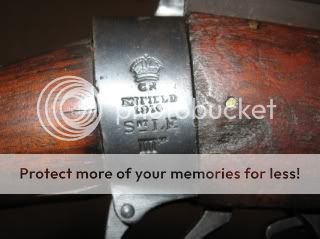
SMLE MK III
made by Enfield, in 1916, serial number D with 4 digits
Matching number on rear sight, bolt, and receiver

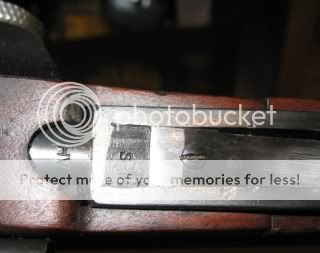
Barrel (Where rear sight is located) is marked HV
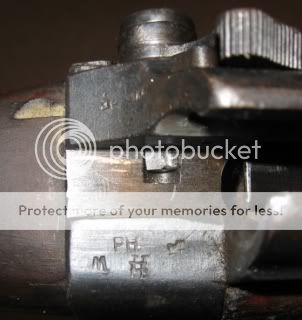
Left side of receiver is marked BNP
Drop free mag, no serial but letter R stamped on the back, EFL DD and 3 stamped on the mag follower.
Bolt head is stamped U

The wood does not seem to be matching since number is not matching, some yellow paint on it also, and on the front metal part. The butt is a little loose and there is a crack on it, close to the receiver.

That rifle was given to me unregistered 10 years ago (now registered, of course)
I have never shot it, but was shot by previous owner
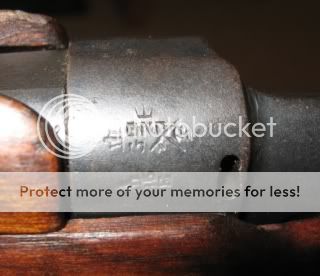
Enfield003.jpg


Enfield004.jpg


Enfield006.jpg


Enfield015.jpg


Enfield011.jpg


Enfield002.jpg


Thanks for any assistance !!!

Cheers
 
Last edited:
It sounds like it's wearing Australian coachwood. We'd need to see pics to determine if someone put that wood on it to restore a sporter, or if it's an australian refurbishment of a British rifle, which is also very possible.
 
It sounds like it's wearing Australian coachwood. We'd need to see pics to determine if someone put that wood on it to restore a sporter, or if it's an australian refurbishment of a British rifle, which is also very possible.

Ok thanks,
Do you think it has his original barrel (Nice rifling BTW) and does it have a collector value or it's just another bubba's rifle?
 
BNP marking is post 1956 civilian proof (Birmingham Nitro Proof) as British law requires all arms to be proofed before public sale. So most likely it was surplused and proofed for Brit market sometime after then.

HV tells me that sights have been setup for High Velocity ammo (Mk.VII cartridge). So should be sighted well enough for current day commercial ammo. Every rifle seems to shoot off a bit, you have to get to know how it shoots and compensate by aiming English style (ie aiming off).

U on the bolt refers to the grade of steel from which it is made, I believe.

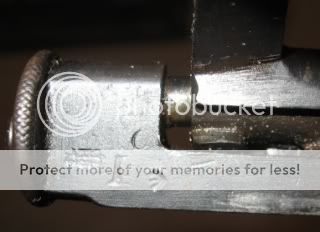
Cocking piece is a replacement as it appears to have BSA inspector's stamp.

A band of yellow paint usualy denotes a rifle downgraded to 'For emergency use only' usualy due to a worn but still serviceable barrel bore. Some countries such as Australia used yellow to denote downgrade to 'Drill Purpose'. But who is to say if wood is original or was parts reassembled to the rifle.

Need to see right side of receiver and under the handguard to see the barrel nocks form to tell if barrel has been replaced. The original barrel and receiver were numbered with the same roll die at the factory so should be identical. If the font of the characters or the spacings of the two numbers differ, then is likely a replacement.

Not a rare specimin by any stretch of the imagination, but is a nice example of war time production ( its a Mk.III*). If the bore is nice, then it would be worth restoring with nice wood. But be warned, you might spend two hundred dollars on it and end up with a three hundred dollar rifle.
 
Last edited:

That gun looks to be a "restored sporter". It has an Australian forestock, but the metal has no Australian markings such as a MA ftr date. I'm sure it's still a ncie representative axample though - you should try shooting it a bit, see if you like it :)
 
I just checked, barrel is original (same serial #). I'm actually surprised since the groove are very nice.
I was given that rifle along with a Lithrow 1916, the other one had the barrel replaced

Serial number on the wood does not match any of the 2, so I'm pretty confident that the wood on both are not original

Thank for all your help

Now I just have to decide what to do with them... :confused:
 
I just checked, barrel is original (same serial #). I'm actually surprised since the groove are very nice.
I was given that rifle along with a Lithrow 1916, the other one had the barrel replaced

Serial number on the wood does not match any of the 2, so I'm pretty confident that the wood on both are not original

Thank for all your help

Now I just have to decide what to do with them... :confused:

not so fast.... :eek::runaway:

when barrels were replaced they were stamepd witht eh rifles serial number. What you hav to look for is on the left side near the reciever for hte barrel date should be a '16 for 1916 if original (perhaps ever '17) :D
 
Sure they did, but that was done, when FTR'd . Its seldom these days that you find an early Enfield with the oval shaped "cocking piece" as almost all have been through the FTR process more than once. .... David K
 
Last edited:

Cocking Piece

Sure they did, but that was done, when FTR'd . Its seldom these days that you find an early Enfield with the oval shaped "cocking piece" as almost all have been through the FTR process more than once. .... David K

The oval shaped cocking piece was phased out in 1916, and most of the SSA and NRF rifles had them from the start. Most Enfield production from 1916 on had the flat sided piece, too. I don't think LSA ever switched, though, and BSA seems to have used both types. The later cocking piece, used on the dispersal rifles from WW2, was flat on the top, as were the WW2 Lithgow cocking pieces. All the WW1 flat sided cocking pieces were the same shape as the one on the No. 4. Many will be found with various markings from sub contractors, like S.M.C. (Singer). One can tell if the cocking piece is original to the rifle by comparing the markings to those on the rest of the rifle.
 
Back
Top Bottom