












































Few people realizes 1911 trigger is actually adjustable. When I say "adjustable", I mean you can decrease AND increase trigger pull without special tools. It's great - because if you reduce trigger pull too much, you can reverse it easily, which makes it doable for everybody.
The whole project takes 30 min, including learning curve, assuming you know how to take the gun apart.
Actually, you don't even need to take the whole thing apart. All you need to do is remove the grip safety.
The gun I use is a new model 1911 from Canada Ammo. Very good pistol, forged frame and slide, and price is far more than reasonable.
For latest Norc 1911, you need to remove panel on left side:
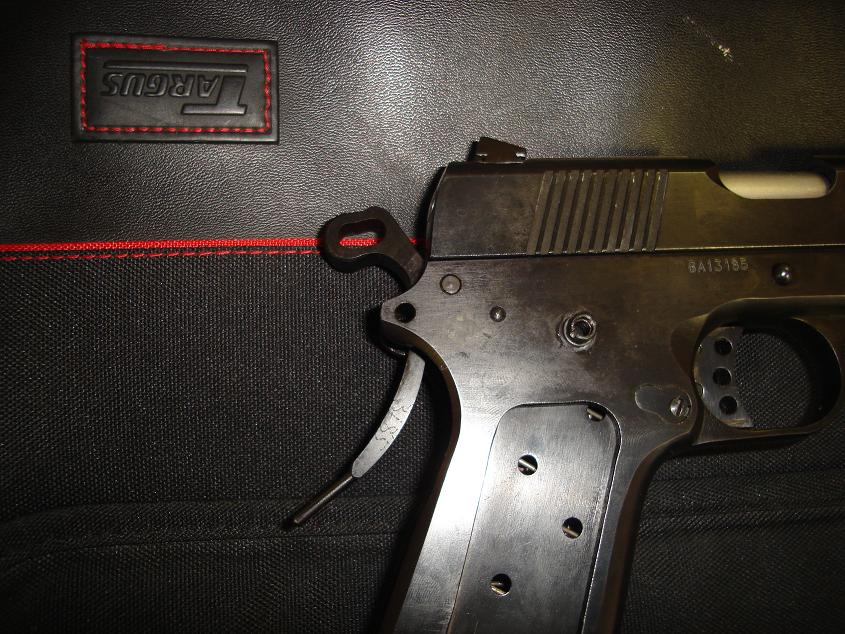
Now the pistol is ready for trigger jo

The secret of 1911 trigger pull is on this spring:
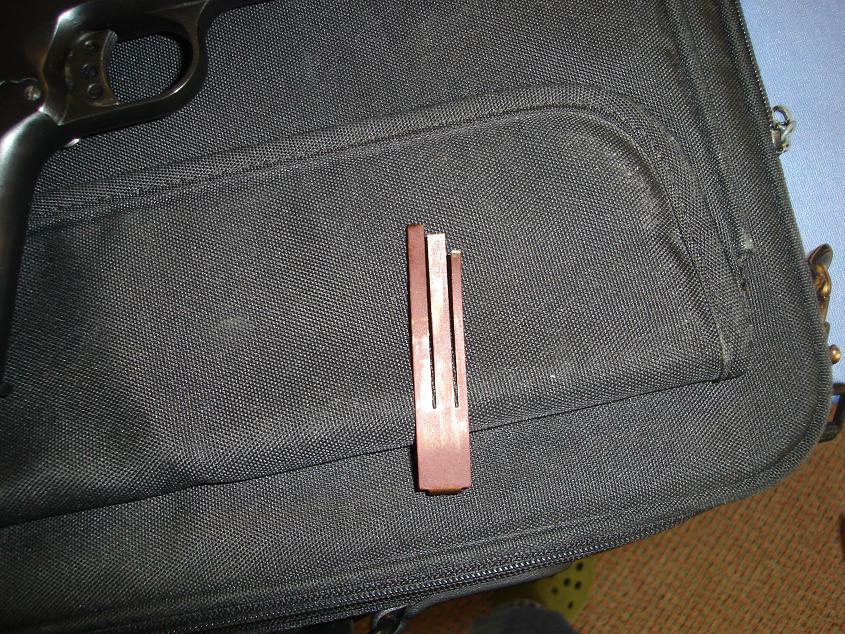
Mr. Browning used one spring to do three jobs:
1, Push trigger forward (the first finger on left side)
2, Push diconnector ( the middle finger)
3, Push grip safety backward. (the right side finger)
To understand how it works, you need to put the back stripe on:
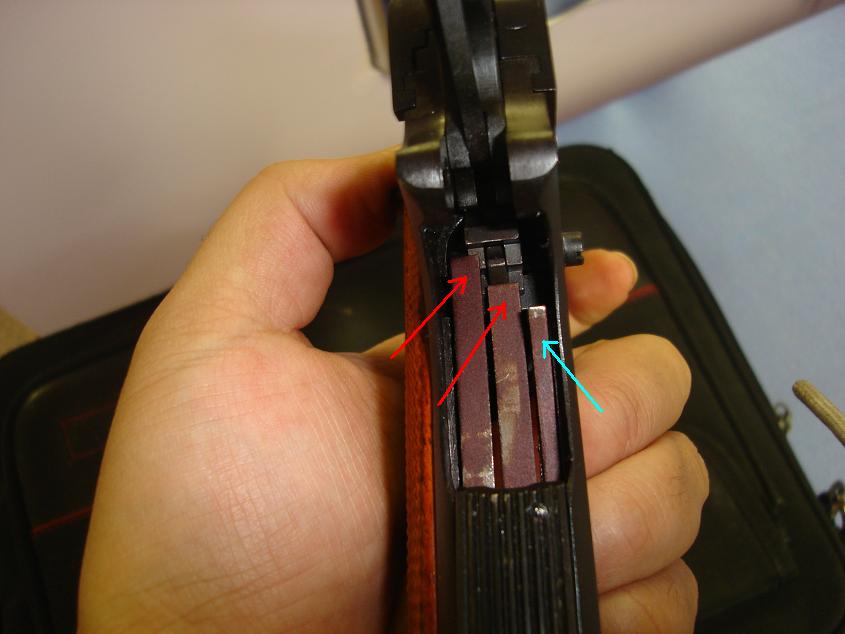
Now pull the trigger while moving hammer up and down. You can easily understand how the 2 fingers (with red arrows) hold the trigger forward.
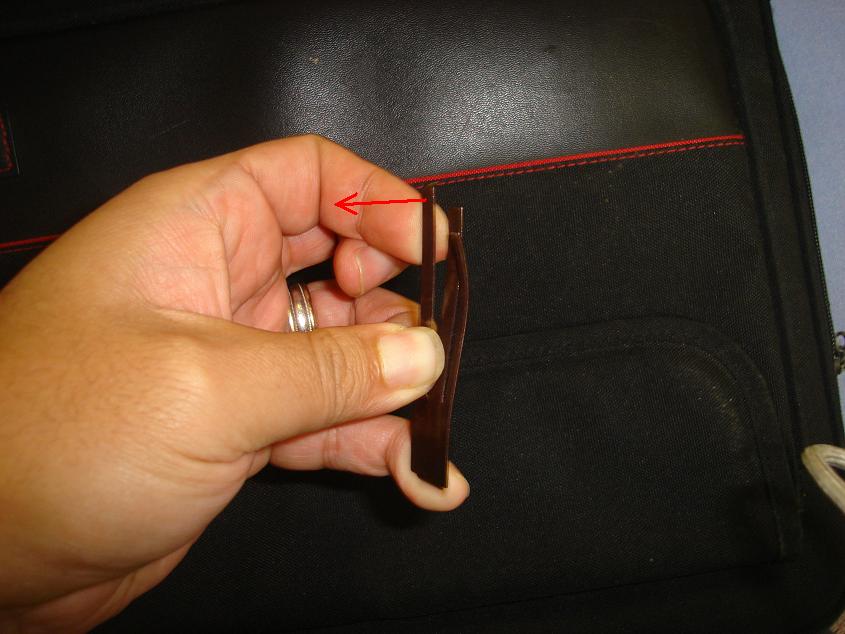
Now you need to take out the spring and take a picture like this:
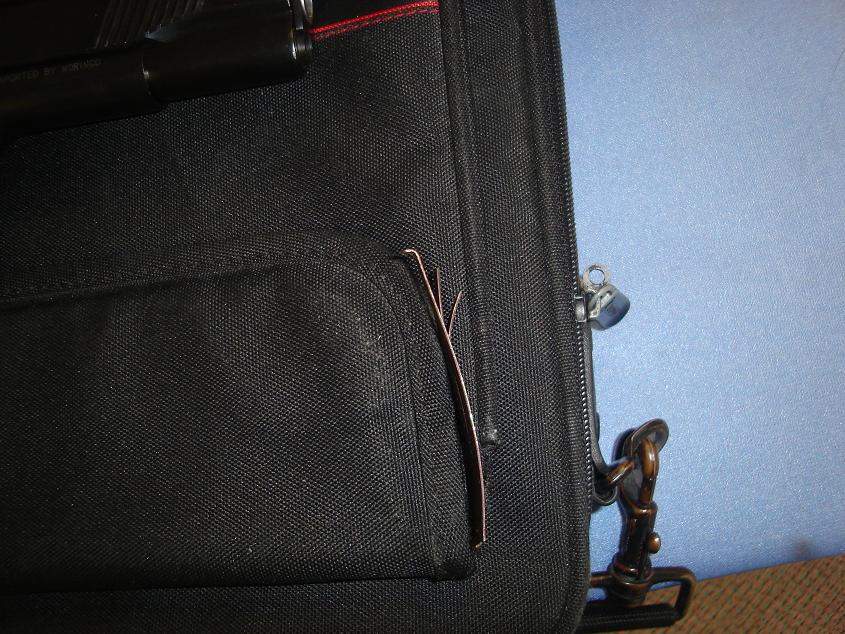
Do it before you make any change, so you have a pic shows you what the spring looks like in factory setting. (The spring in the picture, however, has been modified. I don't know what it looks like before now. That's the reason I want you to do that.)
Now you can bend the 2 red arrow fingers backward until it looks like the one above. Since you can always bend it back, you can try as many times as you want - just make sure the fingers still touch the trigger!
The CanAm 1911 has a trigger pull of 4~5 pounds, which is standard for a military pistol. Everybody should be able to reduce it to around 2-1/2 pounds.
Happy New Year and Have Fun!
The whole project takes 30 min, including learning curve, assuming you know how to take the gun apart.
Actually, you don't even need to take the whole thing apart. All you need to do is remove the grip safety.
The gun I use is a new model 1911 from Canada Ammo. Very good pistol, forged frame and slide, and price is far more than reasonable.
For latest Norc 1911, you need to remove panel on left side:
Now the pistol is ready for trigger jo
The secret of 1911 trigger pull is on this spring:
Mr. Browning used one spring to do three jobs:
1, Push trigger forward (the first finger on left side)
2, Push diconnector ( the middle finger)
3, Push grip safety backward. (the right side finger)
To understand how it works, you need to put the back stripe on:
Now pull the trigger while moving hammer up and down. You can easily understand how the 2 fingers (with red arrows) hold the trigger forward.
Now you need to take out the spring and take a picture like this:
Do it before you make any change, so you have a pic shows you what the spring looks like in factory setting. (The spring in the picture, however, has been modified. I don't know what it looks like before now. That's the reason I want you to do that.)
Now you can bend the 2 red arrow fingers backward until it looks like the one above. Since you can always bend it back, you can try as many times as you want - just make sure the fingers still touch the trigger!
The CanAm 1911 has a trigger pull of 4~5 pounds, which is standard for a military pistol. Everybody should be able to reduce it to around 2-1/2 pounds.
Happy New Year and Have Fun!
Last edited:
























