
If it were mine, I'd cut and reweld the bolt handle, notch the stock deeper to allow for it to be tucked in closer. The safety can be modified or replaced to clear the bell of the scope. The timney trigger is has should be pretty decent.













































You are using an out of date browser. It may not display this or other websites correctly.
You should upgrade or use an alternative browser.
You should upgrade or use an alternative browser.
Husqvarna 6.5 x 55 Sporterized; What's it Worth?
- Thread starter Cheeky Munkey
- Start date
Maybe a new trigger, new safety, re-shape or replace bolt handle, ditch and replace bases, rings, and no-name scope... even if you do it yourself, added to the original cost, you're sure to be into it for more $ than it'll ever be worth. Pay someone else to do it, and you'd be up to 3 or 4 times what it would be worth. The Husqvarnas can be great shooters, I do like the 6.5x55, and I've been through the "fix it up" routine myself. It was good fun, but definitely a money losing venture.

The issue is not one of quality, rather it is one of practicality. I'm not suggesting that the iron sights on your rifle lack quality, rather they are not the style of sight I prefer. An open sight requires you to attempt to manage 3 points of focus, the front sight must line up with the rear sight and the sights together must then be put on the target. This is difficult and time consuming because the human eye can only focus on an object at a single focal distance at one time. The temptation is to continually shift your focus from one point to another; rear sight, front sight, target, thus the open sight is neither fast or precise.
This focus problem can be visualized as follows: Hold the forefinger of your right hand say 8"-10" from your dominant eye and concentrate on it until you can see the fingerprint on that finger. That finger is now in sharp focus. Now hold up the forefinger of your other hand at full arms length so that both fingers are within the field of view of your eye. You will see that the farther finger is somewhat out of focus unless you adjust your focus to the forward finger at which time the close finger looses focus. Now hold up both fingers against an object on the wall across the room and you will see that the object across the room can only be in focus when both fingers are out of focus, the object across the room is out of focus and the rear finger is out of focus if the front finger is in focus, and the object across the room and the front finger are out of focus if the rear finger is in focus.
A peep sight or ghost ring rear sight allows the shooter to ignore the rear sight provided the front sight is somewhere inside the aperture. Our shooter then places the front sight on the target, then pulls his focus back to the front sight and concentrates on the front sight until the shot breaks. Very good shooting can be done with an aperture rear sight, almost as good as with a scope provided the target is large enough at the range that it is engaged.
The primary advantage of the scope sight is not magnification. If it were, then a 20X scope would always be superior to a 2X scope, and clearly this is not the case. The advantage of the scope is that the aiming point, the reticle, and the target appear on the same focal plane and are both in sharp focus when the scope is properly adjusted.
A very informative post. Thanks, Boomer, that makes perfect sense.
Assuming the rifle works fine as it is (the owner assures me it's a laser) is there any compelling reason why a fellow shouldn't just leave it alone? The scope's bright and clear. The Timmney trigger has a really nice break. The stock's in terrific shape and fits me well. The original safety works fine.
Is the main concern simply the height of the scope? I'm guessing that will effect it's accuracy over a greater range. ie: It'll only work well in a specific range?

What's the effective range of this cartrige for competitive type shooting? How about for deer hunting?
Thanks for your patience, gents. I'm learning as I go, here.
cheers,
CM

- Location
- Somewhere on the Hudson Bay Coast
Is the main concern simply the height of the scope? I'm guessing that will effect it's accuracy over a greater range. ie: It'll only work well in a specific range?
What's the effective range of this cartrige for competitive type shooting? How about for deer hunting?
Thanks for your patience, gents. I'm learning as I go, here.
cheers,
CM
CM, The height of the scope is important for two major reasons. First and foremost in order to shoot well you must have a repeatable cheek-weld on the stock. When your cheek hits the stock your eye should be in line with the center of the scope, and it must be exactly the same from shot to shot. Accuracy is nothing more than consistency, and we must be consistent in order to shoot well. The farther we stray from that ideal cheek-weld, the more difficult good shooting becomes. As an extreme example, you might have to rest you chin on the stock to see a scope that is mounted very high on a rifle with a very low comb. Conversely, a very low mount will do you little good if the comb of the rifle is high and you are unable to mash your cheek down hard enough on the stock to see through the scope. The shape of your face and the shape of the stock must determine the height of the scope.
Secondly, the higher the mount is above the action, the more sensitive it becomes to knocks and bumps or never mind what may happen should the rifle be dropped. It wouldn't take much of a bump to destroy the zero held with those rickety see through mounts. Good mounts do not need to be expensive, although many good ones are, but they do need to be strong.
The 6.5X55 is a wonderful game and target cartridge. It is one of those cartridges that can be used for anything from varmints to the largest North American game, and taking deer, moose, or bear is well within it’s ballistic prowess. It has been used successfully in 1000 yard matches in custom match rifles with good ammunition. But the limitations of the cartridge are less important than the limitations of the shooter. You must get the rifle out, sighted in, and then shoot at known distances before you know what you can accomplish with it, and what your limitations are. Once you have developed this basic skill then begin to shoot at targets at unknown distances with the objective of making first round hits when shooting from field positions. From there you can learn to shoot at moving targets, shoot in the wind and learn the effect wind has on bullets and work out the problems associated with shooting through mirage.
All of this requires you to consume a vast amount of ammunition, so handloading should become your next hobby. Handloading will reduce the unit cost of your ammunition, allowing you to shoot more (but not cheaper) and it will allow you to match your ammunition precisely to your individual rifle.
CM, The height of the scope is important for two major reasons. First and foremost in order to shoot well you must have a repeatable cheek-weld on the stock. When your cheek hits the stock your eye should be in line with the center of the scope, and it must be exactly the same from shot to shot. Accuracy is nothing more than consistency, and we must be consistent in order to shoot well. The farther we stray from that ideal cheek-weld, the more difficult good shooting becomes. As an extreme example, you might have to rest you chin on the stock to see a scope that is mounted very high on a rifle with a very low comb. Conversely, a very low mount will do you little good if the comb of the rifle is high and you are unable to mash your cheek down hard enough on the stock to see through the scope. The shape of your face and the shape of the stock must determine the height of the scope.
Secondly, the higher the mount is above the action, the more sensitive it becomes to knocks and bumps or never mind what may happen should the rifle be dropped. It wouldn't take much of a bump to destroy the zero held with those rickety see through mounts. Good mounts do not need to be expensive, although many good ones are, but they do need to be strong.
The 6.5X55 is a wonderful game and target cartridge. It is one of those cartridges that can be used for anything from varmints to the largest North American game, and taking deer, moose, or bear is well within it’s ballistic prowess. It has been used successfully in 1000 yard matches in custom match rifles with good ammunition. But the limitations of the cartridge are less important than the limitations of the shooter. You must get the rifle out, sighted in, and then shoot at known distances before you know what you can accomplish with it, and what your limitations are. Once you have developed this basic skill then begin to shoot at targets at unknown distances with the objective of making first round hits when shooting from field positions. From there you can learn to shoot at moving targets, shoot in the wind and learn the effect wind has on bullets and work out the problems associated with shooting through mirage.
All of this requires you to consume a vast amount of ammunition, so handloading should become your next hobby. Handloading will reduce the unit cost of your ammunition, allowing you to shoot more (but not cheaper) and it will allow you to match your ammunition precisely to your individual rifle.
Thanks, Boomer. You should write a book. I'm not worthy. That's all excellent advice and I appreciate it. I'm on the lookout for some suitable dies for loading/reloading. A buddy has a good reloading press that I hope to make use of.
I'm also on the lookout for any good books that deal with the nuts and bolts of precision shooting. This one looks good.
http://www.canadiangunnutz.com/forum/showthread.php?t=369767
Any other suggestions appreciated.
- Location
- Somewhere on the Hudson Bay Coast
Precision shooting and practical shooting are not the same and although they have techniques that may overlap, they are mutually exclusive. The precision shooter generally shoots a large number of rounds from a known distance at a target of known proportions, with a generous time constraint provided he does not find himself in a challenging wind situation where he must hammer off his shots quickly. The practical shot must access the problem before him, choose the correct position. His success is measured by a single shot he makes at a poorly defined target that maybe stationary or moving, at an estimated range based on the size of the target which involves a large built in margin or error, in low light, with a tricky wind, under an unknown time constraint, and he maybe out of breath after great physical exertion. His position is dictated by topography and vegetation. The fit of the rifle is dictated by the amount of clothing you need to be comfortable.
To my way of thinking practical shooting is much more demanding than is precision shooting, but in fairness competition brings it's own level of stress to the shooter whose personal and financial investment to any given competition is not trivial. From the point of view of the practical shooter, I consider Jeff Cooper's "The Art of the Rifle" a must have.
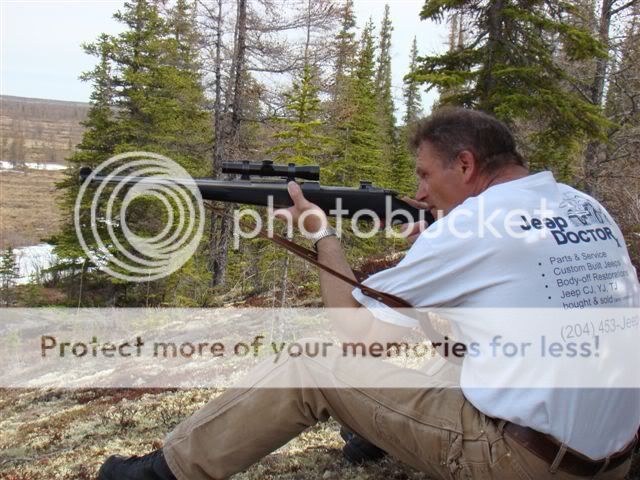
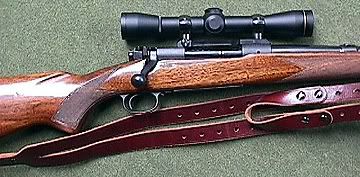
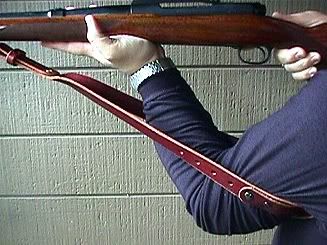
Another item you might consider for your rifle is a shooting sling that is also suitable for field carry. Slinging up increased the probability of a first round hit by perhaps 30%, but until recently the only types available have been the heavy military style leather slings that are slow to adjust from carry sling to shooting sling, but happily there are now other choices. I like the Safari Ching Sling from Galco USA pictured below and it is the latest configuration of Eric Ching's Ching Sling.
To my way of thinking practical shooting is much more demanding than is precision shooting, but in fairness competition brings it's own level of stress to the shooter whose personal and financial investment to any given competition is not trivial. From the point of view of the practical shooter, I consider Jeff Cooper's "The Art of the Rifle" a must have.
Another item you might consider for your rifle is a shooting sling that is also suitable for field carry. Slinging up increased the probability of a first round hit by perhaps 30%, but until recently the only types available have been the heavy military style leather slings that are slow to adjust from carry sling to shooting sling, but happily there are now other choices. I like the Safari Ching Sling from Galco USA pictured below and it is the latest configuration of Eric Ching's Ching Sling.
Precision shooting and practical shooting are not the same and although they have techniques that may overlap, they are mutually exclusive. The precision shooter generally shoots a large number of rounds from a known distance at a target of known proportions, with a generous time constraint provided he does not find himself in a challenging wind situation where he must hammer off his shots quickly. The practical shot must access the problem before him, choose the correct position. His success is measured by a single shot he makes at a poorly defined target that maybe stationary or moving, at an estimated range based on the size of the target which involves a large built in margin or error, in low light, with a tricky wind, under an unknown time constraint, and he maybe out of breath after great physical exertion. His position is dictated by topography and vegetation. The fit of the rifle is dictated by the amount of clothing you need to be comfortable.
To my way of thinking practical shooting is much more demanding than is precision shooting, but in fairness competition brings it's own level of stress to the shooter whose personal and financial investment to any given competition is not trivial. From the point of view of the practical shooter, I consider Jeff Cooper's "The Art of the Rifle" a must have.
Another item you might consider for your rifle is a shooting sling that is also suitable for field carry. Slinging up increased the probability of a first round hit by perhaps 30%, but until recently the only types available have been the heavy military style leather slings that are slow to adjust from carry sling to shooting sling, but happily there are now other choices. I like the Safari Ching Sling from Galco USA pictured below and it is the latest configuration of Eric Ching's Ching Sling.
More excellent advice. Thanks a lot, Boomer. You sound like you really know your way around this stuff. I appreciate your efforts and willingness to share your experience and wisdom. This is invaluable.
I'll put Jeff Cooper's "The Art of the Rifle" on my list.
cheers,
CM
just looked at the pics again, there is alot of air showing between that front base and reciever ring.
check this link:
http://www.tradeexcanada.com/index.php?option=com_paxgallery&task=table&gid=5
Hi David,
I finally figured out what you were refering to. I beleive that's actually light reflecting off the dovetail edge of the base, not light visible under it.


I agree with the first part, I like everything about that rifle but is chambering, that barrel step and that set of fugly rings. But that all said I think someone did a really nice job on it, I would say close to 300 for it, which is a shame really, not worth the effort put into it.
What's wrong with the chambering? Or are you one of those guys that need a 300wm to kill a Deer. The 6.5x55 is a very capable Cartridge.
What's wrong with the chambering? Or are you one of those guys that need a 300wm to kill a Deer. The 6.5x55 is a very capable Cartridge.

I was waiting for someone else to catch this.
It's a damn fine cartridge IMHO.

Methinks Dosing is all wet...
[youtube]8KswnjMa-MQ[/youtube]

Mount Sweetness
CGN Ultra frequent flyer
- Location
- Southern Ontario
I handled one of these in 8mm at a recent gun show and loved it. It had a nice peep on it and came to the eye perfect.
The guy was asking $650.....
I might look into one of the 6.5's on Tradex. I was impressed with these guns.
Why are they a dime a dozen?
Are they inaccurate?
Do not feed reliably?
Terrible triggers?
It seems like many for sale had cracks in stock....lots with tang cracks. What's up with that?
For $250, they seem like a well made gun....what gives?
The guy was asking $650.....
I might look into one of the 6.5's on Tradex. I was impressed with these guns.
Why are they a dime a dozen?
Are they inaccurate?
Do not feed reliably?
Terrible triggers?
It seems like many for sale had cracks in stock....lots with tang cracks. What's up with that?
For $250, they seem like a well made gun....what gives?


I bought mine from Tradex for under $200. It had been previously drilled and tapped for a side mount so I decided to put some see-through mounts on it. It's VERY accurate, has a smooth action and I'm not too worried if the stock gets a scratch or ding. Shot a deer with it last fall. For the money, you can't go wrong.
Mount Sweetness
CGN Ultra frequent flyer
- Location
- Southern Ontario
Anybody have a 6.5x55 for sale?
Why don't you try Tradex? Their link is at the top of the page, their service is excellent.Anybody have a 6.5x55 for sale?
Mount Sweetness
CGN Ultra frequent flyer
- Location
- Southern Ontario
tradex has plenty, I've requested to see additional pics on a few.
I usually like to try to buy privately first, no tax...
I usually like to try to buy privately first, no tax...






















