













































Hi folks,
I know, I know, my productivity has slowed down somewhat. Blame it on summer vacation, splitting fire wood, etc, etc...
Anyways, here's what I've finally been able to work on for the past couple of weeks.
I got this P14 part of a two-rifle deal (Thanks a.g.!), for a reasonable price considering the shape it was in. It probably had been a while since someone took it completely apart; but don't trust my words, here's a... pictorial! Woohoo!
First, taking a look at the rifle before I took it apart. Damage to the front handguard and rust on metal bits;
http://i272.photobucket.com/albums/jj180/louthepou/Lee Enfield Refurb/Picture119.jpg
Handguard ring and rear handguard partially removed;
http://i272.photobucket.com/albums/jj180/louthepou/Lee Enfield Refurb/Picture122.jpg
And (I like this one) underside of the trigger assembly once removed from the forend.
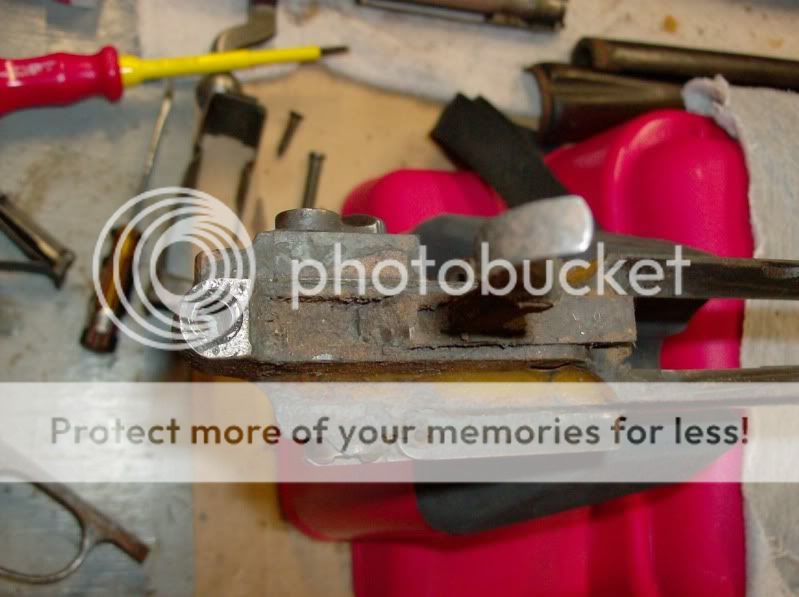
So I started working on the metal parts. Removed all the crud, some of which was a mix of sand, dust, hardened grease... I suppose, anyway. Rust had to be removed, which left some areas of some parts (middle band, front band, etc) bare; so I had to reblue these parts. I know it can sound harsh on a project like this one; but if the rust is too serious, it needs to come off; and bare metal will just start rusting again soon, so... bottom line, what I didn't absolutely need to touch, I didn't touch. For example, the barrel was left with its original protective "gunk": http://i272.photobucket.com/albums/jj180/louthepou/Lee Enfield Refurb/Picture120.jpg
Then, I moved on to the wood. Both handguards needed repairs. The front one, I cut a square chunk where there was a missing piece.
http://i272.photobucket.com/albums/jj180/louthepou/Lee Enfield Refurb/Picture131.jpg
I glued a spare piece of wood, slightly larger; I then carved the excess wood.
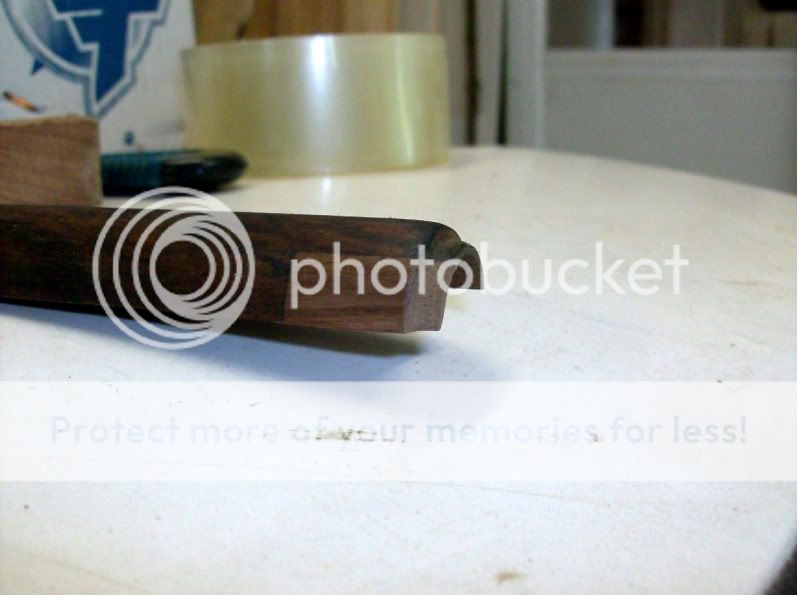
Except for the repaired areas, only very fine steel wool was used for wood prep (after cleaning with paint thinner). Linseed oil was then used for finishing.
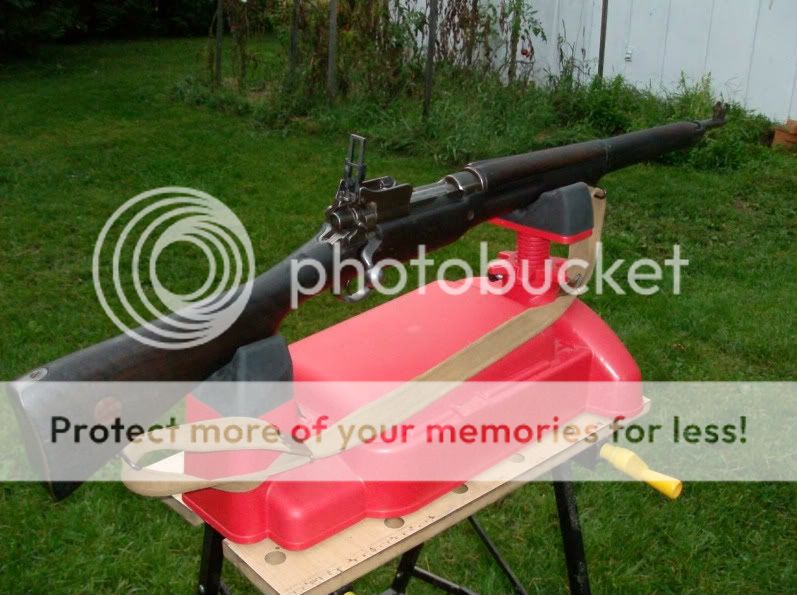
So all things considered, about 12 hours well spent. This Winchester-made P14 should shoot well, the bore and rifling are nice - can't wait to try her at the range!
http://i272.photobucket.com/albums/jj180/louthepou/Lee Enfield Refurb/Picture132.jpg
I know, I know, my productivity has slowed down somewhat. Blame it on summer vacation, splitting fire wood, etc, etc...
Anyways, here's what I've finally been able to work on for the past couple of weeks.
I got this P14 part of a two-rifle deal (Thanks a.g.!), for a reasonable price considering the shape it was in. It probably had been a while since someone took it completely apart; but don't trust my words, here's a... pictorial! Woohoo!
First, taking a look at the rifle before I took it apart. Damage to the front handguard and rust on metal bits;
http://i272.photobucket.com/albums/jj180/louthepou/Lee Enfield Refurb/Picture119.jpg
Handguard ring and rear handguard partially removed;
http://i272.photobucket.com/albums/jj180/louthepou/Lee Enfield Refurb/Picture122.jpg
And (I like this one) underside of the trigger assembly once removed from the forend.
So I started working on the metal parts. Removed all the crud, some of which was a mix of sand, dust, hardened grease... I suppose, anyway. Rust had to be removed, which left some areas of some parts (middle band, front band, etc) bare; so I had to reblue these parts. I know it can sound harsh on a project like this one; but if the rust is too serious, it needs to come off; and bare metal will just start rusting again soon, so... bottom line, what I didn't absolutely need to touch, I didn't touch. For example, the barrel was left with its original protective "gunk": http://i272.photobucket.com/albums/jj180/louthepou/Lee Enfield Refurb/Picture120.jpg
Then, I moved on to the wood. Both handguards needed repairs. The front one, I cut a square chunk where there was a missing piece.
http://i272.photobucket.com/albums/jj180/louthepou/Lee Enfield Refurb/Picture131.jpg
I glued a spare piece of wood, slightly larger; I then carved the excess wood.
Except for the repaired areas, only very fine steel wool was used for wood prep (after cleaning with paint thinner). Linseed oil was then used for finishing.
So all things considered, about 12 hours well spent. This Winchester-made P14 should shoot well, the bore and rifling are nice - can't wait to try her at the range!
http://i272.photobucket.com/albums/jj180/louthepou/Lee Enfield Refurb/Picture132.jpg























