












































You are using an out of date browser. It may not display this or other websites correctly.
You should upgrade or use an alternative browser.
You should upgrade or use an alternative browser.
Making my own Lee Enfield transit box
- Thread starter bobfortier
- Start date


- Location
- London, Ontario
Thats awsome man, good job!

Hi
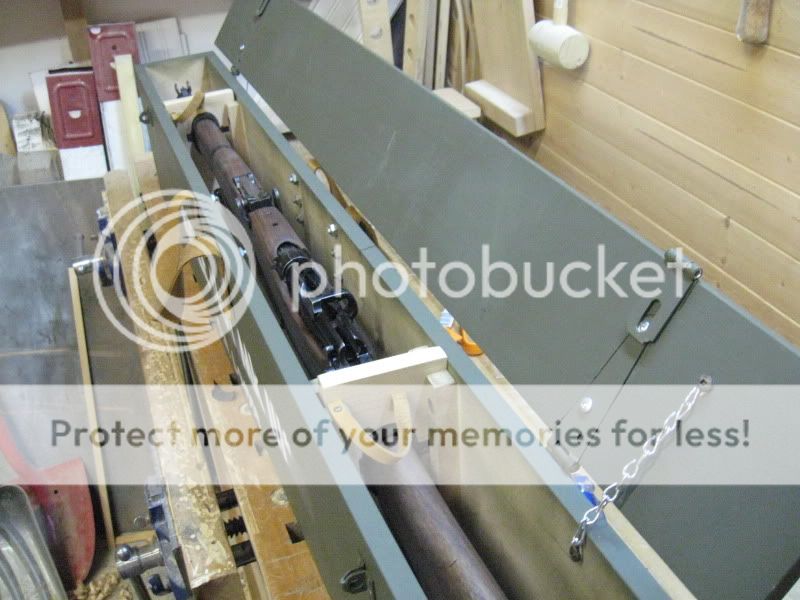
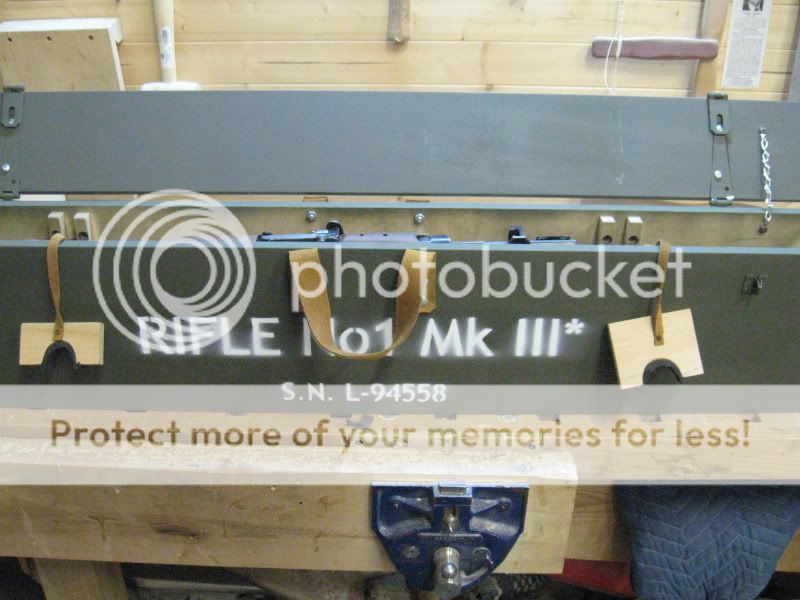
Here is a couple of pics. The box is now half-painted olive drab, I obviously need to buy a new can.
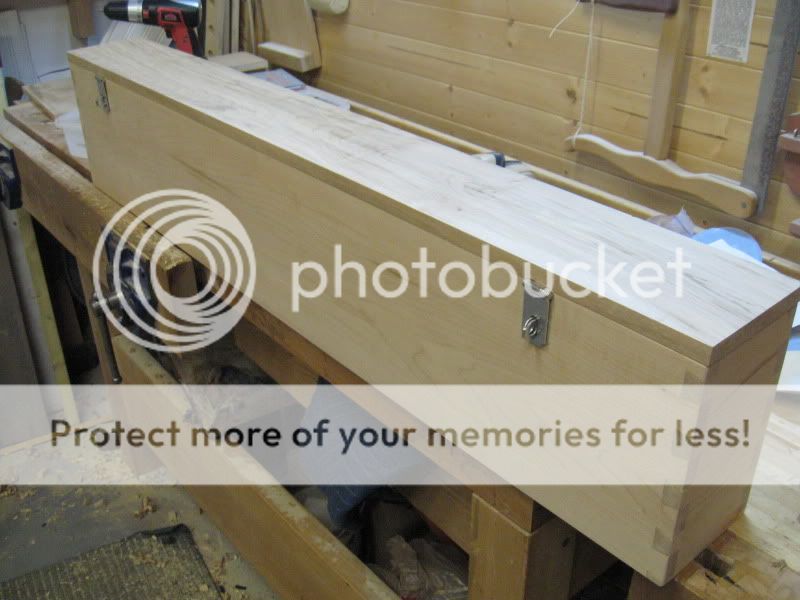
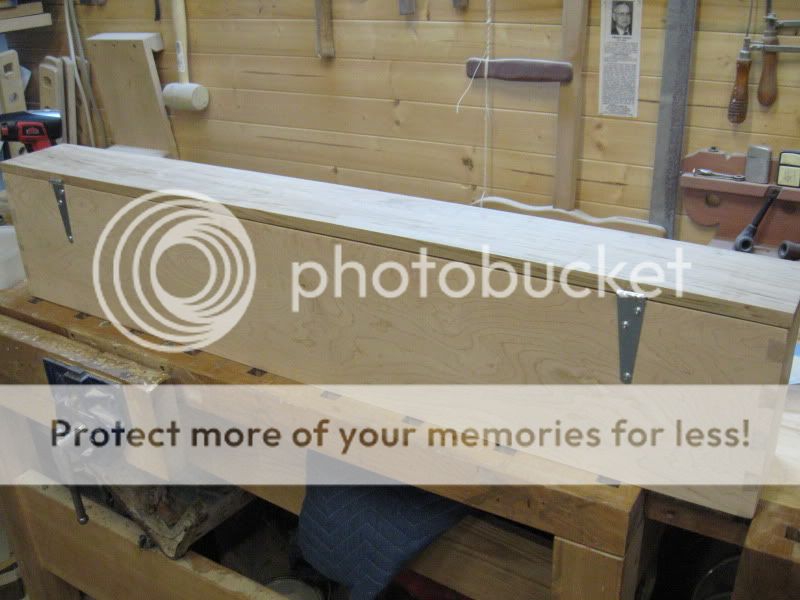
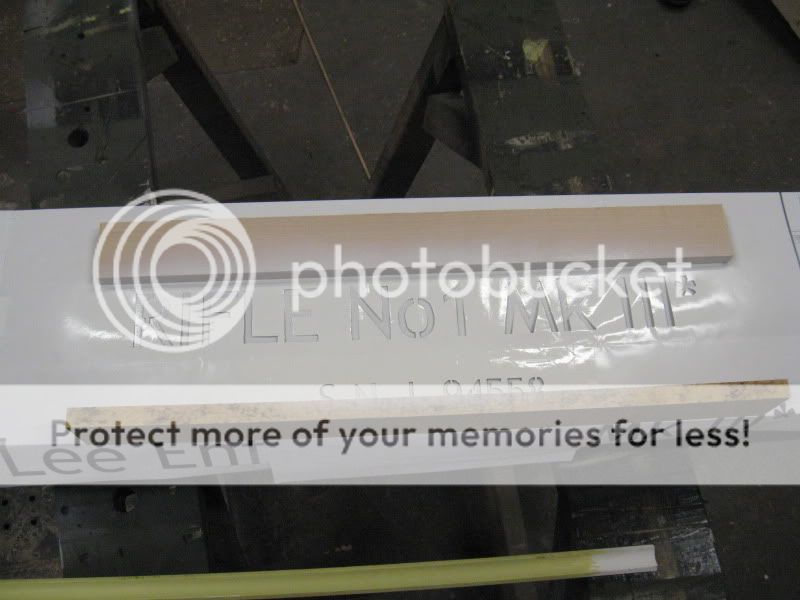
For the writing on the box, I have 3 choices. Which one do you think can be the best ?
1. RIFLE No1 Mk III*
2. Lee Enfield No 1 Mk III*
3. LEE ENFIELD No 1 Mk III*
Here is a couple of pics. The box is now half-painted olive drab, I obviously need to buy a new can.
For the writing on the box, I have 3 choices. Which one do you think can be the best ?
1. RIFLE No1 Mk III*
2. Lee Enfield No 1 Mk III*
3. LEE ENFIELD No 1 Mk III*
Applefarmer
CGN Ultra frequent flyer
- Location
- Lime Stone City
great looking box, now to just adjust the size to a No.5

Hello BobFortier
If one was building this box for a No 4 Mk "T" sniper rifle the boxes have have the following lettering on them,, Otherwise I would suggest you check out milsurps.com and search Enfield transit boxes and see what they put on the boxes for your particular rifle. There were a few variations and of course the regular enfield rifle transit box is not as tall as the sniper transit box.
Words on lid are about 4 inches from the left side by 3/4 inch high and say:
RIFLE NO. 4 MK 1 or 2 T
SERIAL NUMBER: ? (put in the appropriate serial number of your particular rifle)
SIGHT TELE. NO. 32 MK. 3 (OR 1 OR 2)
SERIAL NUMBER: ? (put in the appropriate serial number of your scope)
On the front and back the box should say:
CHEST S.A. NO 15 MK. 1
These letters are 2 inches high and centered in both directions height and middle and are in white.
Your box looks awesome! all you need now is a set of original WW 2 hardware!
Hope this is of some help, I am building the Enfield sniper rifle transit box myself right now.
If one was building this box for a No 4 Mk "T" sniper rifle the boxes have have the following lettering on them,, Otherwise I would suggest you check out milsurps.com and search Enfield transit boxes and see what they put on the boxes for your particular rifle. There were a few variations and of course the regular enfield rifle transit box is not as tall as the sniper transit box.
Words on lid are about 4 inches from the left side by 3/4 inch high and say:
RIFLE NO. 4 MK 1 or 2 T
SERIAL NUMBER: ? (put in the appropriate serial number of your particular rifle)
SIGHT TELE. NO. 32 MK. 3 (OR 1 OR 2)
SERIAL NUMBER: ? (put in the appropriate serial number of your scope)
On the front and back the box should say:
CHEST S.A. NO 15 MK. 1
These letters are 2 inches high and centered in both directions height and middle and are in white.
Your box looks awesome! all you need now is a set of original WW 2 hardware!
Hope this is of some help, I am building the Enfield sniper rifle transit box myself right now.
Last edited:

stencollector
CGN Ultra frequent flyer
- Location
- shilo MB, the armpit of Canada
Stencollector, where are you when we need you?
Kandahar Airfield. No snow here.
Originally Posted by rgg_7 View Post
maple leah eh...is you hardware from CNo7 transit chests or No4T British? There are a few differences for the purist at heart.
I once read somewhere that the hardware used in the no 7 and No 4 T transit boxes is identical. What is the difference?
Both statements are actually correct. The hinges (for example) on a Cdn box, either Cno7 or on the no15 Cdn chest, have 4 screw holes on each half of the hinge. The hinges on a Brit chest have 3 screw holes on each half.
The hardware used on the rifle chests was also used on the Bren chests, the mortar chests, Vickers chests, and a host of others. They were still in use on certain equipment chests manufactured for the army into the 1950s.
Stencollector, glad to hear you don't have to shovel any snow over there!.
Heres a question for you. I have noticed in some of the No 7 transit boxes I have examined personally and from pictures I took years ago of No 4 T boxes that there is quite a variety of joints used on the four corners. Some of the no 7 boxes have 1/4 inch finger joints, some have 5/16 finger joints and some have 1/4 inch finger joints with a 1/2 inch piece on the top and bottom. From the pictures I took of No 4 T transit boxes at the Toronto Militaria show years ago these transit boxes had what looks like plain 1/2 inch finger joints all the way from top to bottom (same as the L4A1 transit boxes). The plan that is curculating on the net of the No 4 T transit box show dovetails. Can you explain this? From what I understand the Canadian boxes were made by only a couple of makers here in Canada, did they just have different joints depending on the year made or what? I am betting the dovetails were not common because they were labour intensive.
Another question is what is the exact colour used on the boxes?, was it simply OD green, or toy tank green or what?. I want to paint my repros, but am not sure what colour to ask for when I buy the paint. I have found out that during the war the finish was always matt, and anything post war was glossy, is this right?
Hoping you can help me out and stay safe over there.
Heres a question for you. I have noticed in some of the No 7 transit boxes I have examined personally and from pictures I took years ago of No 4 T boxes that there is quite a variety of joints used on the four corners. Some of the no 7 boxes have 1/4 inch finger joints, some have 5/16 finger joints and some have 1/4 inch finger joints with a 1/2 inch piece on the top and bottom. From the pictures I took of No 4 T transit boxes at the Toronto Militaria show years ago these transit boxes had what looks like plain 1/2 inch finger joints all the way from top to bottom (same as the L4A1 transit boxes). The plan that is curculating on the net of the No 4 T transit box show dovetails. Can you explain this? From what I understand the Canadian boxes were made by only a couple of makers here in Canada, did they just have different joints depending on the year made or what? I am betting the dovetails were not common because they were labour intensive.
Another question is what is the exact colour used on the boxes?, was it simply OD green, or toy tank green or what?. I want to paint my repros, but am not sure what colour to ask for when I buy the paint. I have found out that during the war the finish was always matt, and anything post war was glossy, is this right?
Hoping you can help me out and stay safe over there.
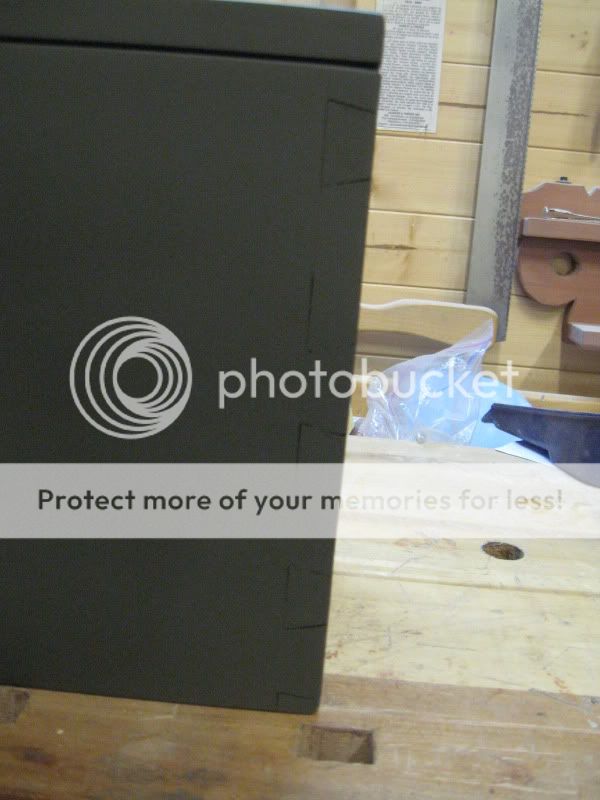
Just a comment about the dovetail. If they where made by hand by a couple of maker, it is quite normal that they look different. The one I did in maple took me something like 3 hours from start to finish, so I imagine that a trained woodworker can dovetail maybe 4 boxes a day in soft wood.
This joint is indeed labor intensive, but those boxes can take a beating. I knoe mine will be able to.
This joint is indeed labor intensive, but those boxes can take a beating. I knoe mine will be able to.
stencollector
CGN Ultra frequent flyer
- Location
- shilo MB, the armpit of Canada
Stencollector, glad to hear you don't have to shovel any snow over there!.
Heres a question for you. I have noticed in some of the No 7 transit boxes I have examined personally and from pictures I took years ago of No 4 T boxes that there is quite a variety of joints used on the four corners. Some of the no 7 boxes have 1/4 inch finger joints, some have 5/16 finger joints and some have 1/4 inch finger joints with a 1/2 inch piece on the top and bottom. From the pictures I took of No 4 T transit boxes at the Toronto Militaria show years ago these transit boxes had what looks like plain 1/2 inch finger joints all the way from top to bottom (same as the L4A1 transit boxes). The plan that is curculating on the net of the No 4 T transit box show dovetails. Can you explain this? From what I understand the Canadian boxes were made by only a couple of makers here in Canada, did they just have different joints depending on the year made or what? I am betting the dovetails were not common because they were labour intensive.
Another question is what is the exact colour used on the boxes?, was it simply OD green, or toy tank green or what?. I want to paint my repros, but am not sure what colour to ask for when I buy the paint. I have found out that during the war the finish was always matt, and anything post war was glossy, is this right?
Hoping you can help me out and stay safe over there.
I can't comment on the dovetails, as I have not really paid much attention to them.
As to the paint on the boxes, going by memory, here is what I have seen:
Canadian made sniper chest: Primed inside and out with a purplish primer. Outside of the box painted in a flat green/brown paint, same as most of the Cdn military vehicles of the 40s were painted.
Canadian made Cno7 chest: Flat green/brown paint inside and out. Post war, typically they were mostly painted over to the semi gloss green like the vehicles of that era used.
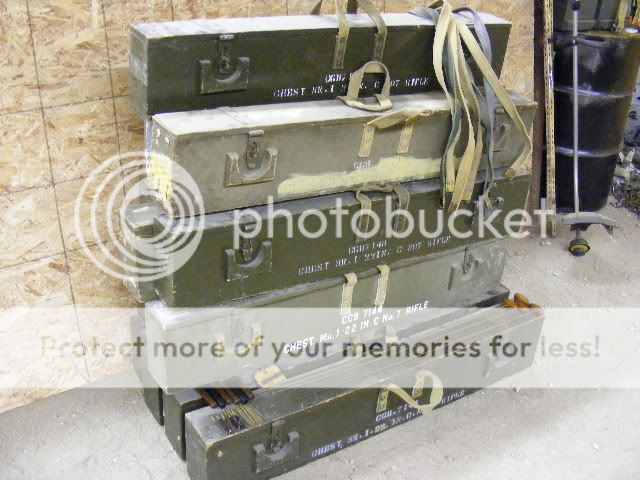
Here is a small stack of original and 50s repaint Cno7 chests:
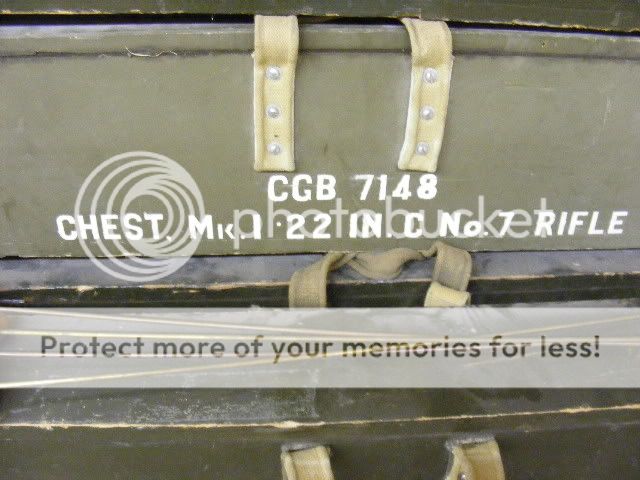
Below is an example of the original marking on a Cno7 chest:
Here are the original marking on a Cdn No15 chest as used with the no4mk1*T rifle:
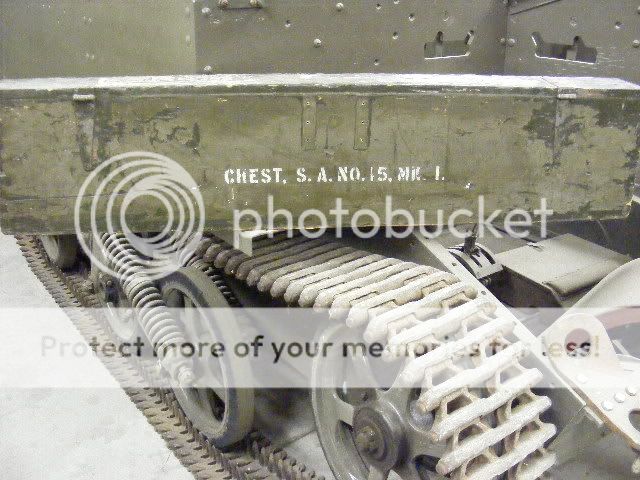
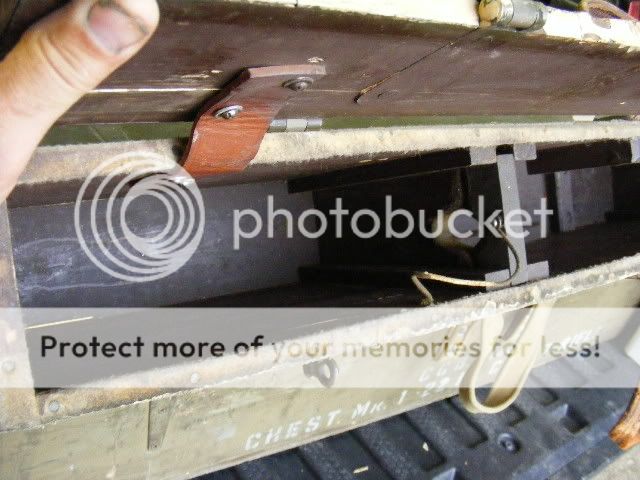
Below is a photo of the purple primer used on the inside and outside of the Cdn no 15 chest. The outside was then painted the olive green/brown:
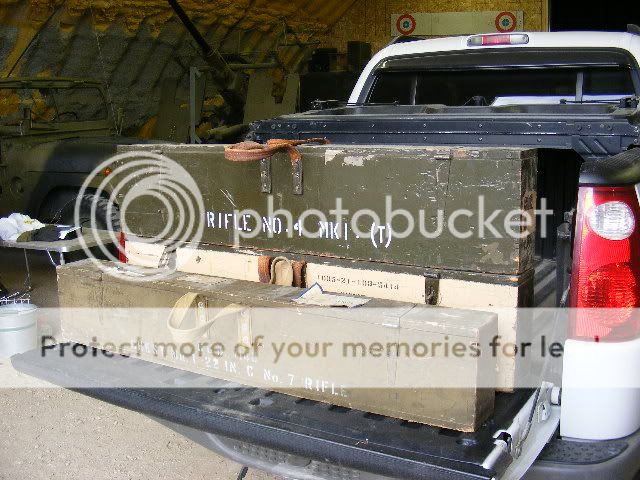
An example of a wartime colored Cno7 chest next to 2 post war painted no15 chests (Cdn). The chests were emblazoned with a myriad of stencils varying from the unit it was being shipped to, the NSN, the serial number, and shipping data like weight and cu ft.
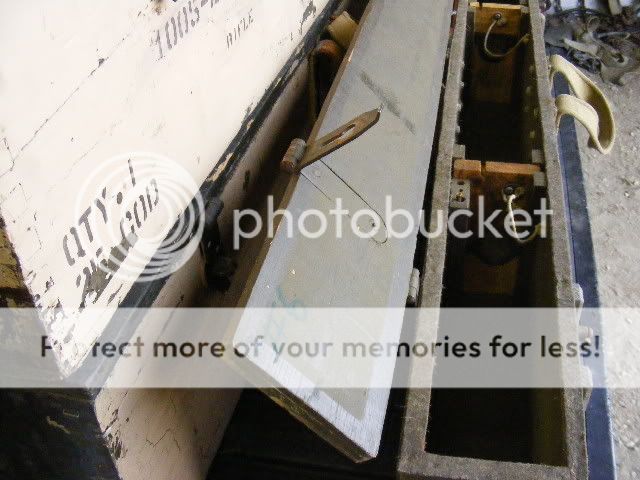
Inside of a Cno7 chest. The inside was painted the same color as the outside on the no7 chests:
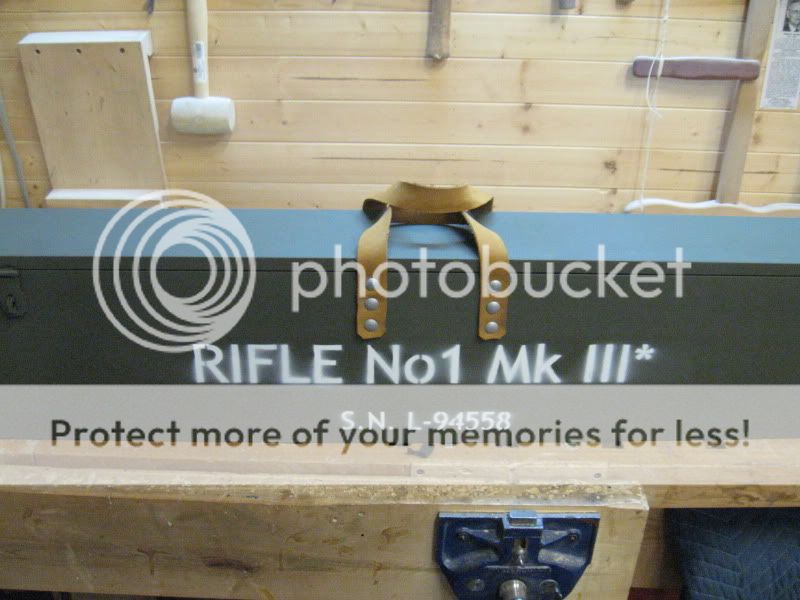
Here is what I did today. The letters are a bit hazzy (sp?) but I ran out of OD paint, so it will stay like that. I did not have any cardboard on hand to do the stencil.
Here it is. I'm sure that after a couple trip to the range it will look ok LOLL
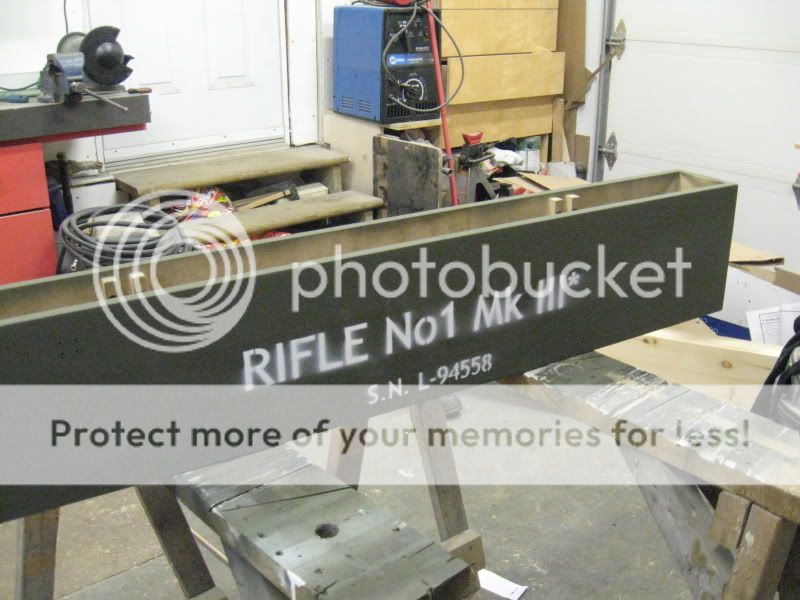
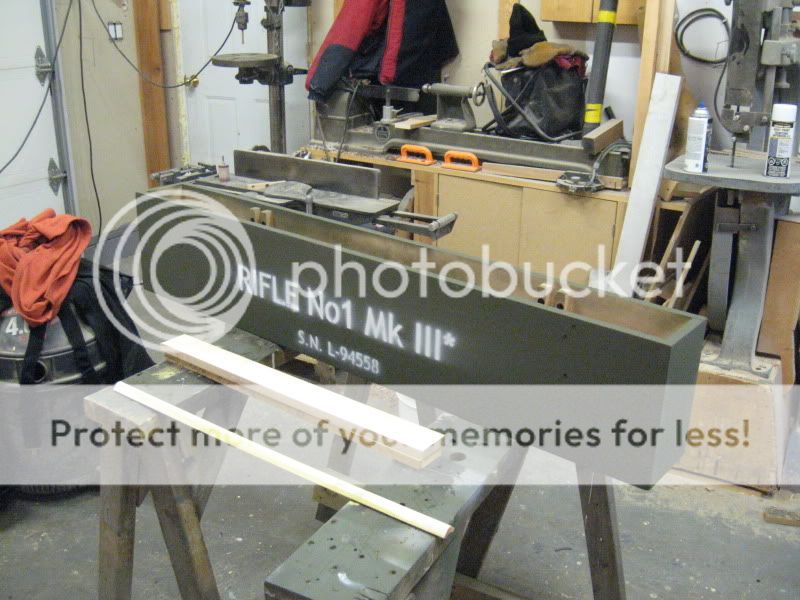
Here it is. I'm sure that after a couple trip to the range it will look ok LOLL
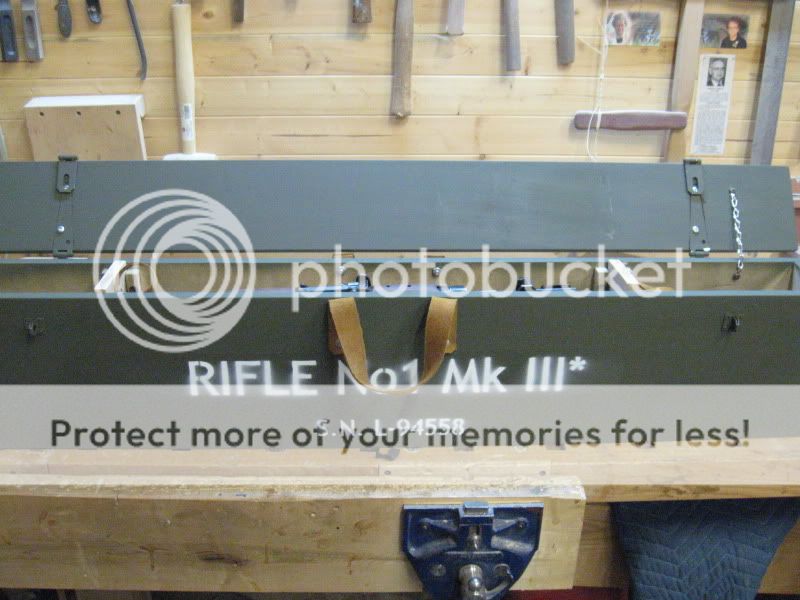
Lookin' Good, I like your dovetails ( good work). I've been debting on building a chest and I've been googling,I've seen different joints on the boxes.On the CHEST -No.4 Mk.1 T drawing it shows 1" pitch on the drawing.On the web its shows two different joints ,one dovetail is different then the 1" pitch and a straight joint like a finger joint. So, different factories or for different countries???
Its called a "box joint" and its really fast and easy to make with a table saw with a jig. You clamp the wood to a vertical part of the jig, cut one slot and move the slot you just cut to the side over a strip that fits the slot, then cut the next slot and so on. Here is a link to a better description:
http://sawdustmaking.com/Box Joint/boxjointjig.html

- Location
- West coast of Vancouver Island
Great job, if I had the room.....
The Canadian boxes were spruce, pine and fir. Most of it harvested in Northern Ontario and eastern Ontario. Just waiting for my 90 year old friend to write down what he remembers of the mill and the place they were made. Also, some boxes were made in western Canada but I don't expect the wood species to vary.
It also looks like the cheek pieces for the sniper rifles were also made from soft wood as well. I ended up with a small box of finished and unfinished bits and they are a mixed bag of wood.
It also looks like the cheek pieces for the sniper rifles were also made from soft wood as well. I ended up with a small box of finished and unfinished bits and they are a mixed bag of wood.
Last edited:
- Location
- West coast of Vancouver Island
I sure like your work Bob.
I've had 10 chests last 25 years , and almost all of them has something different stamped on it's front! And lid! Original info plus other info such as local base shop, decals, paper orders stapled, yellow paint quickly thrown over stenciling using a shaving brush and who knows what else?
Grey, blue and green painted boxes.
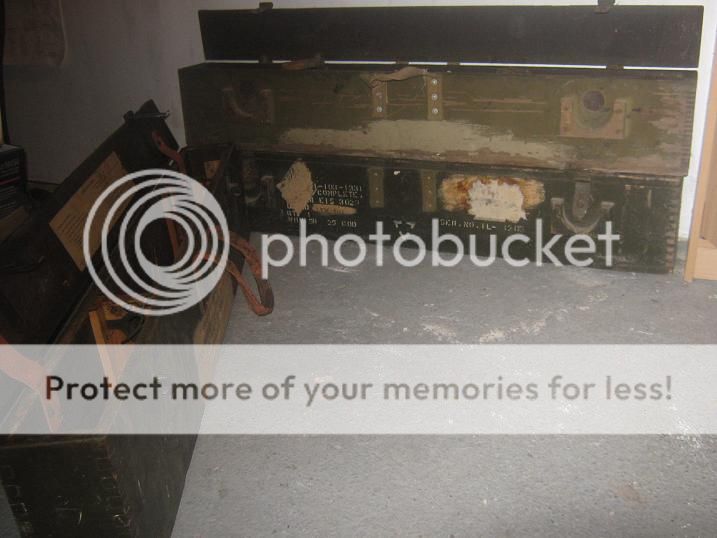
Grey, blue and green painted boxes.
Last edited:

 Nice work! I wish I had the time, patience, tools....
Canadian boxes were SPF (Spruce. pine and fir) Made in New Liskeard Ontario by Hill Clark Francis who also I suspect made no.4(T) check pieces from what looks like beech and fir. Boxes were made several other manufacturers as well and wood from there is unknown at the present. I got a box of "junque" from the old New Liskeard factory some years ago and there are a number of finished and semi finished cheek pieces in there that we have ID's as beech and fir.






















