canucklehead I'm sure your absolutely right in that a lot of people don't have these issue's but I figured I better give anyone interested the heads up of what potentially could happen and perhaps my warning was a little harsh
As for rifles I brought my 257 Weatherby and my dad his 6.5x55 Mauser (redone 15 yrs ago).
The ranges we were shooting were:
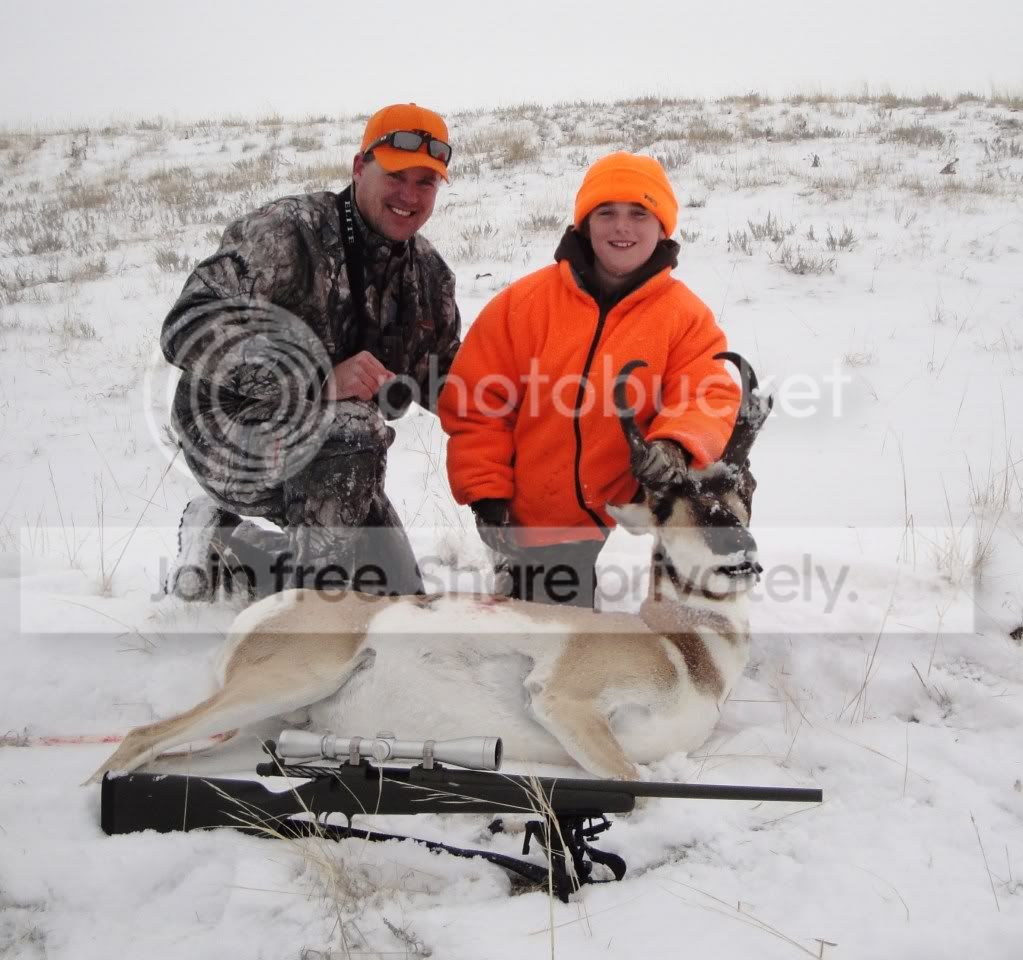
My buck = 425yd
Dad buck =375rd
My 1st Doe = 225 rd....standing position
My 2nd Doe = 400 yd.....your able to purchase up to 2 additional doe tags
Dad Doe = 300yd
Like I said you have to be prepared for long shots. Best three words of advice I could have for you is......practice......practice......practice. That's what made the difference for me.
However to be fair there not always long shots, another guy in camp got lucky with his buck @ 125yd and a doe @ 70yds....but as I'm sure you know that's hunting. I think it's safe to say the average shot is around 300yrds.
The 257Wby is pretty much the perfect calibre for out there on antelope, but obviously it's not for everyone for many reasons. I'm always a firm believe that any calibre will pretty much do the job if the bullet's placed in the right spot. I'm sure either your .308 or 300WSM will do the trick just make sure your really comfortable with which ever one you choose and know your ballistics as you will have to compensate for bullet drop with either of those calibres.
Without getting everyone "riled-up" about calibres and starting a whole debate

, and to clarify this is
"just my opinion". I have a Rem 700 .308 as well, but that stayed home simply because
"in my opinion" the .308 has way too much drop when you start getting into these ranges for my personal taste. It's fine when target practicing at the range and you have time to adjust, but when you have live animals in front of you it's a different story. Sometime you have all the time in the world to settle in......get your ranges.....adjust your scope....etc, but more often then not when it comes to
real hunting you have seconds to do all this and that's when it really matters. For me personally, I'd prefer to go with a flatter shooting, higher velocity, calibre, something like we took or perhaps a 270, 260 or so. That's not too say you can't start making your scope adjustments with the .308 (or larger calibre's), but I would highly recommend a bullet drop compensator on your scope if your planning on this and your own personal range finder is a must......but most important practice.....practice....practice at these ranges.
If your worried about putting down the animal in terms of calibre I would recommend worrying more about shot placement than anything else. They are a small animal and a 300 WSM will put a pretty good smack in there and (potentially) ruin a lot of meat if placed wrongly, but as said
and they will still keep going.
To give you an idea with all of mine the antelope dropped on the spot and was dead before I even got up to it. My dad had his doe go a pretty good distance because the shot wasn't "right-in-there," (still good, but not perfect). To give you an idea another guy in camp was using a 338win and surprisingly
that antelope went a long distance when shot in the left rear quarter......although to be fair that same guy did drop a very nice buck @ 400yds
Like I said "in my opinion" shot placement is most critical and if you have a calibre that you are 100% comfortable with and can decide exactly how much to compensate for in milli-seconds then that's the one to use. Otherwise your better off to get into the flatter shooting rounds like I mentioned and be able to hold on the kill zone anywhere out to 300 yds and not worry. To me that will put more meat in the freezer than anything else.