World War I Sniper TAKING AIM FROM THE TRENCHES.
An Indiana National Guardsman who volunteered for Canadian service, Captain Herbert W. McBride developed sniping tactics that became U.S. Army doctrine after World War I.
Throughout the history of warfare, few military leaders have placed adequate emphasis on the value of the well-trained and properly equipped individual rifleman. Only occasionally have far-sighted commanders, such as American Colonel Daniel Morgan and British Lieutenant Colonel Patrick Ferguson in the Revolutionary War, Henry Berdan in the American Civil War, and other imaginative leaders understood the effectiveness and efficiency of good marksmanship.
Another such believer in the value of the single well-aimed shot emerged from the shell-wracked trenches of World War I. The lessons that Herbert McBride learned in battle and later documented would become a textbook for future leaders on the techniques and tactics of sniping.
In the fall of 1914, the possibility of the United States entering the war in Europe seemed remote to Captain Herbert Wesley McBride, a company commander in the Indiana National Guard. That prospect did not sit well with the young firebrand.He had missed out on two chances already--the Spanish-American War in 1900--and he felt that he could not stand idly by and let this war slip away. After determining that the Canadians would surely be called upon to support the British in France, McBride resigned his commission, packed his bags and headed north, enlisting at Kingston, Ontario, on April 3, 1915.
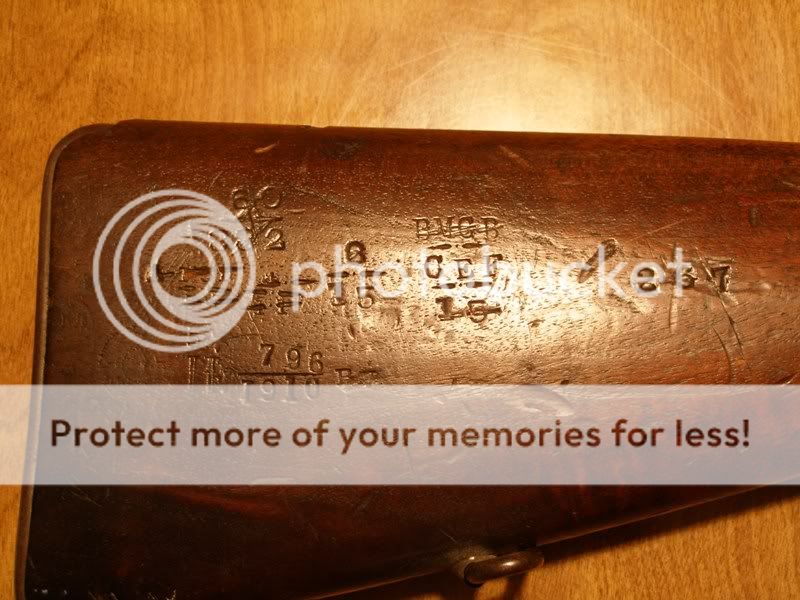
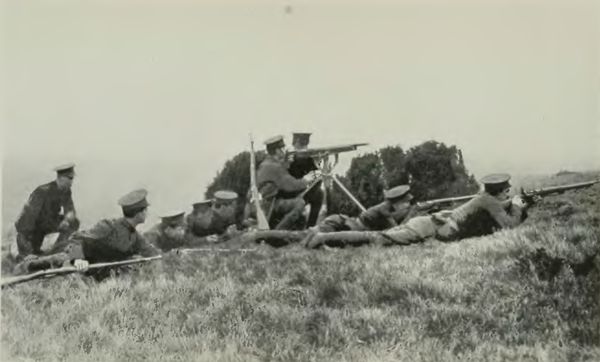
An expert marksman himself, McBride believed that a trained soldier who could shoot well was worth his weight in artillery shells. The Canadians readily accepted this determined American and and assigned him to the 21st Battalion, Canadian Expeditionary Force under Lt. Col. William St. Pierre-Hughes, the brother of the minister of Militia and Defense. Road marches in the rugged Canadian forests and hills, rifle drill and basic military subjects filled each day for months. St. Pierre-Hughes also was a marksman, and he said that "musketry " training was one of the most vital things his men should receive before they faced actual combat. Days were spent on the range with the Canadian-built Ross Mark 3 .303-caliber rifle. Each man was carefully coached and evaluated. By the time its troops boarded ship, the 21st Battalion had the reputation of being "full of riflemen."
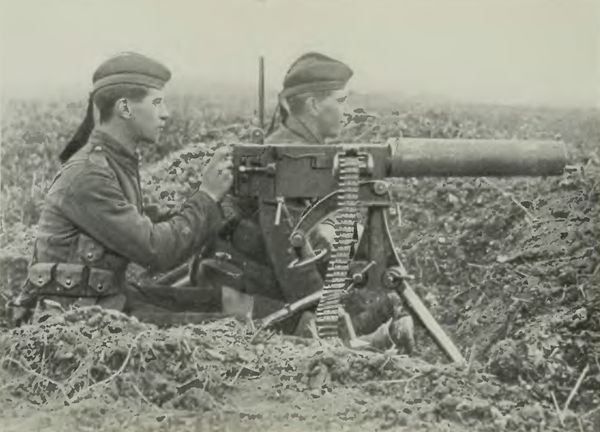
McBride was ready and eager to enter the fray by the time his unit reached the trenches in France. Although a rifleman at heart, he had been assigned to the Machine Gun Platoon--the "Emma Gees"--as a private. After he had spent a short period in that capacity, his skills and enthusiasm earned him a promotion, and he was put in charge of the machine-gun section. As section leader, his job was to scout for positions to emplace his machine guns that would both afford protection to the crews and give them good fields of fire to cover no man's land. At this, he was good. A hunter since youth, McBride could move around the battlefield easier than most without being detected by German snipers. Moreover, with a rifle as his personal weapon once more, McBride found that his scouting forays afforded him some excellent chances to take a few shots on his own.
One other man proved as capable as McBride, and they quickly became friends, accompanying each other on these scouting missions. Young Private William Emmanuel Bouchard had spent his youth trapping in the forests of Quebec province before enlisting at Kingston on November 6, 1914. They became an effective team, with Bouchard's sharp eyes picking out targets and McBride taking careful aim.
The Canadians had joined the British Expeditionary Force under General Sir John French in Flanders, and McBride found himself in the southern Ypres salient facing Messines Ridge, which was held by the German Sixth Army under Crown Prince Rupprecht of Bavaria. On a hill behind McBride's company in the Canadian trenches, a shelled-out French farm house and barn stood among rubble and shell craters, commanding an excellent view of the German trenches. McBride learned that when the Canadians had arrived in that sector, a squad had found the body of a French sniper in the ruins, his Lebel rifle still protruding through a window. From then on, the farmhouse was called the "Sniper's Barn."
After checking the ruins carefully, McBride and Bouchard determined that the position was too exposed and that if anyone was foolish enough to shoot from there, he would be quickly answered by German artillery that undoubtedly had it preregistered. McBride scanned the terrain in front of the barn for a better position. He thought they could hide in a hedgerow to the front and have just as good an observation post as they could up in the barn. He felt that if the Germans tried to suppress his fire, they would shell the barn, thinking his shots were coming from there. The practice of setting up near an obvious place that would draw the enemy's attention without actually being near that place would become a sniper's tactic, used in many wars to come.
Bouchard agreed with "Mac" on his choice of location, and the two soldiers moved out. The Canadians had been taking casualties from a German sniper for several days, and McBride wanted to do something about it. If he could just locate the sniper's "hide," he might be able to eliminate the menace, but the troops in the trenches could not provide a clue as to where the shots came from. From their position in the hedgerow, McBride and Bouchard could see a mile across the battleground and well behind the German trenches. The two men settled in to wait.
In the late afternoon, McBride saw several stretcher-bearers leave the Canadian trench and begin picking up wounded that littered the battlefield after a skirmish. As he watched, he heard the unmistakable crack of a Mauser rifle and saw a stretcher bearer fall, shot through the stomach. Another shot rang out, and a second medic spun to the ground.
The stretcher-bearers were not line infantrymen, but pipers from the Regimental Pipe Band. Seeing them shot down during a mission of mercy infuriated McBride and Bouchard. They scanned the area frantically, but the German was well hidden and continued to pick off the aid men as fast as they entered his sights. Three more went down, and the remainder scurried for the trenches. With only the iron sights of his Ross service rifle and no binoculars, McBride and Bouchard never located the assailant.
Frustrated, McBride decided that he would need more than his standard infantry rifle for the mission he had in mind. If he had just had a telescopic sight for his rifle, maybe he could have found the culprit -- and saved some lives in the process. But how would he get one?
Weeks later, while scouting in back of the Canadian lines for suitable machine-gun positions, McBride happened upon a sniping post manned by an officer and two soldiers from the East Kent Regiment, also known as "The Buffs." The first thing that caught his eye was the telescopic sight on the team's British Lee-Enfield rifle. Up to that time, he was unaware of any designated specialists in that capacity. The British officer explained that there was a school for sniping, and that after one completed the course, he was issued the proper equipment. He had also heard that the Canadians were forming a school of their own, and suggested that McBride enquire of his officer. McBride was intrigued and asked for a peek at the rifle and the scope. As he drew the weapon to his eye, McBride noted that the scope consisted of a brass tube about 10 inches long and three-quarter inch in diameter, and it only had a horizontal cross hairs, with no adjustment for changing windage. The field was limited, and one would have to judge the windage and "hold off" the proper distance, but it was better than nothing. The British sniper mentioned that the scope was made by Stanley in London.
McBride returned to battalion headquarters, explained his intentions to Colonel St. Pierre-Hughes and asked for a chance to attend the upcoming sniper school. In short order, St. Pierre-Hughes granted him permission.
McBride arrived at the newly organized school near the village of LaClytte, not far behind of the Canadian lines. After proving his worth as a sharpshooter, he was issued a specially adjusted Ross rifle with a telescopic sight. This variant on the Ross had been built for the Canadian army rifle team that competed in the American National Rifle Matches at Camp Perry in 1913 and was extremely accurate. The scope was a new type, built by the Warner and Swasey Company. It had a prismatic sight and was mounted on the left side of the rifle's receiver, which allowed the shooter to also use the iron sights for close shots. When McBride tried out the new rifle, he found that the locking screw on the mount became loose after a few shots. He solved that problem by mixing up a cup of salt water, coating the threads of the crew with it and retightening it. When it "rusted in," it held the scope satisfactorily.
Before returning to the 21st Battalion, McBride also received a spotting scope with a tripod, for use by his spotter. To him, there was no question as to who that should be. Upon rejoining his company, he asked Bouchard if he would be interested in doing a little sniping with him. Bouchard jumped at the chance.
They located an ideal spot for their main sniping post--the old Sniper's Barn, still 500 yards behind the front line, which gave them a commanding view of the countryside. In the hedge in front of the barn that they had used so many months before, the two snipers built a camouflaged "hide" and went to work. McBride and Bouchard first determined the range to all the landmarks to their front and marked a map with the distances and angles noted. In the school, the experienced snipers had told the students to shoot off at an angle to mislead the Germans, and McBride marked those areas as primary target lines. Once that was accomplished, the two men settled down to wait.
Later in the day, the familiar crack of a German Mauser sounded. Bouchard spotted a target and called the location just to the right of a place marked "Number Four Post" on the map. McBride shifted his scope and scanned the enemy lines. He did not see the German sniper, but what he did see made him smile. The sniper's fire was being directed by an officer. McBride had passed over the spot several times without noticing the German, whose uniform blended in well with the tree trunk he was standing in front of, but when the man moved slightly, McBride settled his sight on the officer and squeezed the trigger. The man went down, shot through the chest.
For a short time thereafter, McBride and Bouchard lay waiting for a reply from the German side. Then a bullet smacked into their nest. "Probably just a stray round," said Bouchard, raising his eye back to the spotting scope. Just then another shot pierced McBride's cap, barely missing his scalp. A third round immediately buzzed through the hedge and struck Bouchard.
"Jesus Christ, Mac!" exclaimed Bouchard, crossing himself, "they near got me that time." The Germans had obviously spotted the two men, so they hastily abandoned their position and retreated behind the Sniper's Barn, where McBride examined Bouchard's wounds. The bullet had scraped the side of his head, grazed his shoulder and carried on to his calf, cleaving a furrow along his skin.
"What the hell, Mac," Bouchard said, "they got to hit me harder than that before I quit." After Bouchard was patched up at an aid station, the team decided it was time to find another spot for its activities. Analyzing the terrain the next day, the two men picked a spot in the middle of an open field. The place looked ideal, but the problem of how to safely get there remained.
For several nights, the two men labored intensely. They dug a trench 3 feet wide and as deep from the front of a ruined building to the spot they had selected. Each man carefully removed the sod and carried it back to the ruins, returning with pieces of board to cover the tunnel. After laying the boards over the top, they went back for the sod and carefully replaced it to hide the night's work. The result was a perfect sniper's nest.
When the hide was completed, they left it for a week to see if the Germans would discover it and use artillery to destroy their work. When it passed the test, McBride and Bouchard entered the tunnel and crawled through the mud to the chamber to try their luck. Once inside, McBride wetted a piece of burlap and spread it on the ground in front of his firing port to suppress any dust from his muzzle blast. Bouchard mounted his spotting scope in his little observation hole, adjusted the focus and began to search the front. Several hours passed as the two men watched the disheveled landscape, but the day was quiet.
Finally, just as McBride decided to call it a day, Bouchard pointed out a particular place in the German forward trench where he had observed some construction going on. The Germans were building a new ma chine-gun emplacement and had strung up a piece of muddy canvas to conceal the working party. Bouchard had seen someone moving near the screen. He whispered his observation to McBride, who took aim and squeezed the trigger. The bullet struck the screen dead center, and five Germans immediately scurried for better cover. McBride fired two more rounds at the fleeing troops, and Bouchard mentioned that he thought McBride hit one. The targets were gone by then, but McBride knew this new nest would work out well.
Over the next few weeks that they occupied the little hide, McBride kept a record of his efforts, a habit developed during his competition days that stood him well in reporting the team's successes. The entries were short and to the point: "December 1st. Hazy--Near leaning tree. 1 shot 750. Fell and they pulled him in. Two shots at helpers--got one.
"December 2nd-3rd-4th. Rain. N.G. [No good].
"December 7th. Brt. & clear. Fresh S.W. wind. Near 92. Twice men showed them selves. Three shots, sure of one. 50 yards R. one man--one shot. R of 02 our artillery blew down M.G. emplacement showing open end of covered trench. Men trying to get out--4 shots--2 known hits. Thirty yards left, 1 man, 1 shot. Got him. This was a good day.
"December 8th. Rainy a.m. Hazy p.m. Piccadilly Farm. 5 good chances and three known hits.
"December 9th. Hazy, cool. 1 at leaning tree, standing straight up. 2 shots at group back of 92. No observation. One fifty yards right. Fell across log. Shot three successive helpers (all soldiers), all four lying in sight at dark.
"Dec. 10. Rain: N.G.
"Dec 11. Misty. One shot--Piccadilly. Probably missed.
"Dec. 16. Clear. Fine hunting. 16 good shots--7 known hits and feel sure of at least four more."
And so it went. The references reflected data on McBride's range chart, which covered every foot of the German defenses in his sector. Bouchard would call a location, and McBride would shift and find his target in the minimum amount of time. Seconds made the difference between life or death to the German targets.
The technique of recording activity in a sniper's log would one day become standard procedure for sniper teams. With the added information of wind, temperature, light conditions and distance, sights could be ad justed accurately on a later date on a day that matched the recorded information in the book about a similar previous shot.
The German snipers proved to be no slouches when it came to shooting at ranges up to 500 yards. Some of the enemy snipers used "bedded" rifles. These Mausers were gripped in machine-gun rests and aimed to cover some unprotected spot well behind the Canadian lines--sometimes up to a range of 1,500 yards. Most of the impact areas were troop concentration points or road intersections. The German gunners could "pickle off" a shot in the middle of the night and almost be assured of hitting someone. Since it was not uncommon for stray rounds to be floating about, several casualties often occurred before the men realized that they were under deliberate attack and detoured the impact zone.
The Canadians used similar devices. One particular piece of ingenuity was a steel frame made to hold six rifles. A man was detailed to make the rounds each night and pull the triggers at given intervals. That procedure was later abandoned and relegated to the machine-gun section, as its weapons could do the same thing.
McBride had his own ideas about the ammunition and weapons selected by committees of experts that were then supplied to the troops in the field to comply with some theory in the minds of people who did not have to use them. (Some of his ideas would ring true again in Vietnam, in the debate concerning the replacement of the 7.62mm M-14 rifle with the lighter 5.56mm M-16.) One such idea was to arm every soldier with an automatic or semiautomatic weapon, in the belief that massive firepower and smaller, lighter ammunition--so each man could carry more--would enable a given number of men to inflict more casualties among the enemy.
To that rationale, McBride replied: "Up to date, no soldier has been able to carry enough ammunition to take him through a day's fighting--that is, in a real battle. They say they will reduce the caliber and thus reduce the weight of the ammunition. Yeah? How much can you reduce it? You can probably cut it down from say, ten pounds to eight or, to make it more plain, by reducing the caliber from thirty to twenty-six (and keeping up the same velocities) you will have made a reduction such as may be represented by the difference between sixty and fifty-two (bullets) or thereabouts." McBride proposed instead to teach the soldiers to shoot better--then they would not need the extra bullets. Regarding equipping each man with an automatic rifle, he wrote: "You'd better let the little old rifleman carry on with his simple magazine rifle. Out of every hundred men in the infantry, perhaps ten are really qualified to rate as riflemen. And you cannot make these riflemen by merely designating them by name and number in orders from headquarters. They must have learned the game by long months of practice and experiment. If, in addition to thorough range training, they have had the experience of hunting big game--especially goats and sheep--so much the better." Once the best shots were identified, he suggested: "Take these men and arm them with the very best type of Sporters equipped with both telescopic and modern iron sights, and turn them loose during an engagement. Their functions will be to afford a protective screen for the machine guns and trench mortars and to take advantage of every opportunity to harass the enemy."
By 1916, the British army had organized a true Sniping Corps. It consisted of game keepers, guides and men from the Scottish deer forests. They were called the "Lovat Scouts after , Lord Lovat, who had been instrumental in organizing and equipping the force.
The Canadians established their own Sniper Section and attached it to the Intelligence Section, working under "Scout Officers." By trial and error, each army was finding that a sniper also made an excellent scout. Men who daily scanned every inch of the terrain knew it well. The sniper knew when something was different or when something was amiss from the day before. With those reports, the Intelligence Section could learn many things--perhaps the artillery was changing positions, perhaps the Germans were readying for an attack or pulling back.
But to Captain McBride, the most important part of a sniper's work was counter-sniping. For that task, the sniper must first locate his opponent-a considerable job in itself. Then he must study his adversary's history. How many men has this individual killed? If the number is high, he is a good sniper--and extremely dangerous.
On one occasion, McBride had been called up to eliminate a particularly troublesome German sniper who had killed several men over a period of days. When he arrived in the particular stretch of the trenches, he noted the weather. A blanket of light mist lay against the ground and was drifting and streaking slowly about.
Using the mist as a cover, he scanned no man's land with his big spotting scope. Passing his gaze slowly across the German parapets, he noted nothing unusual. Then, just as he changed to his binoculars and began sweeping the German positions, a shot rang out. Fortunately for McBride, he had his field glasses exactly on the spot where the muzzle flash sparked distinctly.
Dropping the binoculars, McBride picked up his Ross and drew the scope to his eye. He ordered two machine guns to aim where he did. The enemy sniper had fired from a corner of parapet next to a pillbox, and he called the location to the gunners. McBride fired. His shot was quickly followed by bursts from the two machine guns standing by. No more was heard from that sniper.
Week after week, McBride and Bouchard prowled the trenches, the craters of no man's land and the hills behind the lines, setting up, watching, waiting and sniping. Between them, they accounted for more than 100 Germans. Two men with a rifle accounted for more enemy dead than most infantry companies. Finally, Bouchard was transferred to another outfit, and McBride later received the sad news that a German shell had killed his friend on September 15, 1916. McBride sat in the mud of the trench and thought of their time as a team. They would hunt together no more.
By that time the British army needed more than snipers. They needed officer replacements, and McBride's name surfaced, since he had been an American captain before the war. The Canadians wasted no time in locating him and pushing the proper paperwork through. McBride drew a field commission and by the end of the war had been promoted to captain. He never lost his love for the rifle, however, and never changed his mind about the importance of training not only snipers, but individual soldiers.
He later wrote: "In these days of modern warfare. we generally find opposing armies about evenly matched in numbers--at least amongst those units which come in actual contact in the field. Have you ever figured out what would happen if in our next war we can put an American Army in the field with its rifle users all sufficiently trained so they can hit and kill one enemy soldier. Just think that over."
In the trenches of Flanders, McBride proved the value of the trained rifleman. His experiences and theories were studied and adopted by other military leaders in the post war years. In specially trained and equipped scout/sniper units in Vietnam, much of what McBride pioneered in the shell-pocked killing fields of World War I became doctrine--with resounding success. During the Vietnam War, the M-16 assault rifle and the M-60 machine gun were used to pour fire into suspected Viet Cong or North Vietnamese positions, and the doctrine was to gain "fire superiority" through use of massive firepower. Consequently, the U.S. military estimated that 50,000 rounds of small-arms ammunition were expended for each enemy casualty. In comparison, sniper teams in Vietnam expended an average of 13 rounds for each enemy soldier killed.
Throughout the years a sniper's motto surfaced and became the creed of the military marksmen whose mission it was to fire that "single well-aimed shot": One shot one--kill. Captain Herbert McBride would have liked that.
A former Marine sniper in Vietnam, retired lieutenant colonel with 14 years in U.S. Army Reserve Intelligence, and retired police helicopter pilot for Tulsa, Okla., Craig Roberts is co-author of the book One Shot, One Kill and a frequent contributor to Primedia publications. For further reading, he suggests: A Rifleman Went to War, by Herbert W. McBride.

















































 ...:
...: