












































Model 70 Blowup

Banished

Regular
Rating - 100%
75   0   0
Location
Osoyoos, B.C.
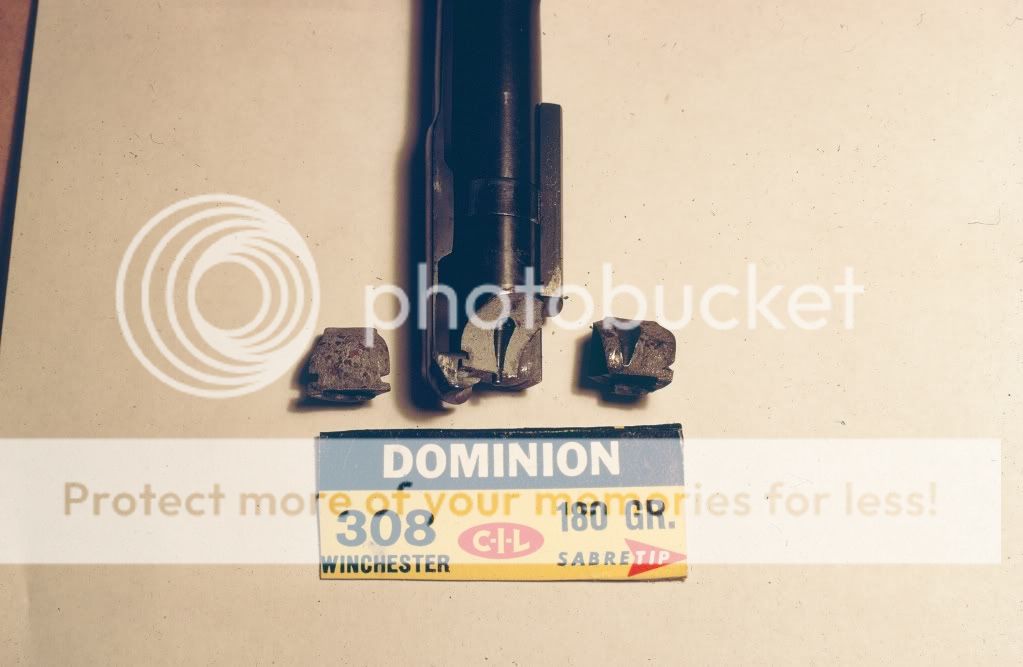
I posted an item a few days ago on the reloading forum about almost blowing up a rifle using the wrong powder. That post got me thinking about a .308 Model 70 Winchester (pre 64) that many years ago had managed to blow off both locking lugs without any excessive pressure. The following photo shows the end result.
M70Bolt001.jpg


This happened in 1971 near Pond Inlet on the north shores of Baffin Island. During a hunt the shooter was surprised when he opened the bolt, after killing a Caribou, and saw both locking lugs and the extractor fall to the snow. After the hunt he brought the rifle to me for my thoughts. I knew he had been using factory loaded ammunition so I wrongly assumed he had probably plugged the barrel with snow causing excessive pressure which caused the locking lugs to fail. The only thing that saved him from wearing the bolt in his eye socket was the bolt handle slot in the receiver.

I asked him if he had saved the cartridge case that caused the problem and he said it was still in the chamber. It was still there because the extractor had blown off. A light tap with a cleaning rod removed the case. I was shocked when there were absolutely no signs of excessive pressure on this case. The edge of the primer was nice and round with no leaking and no scuff marks anywhere on the case head. The 180gr Dominion ammo had been fired many times in this rifle without incident.

I can’t be sure but I think this happened because there was probably a fault in the bolt metal combined with the –30 F temperature. Very cold temps. causes metal to become brittle.

Winchester replaced the bolt and so far as I know had no comment about what caused this.

Regards

Aubrey
 
Last edited:
The first thing I noticed is the bolt is blued. On a pre-64 Model 70 the bolt should be in the white. Whether or not this indicates some monkeying around, who knows. Just an observation that draws suspicion. . . possibly a bolt was changed out and the headspace not proved correct?? The serial number on the bolt would verify as the s/n was electric pencilled at the factory.
 
The first thing I noticed is the bolt is blued. On a pre-64 Model 70 the bolt should be in the white. Whether or not this indicates some monkeying around, who knows. Just an observation that draws suspicion. . . possibly a bolt was changed out and the headspace not proved correct?? The serial number on the bolt would verify as the s/n was electric pencilled at the factory.

The rifle was purchased new with the bolt blued. Serial numbers on receiver and bolt matched. No work was ever done on the rifle until Winchester replaced the bolt.

Regards

Aubrey
 
Cold temperature, I would say. Steel breaks very easily in cold, and yet -30 F is not really severe. I spent much of my younger life in cold countries and I have been out in temperatures officially measured at colder than -45, even -50. I have seen quite a few axes break off great chunks of steel, just from chopping into a frozen tree.
I never heard of a rifle failing due to cold, but I suppose possible.
 
The rifle was purchased new with the bolt blued. Serial numbers on receiver and bolt matched. No work was ever done on the rifle until Winchester replaced the bolt.

Regards

Aubrey

Unusual, as I have not saw any pre-64 M70's with the bolt blued from the factory, pre-war or post-war. I own 10 myself, including a 308 with all bolts in the white. Roger Rule's book shows all the bolts in the white as well. Someone had to have been monkeying with the bolt and got happy with the bluing.
 
Bluing baths only operate at 292degrees fahrenheit not enough to change anything in the bolt construction also at minus 30 the pressure would be substantially lower than say at 70 degrees fahrenheit this does not add up possibly faulty bolt out of the box.
 
Could the bolt be blue because it had frozen up, and was held over a Coleman stove to thaw it out?
Wouldn't be the first bolt to be ruined this way. I've seen set back locking lugs, collapsed springs, etc, from this treatment.
IIRC, there was a chap brought into Baffin Regional Hospital with injuries suffered when a bolt exited a rifle and struck him in the face.
This sort of failure is very rare - usually it is a catastrophic cartridge case failure which wrecks a rifle.
 
I think somebody monkeyed with the bolt, In the picture I see a bolt guide or left hand lug raceway gas block attached to the extractor clip ring opposite the extractor. I don't think I've ever seen a pre-64 with this feature let alone a blued bolt on a pre-64. Somethings strange with that bolt.
 
The 243. 308, 358 series of featherweight rifles had the extended bolt guide/stop to shorten the bolt throw as there was only the long action at that time. It also assisted as a gas shield filling the raceway according to some sources I have stumbled across. Not sure it was ever intended to do that when they were made though. I have also never seen a factory blued bolt from a true pre-64 sporter. Not too sure about all the target variations being unblued though.
 
The blued bolt is interesting and might indicate something, or not.

If the bolt had been exposed to excessive heat, as in being thawed out in an open flame, bluing would be an obvious method to refinsh the metal afterwards.

The rifle probably saw a lot of use and may been reblued. The owner could have decided to get the bolt blued at the same time. Would make sense in a marine/arctic environment.
 
Ok. This is my fault for not telling you a bit more of the story. The rifle was one of 91 special order rifles produced by Winchester in 1960 for the RCMP some of which came with a blued bolt from the factory - I have no idea why. Later RCMP M70's came with many other variations never seen on the retail rifles including steel magnum cross bolts in .308 Win.

The extractor had been blown off and was placed back on the bolt by the hunter who had no idea where it should go.
 
I'd call it ####-poor QC on the heat treating rather than an overpressure on the part of the cartridge, as being a likely suspect in this particular case. Maybe the wrong barstock got used to make a few parts.... Never gonna know, if the bolt doesn't get shipped to a lab and tested.

Or a combination of several things all falling into line, swiss cheese theory and all that.

That the cartridge fell free and was not showing damage, seems to point that way. I'd expect to see some cartridge deformation on an overcharge severe enough to blow the lugs off.

Cheers
Trev
 
Aubrey,
I had not heard of this on a pre-64 prior to this but had seen one post-64, push feed model which had lost both lugs. Also with a factory load.
I would surely like to be able to look at something like this first hand. Some discoloration in the break makes it look like it had fractured on the surface sometime prior to complete failure.
I suspect a combination of faulty heat treat, contaminated steel, and a sharp corner at the base of the lugs. I wish you hadn't posted this. I'll probably develope a flinch whenever I shoot one of my old Winchester actioned rifles now!
Regarding the heat treeatment, I once treated a shaft with an integral gear which I had made of 4140. In retrospect, I suspect the quenching oil was too cold. Anyway, I had hardened it and was kind of admiring it prior to drawing it back a bit. As I watch it made a plinking sound and one of the gear teeth just popped right off! Sometimes, considerable stress can be generated by poor heat treatment. Another thing which can cause a similar failure is hydrogen embrittlement which occurs as a by-product of chrome plating. Had the bolt been black chromed, instead of blued, that might be a possibility. Regards, Bill
 
Back
Top Bottom






















