












































You are using an out of date browser. It may not display this or other websites correctly.
You should upgrade or use an alternative browser.
You should upgrade or use an alternative browser.
28 Gauge Guestion?
- Thread starter Bull's-Eye
- Start date


Ahsan Ahmed
CGN Ultra frequent flyer
Kinda loaded question  as there are a few variables involved. That said, one may generally use the 28ga for small Game including various Upland Birds and small ducks (with the appropriate choke/load combo) as long as one can keep those shots under 35 yards.
One could effectively use that for Skeet and/or Sporting Clays as well. However, it would then be prudent to reload in such case in order to optimize savings (factory loads, for both target/hunting, are more expensive in comparison with 12/20ga). If the intent is simply to hunt with that then acquiring factory shells should be a non-issue since not many are needed over a season.
BTW, it has fast become a favourite gauge for me.
as there are a few variables involved. That said, one may generally use the 28ga for small Game including various Upland Birds and small ducks (with the appropriate choke/load combo) as long as one can keep those shots under 35 yards.One could effectively use that for Skeet and/or Sporting Clays as well. However, it would then be prudent to reload in such case in order to optimize savings (factory loads, for both target/hunting, are more expensive in comparison with 12/20ga). If the intent is simply to hunt with that then acquiring factory shells should be a non-issue since not many are needed over a season.
BTW, it has fast become a favourite gauge for me.

The 28 gauge is good for any upland hunting over a pointing dog, preserve pheasants, perhaps wild pheasants if the shots are kept close. Less suitable for waterfowling due to rarity of non-tox 28 gauge. Great for clay target shooting. Excellent gauge to introduce young or female shooters.
The guns are light, easy to carry, low recoliing and the gauge is ballistically closer to the 20 gauge than the .410. It's a reloader's delight.
An added bonus is that it's completely unsuitable for bear defense, mall ninja and tacticool shooting. No factory buckshot or slugs.
All of the above make it a favourite gauge of mine.
The guns are light, easy to carry, low recoliing and the gauge is ballistically closer to the 20 gauge than the .410. It's a reloader's delight.
An added bonus is that it's completely unsuitable for bear defense, mall ninja and tacticool shooting. No factory buckshot or slugs.
All of the above make it a favourite gauge of mine.


An added bonus is that it's completely unsuitable for bear defense, mall ninja and tacticool shooting. No factory buckshot or slugs.
All of the above make it a favourite gauge of mine.
LOL, good one CB.
I love my 28 gauge 870 Wingmaster.
The 28 has its own special following. it is a smaller frame which normaly makes it light. It usualy patterns very well due to less shot. Ammo is much more expensive. I have done very well in small gauge events in SPorting Clays with my 28 Chapuis and prototype Ruger. With the Ruger I finished twice third at the Worlds. My Chapuis 28 has done well on clays and on live upland birds as I hunt over a good dog!
Here is a pic of a bespoken, one of a kind 28 gauge O/U:
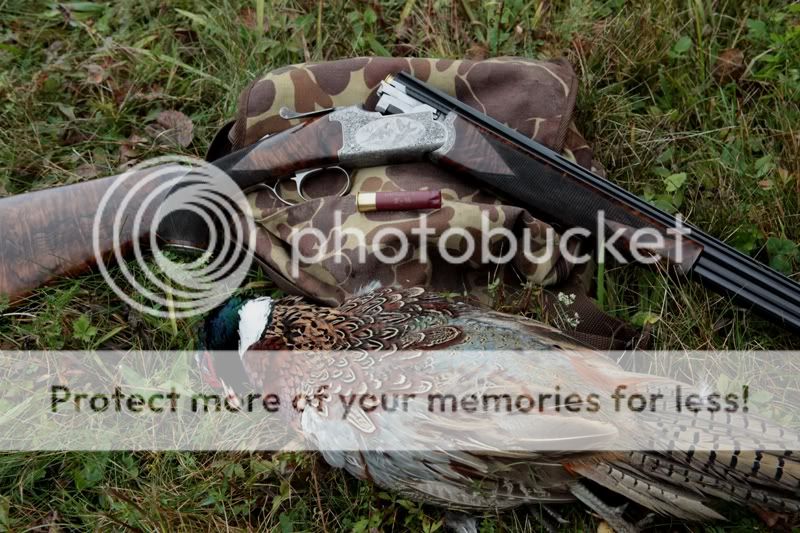
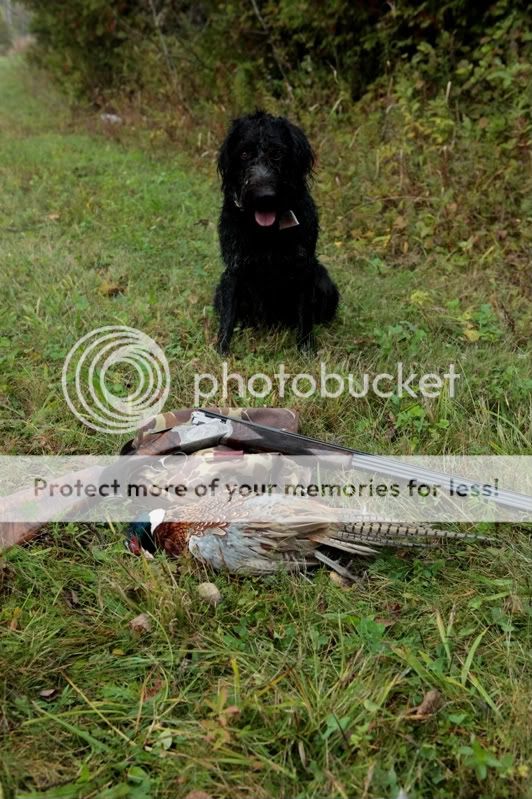
BTW, I use target loads in Win AA Extra Light 8.5 in the bottom barrel and if I miss, then Win 5s in the Mod upper barrel. Target loads do very well on all upland birds when hunting over a dog. The pellets do not prentrate much. They knock the bird out with so many pellets hitting it. It is like getting wacked by a 2x4! The dog retrieves and one shoves the bird in the bag!
28s are fun to shoot!
Regards,
Henry
Here is a pic of a bespoken, one of a kind 28 gauge O/U:
BTW, I use target loads in Win AA Extra Light 8.5 in the bottom barrel and if I miss, then Win 5s in the Mod upper barrel. Target loads do very well on all upland birds when hunting over a dog. The pellets do not prentrate much. They knock the bird out with so many pellets hitting it. It is like getting wacked by a 2x4! The dog retrieves and one shoves the bird in the bag!
28s are fun to shoot!
Regards,
Henry
Saw a beautiful Italian Made 28 Gauge this weekend at the local gunshow and not having ever owned a shot gun I am curious what would you use/hunt with a 28 gauge?
Anything I want.
Ahsan Ahmed
CGN Ultra frequent flyer
- Location
- North-Central Quebec
The perfect tool for grouse.
i have a 28gauge single shot hinge action. It came with a 30-30 single barrel as well. The kids use it for grouse/rabbits etc. I still have a box of slugs for it as well. There may not be any comercial slug loads available now??? , but i ahve an origional box of slugs for the gun. Most provinces require 20ga or larger for big game so they would not be legal for hunting in most provinces anyhow. Not sure how effective they would be in any case. Better of as a conversation piece. Neat little gun for sure.
- Location
- North-Central Quebec
. I still have a box of slugs for it as well. There may not be any comercial slug loads available now??? , but i ahve an origional box of slugs for the gun. Most provinces require 20ga or larger for big game so they would not be legal for hunting in most provinces anyhow. Not sure how effective they would be in any case. Better of as a conversation piece. Neat little gun for sure.
In the 40`s to 70`s, some poachers and also poor hunters and farmers in remote rural areas used 28 g. slugs for taking deer. Why? Because you could buy a single shot for less than $25 new ($10 used) and use it for small game, vermin and deer while for example, a .30-30 cost $75, used mose expensive shells, required more maintenance and was useful only on larger game. The same reasons also pushed other hunters to take deer by firing 44-40 ammo at close range in their .410's. Both these practices have been related to me by older gentlemen who reminisce about the "good old days" on the homestead.

Turkeyslayer 1300
CGN Ultra frequent flyer
- Location
- Russell, Ontario
The 28 gauge is good for any upland hunting over a pointing dog, preserve pheasants
We like recommend at least a 20 for pheasants where I work, after seeing a few thousand pheasants shot my boss has no time for anything smaller, even over pointers.
Pellets is pellets. One ounce of shot from a 28 gauge and one ounce of shot from a 20 gauge have the same pellet count. IMO if you can't hit it with a 28 you probably won't a 20 either.We like recommend at least a 20 for pheasants where I work, after seeing a few thousand pheasants shot my boss has no time for anything smaller, even over pointers.
When pheasants are flushing wild around here, 30 to 35 yards out in front, I think the heavier shot loads available in the 20 will do more than a 25 gauge will do, except for the person who can shoot a shotgun like a sniper. In fact, that's when I like the fact I'm carrying a 12.It will do anything a 20 gauge will do in my opinion. So upland game in general.
However, the 28 gauge is sure tempting, except most of the ones which made my mouth water were well above my pay grade. I hunted with Lee Strait one day back in the late 70's with two beautiful 28 gauge doubles he had made in Spain, back when most people never even thought of quality gunmakers being in Spain. Those were gorgeous shotguns, and simply a delight to shoot.
I wonder where those shotguns went when Lee died? I hope whoever got them appreciates what they have in their hands - not just the workmanship, but the man who owned them.
Given the right alignment of the stars and planets with my wallet and happy circumstance, I'd certainly grab a 28 gauge if the opportunity presented itself. There is no question they have a style, elegance, and feel that the bigger bores just don't have. If I never got involved in hunting that involved shots at 30 yards and beyond, I'd probably sell all my shotguns and buy one really nice 28 gauge O/U...
How true that is...Pellets is pellets. One ounce of shot from a 28 gauge and one ounce of shot from a 20 gauge have the same pellet count. IMO if you can't hit it with a 28 you probably won't a 20 either.
Turkeyslayer 1300
CGN Ultra frequent flyer
- Location
- Russell, Ontario
Pellets is pellets. One ounce of shot from a 28 gauge and one ounce of shot from a 20 gauge have the same pellet count. IMO if you can't hit it with a 28 you probably won't a 20 either.
We are keenly aware of that, however 5's are our prefered size for pheasants and I'm sure you will agree that a 28 will not pattern as efficiently with 5's as a 20 will, also I have never been able to show a meaningful pattern improvement with 1 ounce 28 loads over 3/4ounce loads.
A 28 is the perfect Chukar gun.
I think we're well into the gray area here.We are keenly aware of that, however 5's are our prefered size for pheasants and I'm sure you will agree that a 28 will not pattern as efficiently with 5's as a 20 will, also I have never been able to show a meaningful pattern improvement with 1 ounce 28 loads over 3/4ounce loads.
A 28 is the perfect Chukar gun.
I only hunt wild birds, and we have lots of them not too far from here so you'd go broke running a put and take operation around here.
This early in the year, I have an ounce of #7's on deck, followed by 1 1/8 of #6. Once the birds start getting a bit spookier, that will change to 1 oz of 6 and 1 1/8 oz of 5. Or 1 1/8 with 1 1/4. Where the birds get really crazy, the far end of the scale is 1 1/4 oz of 4's, followed by 1 3/8 oz of 4's. It usually doesn't get quite that bad, however. But there's a variety of shotshells in the truck back in the dog box for whatever we run into.
I would not want to bet somebody a well choked 28 would not deliver just as nice a pattern with #5s as a 20 gauge will. I am well aware that theory has it that the bigger the bore, in general, the easier to get the desired pattern. Along with the shorter the shot column, the more pellets arrive at the right place at the right time. However, I have hunted with too many guys who knock pheasants out of the air with almost boringly predictable certainty using a 28 gauge to not believe they must be getting pretty damned good patterns with their shotguns to be knocking cocks down with such consistency. If their patterns were that spotty, we would see far more crippled birds and lost birds from these guys. Most of their birds are obviously dead in the air. They're the ones, incidentally, who changed my thinking on the effectiveness of 28 gauges versus pheasants, where I once believed the 28 gauge to be the tool of the specialist.
If I really felt an impulse to get sticky with my client's guns, I wouldn't look at the size of the hole in the barrel of whatever they brought. I'd have them take a few shots at a patterning board. And then I bet I'd be just as equally unhappy with some shooting 12's as some shooting 28's.
To my mind, for pheasants, the limiting factor on the 28 gauge is the range, and that's assuming the shooter patterned it, just as the shooter should pattern his shotgun no matter what gauge it is. No matter what barrel the shot comes out of, there are only so many pellets of a given size in an ounce, and there's a range where that pattern simply gets too thin and/or not enough retained energy. For me, once the shots start getting out to 30 yards and beyond, then it is time to go to bigger payloads of bigger pellets. And even then, I have no doubt there are some fine 28 gauge snipers out there who could make head/neck shots on flushing pheasants with a tightly choked 28. I just ain't one of them and never will be.
One thing that probably helps out the 28 gauge is that it is seldom the first shotgun a novice gunner buys. Most guys who end up with a 28 are generally fairly respectable wingshots who do a lot of shooting to begin with. That helps a lot, in my mind.
An added bonus is that it's completely unsuitable for bear defense, mall ninja and tacticool shooting. No factory buckshot or slugs.
Ditto! LOL. But does this mean I can still carry it while wearing dirty cammo and a backwards baseball cap?
Ditto! LOL. But does this mean I can still carry it while wearing dirty cammo and a backwards baseball cap?






















