Wooden Bullets

green

CGN Ultra frequent flyer
Rating - 100%
39   0   0
I have read many times about the combat use of wood bullets usually with the story that "X" country was so pressed for material that they issued wood bullets for front line use. Wood bulleted ctgs have been issued as noise, grenade and other blanks but I have never found any documented purpose made combat ammo.
I decided to make my own and test them.

Calibre .303" British
Arm P14 mkI
Load
5/16 (.3125") dowel cut to 1.3" and sharpened to spitzer point.
Weight 7.5 gr.
Load 12 gr Unique

Test
Load fed perfectly thru mag

Accuracy

Target 18x24"

10 ft 5 shots 3 hits

30 ft 5 shots no hits
All bullets hit sideways

Penetration

Target phone books in card board box

5 ft 5 shots 3 hits
Penetration 3/16 to 1/4 inch
All bullets hit sideways.

Fireing was done over fresh snow. Splinters were observed showing bullets were breaking up. Two bullets were found 30-35 yards from fireing point which may be the max range of this load.
Load gave a sharp report showing this is a good noise blank.

Conclusion

This would be a useless combat load unlikely to penetrate webbing or a great coat. It would alert the enemy and annoy them.
Myth busted.
 
Last edited:
I thought wood bullets were for gallery practice rounds, not combat. I know there was allot of Swedish 6.5x55 wooden bullet gallery practice rounds available 15yrs ago.
 
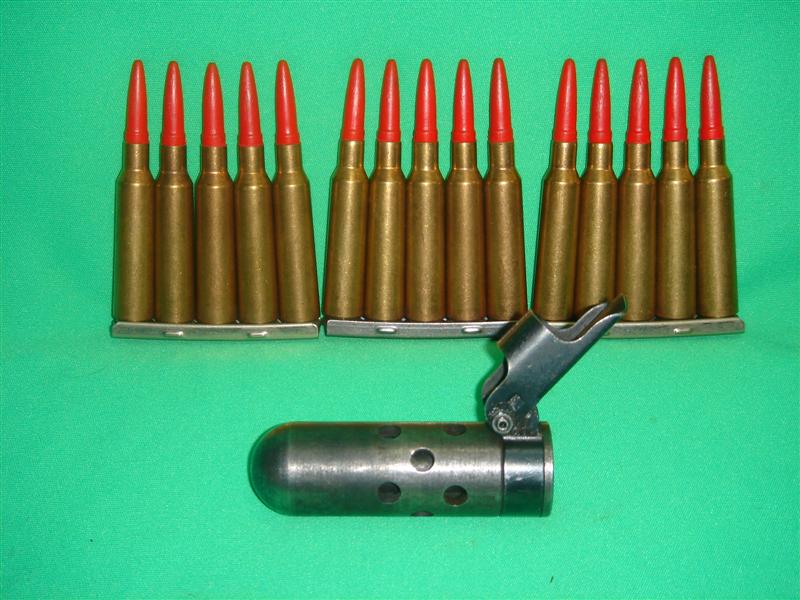
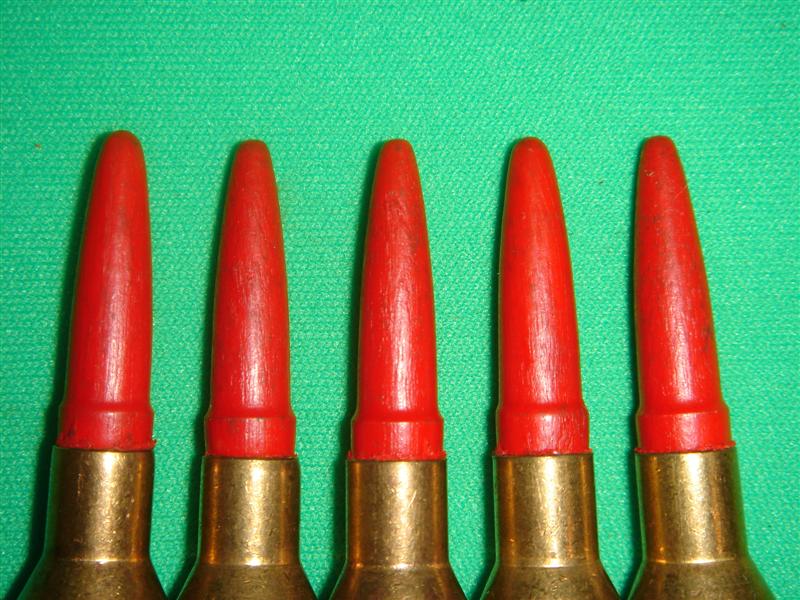
Wooden bullets were standard in Sweden, but only for training purposes. The M/94 was a round nosed bullet blank cartridge, and the M/14 was a spitzer shaped one. Various coloured bullets were made.

The first regulations were made with a safety distance of 20 meters, and if fired at "attacking enemy soldiers" at under 20 meters distance, were supposed to be aimed to the side or into the air. This distance was later increased to 100 meters, but the occasional accident could still occur.

In 1955, the Swedes started using a blank firing attachment that splintered the wooden bullet, and also a different type of blank firing attachment for machine guns and automatic weapons.

Sweden did not use them for Gallery Practice rounds. They loaded a light jacketed bullet and light powder charge for inside practice, and even made a skolskjutingskarbiner (school shooting carbine) with the barrels rifles with a slower twist for these short, light bullets. Sometimes a bag of Oats was used as a backstop, and the bullets salvaged for reloading.

You would have to be VERY close or VERY desperate to use a wooden bullet in a combat situation.
.
 
I would think that with the right kind of wood they could be effective. Maybe something very hard like oak. Standard wood dowel would be quite soft. Great post.
 
I actually picked up some 8mm Mauser with wooden bullets at a Gun Show recently.
They had WWII German headstamps and I hoped that they were Grenade Launching blanks, after some research I found out they were Danish re-loaded blank rounds.

While doing my research I found out that wood bullets were used for various reasons:
Blanks
Grenade Launching Blanks
Gallery Shooting
etc.

There were reports made by GI journalists during WWII about the 'evil' Japanese and Germans using wood bullets on Allied troops and that such bullets were devious because they could not be found by X-Rays and would spread infection - all off this was propaganda at best and would be off base.

I also found one report were some GI's executed a German because he was found with wooden bullets which they thought were being used against the codes of war. More than likely they were simply grenade launching blanks.

Simply for combat purposes, wooden bullets would only be semi-functional in very close combat.
 
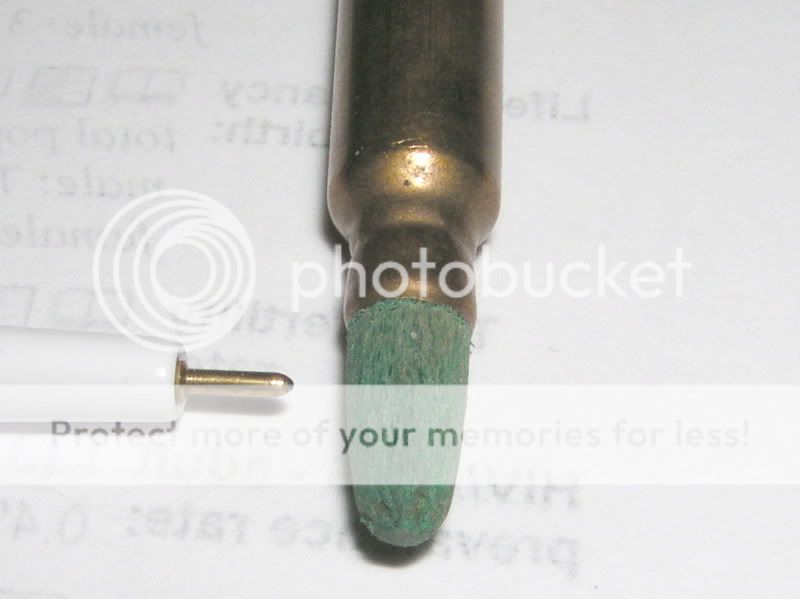
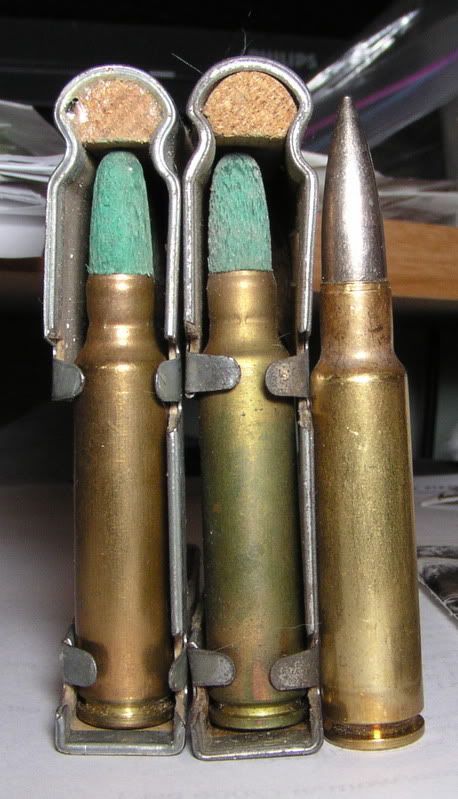
7.5x55 Original Wooden tipped blanks

blankcloseup.jpg


P1010048-1.jpg
 
are these for vampires?

If they are could someone shoot that annoying guy from twilight? ruined vampires as a literary villian forever. LOL
 
Wooden bullets were standard in Sweden, but only for training purposes. The M/94 was a round nosed bullet blank cartridge, and the M/14 was a spitzer shaped one. Various coloured bullets were made.

The first regulations were made with a safety distance of 20 meters, and if fired at "attacking enemy soldiers" at under 20 meters distance, were supposed to be aimed to the side or into the air. This distance was later increased to 100 meters, but the occasional accident could still occur.

In 1955, the Swedes started using a blank firing attachment that splintered the wooden bullet, and also a different type of blank firing attachment for machine guns and automatic weapons.

Sweden did not use them for Gallery Practice rounds. They loaded a light jacketed bullet and light powder charge for inside practice, and even made a skolskjutingskarbiner (school shooting carbine) with the barrels rifles with a slower twist for these short, light bullets. Sometimes a bag of Oats was used as a backstop, and the bullets salvaged for reloading.

You would have to be VERY close or VERY desperate to use a wooden bullet in a combat situation.
.

Those same gallery rounds are used in the 84mm Carl Gustav sub calibre device round.
 
The Germans used a lot of the things and quite a number found their way into the field. Actual purpose was to show the inspecting Herr General that the crew actually knew how to load and fire that '42, as well as for use in training, mock battles, AA drill, all that kind of thing. In a rifle they would work fine, but there were special training barrels and boosters made for the '34 and the '42 so the MGs would function automatically.

Come to think of it, we made wooden-bulleted blanks for the Bren for exactly the same purpose and, again, they had to be used with the correct adaptor in order for the gun to fire in an automatic condition.

Looking through the junque bin in the basement, I discover a dedicated blank-fire adaptor for the AG-42B rifle, to be used with the Svedish blanks. The bullet would disintegrate inside the adaptor and come out as a puff of smoke, being that the adaptor is closed at the front.

There are all kinds of legends which SHOULD have had a stop put to them before D-Day, regarding German use of wooden-bulleted blanks but which were not stopped.

The tragic part is that, over the years, I have met and talked with no less than three men who admitted that they had shot and killed surrendered Germans when wooden-bulleted blank ammunition was found in their positions. I have never met a man who actually found any of the stuff loaded into a gun.
'
 
Back
Top Bottom