












































You are using an out of date browser. It may not display this or other websites correctly.
You should upgrade or use an alternative browser.
You should upgrade or use an alternative browser.
Info wanted: Martini-Henry rifles
- Thread starter alexD92
- Start date


This is what I think might be one of the batch of Canadian Martinis.

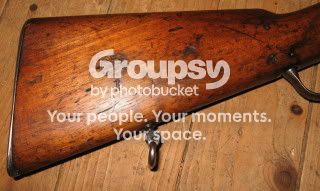
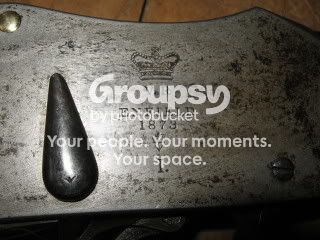
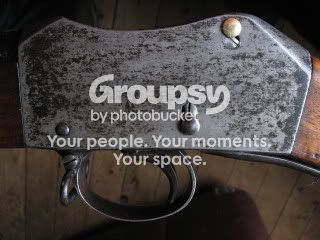
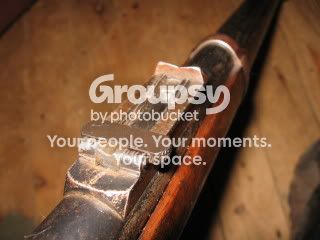

Rifle has serial number 'I 6076' on the front edge of the receiver body and underside of barrel.
6076 is applied to underside of sight leaf and (this is a new one to me) to the upper face of the lever.
Trigger group has the tumbler rest but no evidence of any safety.
Barrel has Jan 1874 manufacture date.
The bore is bright with sharp rifling. The thing looks to have been handled alot and shot very little.
Rifle has serial number 'I 6076' on the front edge of the receiver body and underside of barrel.
6076 is applied to underside of sight leaf and (this is a new one to me) to the upper face of the lever.
Trigger group has the tumbler rest but no evidence of any safety.
Barrel has Jan 1874 manufacture date.
The bore is bright with sharp rifling. The thing looks to have been handled alot and shot very little.

- Location
- Algoma region
Well she is a nice shortlever British made -1st class- martini.
Desireable year aswell!
Military Martinis do not have a safety, some belgian francottes do.... but they are a inferior action design and not fit for British service!!
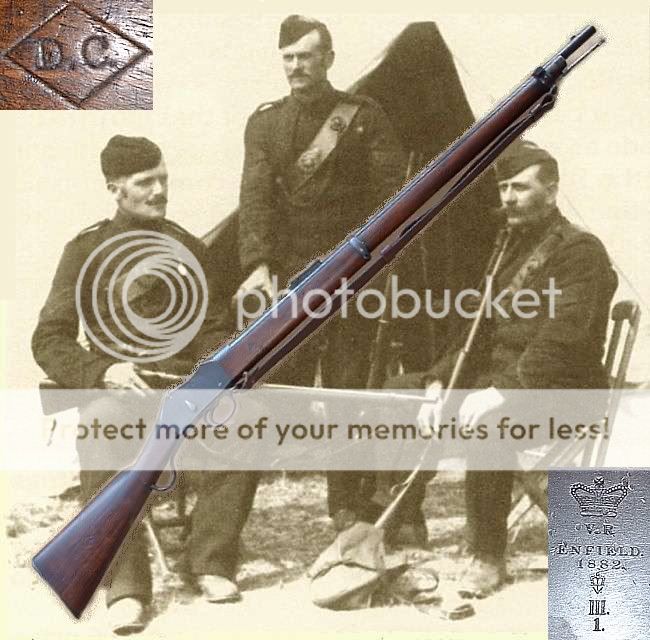
Most Canadian arms of this period will have --DC-- marked on the stock somewhere.
This example looks like she could use a good cleaning.
Desireable year aswell!
Military Martinis do not have a safety, some belgian francottes do.... but they are a inferior action design and not fit for British service!!
Most Canadian arms of this period will have --DC-- marked on the stock somewhere.
This example looks like she could use a good cleaning.
This is what I think might be one of the batch of Canadian Martinis.
Rifle has serial number 'I 6076' on the front edge of the receiver body and underside of barrel.
6076 is applied to underside of sight leaf and (this is a new one to me) to the upper face of the lever.
Trigger group has the tumbler rest but no evidence of any safety.
Barrel has Jan 1874 manufacture date.
The bore is bright with sharp rifling. The thing looks to have been handled alot and shot very little.

- Location
- WMU248 near Edmonton
I have 3 of the A pattern MKIV, one is badly worn and will be a parts gun for the other 2.
Reloading is expensive but still a lot cheaper and easier then trying to find factory ammo
Reloading is expensive but still a lot cheaper and easier then trying to find factory ammo
- Location
- Ottawa origanally Muskoka
The guns can range from a few hundred to a couple thousand.
Depending on make and model.
BSA made a nice .220cal long rifle (.22LR) that is a good shooter and won't break the bank or require you to roll your own.
The 360 No. 5 Rook was a M-H action (with a hammer) and a full military type stock. The 38 Spl shoots adequately from this gun with out reloading facilities. Top accuracy is obtained from proper reloading (using a shortened up 357mag case).
Depending on make and model.
BSA made a nice .220cal long rifle (.22LR) that is a good shooter and won't break the bank or require you to roll your own.
The 360 No. 5 Rook was a M-H action (with a hammer) and a full military type stock. The 38 Spl shoots adequately from this gun with out reloading facilities. Top accuracy is obtained from proper reloading (using a shortened up 357mag case).
I picked up rather a grotty Mk IV Type A several years ago, getting it ready for shooting now that I have bras (at last). Bore is nice, anyway.
Also lucked into a Mark II needing a couple of small parts. This one will be restored carefuly.
Also have a new Mark IV Type A, unfired. Bought it when I was in high-school for $17, so I have had it for a while. Anyone have an idea as to value on an unfired MH?
Serious.
Thank you.
.
Also lucked into a Mark II needing a couple of small parts. This one will be restored carefuly.
Also have a new Mark IV Type A, unfired. Bought it when I was in high-school for $17, so I have had it for a while. Anyone have an idea as to value on an unfired MH?
Serious.
Thank you.
.

MauserMike
CGN Ultra frequent flyer
- Location
- SW Ontario
Well she is a nice shortlever British made -1st class- martini.
This example looks like she could use a good cleaning.
What's peoples idea of an acceptable cleaning? I'm no expert on antique firearms, but in the antiquing world in general original finish and patina appropriate to age means everything.
I'm curious because I have my own 1st BP cartridge rifle on the way.
Sorry for the thread hi-jack. M-H's are cool - love that HUGE round!
Cleaning is just to stabilize the rifle so it won't deteriorate any further. No sanding or chemicals which would harm finish or bluing. Englishman...I believe that your Mk.1 is one of the Canadian issue. The British Militaria Forum has a "sticky" which deals with the Canadian Mk.1's and gives dates and serial numbers. I think the "I" serial numbers are one clue. There is so much junk out there that the Canadian Mk.1's and Mk.3's are a breath of fresh air. Dave
Howdy
I have a 1882 Enfield made MkIII.
I use jamison brass. For a bullet I use RCBS's special mould for .465 nitro magnum #57923. The mould says 480grn but they come out at around 517 grns for me. This bullet fills up the whole lenght for the bottleneck when seated.
Don't feel like cleaning up after black powder so I run 32 grains of IMR SR4759
Cronys in at 1330fps
Windage is perfect but I have to lower the front sight deep in the V notch when shooting otherwise it shoots very high at 100Y
The rifle always attracts a crowd when I bring it out at the range.
Sticker
I have a 1882 Enfield made MkIII.
I use jamison brass. For a bullet I use RCBS's special mould for .465 nitro magnum #57923. The mould says 480grn but they come out at around 517 grns for me. This bullet fills up the whole lenght for the bottleneck when seated.
Don't feel like cleaning up after black powder so I run 32 grains of IMR SR4759
Cronys in at 1330fps
Windage is perfect but I have to lower the front sight deep in the V notch when shooting otherwise it shoots very high at 100Y
The rifle always attracts a crowd when I bring it out at the range.
Sticker

....... Most Canadian arms of this period will have --DC-- marked on the stock somewhere. ......
Although that may be true of Snider-Enfield rifles, it is certainly my understanding that a significant number - perhaps the majority - of the Canadian-purchase Mark I Martini-Henry rifles were not so marked, because so few of them were issued. I know mine is not marked in that fashion ...... (Since these photos were taken, a checkered buttplate and suitable clearing rod have been acquired ....)

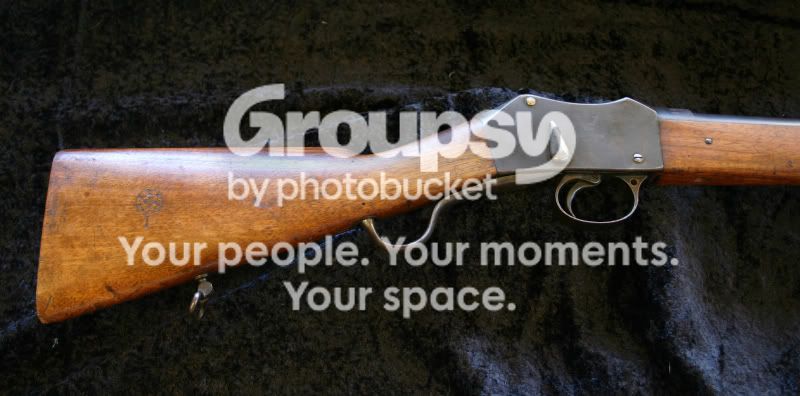
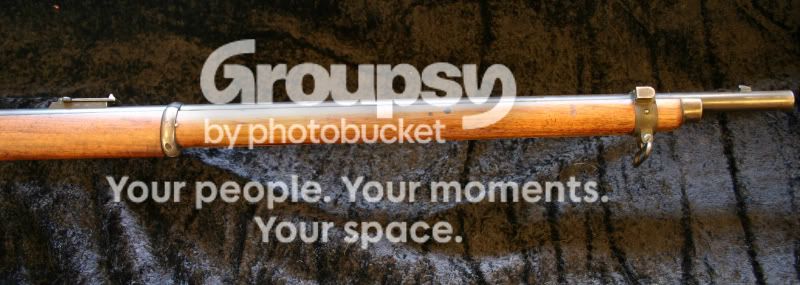


On the other hand, my Mark III is definitely Canadian-marked -
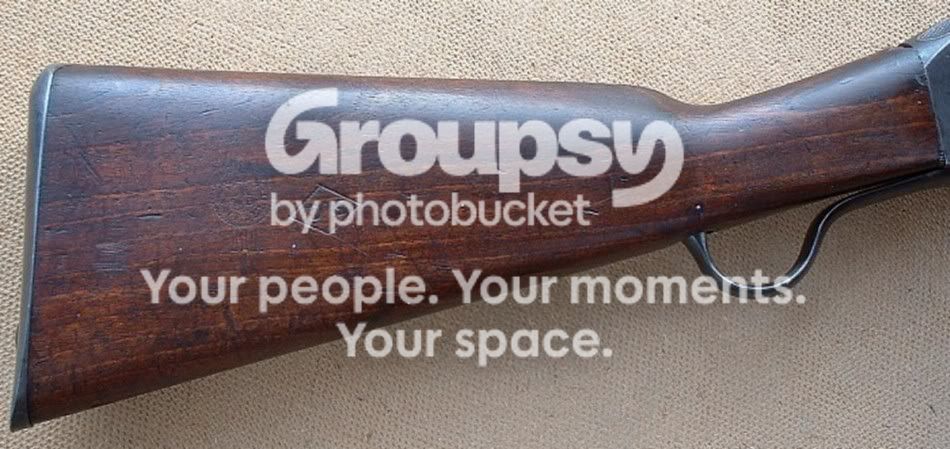
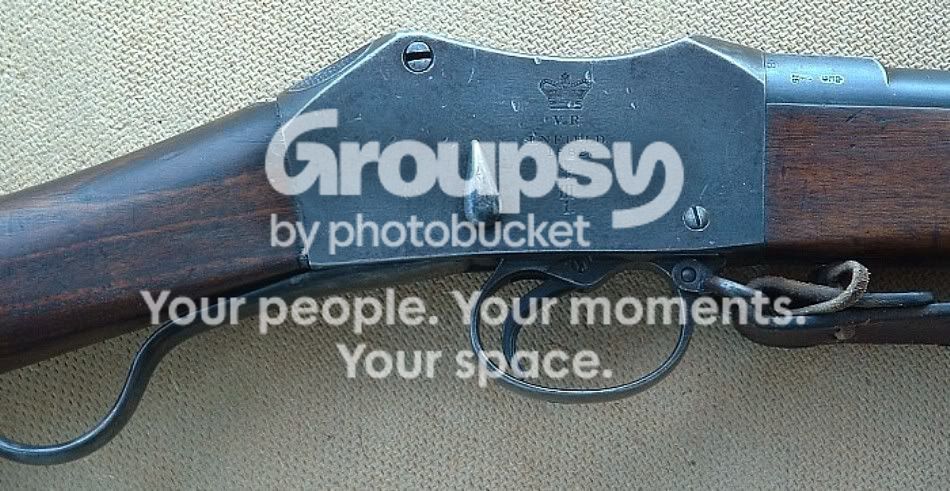
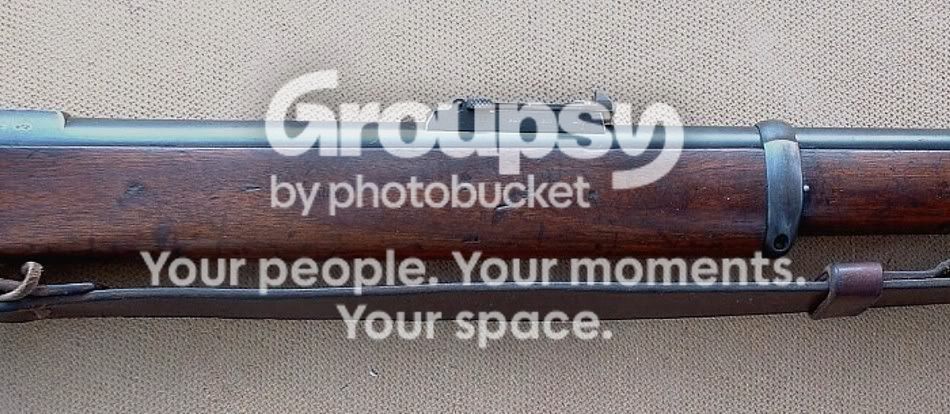
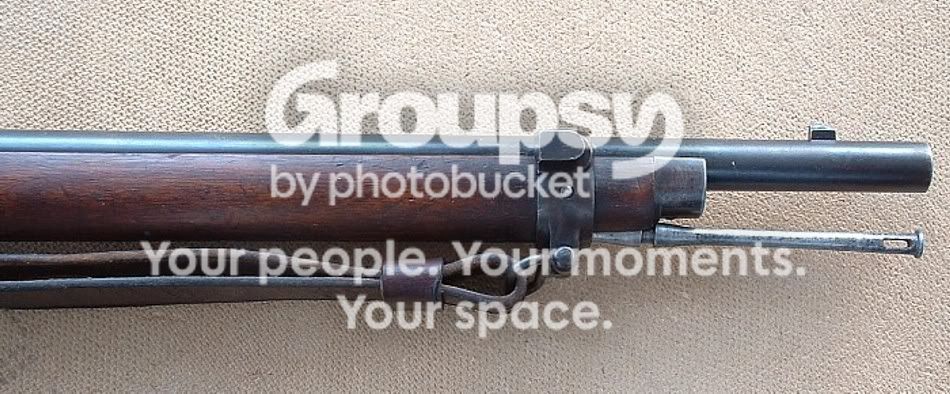


I've got a mk3 and a mk4 that have been around since before the influx of South Asian rifles. I think they are in quite good shape but I can't find any markings that I understand to tell me anything about their history. Can anyone tell me anything based on these photos? Thanks.
MkIII


MkIV


MkIII
MkIV
Last edited:






















