












































You are using an out of date browser. It may not display this or other websites correctly.
You should upgrade or use an alternative browser.
You should upgrade or use an alternative browser.
Brass inspection
- Thread starter ASTRYX
- Start date

It'll go on and on, but from a high level, check for cracks at the neck, signs of pressure in the base, extractor maring in the extraction grove.
And every couple of loads, run a hooked paper clip into the neck and try to feel for a groove in the body anywhere. It means the case is about to separate. This is one of my indicators to toss a batch of brass.
And every couple of loads, run a hooked paper clip into the neck and try to feel for a groove in the body anywhere. It means the case is about to separate. This is one of my indicators to toss a batch of brass.

Bassmaster
CGN frequent flyer
- Location
- WMU 48 - Whitetail country
If you're using reloads, yeah, the very first round you fired should have been inspected.....it's a safety thing and if you really have to ask here then you should really consider re-reading your reloading manual......please.....
I read my reloading manual ... a few times.
I have been told to look for pressure marks, bulging, cracks, etc ... anything else?
Flat primers? What exactly is this?
You can read all you want, but I thought here would be a good place to ask and get some answers other than go re-read something.
It might be a silly question to you, but your silly answer tells me enough about your advice.
Carbon ... thanks ... nice to have an answer to a question. I fired 50 rounds and recovered 45 cases. No cracks, no signs of too much pressure ... what type of maring is unusual in the extractor groove?
I have been told to look for pressure marks, bulging, cracks, etc ... anything else?
Flat primers? What exactly is this?
You can read all you want, but I thought here would be a good place to ask and get some answers other than go re-read something.
It might be a silly question to you, but your silly answer tells me enough about your advice.
Carbon ... thanks ... nice to have an answer to a question. I fired 50 rounds and recovered 45 cases. No cracks, no signs of too much pressure ... what type of maring is unusual in the extractor groove?

heavyBullet
CGN Ultra frequent flyer
- Location
- Just off the island of MTL
Some guys have posted some great pic's of what your looking for in other threads, hopefully they will read this thread and add them here.
Extractor marks are generally a rectangular indent on the head of the brass caused by the brass flowing around it. It will appear as a line going from the primer to the outside of the brass.
Flat primers are just what they sound like. If you look at an unfired primer you'll see that the edges are rounded. Flat primers are hammered back into the bolt and will have a more squarish edge in addition to losing most/all of the little valley created by the rounded primer edge. Some factory loads will show this by nature. In addition this can be an indication of bad head spacing (primer backing out of the pocket).
Searching in google will often yield photos showing normal casings and pressure signs casings side by side. Very useful images.
Flat primers are just what they sound like. If you look at an unfired primer you'll see that the edges are rounded. Flat primers are hammered back into the bolt and will have a more squarish edge in addition to losing most/all of the little valley created by the rounded primer edge. Some factory loads will show this by nature. In addition this can be an indication of bad head spacing (primer backing out of the pocket).
Searching in google will often yield photos showing normal casings and pressure signs casings side by side. Very useful images.

Missing Something
Regular
Case inspection issues
Here are some things too look for.... (mostly in rifle cases...)
Blown primer and you can see the ejector mark on the case head (in the .338 portion) A high pressure sign or a sign of a firing pin protruding too far.
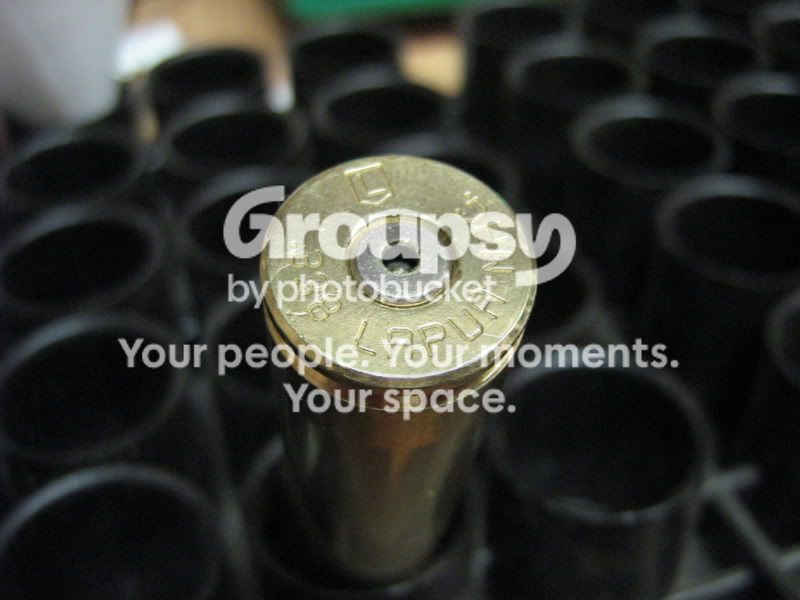
Case failure. As mentioned, toward the top of the case web where the case begins to thin out. In an oversize chamber the case will stretch and "fill" the chamber. It will cause the case to eventually fail. Also a sign of excessive head space.
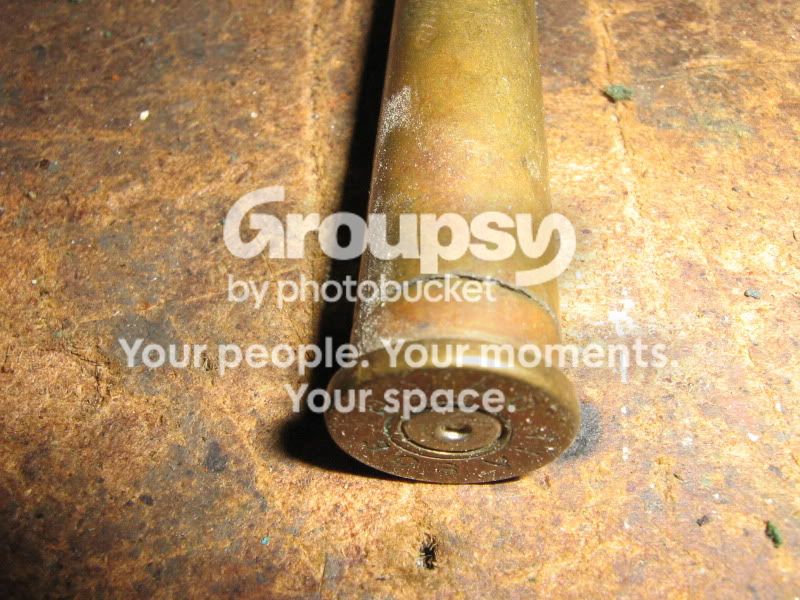
Cupped primer. Caused by high pressure where the primer will "flow" back over the firing pin. Also note the marks on the head caused by ejectors.
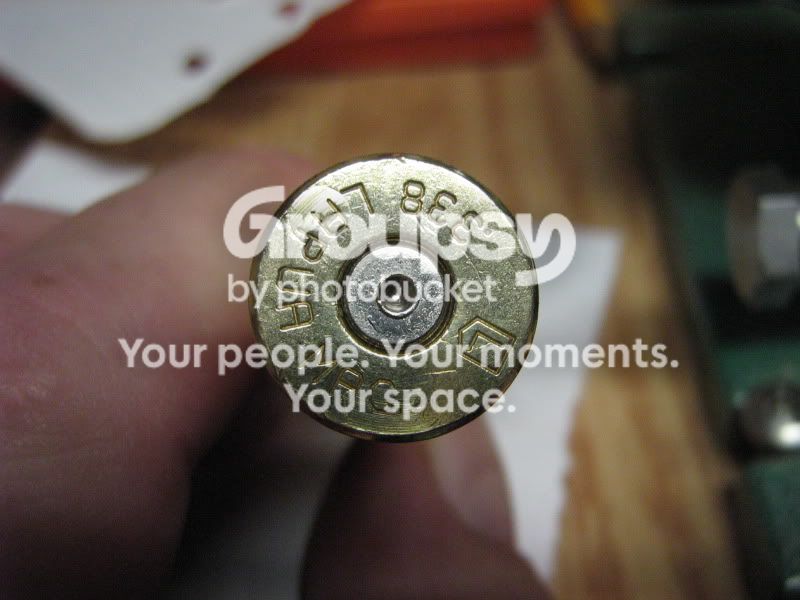
Extreme example of a "cupped Primer". Primer has "flowed" back into the firing pin hole on the bolt.

There are some others, like neck splits and case separations, that are easy to see and are caused by things like brass fatigue and corrosion.
Here are some things too look for.... (mostly in rifle cases...)
Blown primer and you can see the ejector mark on the case head (in the .338 portion) A high pressure sign or a sign of a firing pin protruding too far.
Case failure. As mentioned, toward the top of the case web where the case begins to thin out. In an oversize chamber the case will stretch and "fill" the chamber. It will cause the case to eventually fail. Also a sign of excessive head space.
Cupped primer. Caused by high pressure where the primer will "flow" back over the firing pin. Also note the marks on the head caused by ejectors.
Extreme example of a "cupped Primer". Primer has "flowed" back into the firing pin hole on the bolt.
There are some others, like neck splits and case separations, that are easy to see and are caused by things like brass fatigue and corrosion.
Look for pics online, a written description is no better then it's name. Usually it is a pressure sign.Flat primers? What exactly is this?
I agree with this 100%. There is so much that would only be experienced on every 100000 rnds. It is a matter of the right person communicating the situation, hopefully in pictures.You can read all you want, but I thought here would be a good place to ask and get some answers other than go re-read something.
Carbon ... thanks ... nice to have an answer to a question. I fired 50 rounds and recovered 45 cases. No cracks, no signs of too much pressure ... what type of maring is unusual in the extractor groove?
The maring can vary, but will be obvious. The rim from the groove to the case head will be munged in some way. Often(always?) means that the rifle needs maintenance somewhere.
Some great pics Missing Something. That last one almost looks CG it is so perfect.
I've seen the cases separate as high up as the bottle neck as well.
Brass inspection can be considered a QA (quality assurance) check. This is the last line of defense to ensuring you have a safe load.
Brass inspection should be perfomred when using a spent shell or unfired shell shell ... even manufacturers have occasional QC (quality control) mishaps.
The previous posts pretty much cover what to look for. When looking at a spent (used) shell inspection can provide important signs of concerns.
For example:
- gas or powder marks around the primer can indicate that the primer is not seating properly.
- the indentation of the firing pin is good check to ensure your primer is seating properly.
Inspections after loading can ensure you are not loading an overly compressed charged or that resizing has not caused any cracking.
A spent shell can tell you alot about how your firearm is performing ... or not performing... and inspection of newly reloaded shell can HELP to ensure you have a safe bullet.
IT ALL ABOUT QUALITY AND SAFETY ... which are the same to me
Learn to read your shells ... it can tell you alot.
Brass inspection should be perfomred when using a spent shell or unfired shell shell ... even manufacturers have occasional QC (quality control) mishaps.
The previous posts pretty much cover what to look for. When looking at a spent (used) shell inspection can provide important signs of concerns.
For example:
- gas or powder marks around the primer can indicate that the primer is not seating properly.
- the indentation of the firing pin is good check to ensure your primer is seating properly.
Inspections after loading can ensure you are not loading an overly compressed charged or that resizing has not caused any cracking.
A spent shell can tell you alot about how your firearm is performing ... or not performing... and inspection of newly reloaded shell can HELP to ensure you have a safe bullet.
IT ALL ABOUT QUALITY AND SAFETY ... which are the same to me
Learn to read your shells ... it can tell you alot.
lineofsight
CGN frequent flyer
- Location
- Lower Mainland, BC
ASTRYX good on you for asking the question(s), not only may you learn but also others who may not ask b/c Bassmaster type responses.
Missing Something, great pics. Would have expected primer flattening (flow) around the circumference with the amount of flow shown - reason not flat?
Missing Something, great pics. Would have expected primer flattening (flow) around the circumference with the amount of flow shown - reason not flat?
Missing Something
Regular
ASTRYX good on you for asking the question(s), not only may you learn but also others who may not ask b/c Bassmaster type responses.
Missing Something, great pics. Would have expected primer flattening (flow) around the circumference with the amount of flow shown - reason not flat?
I would think it was because of the primer being soft. I am using Federal LR magnum match primers and they are known to be on the soft side.
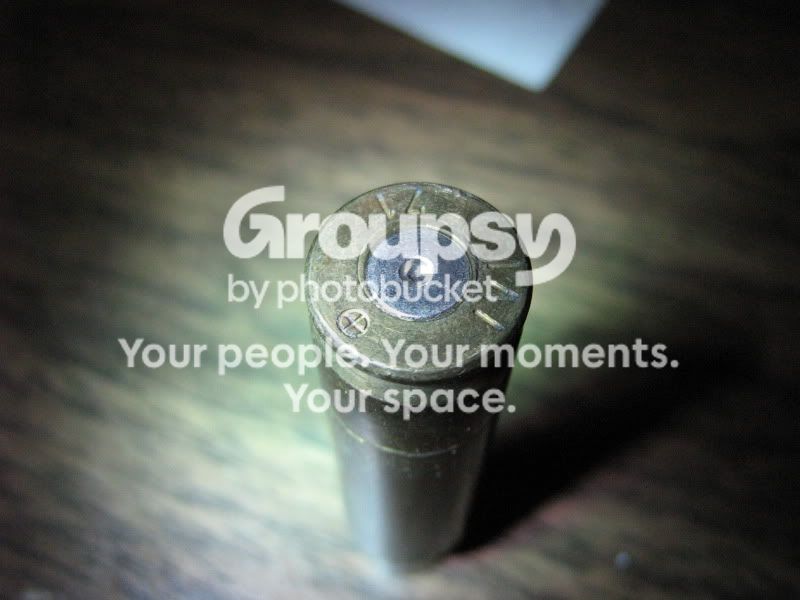
Here is a better example of a "flat" primer.
Bassmaster
CGN frequent flyer
- Location
- WMU 48 - Whitetail country
ASTRYX....my apologies.....ask away......all of the responses here, with the exception of mine were excellent, particularly the ones with the images
heavyBullet
CGN Ultra frequent flyer
- Location
- Just off the island of MTL
Good on you bass.  and great pic's Missing
and great pic's MissingBass .. hats off to you.
Aside from reading and reading, I am finding forums very useful. Hell, even being told to get a certain book to read is good, because if it isn't in the 550 box, it is hard to know what is out there ... and there are lots and lots of things out there.
I have also found the CZ forums very good.
I took my brass down to my local store and asked around ... wow ... talk about differrent opinions! I am going to put my first 50 away and go fire another 50 this week. I will take those to a few guys I know who also fire CZ's and go from there.
I am not seeing any damage, but I value what everyone in this firearms world has to say. I am new and learning.
Want to know anything about cardiac arrest management ... I am your guy! Guns ... well not so much yet!
Well I am stuck at work and all this talk is making me want to hit the range!!
Aside from reading and reading, I am finding forums very useful. Hell, even being told to get a certain book to read is good, because if it isn't in the 550 box, it is hard to know what is out there ... and there are lots and lots of things out there.
I have also found the CZ forums very good.
I took my brass down to my local store and asked around ... wow ... talk about differrent opinions! I am going to put my first 50 away and go fire another 50 this week. I will take those to a few guys I know who also fire CZ's and go from there.
I am not seeing any damage, but I value what everyone in this firearms world has to say. I am new and learning.
Want to know anything about cardiac arrest management ... I am your guy! Guns ... well not so much yet!
Well I am stuck at work and all this talk is making me want to hit the range!!
As you reprime the cases, pay attention to how snug the primers are going into the case. Primers being loose in the case after only a few firings are a good indication that the loads are too hot, and the powder charge needs to be reduced. You can also measure the case web expansion to see if it is excessive. If the case web is expanding more than normal, this indicates excessive chamber pressure. Light cratering around the firing pin indent on the primer, may not be a sign of excessive pressure, but rather a sign that the firing pin doesn't properly fit the hole in the bolt face.






















