French arms of the Great War - educate me

RangeRover

Regular
GunNutz
Rating - 100%
256   0   0
Location
Alberta
While I am somewhat knowledgeable about British/Canadian/American arms used in the Great War period, my knowledge about the long arms used by the French is limited to what I pick up in passing here and on other boards, and the conversations about French arms are certainly in smaller supply than those about Anglo-American arms.

I know, based on recent purchases posted here, that there are those "in the know" on this board, with some pretty nice examples, so I'd welcome some education on the primary arms used by the French from a contemporary shooter's perspective.

For someone looking to buy, and shoot, a French rifle from the 1914-1918 period, what are the most practical and/or enjoyable options? (I realize sourcing ammunition and reloading components would be a primary challenge). What are the price ranges to be expected? What are the things to watch out for?

Heck, just tell me why you like them.

Pictures welcomed and thanks.
 
I'm not much of an expert but I think you have 3 choices:

1.Lebel Model 1886/93 -Most of French troops in 1914-18 period where armed with those.I never handled or shot one so someone else would have to fill this one.Last one I have seen for sale was 450$.All those I have seen pictures of on EE were in decent and down to really sorry state as they are not coming from France but most likely from Syria of one of former French colonies.I guess proper storage wasn't top priority.

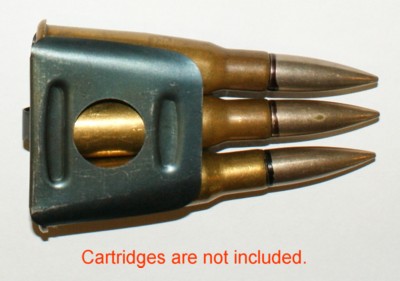
2.fusil mle 1907-15 Berthier- Most of those found for sale are in original 3 shot magazine configuration but 5 shot converted examples are around.Unlike Lebel (with its tubular 8 shot magazine) Berthiers require Mannlicher type clip to be used as repeaters.At times and in some areas those are much harder to come by than rifles themselves.All those I ever handled were in good to excellent shape so that's a big +.I think they go for around 250-350$ but it really depends on state of the rifle.

3.Gras single shots in both original 11mm caliber(I can't remember designation) and 8x50R Lebel.I'm not sure if those were used in combat of just by rear troops/training but they were there so I count them in.Those rifles do show up on EE once in a while and usually promptly dissapear. Prices go for 200$ and up for one in original caliber and 450$ and up for one in 8mm.

From those 3 I have only Gras and it is a great handling rifle,very accurate,not very fussy about ammo but very sensitive to dirt/dust on the bolt and the action.It is the most accurate 8mm battle rifle I have despite very hard trigger and absolutely horrendous rear battle sight.It took me a while to get use to those two.

I hear Berthiers are great shooters but one and only example I handled had corroded barrel and cut and re-welded front 2 inch part of barrel itself.I'm still looking for one on the gun shows.Maybe one day...

BTW-All French Lebels and Berthiers fire 8x50R Lebel cartridge.Trade-ex has brass and Lee has dies.Like with all military rifles bore sizes vary so slug your barrel before firing.
If you come across surplus ammo in this caliber I wouldn't buy it.It's old,often corroded and most of ammo I have seen was meant for Hotchkiss machine gun.

Don't believe in negative comments about quality of French arms and whole "droped once" BS.French troops put up one the hell of a fight with those rifles in WW1 and held most of Africa in relative peace between wars (not an easy task).
Blame for 1940 disaster lays in French socialist governments and its polices in 1918-40.
Army,Air Force and Navy did the best they could under the circumstances.
 
Very well said Donor, I absolutely agree. I had the chance to try both, and I can confirm that the Lebel and the Berthier are both very decent shooter and pretty precise. Of course not the best of the Great War but solid rifles nevertheless.
 
While I am somewhat knowledgeable about British/Canadian/American arms used in the Great War period, my knowledge about the long arms used by the French is limited to what I pick up in passing here and on other boards, and the conversations about French arms are certainly in smaller supply than those about Anglo-American arms.

I know, based on recent purchases posted here, that there are those "in the know" on this board, with some pretty nice examples, so I'd welcome some education on the primary arms used by the French from a contemporary shooter's perspective.

For someone looking to buy, and shoot, a French rifle from the 1914-1918 period, what are the most practical and/or enjoyable options? (I realize sourcing ammunition and reloading components would be a primary challenge). What are the price ranges to be expected? What are the things to watch out for?
Heck, just tell me why you like them.

Pictures welcomed and thanks.

The only French rifle from the first war in decent condition, that I encountered, is in the museum of "les invalides" in Paris. Same goes for German rifles.
In the last twenty five plus years, I don't recall having seen a Gewehr 98, Lebel or Berthier worth buying.
Ammo is the lesser problem.
If you are looking for newer French rifles like MAS 36/51, you still can find them in brandnew condition.
I bought one several years ago in the wrap, and it was a nice rifle/ shooter.
 
They are around. I bought a very nice 07-15 in original 3 round condition. Everything matches, bore is great. Aslo have over 300 rounds of ammo.....
 
The Lebel is very interesting, they tubular mag is it's down fall as it take time to fully load if in a rush. If you don't load the tube mag your in single shot mode.

Original 8mm lebel ammo had a groove in the rear if the cartridge case to prevent the spire point bullet from rising up and hitting the primer.
Something to think about when resizing 348 win cases to 8mm lebel and using a FMJBT bullet.

DSC09318.JPG
Clip%20Berthier%208mm%20lebel%203%20balles.jpg


They are now making repro 3 rd clips for the Berthier rifles, The 5 rd can b purchased from numrich.
 
If I recall the French being the innovators in the small arms field were at a disadvantage at the begining of WWI, being equipped with a large number of firearms which had been surpassed by newer designs. Small arms changed rapidly between 1880-1910 and by the time you equipped an army, the guns were often obsolete.

Part of the problem about the French morale post WWI was that the spirit of E'lan was literly drained out of them at Verdun, along with the blood of a whole generation. Which lead to the concept of the maginoit line which helped offset the reduced manpower the French suffered coming into WWII, sadly the line was not futher extended, it might have given sometime for the French to organize and cripple the Blitzkrieg effect.
 
Just a quick note on spelling, FWIW.

MANNLICHERS comprise that group of rifles using distinctive features patented by von Mannlicher, the arms designer. These include the Berthier and Carcano rifles both, as both used versions of the Mannlicher magazine system.

MANLICKERS are those sleazy flowzy young creatures sometimes found in the smoky back rooms of certain estaminets. They can transmit an AMAZING variety of diseases if you aren't careful!

(Sorry about that: just HADTA do it!)

;-)
.
 
If I recall the French being the innovators in the small arms field were at a disadvantage at the begining of WWI, being equipped with a large number of firearms which had been surpassed by newer designs. Small arms changed rapidly between 1880-1910 and by the time you equipped an army, the guns were often obsolete.

Part of the problem about the French morale post WWI was that the spirit of E'lan was literly drained out of them at Verdun, along with the blood of a whole generation. Which lead to the concept of the maginoit line which helped offset the reduced manpower the French suffered coming into WWII, sadly the line was not futher extended, it might have given sometime for the French to organize and cripple the Blitzkrieg effect.

It wouldn't have mattered if the Maginot Line was extended, fortified emplacements are no match for massed armour and artillery coordinated with air attack. The Maginot was built for conditions which didn't exist in 1940. Even the success of the Blitzkrieg cannot entirely explain the absolute collapse of French resistance in May and June of 1940. Though there were a few French divisions which acquitted themselves admirably, the majority folded with remarkably little struggle. The rot came from the top down in the French military of 1940. Churchhill commented after a visit to the continent in May,1940 that he was shocked by the defeatism displayed by the French high command.
 
You're probably right Mike, but one can wonder if Great Britain would have resist the Blitzkrieg if it wasnt for the simple fact that its an island...
 
The rot came from the top down in the French military of 1940. Churchhill commented after a visit to the continent in May,1940 that he was shocked by the defeatism displayed by the French high command.

That prompted operation catapult and also known as the Battle of Mers-el-Kébir.
 
It wouldn't have mattered if the Maginot Line was extended, fortified emplacements are no match for massed armour and artillery coordinated with air attack. The Maginot was built for conditions which didn't exist in 1940. Even the success of the Blitzkrieg cannot entirely explain the absolute collapse of French resistance in May and June of 1940. Though there were a few French divisions which acquitted themselves admirably, the majority folded with remarkably little struggle. The rot came from the top down in the French military of 1940. Churchhill commented after a visit to the continent in May,1940 that he was shocked by the defeatism displayed by the French high command.


The line held and surrendered upon the fall of France, the Germans were able to bypass it and captured key bridges using Commando's in disguise. The line was not a solid wall, but an intersecting line forts and stronpoints, which the armour could bypass, but not the German horse and foot bound infantry. in fact most of the German army relied on horses for much of WWII.

I do however agree with the assesment of the high command.

map of the line http://en.wikipedia.org/wiki/File:Maginot_Line_ln-en.PNG

The World War II German invasion plan of 1940 (Sichelschnitt) was designed to deal with the line. A decoy force sat opposite the line while a second Army Group cut through the Low Countries of Belgium and the Netherlands, as well as through the Ardennes Forest which lay north of the main French defences. Thus the Germans were able to avoid a direct assault on the Maginot Line by violating the neutrality of Belgium, Luxembourg and the Netherlands. Attacking on 10 May, German forces were well into France within five days and they continued to advance until 24 May, when they stopped near Dunkirk.

During the advance to the English Channel, the Germans overran France's border defence with Belgium and several Maginot Forts in the Maubeuge area, whilst the Luftwaffe simply flew over it. On 19 May, the German 16th Army successfully captured petit ouvrage La Ferte (southeast of Sedan) after conducting a deliberate assault by combat engineers backed up by heavy artillery. The entire French crew of 107 soldiers was killed during the action. On 14 June 1940, the day Paris fell, the German 1st Army went over to the offensive in "Operation Tiger" and attacked the Maginot Line between St. Avold and Saarbrücken. The Germans then broke through the fortification line as defending French forces retreated southward. In the following days, infantry divisions of the 1st Army attacked fortifications on each side of the penetration; successfully capturing four petits ouvrages. The 1st Army also conducted two attacks against the Maginot Line further to the east in northern Alsace. One attack successfully broke through a weak section of the line in the Vosges Mountains, but a second attack was stopped by the French defenders near Wissembourg. On 15 June, infantry divisions of the German 7th Army attacked across the Rhine River in Operation "Small Bear", penetrating the defences and capturing the cities of Colmar and Strasbourg.

By early June the German forces had cut off the line from the rest of France and the French government was making overtures for an armistice, which was signed on 22 June in Compiègne. As the line was surrounded, the German Army attacked a few ouvrages from the rear, but were unsuccessful in capturing any significant fortifications. But the main fortifications of the line were still mostly intact and manned with a number of commanders wanting to hold out; and the Italian advance had been successfully contained. Still, Maxime Weygand signed the surrender and the army was ordered out of their fortifications, to be taken to POW camps.
 
From 1914 through late 1915, the Mle 1886-93 was by far the most issued rifle. After that date, the Mle 07-15 began to appear in large numbers, eventually more Berthiers would see service in WW1 than the Lebels.

Original Lebels in shootable condition are nearly unobtainable in Canada. After WW1, the guns weren't repaired and were flogged to colonies where they were mostly used up. The French continued to issue the Berthier until the end of WW2 when the MAS 36 became available in quantity.

I have Berthier rifles and carbines - very capable and fast-loading rifles.
 
Back
Top Bottom