stencollector
CGN Ultra frequent flyer
- Location
- shilo MB, the armpit of Canada
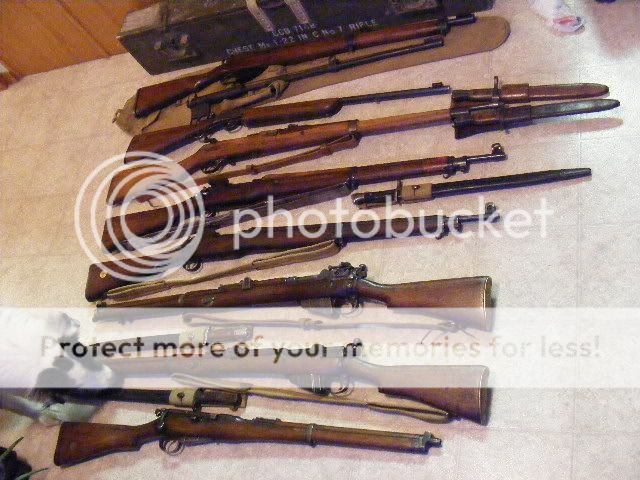
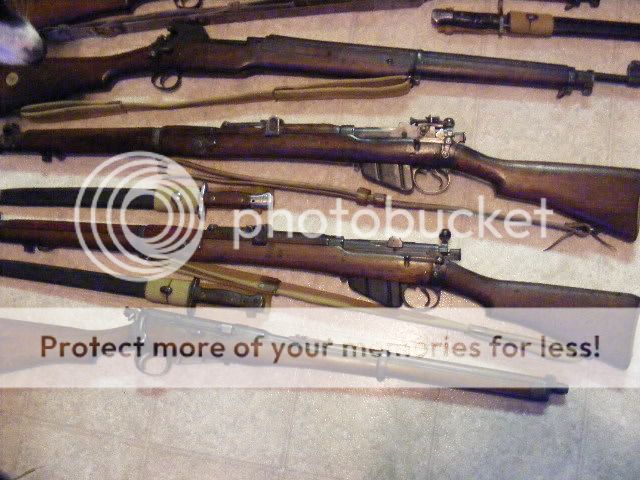
What the heck? It's the 3rd of March and nobodies posted any March purchases yet? OK, I'll start the ball rolling. I picked up 4 nice LB Enfields yesterday. They are, from top to bottom: 1945 Cno7, 1944 unmolested no4MK1* LB, 1950 LB No4mk1 unmolested, almost unfired but with handling marks on the wood, and the crown jewel, a 1956 dated no4mk1*. All came with slings and bayonets (exc the Cno7 of course).
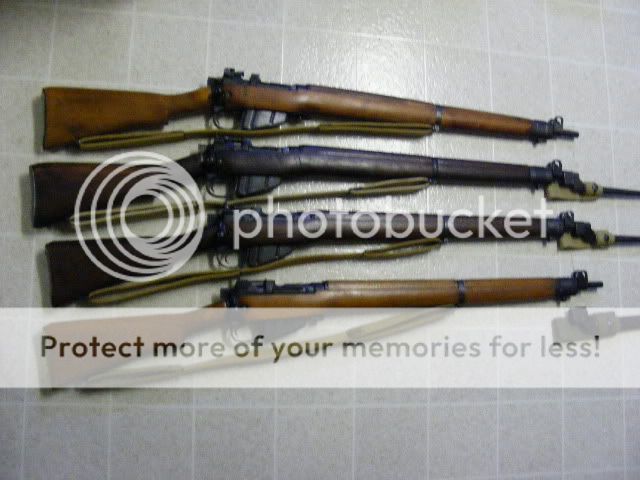
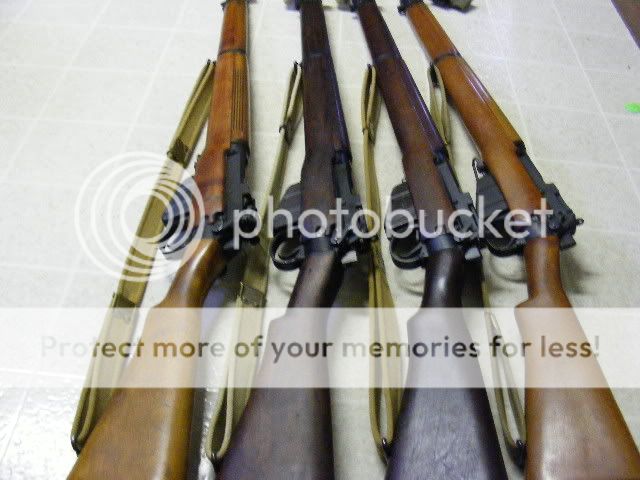
The 1945 dated Cno7 is neat cause it has the early type one markings, normally found on 1944 receivers. The receiver is one of the scrubbed surplus receivers, serial number is out of the range of the proper numbers, and the odd part is incorrect, but all in all a nice rifle. A bit of work will have it proper (less the serial number).
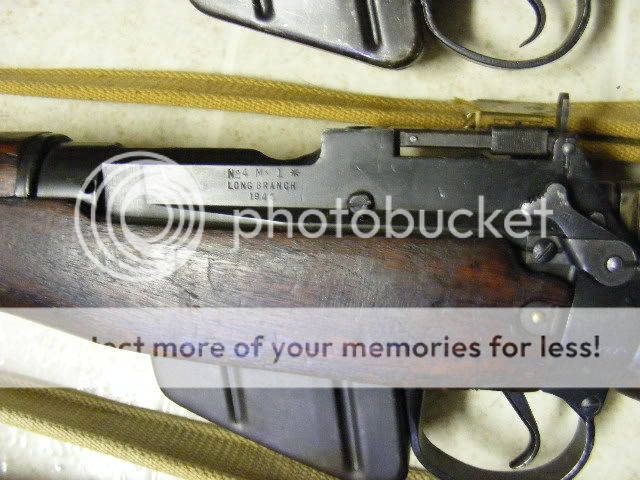
The 1944 is a nice example of typical LB production for the year. Metal is excellent, although the wood has seen some action. Wood is serialized to the rifle.
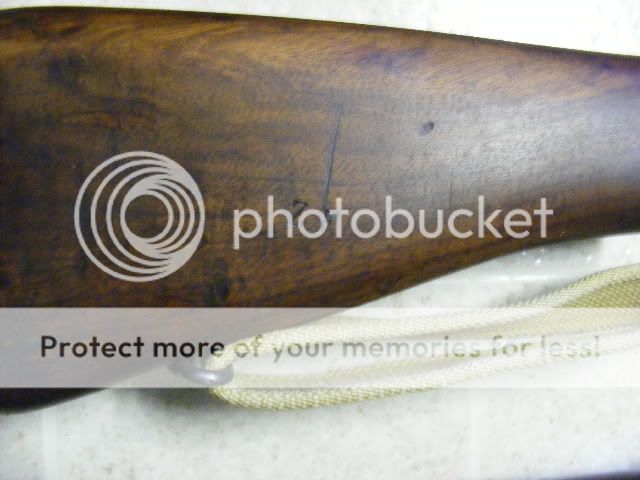
There was one anomaly on it though, which was the ZF on the butt, so the rifle will have to have a thorough going over.
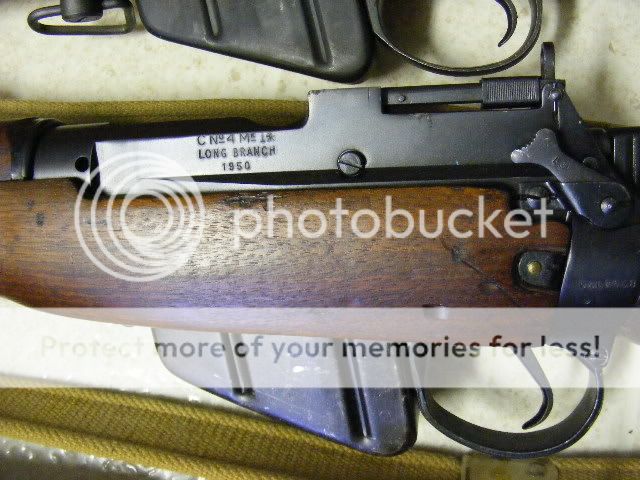
Next is the 1950 no4mk1*. The wood has a few handling dings, but it wasn't until I got it home that I realized that the bolt body was still solid black, and the bolt face shows none of the usual pitting from the primers. Traces of grease are still in the bolt track, so this rifle is likely very close to unfired. Wood and magazine are serialized to the rifle as well.
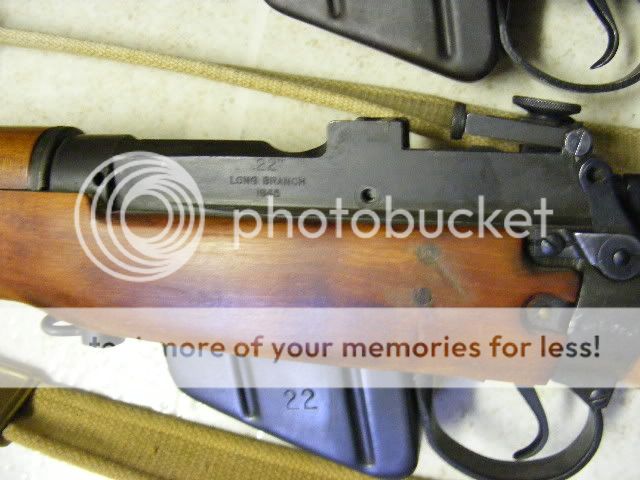
The 1956 LB, as is most 56s, is not a regular run of the mill production. These were usually either replacement receivers for damaged ones, or else target rifles. This one appears to be the latter. As can be seen in the photo below, it has a screw in the heel of the forestock, which indicates a likely conversion. As well, the shadow of a PH5C can be seen on the sidewall, and the barrel float indicates a center bedding.
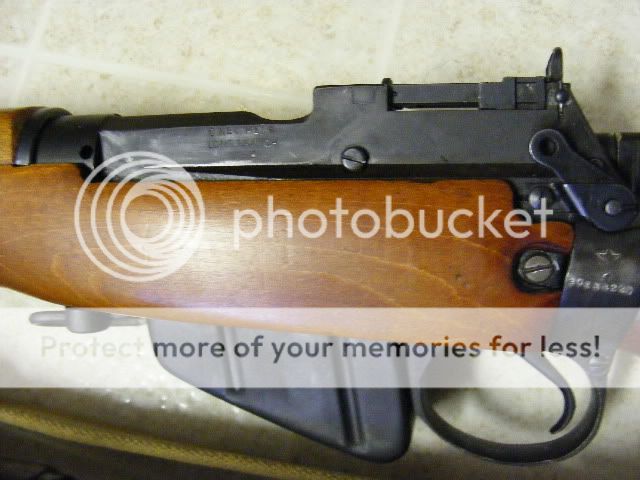
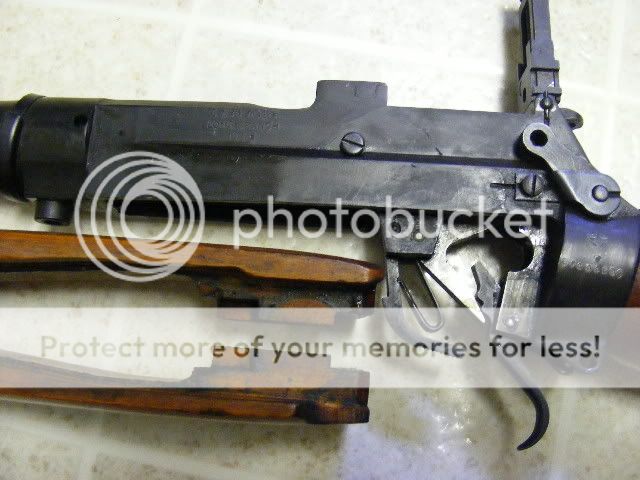
Sure enough, removal of the wood shows it to be a no4mk1/3. The modification is very clean...no signs of brazing are present and the wood itself is also very cleanly done....no dremel tool used here. Serial number is odd in that it is a normal LB type serial number but with one too many digits (an extra ) at the end).
The 1945 dated Cno7 is neat cause it has the early type one markings, normally found on 1944 receivers. The receiver is one of the scrubbed surplus receivers, serial number is out of the range of the proper numbers, and the odd part is incorrect, but all in all a nice rifle. A bit of work will have it proper (less the serial number).
The 1944 is a nice example of typical LB production for the year. Metal is excellent, although the wood has seen some action. Wood is serialized to the rifle.
There was one anomaly on it though, which was the ZF on the butt, so the rifle will have to have a thorough going over.
Next is the 1950 no4mk1*. The wood has a few handling dings, but it wasn't until I got it home that I realized that the bolt body was still solid black, and the bolt face shows none of the usual pitting from the primers. Traces of grease are still in the bolt track, so this rifle is likely very close to unfired. Wood and magazine are serialized to the rifle as well.
The 1956 LB, as is most 56s, is not a regular run of the mill production. These were usually either replacement receivers for damaged ones, or else target rifles. This one appears to be the latter. As can be seen in the photo below, it has a screw in the heel of the forestock, which indicates a likely conversion. As well, the shadow of a PH5C can be seen on the sidewall, and the barrel float indicates a center bedding.
Sure enough, removal of the wood shows it to be a no4mk1/3. The modification is very clean...no signs of brazing are present and the wood itself is also very cleanly done....no dremel tool used here. Serial number is odd in that it is a normal LB type serial number but with one too many digits (an extra ) at the end).
Last edited: