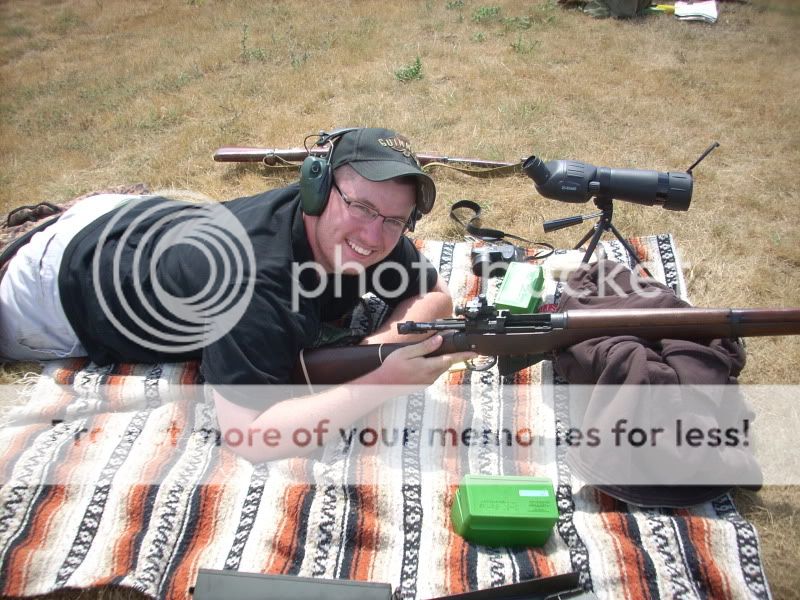
Here is the info sheet for the ORA Vintage Rifle shoot. You are welcome to use any ideas you think useful.
Our first Vintage shoot this year is at Winona (Grimsby, near Hamilton) on may 27th. All CGNrs are welcome. Send me a PM for more info.
Bring out a rifle or two and do some shooting. Remember that we shoot the 100 yard stage from the standing position, so a 20X target scope would not be a good choice. At 100. It would work fine at 200 and 300, where all shooting is prone.
Please don’t let the program intimidate you. The Range Officer will explain each step as we progress through the program. Just make sure you bring a rifle(s), enough matching ammo and ear protection.
As usual, we will have a fine selection of $6 wine as prizes….
Here is an explanation of what we do and how we do it, for those of you who have not shot this event before.
First, it is not so much a competition as it is an opportunity to dig out some rifles to play with. This might be your hunting rifle, a collectible you have not shot before, or your service rifle.
We will start at 100 yards and then move back. This is a course of fire that allows us to zero the rifles at each distance and then shoot carefully aimed shots (10 shots in 5 minutes), then a “sanp” target (10 exposures of about 3 seconds each), with time toreload between exposures if you need to and then a “mover” where the target is shot once as it walks about 10 feet (10 exposures).
Prone shooting can use a rest, so long as the rifle rests on a hand, with the back of the hand on the rest. (I rest my hand on an ammo can.)
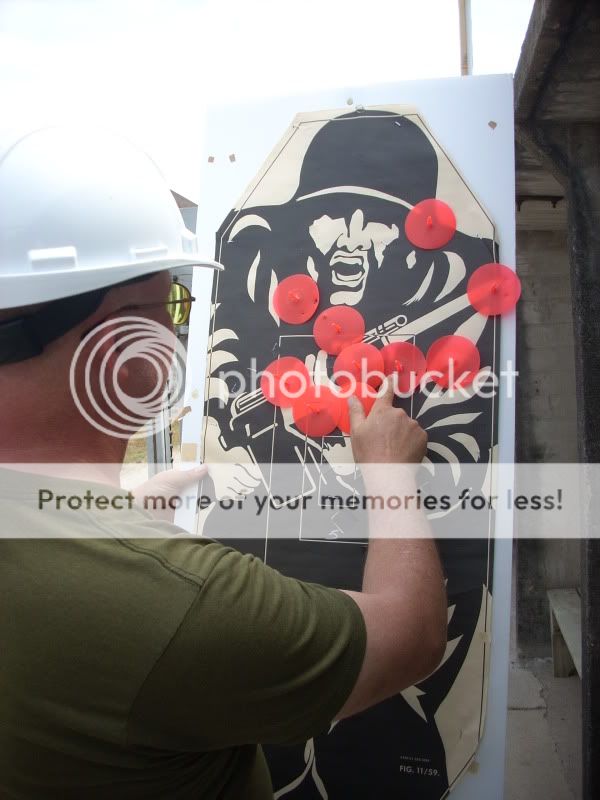
Before each deliberate match you will have 5 minutes of sighting shots. The target will be pulled and a red spotter added for each new hole. For each match you will fire a string of 10 shots. After the shoot the target will be displayed with a red plastic spotting disk in each bullet hole, so you can see where your scoring hits were.
All shooting will be on the fig. 11 target. The back of his wrist is the bull’s-eye. For the deliberate shoot, it is scored 5 – 4 – 3 - 2. For the Snap and Mover, it is scored 5 & 4. The first 2 rings are the 5.
100 yards
Deliberate from the standing position on the 4 foot target. 5 minutes sighting shots for zero. You can shoot the sighting shots prone, to help get a good zero. The match is shot standing, 10 shots in up to 5 minutes. After you have fired your ten shots, the marker will display it to you with the red spotter in each bullet hole, so you will know where the rifle was hitting.
10 shots Standing Snap. 2 sighting shots. A red spotter in each bullet hole will tell you where you hit. The match is 10 exposures of 3 seconds each. 1 shot per exposure. Time to reload for every shot, if you want.
10 shots Standing at Moving target. One sighter in each direction. (Our experience is that the target does not require any lead at 100 yards to hit it.) The target will walk about 10 feet. One shot per exposure. Time to reload for each shot.
200 yards & 300 yards. Same program as 100, except all shooting from prone position. You can rest the back of your hand on an improvised rest. E.g. ammo can, kit bag, lunch box.
Ammo required 120 minimum (more if you take a lot of practice shots)
Note: This is a lot of shooting. You do not have to use the same rifle at each distance or for all stages. You could, for example, shoot a different rifle for each distance. For the Snap and Mover there is plenty of time to re-load the rifle between exposures. I have shot it with a single shot rifle.
Squadding: Shooters will be assigned 4 per target. Two will shoot while 2 go to the butts to mark targets and keep score. After shooting the shooters will go to the butts to take over marking duties while the markers comes out of the butts to shoot. After both relays have had their turn shooting, we will move back to the next distance and repeat the procedure.
With two shooters on the firing point, taking turns shooting the 3 matches it is easy to shoot with your buddy, to share rifles or to shoot with your wife or child.
Marking: Marking the targets will be more interesting because you will know whose target you are looking at. After you have fired 10 shots the markers in the butts will display the target with red spotting disks and then will record the score value on a score sheet in the butts. For this reason it is important that the markers: 1) Have a pen. 2) Know who is shooting on their target. 3) Know who is shooting first.
Shooting issues:
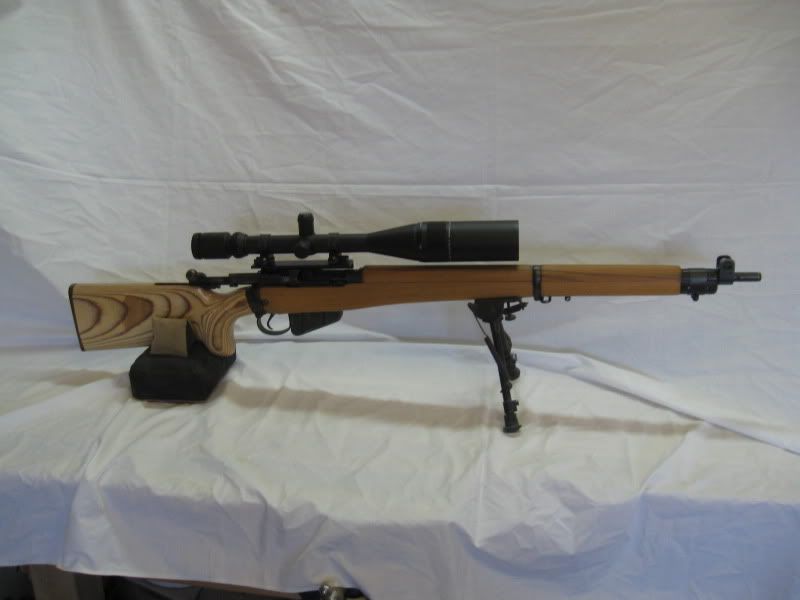
When I shoot a scoped rifle, I sight it in at 100 yards to shoot about 2 inches high. It is easy to aim a bit low at 100. Then at 200 I just aim at the middle and at 300 I aim about 3 inches high.
An optic is handy to get a good idea of where the red spotters are. A telescopic sight solves this. Or a pair of binoculars or a spotting scope.
Equipment List:
• 1 rifle (at least). You can bring 3 and shoot a different one at each distance.
• 120 rounds of ammo (minimum)
• Optics to see the target spotters (spotting scope, binoculars or the telescopic sight on the rifle)
• Mat or ground sheet to lay on, if the mounds are wet. If you don’t have one, a 3x6 piece of carpet sold at Crappy Tire or Walmart works very well.
• Something to rest the rifle on when prone. Could be an ammo can, tool kit, block of wood or your shooting bag. But not a real shooting rest. The rule is you can use an “improvised “rest. A 40 pound cast iron benchrest is hardly “improvised”. You shoot in the normal prone position with the back of your front hand resting on something.
• A hard hat, if you have one. We are required to wear them when marking targets and we are short.
• Try to bring a buddy to shoot with. It is more fun marking targets if you know the guy shooting. Bring your wife of kid. You will be able to shoot together.
• Pen.
• Hat, sunglasses, ear muffs.
• Pack a lunch or plan on Harvey’s or Swiss Chalet
• Entry fee. $20 for ORA members, $40 for non-members.
















































 At least give us a bright yellow or orange target...