Improving accuracy

Brownie, the open sight doesn't interfere with the peep in any way. The whole idea of the peep sight is to focus on the front beed and target, and ignore everything else. Your eye instinctively centers itself, and I, at least, don't even see the open sight. That's how I was taught to use a peep way back when. The open sight also serves a purpose. At dusk and dawn, in low light conditions, the peep becomes difficult to sight through, so I flip it down, and the open sight allows me another few minutes of hunting time. I of course have to limit myself to much shorter range shots, but it works, and got me a nice buck once. Almost every iron sighted rifle I own is set up this way. YMMV.
Mooncoon, I wondered what the alcohol component was for in the various recipes of moose milk. That certainly makes sense...
 
Brownie, the open sight doesn't interfere with the peep in any way. The whole idea of the peep sight is to focus on the front beed and target, and ignore everything else. Your eye instinctively centers itself, and I, at least, don't even see the open sight. That's how I was taught to use a peep way back when. The open sight also serves a purpose. At dusk and dawn, in low light conditions, the peep becomes difficult to sight through, so I flip it down, and the open sight allows me another few minutes of hunting time. I of course have to limit myself to much shorter range shots, but it works, and got me a nice buck once. Almost every iron sighted rifle I own is set up this way. Y
Mooncoon, I wondered what the alcohol component was for in the various recipes of moose milk. That certainly makes sense...

the front sight will cover more than half your field of view, but if it works for you carry on and don,t change a thing.....
Brownie
 
Thanks Moose. So this is a hunting thing when the charge is in the barrel all day potentially?
Not only that, the wad stops your patch from burning through.A oldtimer showed me this trick awhile back,I didn't beleive it at first,after all put a match to some paper from a nest and it burns like hell.But he showed me that if you tore off a fairly thick wad and compressed it between your powder charge and patched roundball you gained a better gas seal.My groups improved cosiderably.Old wives tale?Perhaps,but every fall I'm in the woods looking for blown down nests to add to my supply.
 
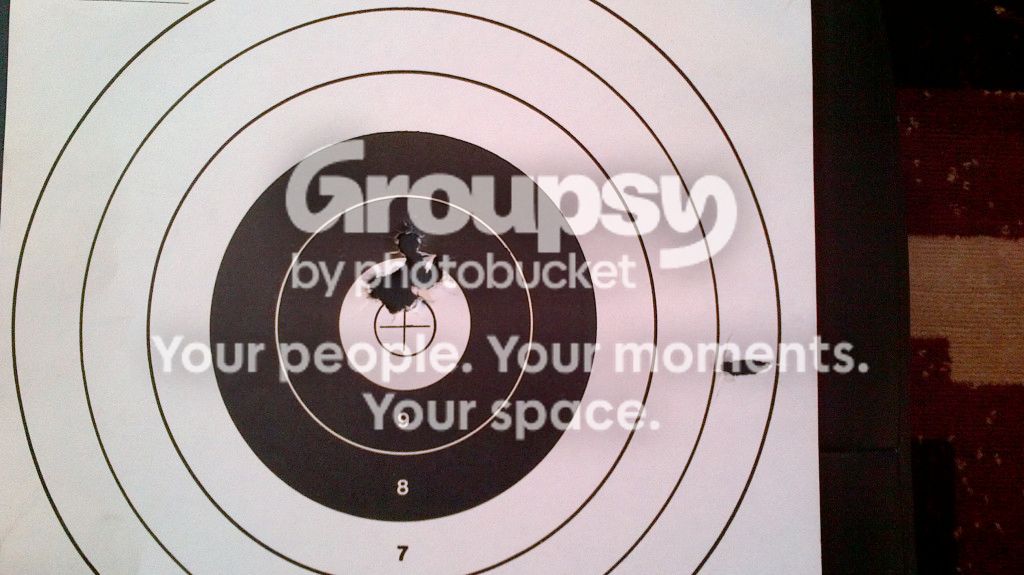
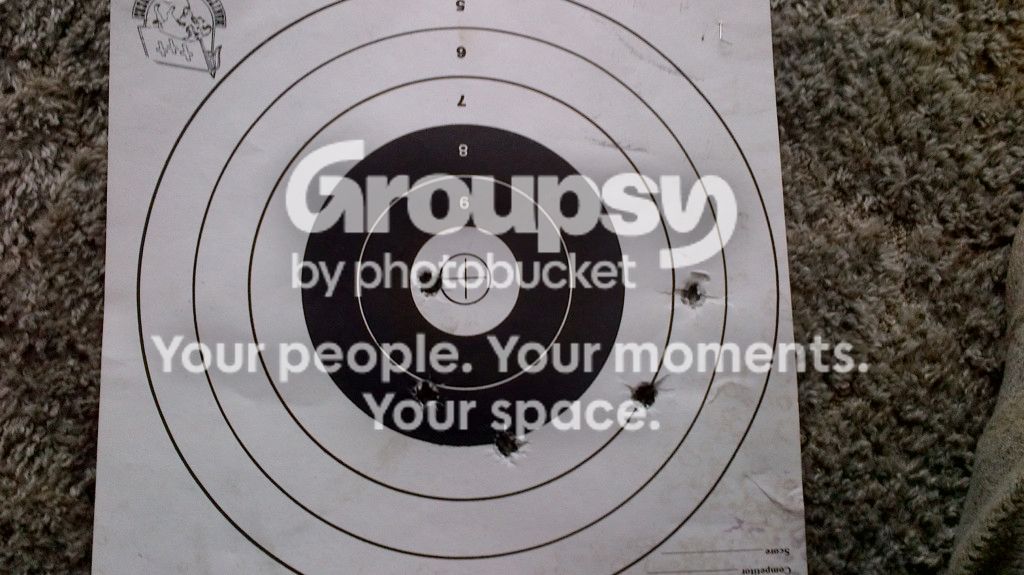
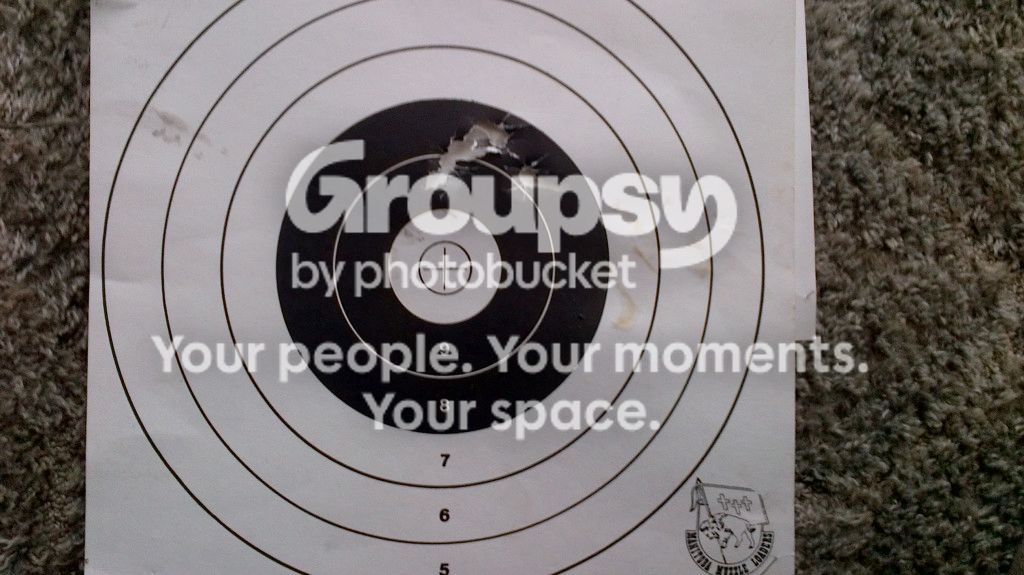
I was back out to the backyard range yesterday. The latest results are below. The first target was with .006" cotton patches, pre-lubed with water soluble cutting oil, that I had let dry overnight. I swabbed between shots with the 6/1 water/cutting oil solution, then a dry patch. The groups are getting smaller, with the exception of the damned flyer. Both these targets have flyers, both caused by slight hang fires. I suspect that the water soluble solution may not be the answer in cold weather.
IMG_00000116.jpg

IMG_00000117.jpg

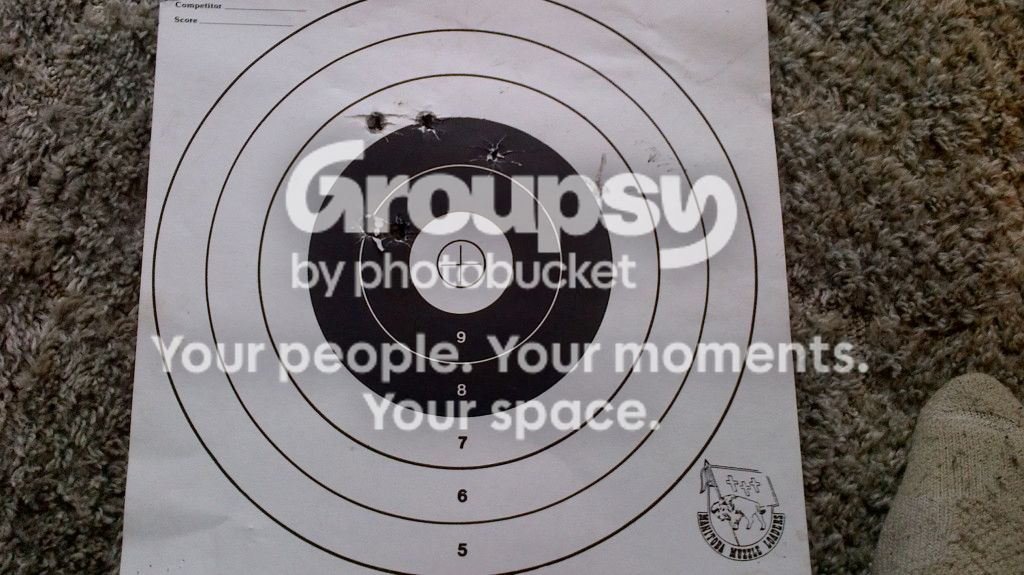
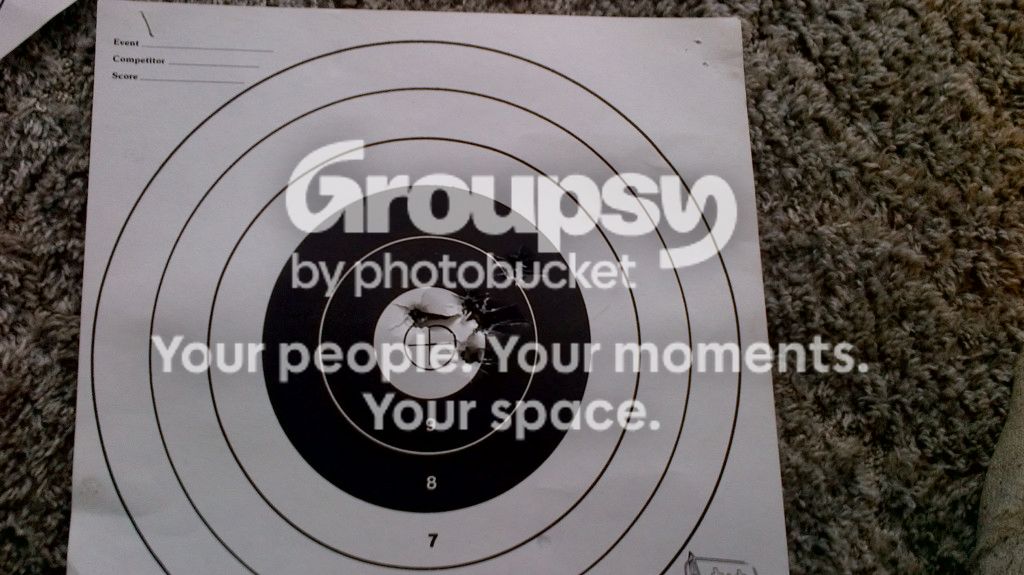
The next target was with the same patch/lube/cleaning combination, but I wieghed the balls. Weight range was 181-184 grains, so I selected the heaviest ones, assuming that they were likely the most distortion free. Once again, slightly tighter group, and except for the flyer, I'm pretty happy. Ol'Flinter, you called this one right from the start, one ragged hole at 30 yards...not there yet, but getting close. At the beginning I was pretty damn skeptical, but you were right on. I'm done with this for the time being, I'm walking one of my girls down the isle this week, and then we head south for the winter, so I won't bore ya'all with any more "muzzleloading 101" posts for a while. I'm going to buy a copy of Dutch Schult's book to read on the beach, and will be full of ideas come spring. Thanks for the help, men!
 
You are getting great performance there.
I always used medium weight denim for my patching...washed or worn our blue jeans worked great. Usually the backs of the legs were more consistent thickness...I measured it a couple of times then learned through experience to gauge it by feel. Cleaning the bore after every shot will produce great results. The best advice I can give is be thoroughly consistent in everything you do. The amount of powder, the thickness of the patch, the amount of lube on the patch, the weight of the ball, the fit of the percussion cap plus the seating pressure can also make a difference.
Years ago, before I went to a custom built gun, I used a spaghetti Enfield rifle...not the musket or carbine. I made a cleaning rod out of 3/8 brass rod with file handle on the end. If I loaded it and just firmly seat the ball (yes I was using a patched RB) the groups averaged about 4 inches at 50 yards. I tired something out of the ordinary by ramming/throwing(for lack of better description) the rod forcibly, letting go of it at the last moment...I held the bore guide with the other hand. After three "hits" the rod would ring, then I knew the ball was seated. Groups now chewed out the ten ring, or 2 inches at 50 yds. Guys would laugh at me saying you are deforming the ball, until they say the target...they did not laugh then.
 
Nice work! You have certainly got a bunch of the kinks out now. Thats the kind of group most muzzleloaders are capable of.

Always a good idea to do some testing at longer ranges too. Sometimes it will show you things that aren't apparent at shorter range and you can get a feel for the trajectory.

Enjoy your holidays!
 
During deer season, I had knocked down a nice buck, and he thrashed around for a while, then got up and ran off. I asked this forum for advice to prevent repeats. The recurring theme in the responses was shot placement. Consequently, after season ended, I hit the backyard range, and was alarmed at what I saw. My groupings were pretty sad. I spent some time on this site, and others, looking for answers again. Once again, what I learned was pretty basic stuff, but it worked! Here's my initial effort at 30 yards, 90 grains of powder, 100% cotton tee shirt patch, and a dirty bore. By dirty, I mean likely 25 or 30 shots, and 3 weeks without cleaning.
IMG_00000107.jpg

Not too good...but I gave the rifle a good cleaning, and here's the result...
IMG_00000111.jpg

Better, right? So then I found a different shirt to tear into strips for patching. It was 100% cotton denim, not as heavy as jeans, heavier than a tee shirt. Also, I reduced the charge to 60 grains, and cleaned with oily patch, then dry patch Better again...
IMG_00000109.jpg

The last effort was with a reduced charge of 45 grains. The 'flyer" is the first shot, forgot to reduce the charge...duhhh. Still swabbing between shots.
IMG_00000110.jpg

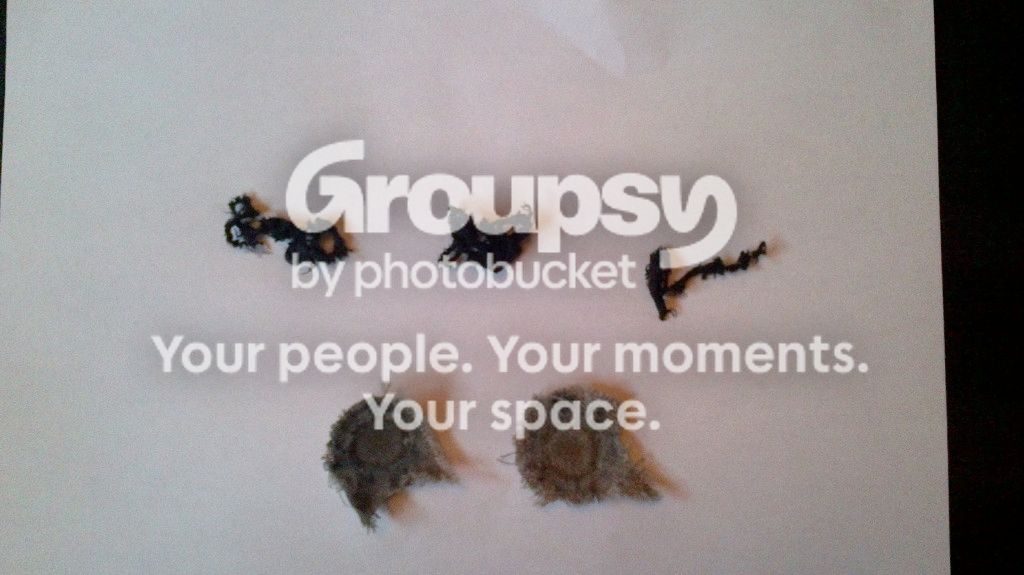
Here's the difference between recovered patches.
IMG_00000115.jpg

The thinner patches were burning through, almost disintigrating. Also, with a clean bore, they were not tight enough in a .50 barrel and .495 balls. The thicker cotton was much better. As I mentioned above, this is sort of muzzleloading 101, but I have been away from it for 25 years, and needed a refresher. I thought that it might be interesting to some of the newer shooters on this forum.
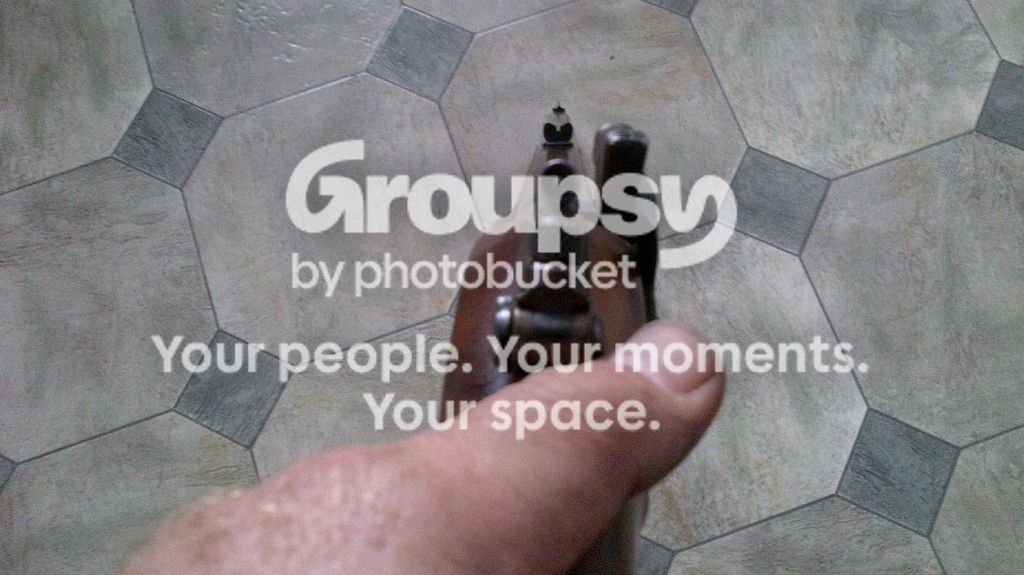
I know that we all tended to use much heavier charges back in the day. Big bang=fun. Now, small bang=cheap, accurate, comfortable to shoot. Win, win, win. The down side will come next deer season. 45 grains sure has less muzzle energy than 90. That's it till I can get to Jo Brook for some more caps. OBTW, here's my old Great Plains from my perspective. The old Lyman tang mounted peep sight works great. Peep sights are awsome!
IMG_00000105.jpg

Thanks for checking this out.

Please, Please tell me what is the model number of your Lymen peep. I want one for my 54 caliber Lymen Great Plains Hunter. It also looks like U may have replaced your front sight.
Cheers & Tighter Groups: Eaglesnestsr
 
Eaglesnestr, I looked at the sight, and my poor old eyes can't read the tiny writing. I will try to find a magnifying glass, but not for a day or two...I'm walking my daughter down the aisle tomorrow. I bought it at a gunshow years ago. It came off a 99 Savage. The Winchester models are too high. As it was, I had to put on a taller front sight. I went with a bead front, it makes a dandy combination. If I forget, PM me.
 
Well done, 'Rider!! A bit more practice and you will rid yourself of most of those pesky fliers so you can move on out to 50 yds and beyond. Look out Bambi next fall!
 
During deer season, I had knocked down a nice buck, and he thrashed around for a while, then got up and ran off. I asked this forum for advice to prevent repeats. The recurring theme in the responses was shot placement. Consequently, after season ended, I hit the backyard range, and was alarmed at what I saw. My groupings were pretty sad. I spent some time on this site, and others, looking for answers again. Once again, what I learned was pretty basic stuff, but it worked! Here's my initial effort at 30 yards, 90 grains of powder, 100% cotton tee shirt patch, and a dirty bore. By dirty, I mean likely 25 or 30 shots, and 3 weeks without cleaning.
IMG_00000107.jpg

Not too good...but I gave the rifle a good cleaning, and here's the result...
IMG_00000111.jpg

Better, right? So then I found a different shirt to tear into strips for patching. It was 100% cotton denim, not as heavy as jeans, heavier than a tee shirt. Also, I reduced the charge to 60 grains, and cleaned with oily patch, then dry patch Better again...
IMG_00000109.jpg

The last effort was with a reduced charge of 45 grains. The 'flyer" is the first shot, forgot to reduce the charge...duhhh. Still swabbing between shots.
IMG_00000110.jpg

Here's the difference between recovered patches.
IMG_00000115.jpg

The thinner patches were burning through, almost disintigrating. Also, with a clean bore, they were not tight enough in a .50 barrel and .495 balls. The thicker cotton was much better. As I mentioned above, this is sort of muzzleloading 101, but I have been away from it for 25 years, and needed a refresher. I thought that it might be interesting to some of the newer shooters on this forum.
I know that we all tended to use much heavier charges back in the day. Big bang=fun. Now, small bang=cheap, accurate, comfortable to shoot. Win, win, win. The down side will come next deer season. 45 grains sure has less muzzle energy than 90. That's it till I can get to Jo Brook for some more caps. OBTW, here's my old Great Plains from my perspective. The old Lyman tang mounted peep sight works great. Peep sights are awsome!
IMG_00000105.jpg

Thanks for checking this out.

Just thought I'd quote with the pics
 
Back
Top Bottom