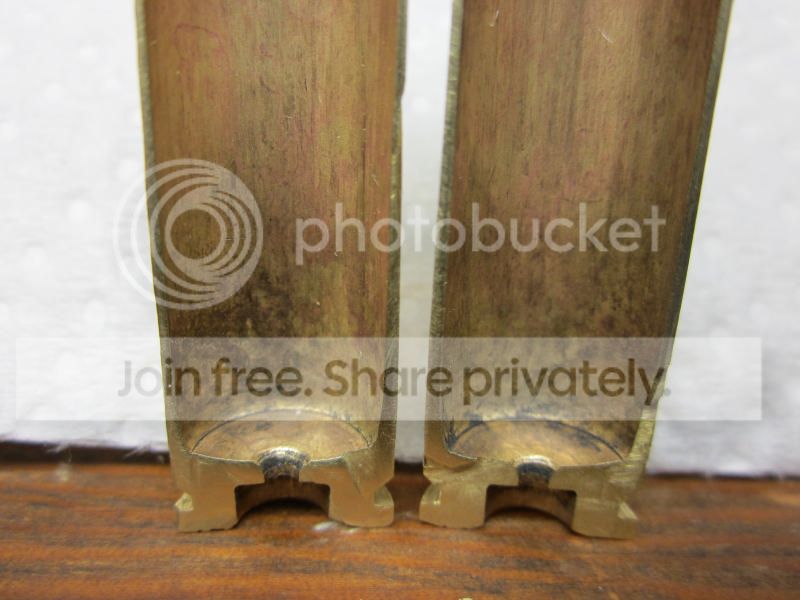
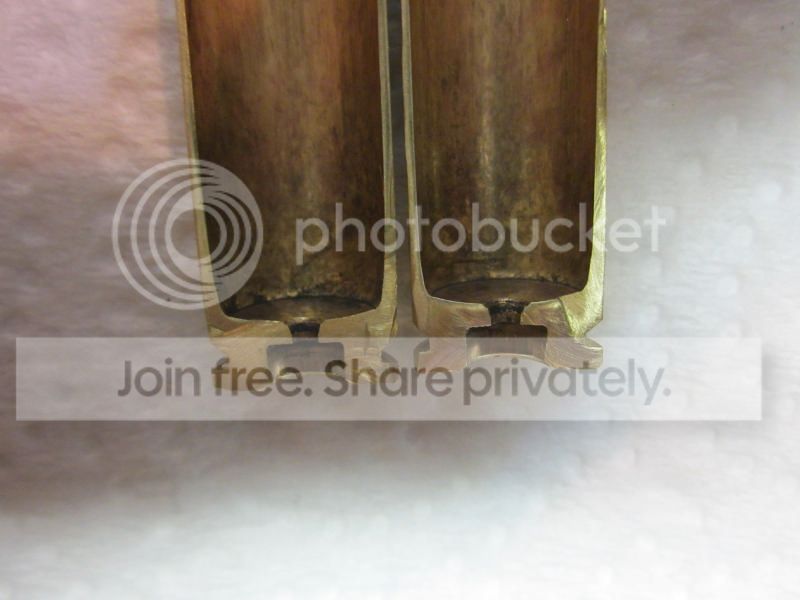
Does the appearance of a ring close to the case head always mean that case head separation is about to occur?
I was at the range on the weekend firing off some handloads for my K31 (7.5X55 swiss). I used Norma brass that I obtained by firing some newly purchased Norma Oryx cartridges, so the brass was once-fired (in my own gun). I put together some loads that were below the maximum recommended load, and after firing them, I noticed that there seemed to be signs of "incipient case head separation" (term used in my Lyman manual), that is to say, a bright ring seems to be starting at the point where the case wall joins the case head. On some of the brass, the ring is almost all the way around the case. There are no signs of excessive pressure on the brass (primers are fine, extraction was normal, no impressions on the case head). As recommended by several sources, I used a piece of wire to feel around on the inside of the case where the ring appears to be forming, but I can't really feel anything obvious in any of the cases that would indicate that there is a problem, but I am not really sure how obvious it should be.
K31s are not know to have headspace issues, and all numbers are matching, so I really didn't expect to ditch brass after the second firing. Could it be that I am just overly paranoid, or could the brass really be ready to separate at the case head? It did seem like the Norma Oryx was loaded pretty hot - my handloads, and GP11 were impacting 2 MOA low compared to the factory Norma Oryx cartridges. Could this be contributing to the problem, or would it be solely a headspace issue?
I also measured the diameter of the head for the Norma brass and compared it the the diameter of once-fired GP11 brass. The diameter of the Norma brass is 0.006" smaller, so I am wondering if the extra bit of diameter in the chamber is contributing to the problem.
Here are some pictures of the brass:
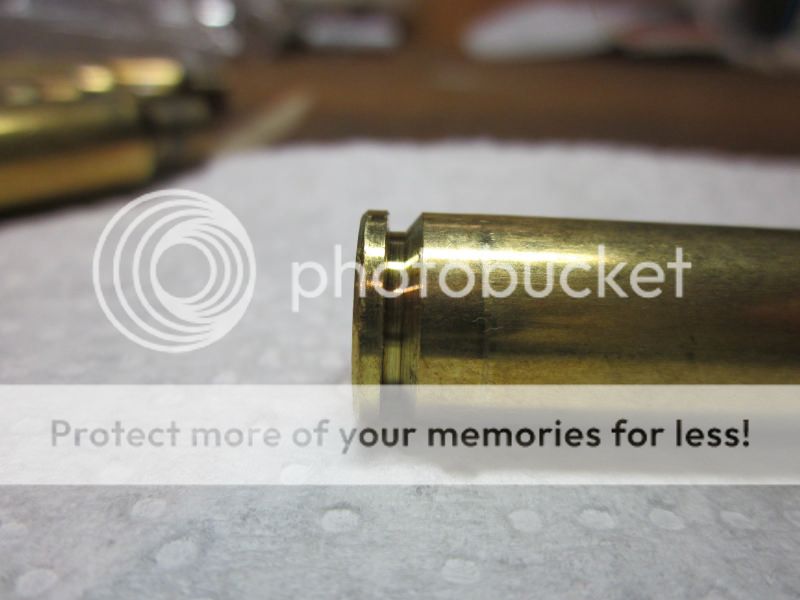
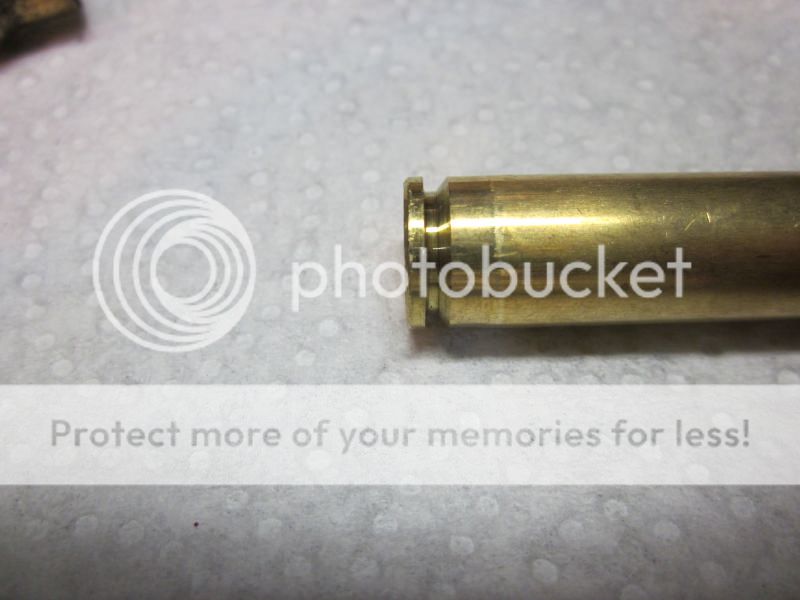

I was at the range on the weekend firing off some handloads for my K31 (7.5X55 swiss). I used Norma brass that I obtained by firing some newly purchased Norma Oryx cartridges, so the brass was once-fired (in my own gun). I put together some loads that were below the maximum recommended load, and after firing them, I noticed that there seemed to be signs of "incipient case head separation" (term used in my Lyman manual), that is to say, a bright ring seems to be starting at the point where the case wall joins the case head. On some of the brass, the ring is almost all the way around the case. There are no signs of excessive pressure on the brass (primers are fine, extraction was normal, no impressions on the case head). As recommended by several sources, I used a piece of wire to feel around on the inside of the case where the ring appears to be forming, but I can't really feel anything obvious in any of the cases that would indicate that there is a problem, but I am not really sure how obvious it should be.
K31s are not know to have headspace issues, and all numbers are matching, so I really didn't expect to ditch brass after the second firing. Could it be that I am just overly paranoid, or could the brass really be ready to separate at the case head? It did seem like the Norma Oryx was loaded pretty hot - my handloads, and GP11 were impacting 2 MOA low compared to the factory Norma Oryx cartridges. Could this be contributing to the problem, or would it be solely a headspace issue?
I also measured the diameter of the head for the Norma brass and compared it the the diameter of once-fired GP11 brass. The diameter of the Norma brass is 0.006" smaller, so I am wondering if the extra bit of diameter in the chamber is contributing to the problem.
Here are some pictures of the brass: