New NEA Evaluation (Part 1)
Last week my son bought a pair of NEAs – a 14.5” and a 10.5”. He wanted one from the instant they first came out and only hesitated because of the initial teething issues.
My experience with the AR goes back about 30 years when I first bought a pair of SGWs. Then I got a Colt flat top Sporter, too. The SGWs were not as well finished, but grouped tighter than the Colt, so I used the SGW in Service Rifle.
Two years ago I bought a 14.5” Norinco for use in CQB. It ran like a champ, right out of the box. I made two cosmetic changes that were important. The plastic handgrip was replaced by a Hogue (rubber). Much nicer. And the stock trigger was replaced by Rock River. I take my shooting seriously and any gun I use gets a trigger job of some kind, if needed. It also got a float tube. If I was shooting Service Rifle any more, I would consider a float tube a real good idea. For CQB (less than 50 yards) I doubt it makes a particle of difference. But the tube was on sale for $39 and I could not resist.
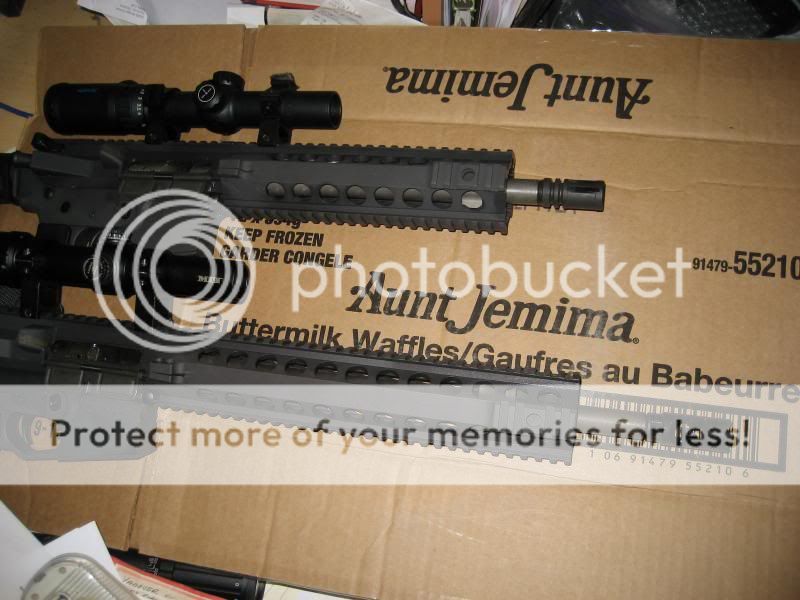
The NEA rifles have a soft black finish. Not painted, like a Norc. I am guessing it some kind of phosphate or anodized finish. I like the look of it, but assume it will mark easily. The shape of the receiver is quite different in detail from other AR-15s. The shape is angular, instead of rounded. I did not notice until I happened to have a pair of rifles side by side. The shape makes the rifle looks a bit stronger.
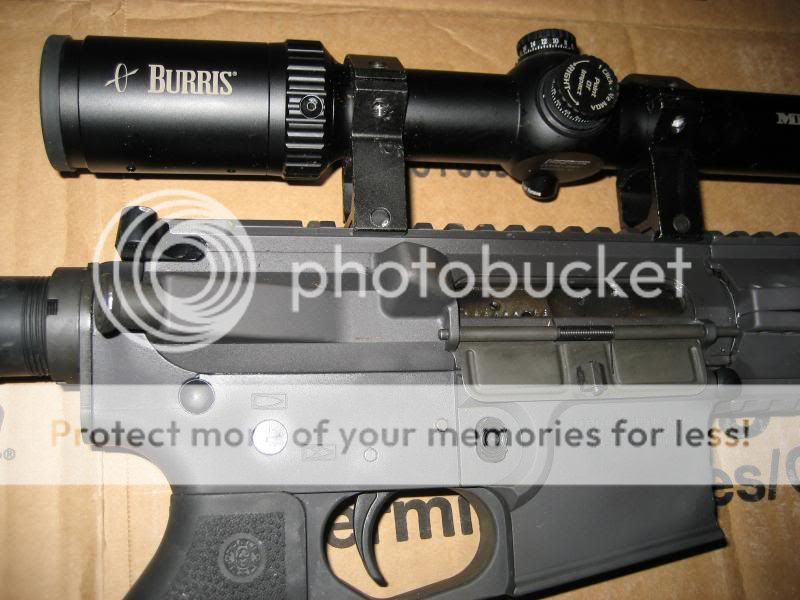
I note that the magwell is beveled. A nice touch. I had to take a file to my Norinco to bevel it a bit.
The bolt carrier and bolt look like a typical AR-15. The gas key is staked in the same manner as my Dimaco bolt.
The trigger feels like a typical AR-15 service trigger, but slightly lighter than others I have used. Both NEA triggers got replaced with Rock River triggers because of my preference for a light crisp trigger.
The NEA barrels are floated. Nothing forward of the receiver touches them. Not only will this maximize the accuracy potential of the rifle, but it means that no matter how you hold or pressure the forend in any shooting position, the rifle will still hold zero and shoot well. I like this feature.
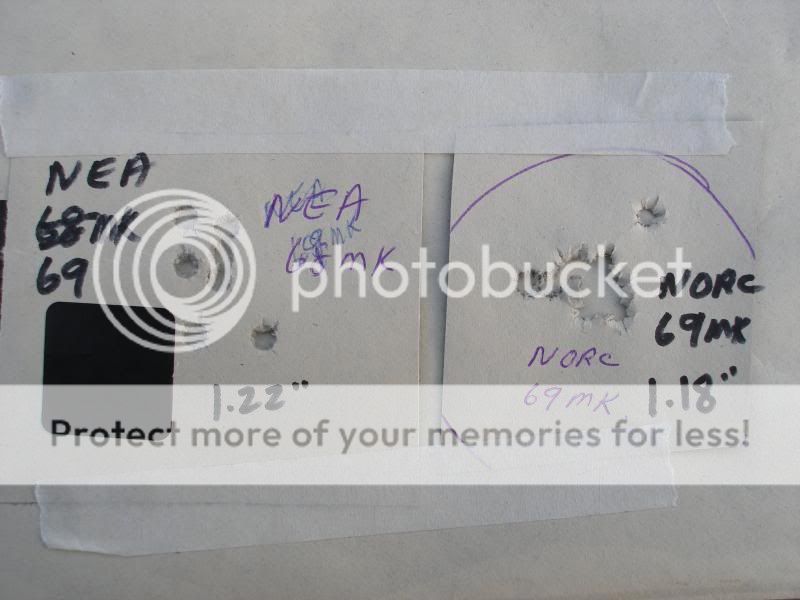
The barrel is what I would call a medium weight contour. It has no cut outs. It looks like it should be stiff and accurate. A full accuracy test will be in Part 2.
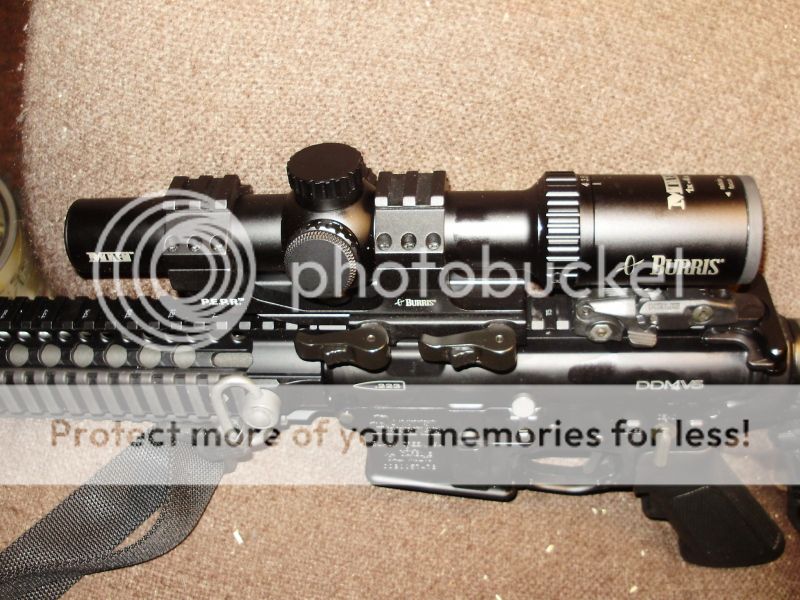
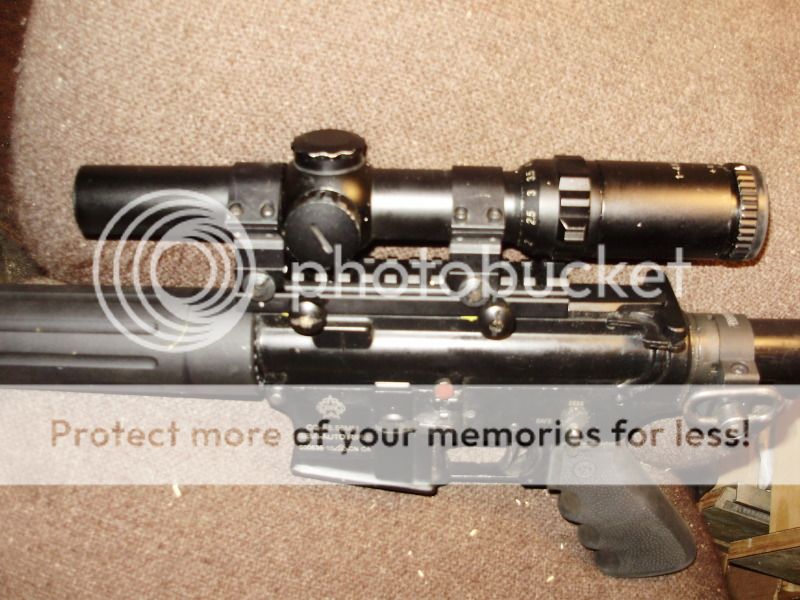
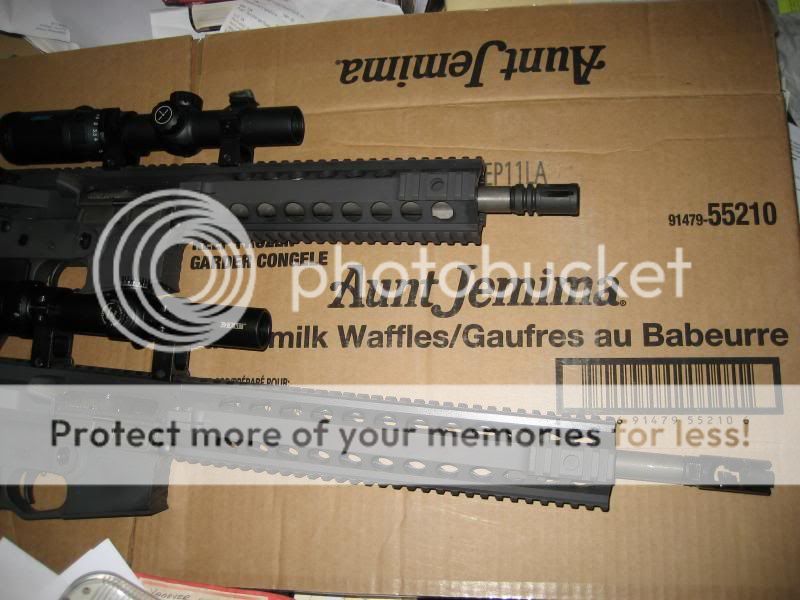
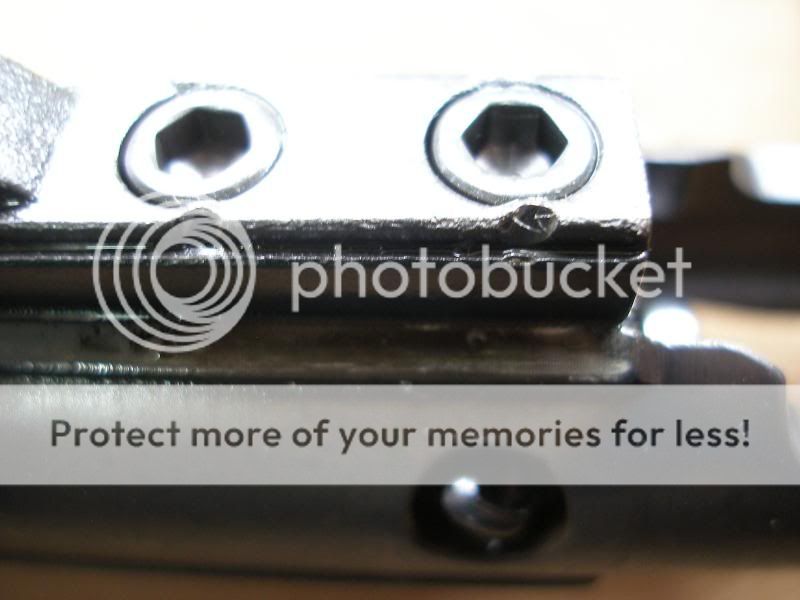
The forend consists of an aluminum quad rail of either 12” or 9”. If you want to hang a light, laser or pencil sharpener on it, lot of choice. The top rail lines up perfectly with the rail on top of the receiver. On one rifle the scope mounts are both on the receiver, but the shape of the other scope requires the forward mount to sit on the forend. Not as desirable, but no elevation problem.
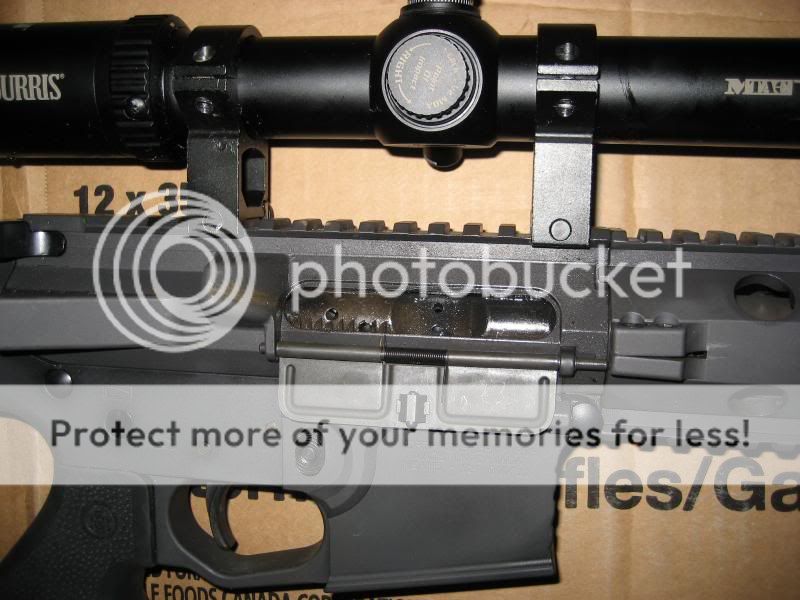
I don’t know if the metal quadrail forend is lighter or heavier than the plastic type forend. But even with the heavier barrel, the NEA is lighter than my Norinco. 7.7 pounds vs. 8.1. Both are 14.5”. I don’t know where the weight savings came from. The NEA receiver looks beefier.
The adjustable butt has 5 locked positions, about ¾” apart. I find it handy to set my scope for correct eye relief in the prone position. When standing, the eye is farther from the scope, so I click the butt one position shorter. The plastic furniture is of mediocre quality. I can see some owners upgrading to Magpul.
Each rifle has several places to attach a sling. The toe of the butt has a big swivel to pass a ling through. A plate at the rear of the receiver has place to clip on a sling. One rifle has a plate with a large round hole, while the other has a slot. The round hole will fit more styles of clips that the slot.
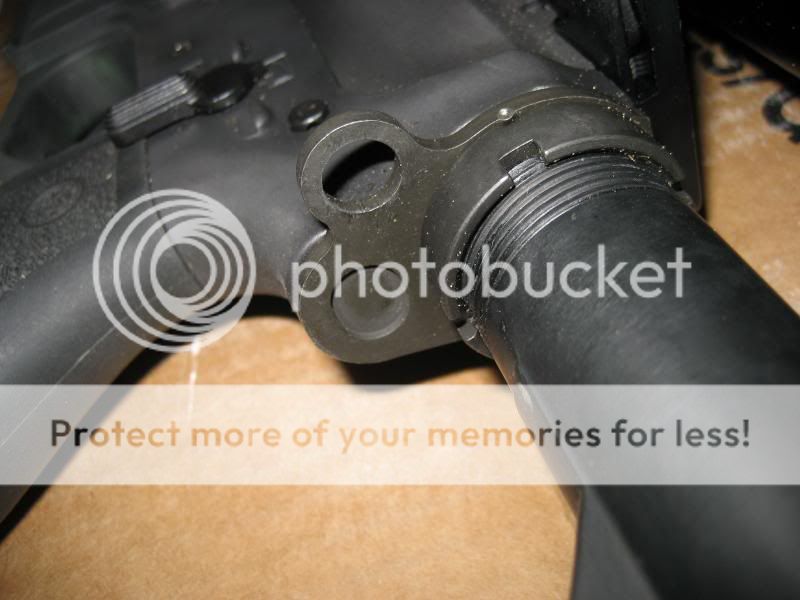
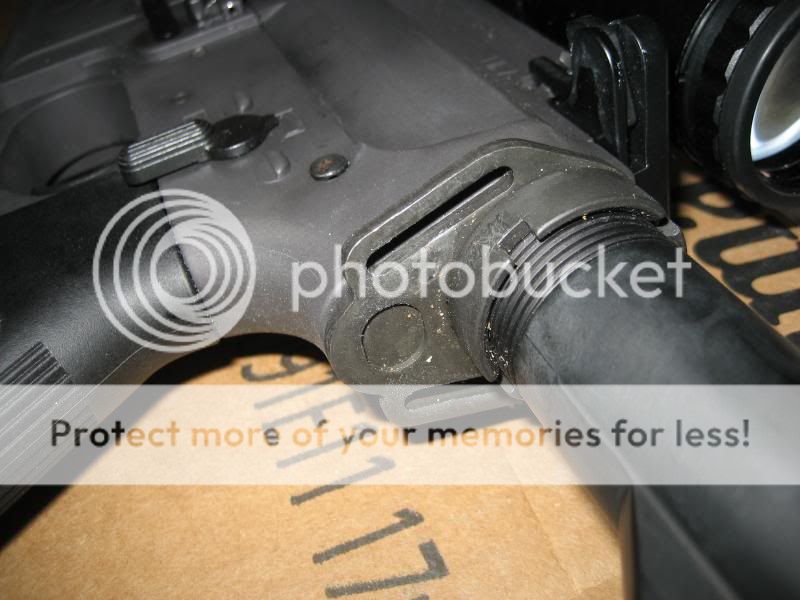
In order to get my Magpul clip to fit the slot I had to use a round file to thin out the hook a bit. Not a big deal, but I think the round hole is a better design. At the front of the forend there is a raised section on either side that hold a quick-detach opening. This is really neat and in the case of the shorty, the raised section might prevent the hand from sliding in front of the muzzle.
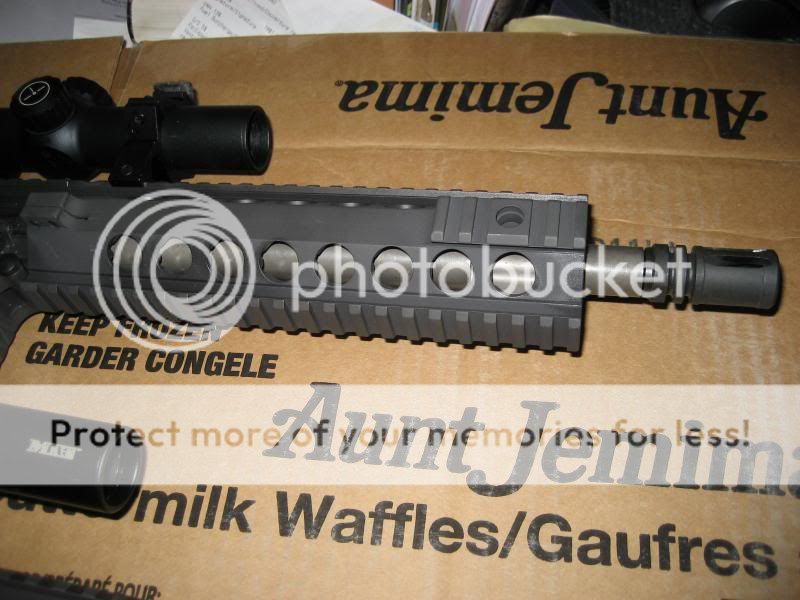
Neither rifle had any sights. Both came with the A2 style flash suppressor. One has already been replaced with a brake, and the other will come off tomorrow. I was watching my son shooting the CQB and noticed his muzzle did not flinch at all with a shot. 14.5” with a brake. In some parts of the CQB the ability to double tap is a real bonus.
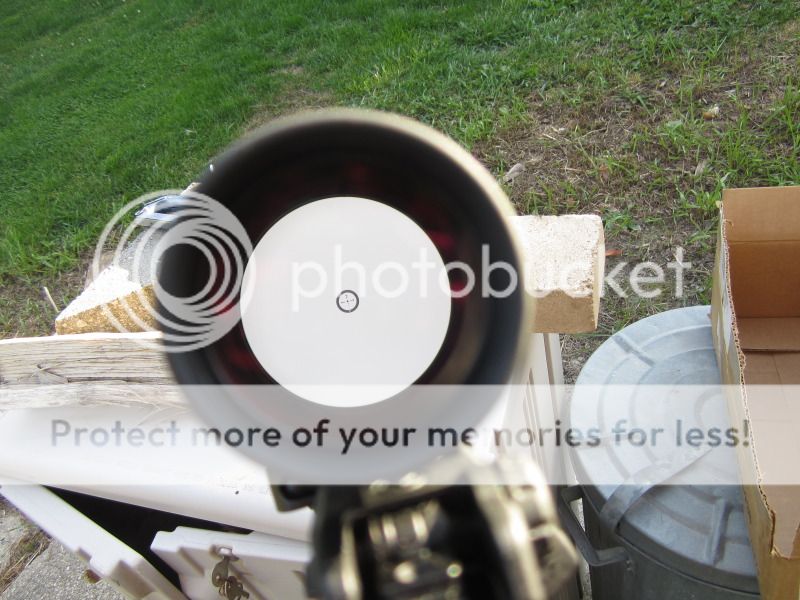
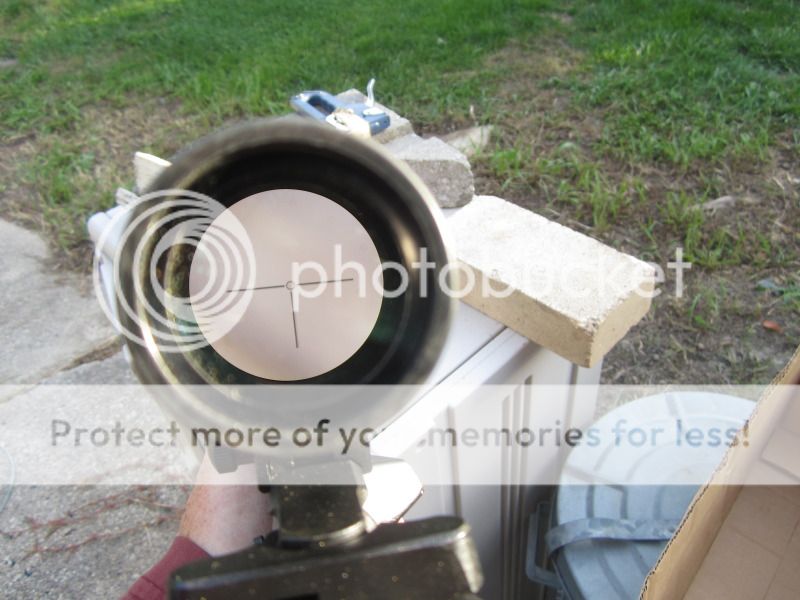
Both rifles got a CQB type scope installed (a Burris MTAC and a $100 Chinese knock-off from Ebay) the day before the CQB match. Rings are see thru (to make them high) cheap 30mm rings. Both were zeroed at 25 yards with 5 shots.
The match was the first time we shot the two NEAs. I used the shorty. They handled well. The triggers felt great. But the experience was spoiled for both of us with magazines that did not seat properly. Sometimes a round would not feed and sometimes the mag actually fell out. In CQB, because we shoot against the clock, every little glitch cost 25 points.
My son was very disappointed. He had spent a lot of money on two rifles that looked great but failed at the most basic level. I was not very fussed, just disappointed and of course, felt bad for him. I usually return from a match with some ideas about improving my kit. In this case I was focused on making the mags fit the rifles. He was using a proven set of Pmags that he has used in a Colt. I used a set of Cmags I use in my Norinco. Because it was both rifles with proven mags, I was pretty sure it was a rifle issue. I had never before studied the moving parts of an AR-15, so I had no idea of what could be wrong. It felt like the mag would not go far enough into the gun to latch.
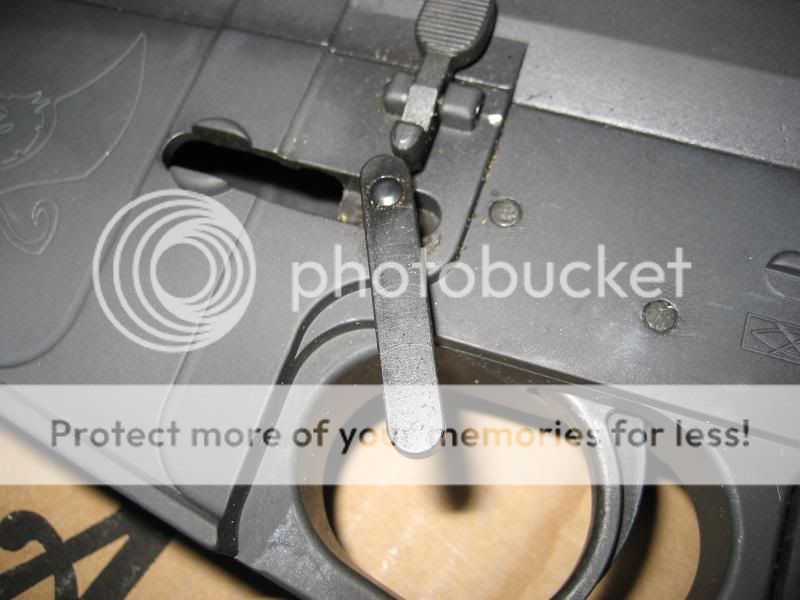
Once the rifle was in the shop, I took the upper off so I could see how the magazine went into the lower. The mag release felt skritchy when pushed. Lube did not help. If you push the mag button with a tool (like a cartridge) the latch can be pushed right out of the rifle and swing around so the latch part can be examined. It was clear that the edges of the latch block were rough. This roughness prevented the latch block from dropping into the notch in the mag. A few passes of a fine file cleaned up the edges of the block and Eureka!! It dropped smoothly into the magazines.
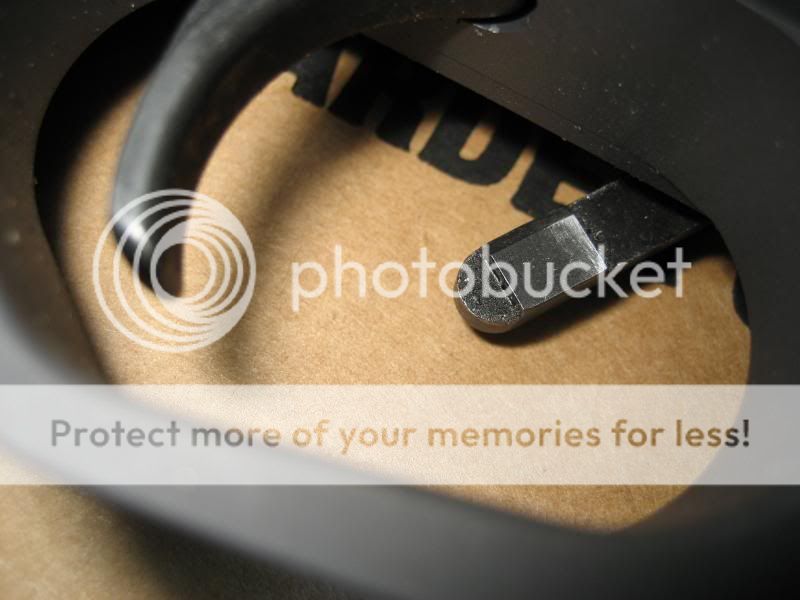
I was disappointed that NEA did not recognize the life or death implications of this part working smoothly.
Now that this issue has been resolved, I am very pleased with the NEA rifles. The only part that is not high quality is the plastic butt assembly. Easily replaced.
The proof of a rifle is in the shooting. In Part 2 the two NEAs go to the range along with my Norinco, for comparison, and shooting a dozen different types of ammo in each (10 shot groups). Each rifle will be fitted with a 20X target scope. The objective will be to find loads that work for each rifle, compare accuracy, and check things like magazine latching, feeding, firing and ejection.
Last week my son bought a pair of NEAs – a 14.5” and a 10.5”. He wanted one from the instant they first came out and only hesitated because of the initial teething issues.
My experience with the AR goes back about 30 years when I first bought a pair of SGWs. Then I got a Colt flat top Sporter, too. The SGWs were not as well finished, but grouped tighter than the Colt, so I used the SGW in Service Rifle.
Two years ago I bought a 14.5” Norinco for use in CQB. It ran like a champ, right out of the box. I made two cosmetic changes that were important. The plastic handgrip was replaced by a Hogue (rubber). Much nicer. And the stock trigger was replaced by Rock River. I take my shooting seriously and any gun I use gets a trigger job of some kind, if needed. It also got a float tube. If I was shooting Service Rifle any more, I would consider a float tube a real good idea. For CQB (less than 50 yards) I doubt it makes a particle of difference. But the tube was on sale for $39 and I could not resist.
The NEA rifles have a soft black finish. Not painted, like a Norc. I am guessing it some kind of phosphate or anodized finish. I like the look of it, but assume it will mark easily. The shape of the receiver is quite different in detail from other AR-15s. The shape is angular, instead of rounded. I did not notice until I happened to have a pair of rifles side by side. The shape makes the rifle looks a bit stronger.
I note that the magwell is beveled. A nice touch. I had to take a file to my Norinco to bevel it a bit.
The bolt carrier and bolt look like a typical AR-15. The gas key is staked in the same manner as my Dimaco bolt.
The trigger feels like a typical AR-15 service trigger, but slightly lighter than others I have used. Both NEA triggers got replaced with Rock River triggers because of my preference for a light crisp trigger.
The NEA barrels are floated. Nothing forward of the receiver touches them. Not only will this maximize the accuracy potential of the rifle, but it means that no matter how you hold or pressure the forend in any shooting position, the rifle will still hold zero and shoot well. I like this feature.
The barrel is what I would call a medium weight contour. It has no cut outs. It looks like it should be stiff and accurate. A full accuracy test will be in Part 2.
The forend consists of an aluminum quad rail of either 12” or 9”. If you want to hang a light, laser or pencil sharpener on it, lot of choice. The top rail lines up perfectly with the rail on top of the receiver. On one rifle the scope mounts are both on the receiver, but the shape of the other scope requires the forward mount to sit on the forend. Not as desirable, but no elevation problem.
I don’t know if the metal quadrail forend is lighter or heavier than the plastic type forend. But even with the heavier barrel, the NEA is lighter than my Norinco. 7.7 pounds vs. 8.1. Both are 14.5”. I don’t know where the weight savings came from. The NEA receiver looks beefier.
The adjustable butt has 5 locked positions, about ¾” apart. I find it handy to set my scope for correct eye relief in the prone position. When standing, the eye is farther from the scope, so I click the butt one position shorter. The plastic furniture is of mediocre quality. I can see some owners upgrading to Magpul.
Each rifle has several places to attach a sling. The toe of the butt has a big swivel to pass a ling through. A plate at the rear of the receiver has place to clip on a sling. One rifle has a plate with a large round hole, while the other has a slot. The round hole will fit more styles of clips that the slot.
In order to get my Magpul clip to fit the slot I had to use a round file to thin out the hook a bit. Not a big deal, but I think the round hole is a better design. At the front of the forend there is a raised section on either side that hold a quick-detach opening. This is really neat and in the case of the shorty, the raised section might prevent the hand from sliding in front of the muzzle.
Neither rifle had any sights. Both came with the A2 style flash suppressor. One has already been replaced with a brake, and the other will come off tomorrow. I was watching my son shooting the CQB and noticed his muzzle did not flinch at all with a shot. 14.5” with a brake. In some parts of the CQB the ability to double tap is a real bonus.
Both rifles got a CQB type scope installed (a Burris MTAC and a $100 Chinese knock-off from Ebay) the day before the CQB match. Rings are see thru (to make them high) cheap 30mm rings. Both were zeroed at 25 yards with 5 shots.
The match was the first time we shot the two NEAs. I used the shorty. They handled well. The triggers felt great. But the experience was spoiled for both of us with magazines that did not seat properly. Sometimes a round would not feed and sometimes the mag actually fell out. In CQB, because we shoot against the clock, every little glitch cost 25 points.
My son was very disappointed. He had spent a lot of money on two rifles that looked great but failed at the most basic level. I was not very fussed, just disappointed and of course, felt bad for him. I usually return from a match with some ideas about improving my kit. In this case I was focused on making the mags fit the rifles. He was using a proven set of Pmags that he has used in a Colt. I used a set of Cmags I use in my Norinco. Because it was both rifles with proven mags, I was pretty sure it was a rifle issue. I had never before studied the moving parts of an AR-15, so I had no idea of what could be wrong. It felt like the mag would not go far enough into the gun to latch.
Once the rifle was in the shop, I took the upper off so I could see how the magazine went into the lower. The mag release felt skritchy when pushed. Lube did not help. If you push the mag button with a tool (like a cartridge) the latch can be pushed right out of the rifle and swing around so the latch part can be examined. It was clear that the edges of the latch block were rough. This roughness prevented the latch block from dropping into the notch in the mag. A few passes of a fine file cleaned up the edges of the block and Eureka!! It dropped smoothly into the magazines.
I was disappointed that NEA did not recognize the life or death implications of this part working smoothly.
Now that this issue has been resolved, I am very pleased with the NEA rifles. The only part that is not high quality is the plastic butt assembly. Easily replaced.
The proof of a rifle is in the shooting. In Part 2 the two NEAs go to the range along with my Norinco, for comparison, and shooting a dozen different types of ammo in each (10 shot groups). Each rifle will be fitted with a 20X target scope. The objective will be to find loads that work for each rifle, compare accuracy, and check things like magazine latching, feeding, firing and ejection.