
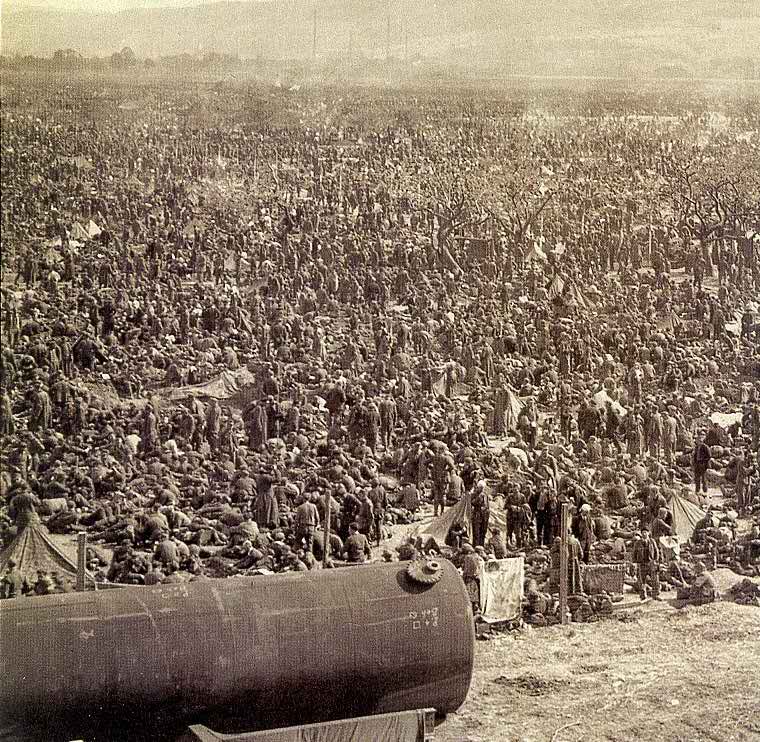
My grandfather was a grunt in the German army WW2. He was captured after D day and held in France, first as a pow under the Americans and then the French. The conditions were brutal and many of his freinds died of starvation or disease. Canada would have been better













































You are using an out of date browser. It may not display this or other websites correctly.
You should upgrade or use an alternative browser.
You should upgrade or use an alternative browser.
German POW graveyard.
- Thread starter CanadianAR
- Start date


Is that on Queen St.? I never even knew about that grave site, let alone that we had German POW's here. I guess I need to step up my WWI & WWII learnings.
It isn't widely publicized. I only discovered it a year ago, due to my girlfriend. Ill give her the credit. She loves to geocache and on occasion, she takes me along. I found this one titled "Brave German Boys" and researched from there.
It is off of Weber St in Woodland Cemetery. At the very back corner.
My grandfather was a grunt in the German army WW2. He was captured after D day and held in France, first as a pow under the Americans and then the French. The conditions were brutal and many of his freinds died of starvation or disease. Canada would have been better
So was my dad.
 Wasn't captured, but after the surrender of the German army, idea of a POW camp on that scale just didn't fly, so the Brits
 dropped them off in an isolated part of Ostfriessland, cut off by a canal and told them, swim the canal and we shoot. That's how he met my mother.
Grizz
Conditions were so bad because the Allies didn't have the means to care for all the thousands of German prisoners after the German collapse in Normandy. And the French would be brutal towards German POWs out of sheer vindictiveness. The book "War in a Stringbag" by RN pilot Charles Lamb is a good read. He was interned by the French in Vichy North Africa for several months and was beaten, starved and generally abused by his French captors.My grandfather was a grunt in the German army WW2. He was captured after D day and held in France, first as a pow under the Americans and then the French. The conditions were brutal and many of his freinds died of starvation or disease. Canada would have been better
Conditions were so bad because the Allies didn't have the means to care for all the thousands of German prisoners after the German collapse in Normandy. And the French would be brutal towards German POWs out of sheer vindictiveness. The book "War in a Stringbag" by RN pilot Charles Lamb is a good read. He was interned by the French in Vichy North Africa for several months and was beaten, starved and generally abused by his French captors.
The sad thing about war. In reality there seems to have been two Frances. One was Vichy that had a very large share of pro German and the other France that fought for their countries freedom. Of course after the war they were all pro allies.. The very same French that were pro German during the war were some of the biggest denouncers of the Nazis.(Me thinks they do protest too much).
After 2 years internment my grandfather was put into locked box cars with thousands of fellow prisoners. They were told that they were being repaitriated. Through the cracks in the walls they saw that they were traveling east and were not stopping in Germany. My grandfather along with several others broke out of the car and escaped to make their way home. The thousands of others continued on to Russia and were never heard from again.
I never met him and I wish I had. We would have had some long talks.
War is sht. When I was in the Canadian army, I served in Germany back in the days of the cold war. Had we gone to war then, I would be fighting my relatives in East Germany and Poland. Now of course they are or allies. Go figure

The POW who as executed was a German Jew who had managed to avoid detection. He was drafted. Toward the end of the war he deserted, and hid until the Allies liberated the area. He then surrendered himself. Put into a camp, he was detected, tried and shot with the cooperation of the Canadians.
Where is this incident recounted? I'd like to know more about it.
Included are two gravebmarkers made by surviving POWs while imprisoned.
The hand carved markers are obviously recent replacements. The originals would have featured the swastika.
What a nice war they had, kvetching with the Japanese internees at times, sending friendly greetings on Japanese Navy Day, the Fuhrer's birthday etc.
It's all there in the memoirs for those who want to read.
Considering the food, exercise, fresh air, social opportunities and medical care they got, probably most of the casualties were suicides or those who were murdered for "defeatism" or general lack of enthusiasm. Probably quite a few of the "suicides" were murders made to look like suicides too.
Which flags are flying from the three poles?
Last edited:
Not necessarily. The wood shows real age. Prehaps they weren't allowed to display the swastika in prisions on canadian soil, prehaps those guys weren't diehard nazis. The Eagle and cross were german military symbols before the swastika.

Just another stain of sh!t on the Canadian military history of ww2.The POW who as executed was a German Jew who had managed to avoid detection. He was drafted. Toward the end of the war he deserted, and hid until the Allies liberated the area. He then surrendered himself. Put into a camp, he was detected, tried and shot with the cooperation of the Canadians.


That depends on where the German POWs were. The ones who were in Russian camps very likely were worked to death or executed.Considering that MANY former POWS decided to make the US and Canada their permanent residence after the war probably goes to show that they had some pretty good treatment at the hands of the Allied Powers...
Can't say many Allied prisoners decided to move to Europe after the war... (barring military postings of course)
Hundreds of thousands of German soldiers died in US POW camps after the war ended.
http://whale.to/b/bacque1.html
Not necessarily. The wood shows real age. Prehaps they weren't allowed to display the swastika in prisions on canadian soil, prehaps those guys weren't diehard nazis. The Eagle and cross were german military symbols before the swastika.
German soldier does not necessary mean Nazi. Heck, iirc Adolf was suspicious of the German army and is why he expanded the SS so much, which were full of die-hard Nazis.
Not necessarily. The wood shows real age. Prehaps they weren't allowed to display the swastika in prisions on canadian soil, prehaps those guys weren't diehard nazis. The Eagle and cross were german military symbols before the swastika.
A cursory review of photos and memoirs will show that the POWs continued to wear their uniforms featuring the Hoheitstabzeichen and other Nazi symbols during their imprisonment. They continued to use the Nazi straight-arm salute and maintained what they called "military discipline": anyone who didn't toe the party line was punished officially and unofficially: beating and murder not excepted.
The eagle shown on one of those grave markers is the type used by the Weimar Republic and the BRD/BW. If you had carved that on a grave marker as a POW or left off the swastika, you would have been lucky to escape with your life.
Last edited:
These people are dead so are beyond any further form of judgement. Any soldier deserves a peaceful grave and it should probably be left at that. Yrs ago I saw some pretty nasty stuff while serving in the Middle East; corpses rotting in the sun and being torn apart by feral dogs after being shot up by the opposition. My comment to them at the time was that nobody was deserving of that, and that some level of humanity should be exercised with the dead. Allow them a grave with headstone with name, rank, national and regimental particulars and date of birth/death and leave it at that.

I thought I'd chime in on this as it seems like a few people are interested. I'm a history student currently doing my Masters and my main research area is German PoWs in Canada during the Second World War. There were about 34,000 interned in the country, with the first ones arriving in 1940 and most of them leaving by the end of 1946. I had the chance to finally visit the cemetery last fall, it is tucked away right in the far corner.
The cemetery at Kitchener is home to the graves of 187 German prisoners, 39 (civilians) from World War One and 148 from World War Two. I have done research into the causes of death and can tell you that almost two-thirds were from medical-related issues/illnesses (heart attacks, cancer, etc). About thirty were killed in accidents (drownings or work related), just under fifteen committed suicide, four were shot in an escape attempt, two were murdered, and five were executed (for the murders).
I'm not too sure where you got this from, but I can say that this isn't quite the case. Two PoWs were murdered at the camp in Medicine Hat by fellow PoWs, all deemed to be pro-Nazis. Both of the PoWs were captured in North Africa and the Canadian guards had nothing to do with the murders. If you are interested, there's quite a bit on the web about it, including this story about the execution of the murders.
The camp at Riding Mountain National Park is actually my main interest and I have been studying it for a few years now. The camp was located in the middle of the bush, ten kilometers from the park boundaries but it did not take long for PoWs to wander and find some civilian farms. In many cases they made friends with the locals and snuck out of camp though this was against the rules. The guards didn't like this and did whatever they could to stop the PoWs from visiting.
If anyone is interested, I've posted some of my research, mostly about Riding Mountain, here: prisonersinmb.########.ca, including the story of two of the PoWs who are buried at Kitchener.
If anyone has questions, feel free to ask and I'll do my best to answer!
Very interesting, I wonder what did most of them died from? War wounds, work related injuries, illness, murdered by other inmates? It's certainly worth doing some research about it.
The cemetery at Kitchener is home to the graves of 187 German prisoners, 39 (civilians) from World War One and 148 from World War Two. I have done research into the causes of death and can tell you that almost two-thirds were from medical-related issues/illnesses (heart attacks, cancer, etc). About thirty were killed in accidents (drownings or work related), just under fifteen committed suicide, four were shot in an escape attempt, two were murdered, and five were executed (for the murders).
The POW who as executed was a German Jew who had managed to avoid detection. He was drafted. Toward the end of the war he deserted, and hid until the Allies liberated the area. He then surrendered himself. Put into a camp, he was detected, tried and shot with the cooperation of the Canadians.
I'm not too sure where you got this from, but I can say that this isn't quite the case. Two PoWs were murdered at the camp in Medicine Hat by fellow PoWs, all deemed to be pro-Nazis. Both of the PoWs were captured in North Africa and the Canadian guards had nothing to do with the murders. If you are interested, there's quite a bit on the web about it, including this story about the execution of the murders.
Actually they had it way better than Allied prisoners. Ate well, accommodations reasonable and a lot of camps didn't even bother with fences. Happened on a book about "prisoner" labor in the development of our National parks. German POWs did their part. At the camp in Riding National Park, the prisoners appeared to be quite integrated into the local communities, even having girl friends. Officials obviously didn't approve, something about fraternizing with the enemy, but some of them would go into town overnight and party. Guy would slip away to a waiting car. Same car would drop him off before roll call nest morning. Way better than the Eastern Front.
The camp at Riding Mountain National Park is actually my main interest and I have been studying it for a few years now. The camp was located in the middle of the bush, ten kilometers from the park boundaries but it did not take long for PoWs to wander and find some civilian farms. In many cases they made friends with the locals and snuck out of camp though this was against the rules. The guards didn't like this and did whatever they could to stop the PoWs from visiting.
If anyone is interested, I've posted some of my research, mostly about Riding Mountain, here: prisonersinmb.########.ca, including the story of two of the PoWs who are buried at Kitchener.
If anyone has questions, feel free to ask and I'll do my best to answer!

A cursory review of photos and memoirs will show that the POWs continued to wear their uniforms featuring the Hoheitstabzeichen and other Nazi symbols during their imprisonment. They continued to use the Nazi straight-arm salute and maintained what they called "military discipline": anyone who didn't toe the party line was punished officially and unofficially: beating and murder not excepted.
The eagle shown on one of those grave markers is the type used by the Weimar Republic and the BRD/BW. If you had carved that on a grave marker as a POW or left off the swastika, you would have been lucky to escape with your life.
Why would the grave yard lie about it? They say they are original, I don't know why they would put them there if not genuine, doesn't add anything really.
And the eagle looks similar to the one on the side of a wehrmahct helmet.
Maybe he was stopped from adding it, maybe it was done post war, who knows. Just trying to say its not Impossible.

- Location
- Leduc County, Alberta
Love this thread.
Militariacollector. Just heard this on the news this morning about a brand new Alberta POW exhibit at the Royal Alberta Museum: http://edmonton.ctvnews.ca/unique-m...-prisoner-of-war-history-in-alberta-1.1264358
I read your blog last night, very interesting. My grandfather conversed with a few of the German POWs in Alberta during WW2. My grandfather was a recent Mennonite immigrant from Siberia and like many Mennonites at the time was a Conscientious Objector to fighting in the war. But of course he still had to serve his new country of Canada, so he was sent to Alberta to work in the parks. I believe he was sent to Banff, but I will need to check up on that.
Do you have any information on whether or not any prisoners from the Battleship Bismarck were in Alberta during WW2, or just in Ontario? My grandfather has some letters from the POWs he kept in touch with as well a one of those "Ships in a Bottle" that he had made for him supposedly by a German Kriegsmarine POW.
Thanks for all your info. Cheers!
Militariacollector. Just heard this on the news this morning about a brand new Alberta POW exhibit at the Royal Alberta Museum: http://edmonton.ctvnews.ca/unique-m...-prisoner-of-war-history-in-alberta-1.1264358
I read your blog last night, very interesting. My grandfather conversed with a few of the German POWs in Alberta during WW2. My grandfather was a recent Mennonite immigrant from Siberia and like many Mennonites at the time was a Conscientious Objector to fighting in the war. But of course he still had to serve his new country of Canada, so he was sent to Alberta to work in the parks. I believe he was sent to Banff, but I will need to check up on that.
Do you have any information on whether or not any prisoners from the Battleship Bismarck were in Alberta during WW2, or just in Ontario? My grandfather has some letters from the POWs he kept in touch with as well a one of those "Ships in a Bottle" that he had made for him supposedly by a German Kriegsmarine POW.
Thanks for all your info. Cheers!
- Location
- Leduc County, Alberta
That depends on where the German POWs were. The ones who were in Russian camps very likely were worked to death or executed.
Hundreds of thousands of German soldiers died in US POW camps after the war ended.
I'm quite sure James Bacque has been discredited and his revisionist history is incorrect at best. I read both his books "Dear Enemy" and "Other Losses" years ago. While there is no doubt that German POWs in Europe were treated poorly following the war, Bacque inflates the mortality figures to such an extent, that those figures alone prove his work suspect. Also, the Germans understood it then, you reap what you sow...
Having said that, survival as a German POW in the Soviet Union, was definitely a different story.... But then again, the Russians were still MUCH kinder to their German POWs in comparison to German treatment of Russian POWs...























