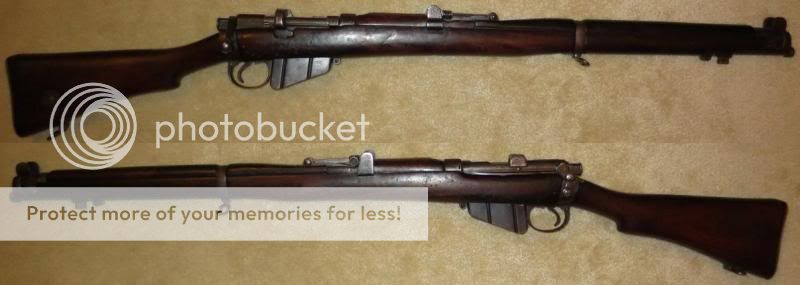
What can you tell me about this Lee-Enfield No. I, Mk. III* ?

ghostie

CGN frequent flyer
Rating - 100%
251   0   0
Location
Vancouver
I bought this No. I, Mk. III off the EE and just recieved it today. This is the first Enfield of any kind that I have ever owned. I had been looking for a nice No. I, Mk. III for a couple of years now. I paid $350. I think that is a decent price, but I'll hear arguement to the contrary.

My criteria for buying one were (more or less): No. I, Mk. III, preferably made in England, WWI era more-or-less, decent looking, the various pieces of wood in the stocks more-or-less match each other in colour, not missing too many small parts, shootable, not outrageously expensive. I think I pretty much got what I was looking for.

A couple of things:
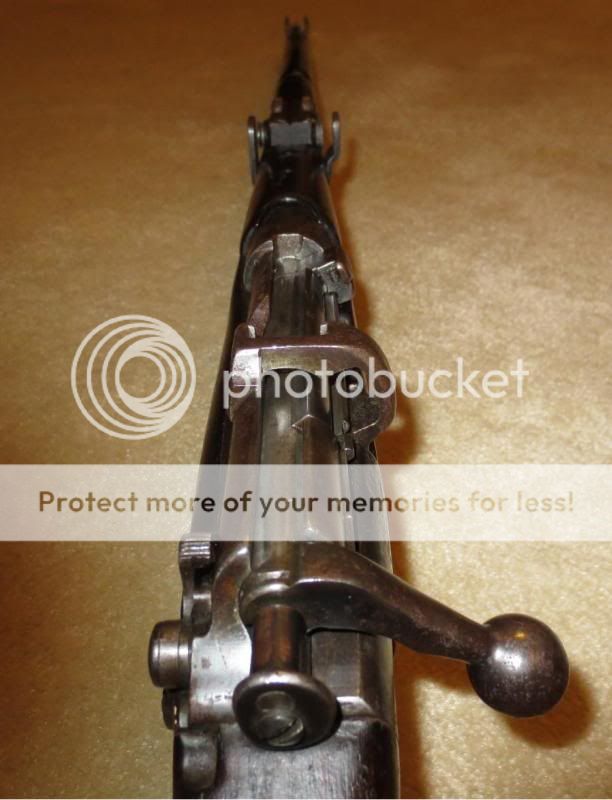
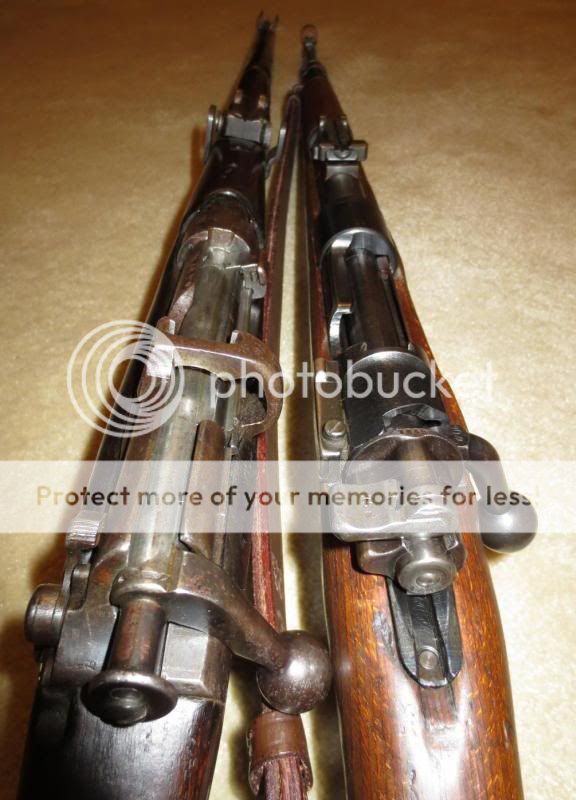
(1) Am I missing any parts here? (other than the sling. I don't know a lot about Enfields)
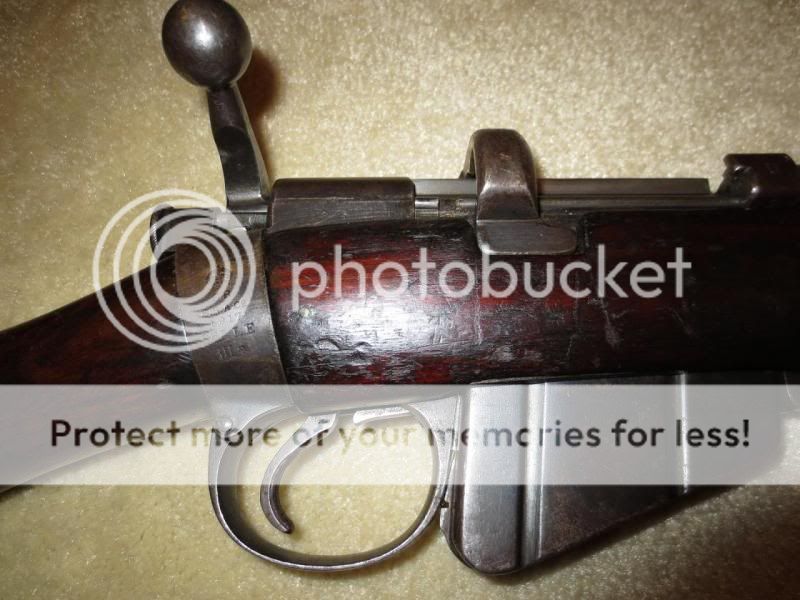
(2) What should I be doing about the rust? Anything? It looks a lot worse under the flash photography than to the naked eye. Is this "patina" or something to be concerned about?
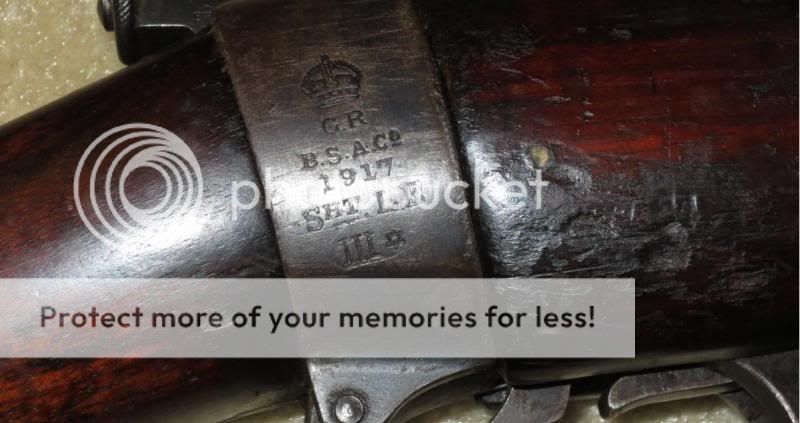
(3) What can you tell me about this rifle? I take it the rifle was made at the Birmingham Small Arms Co. in 1917 during the War. Anything beyond that? I know the * basically means War-time production with no magazine cut-off and no volley sights.
SMLE1_zps063fc004.jpg

SMLE3_zps2b7ab55f.jpg

SMLE4_zps45691404.jpg

SMLE8_zps2ea36308.jpg

SMLE5_zpsd7a965dd.jpg


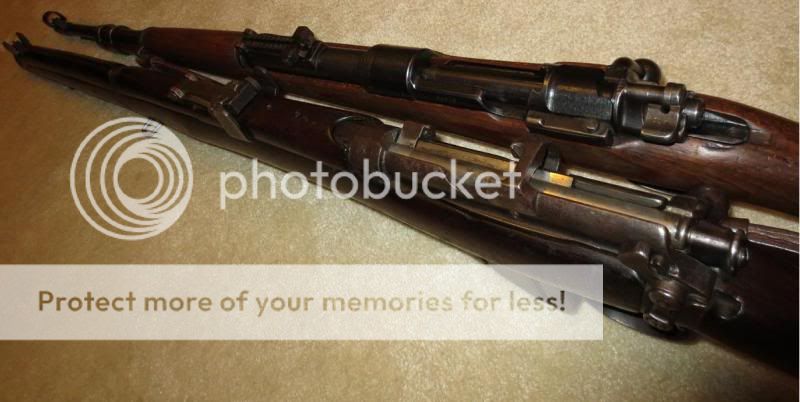
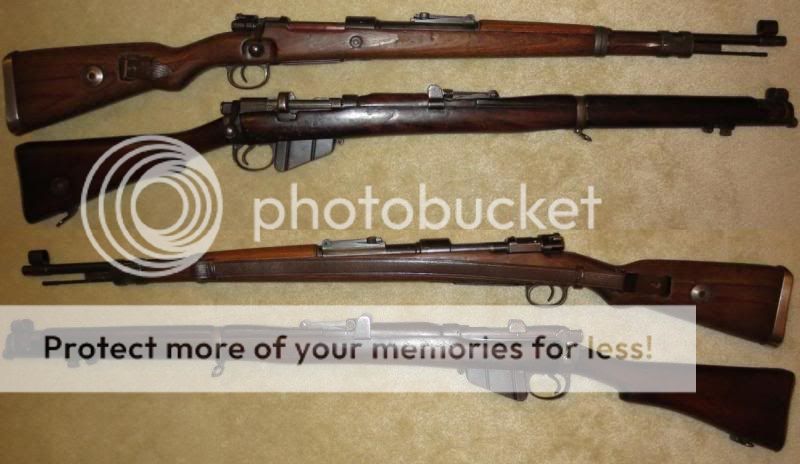
With my other milsurp (a K98K BYF44):
SMLE2_zpsc7a440ab.jpg

SMLE7_zps0ebd966f.jpg

SMLE6_zps72445378.jpg


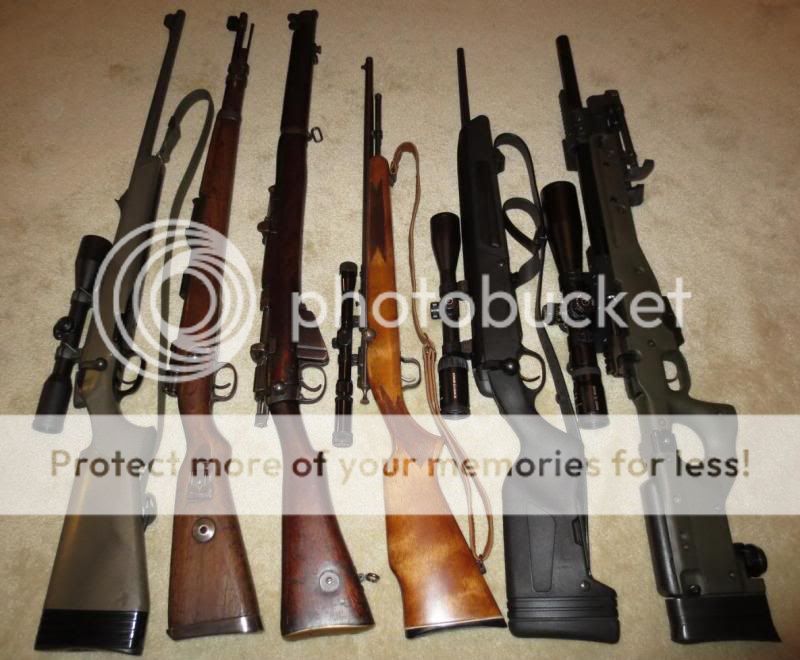
The current state of my bolt-action rifles!
Steyr SSG69 with Kahles ZFM 6x42; K98k BYF44; B.S.A. No. I, Mk. III*; Cooey - my childhood rifle; Styer Scout with Schmidt & Bender Summit 2.5-10x40; Accuracy International Arctic Warfare with Schmidt & Bender PMII 4-16x50 - and I just realized now that I put the mag in and the bi-pod on, but forgot to put the bolt in for the photo. (Two Englishmen, two Austrians, a German and a Canadian!)
SMLE11_zpsde80a21c.jpg
 
Last edited:

Well, you know about a sling, anyway. Pattern 1908 web sling is what you are looking for. The Pattern 37 sling is slightly-different weave of webbing but, otherwise, you can't tell them part. I hav Pattrn 37s on most of mine and they look fine.

What about the buttstock cleaning kit? Should have an oil bottle and a pull-through and a few 4x2 patches. Brass oil bottle is correct for WWI. Plastic bottle for the L1A1 is the same size and a LOT easier and cheaper to find.

You need a MANUAL. Take the Link at the Sticky on the Index page for this forum and scoot over to milsurps dot com and download yourself a free copy of "Rifle - 1942". This is a WW2 manual which covers this rifle very wll.

I note that you have a BSA-marked barrel, so it likely is the original.... and that is bit unusual.

As to price, I would say that you got a VERY nice deal.

You will want to handload your ammo for this rifle and one thing you should know is that Enfield rifling does NOT like boat-tailed bullets all that well. It is MUCH bettr with flat-based bullets. Try the Sierra 180 Pro-Hunter with 38 grains of 4895 powder, with youe bullet sated to the OAL of a Ball round. This will give you about 2250 ft/sc, around 9% slowr than military Ball ammunition, but right at the by-test most-accurate velocity for this rifle. This is my Test load for these rifles; I have a couple here which shoot at or under 1 MOA with it.

For fast reloading, forget about spare mags; the Army never issued them. Get some CHARGERS and learn how to use them; they are MUCH faster than swapping mags, anyway. Chargers should be loaded down-up-down-up-down: first, third and fifth rims AGAINST the back of the Charger, 2 supported on the Rims of 1 and 3, 4 supported on the Rims of 3 and 5. From the side, it looks like _-_-_.

Most important: have fun!
 
You have a fine old rifle that just drips of history. DON'T even think about "refinishing" it. Wipe a wee, wee bit of gun oil on the rusty spots and call it square. Luckily, your rifle has eluded "Bubba" all these years! :rockOn:

Your goose is cooked now. You are going to need a No. 4 Mk something, then a No. 5, then....... well, you get the picture.:p

Thanks for letting us have a look. :wave:
 
Very nice rifle, but it really needs one of these. You know, for crowd control purposes:


A compelling argument, no? :D

Mine's a 1916 BSA, and has the Fiana Fail stamp under the rear handguard. It might be interesting to see what's under yours.
 
A reason for mflat based bullets.
Cordite which is basicaly all this rifle ever used, causes throat erosion. This allows boat tail bullets to "tip" while flat based bullets seal the throat.
 
I would say the barrel has been replaced, that looks like a BSA commercial barrel plus it has both the military proof stamp & the BM commercial proof stamp
 
Stacking swivel, you need a stacking swivel...and so does mine, where the he11 did all of the stacking swivels get to? Action cover and I think they were also issued with a piece of screen in the butt stock to scrape rust from the bore, although the troopies weren't supposed to use it on the pull through without expressed permission from NCO. Which of course would raise all kinds of other questions. (why is there rust in the bore!?)
 
I took some more photos. I'm trying to do a real gentle "Smithsonian"-type restoration of this rifle. Just trying to get the rust off a bit - although I do plan to shoot it a bit, including this weekend.

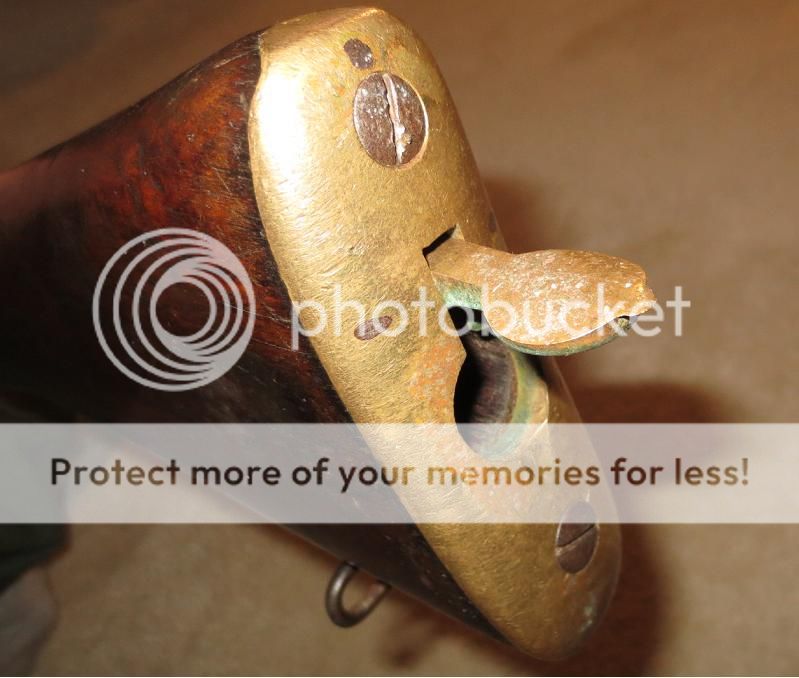
Yes, it does have a brass buttplate with a trap door - although there was nothing in the compartment:
SMLE14_zpsd15ff667.jpg


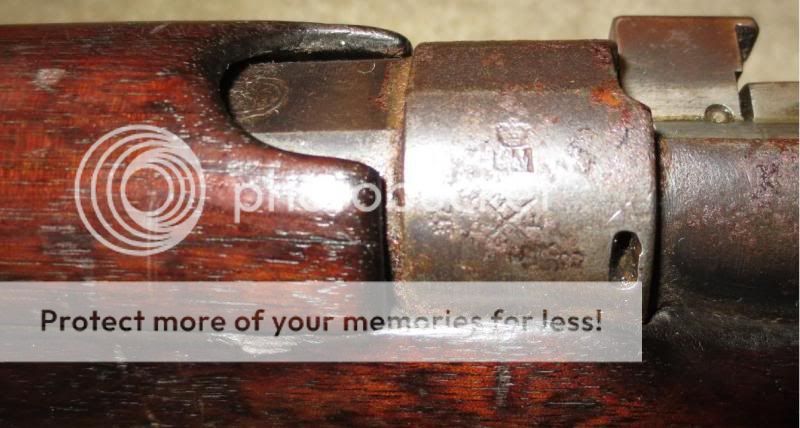
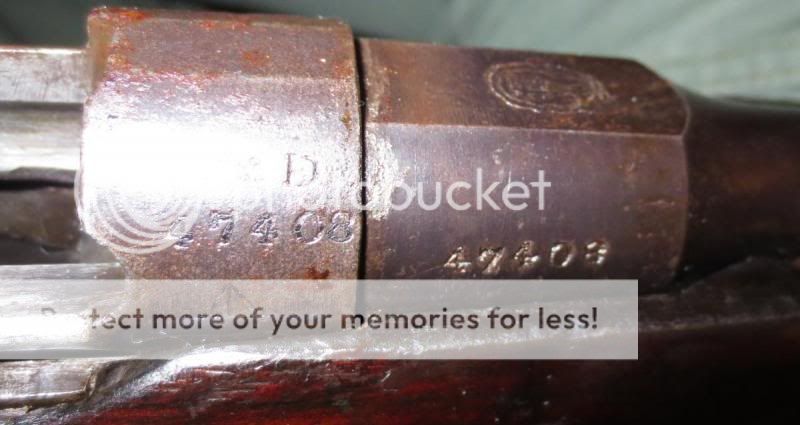
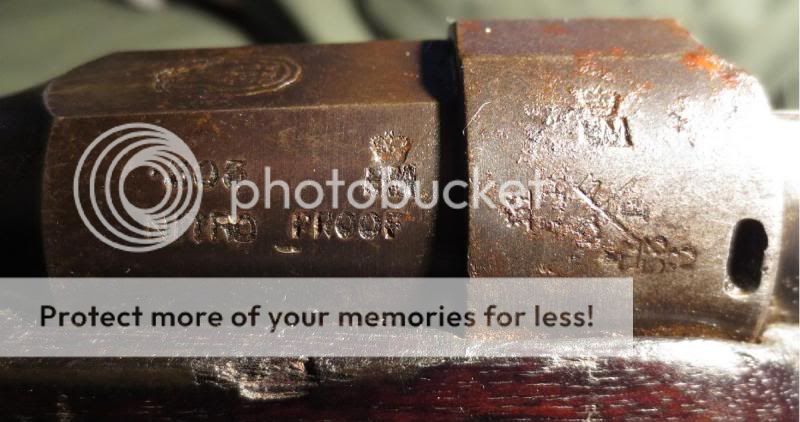
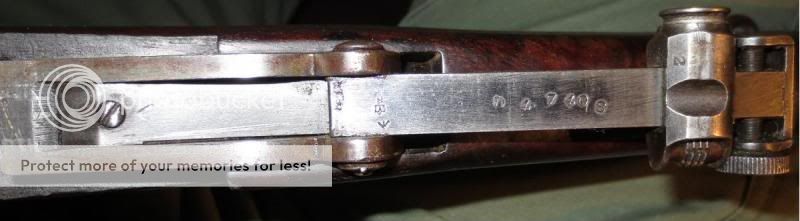
Took the, little wood piece, whatever that is called, off so I could have a look at where the barrel meets the receiver. The barrel is serialed to the receiver. Can anybody tell me what these other markings mean? "Nitro proof", etc.
SMLE15_zpse1892c3d.jpg

SMLE17_zpse1837c00.jpg


The bottom of the rear sight matches the serial number on the reciever/barrel. Not sure about all the parts... but the investigation continues.
SMLE16_zpsc7b2ab24.jpg
 
.
The "303 - BM - Nitro Proof" are commercial markings that were put on the barrel when the rifle was sold out of Service and proof fired before being sold to the public. Interesting to see a windage adjustable rear sight (matching numbers to rifle) on a 1917 No.1 Mark III* though.
 
.
The "303 - BM - Nitro Proof" are commercial markings that were put on the barrel when the rifle was sold out of Service and proof fired before being sold to the public. Interesting to see a windage adjustable rear sight (matching numbers to rifle) on a 1917 No.1 Mark III* though.

Not quite, thats a commercial barrel & is not original to the the rifle, if there was the original military proof stamp & the BSA "stacked rifle" trademark on top of the knox was not there, i would agree.
The windage rear sight is fairly common on a 1917 MkIII* as they used up what they had in stock before using the fixed cap rear sight.
 
I also have a BSA No1 MkIII* and it does not have the brass disc inlet in the butt stock. I did a bit of research on the Internet about it and found out that by 1917 the arsenals had largely done away with them. But who knows, that information may not be entirely true or there were still stock piles of inletted stocks already made. However, many of these aparently had their brass disc hole simply filled with a wood plug by around 1917. As a brass disc is much prettier than a wood plug some butts may have been "retrofitted". Maybe one of the more knowledgeable Enfield guys could shed some light on this.
 
@ Grizzly Adams:
The "barrel flat" properly is called the "Knox-form". The marking there is the rolled-on trademark of the BSA Company: Birmingham Small Arms. Yes, the motorcycle company, although they were in the rifle business about 18 years before the motorcycle was invented. I have seen quite a number of BSA barrels marked in this fashion and NUMBERED AND DATED to the rifles.

BSA never was a Government arsenal. They were a PRIVATE COMPANY which built rifles on contract FOR the Government.

If you find a 1917 BSA RIFLE with an unmarked barrel dated 1921 or something, then the barrel has definitely been changed-out.

ALL parts had to be marked as to their SOURCE. BSA simply chose to use their commercial marking on a LOT of rifle barrels.

The rest of the rifle was marked in accordance with standard military practices of the period..... including a DATE, which was never marked on a commercial rifle.

Hope this helps.
 
Back
Top Bottom