My Inglis Hi Power - and some questions

Tom E Gun

CGN frequent flyer
Rating - 100%
309   0   0
Hello;
I have recently purchased an Inglis Hi Power. Although I have done my best to research this pistol, on the net, I was hoping for a little extra help.

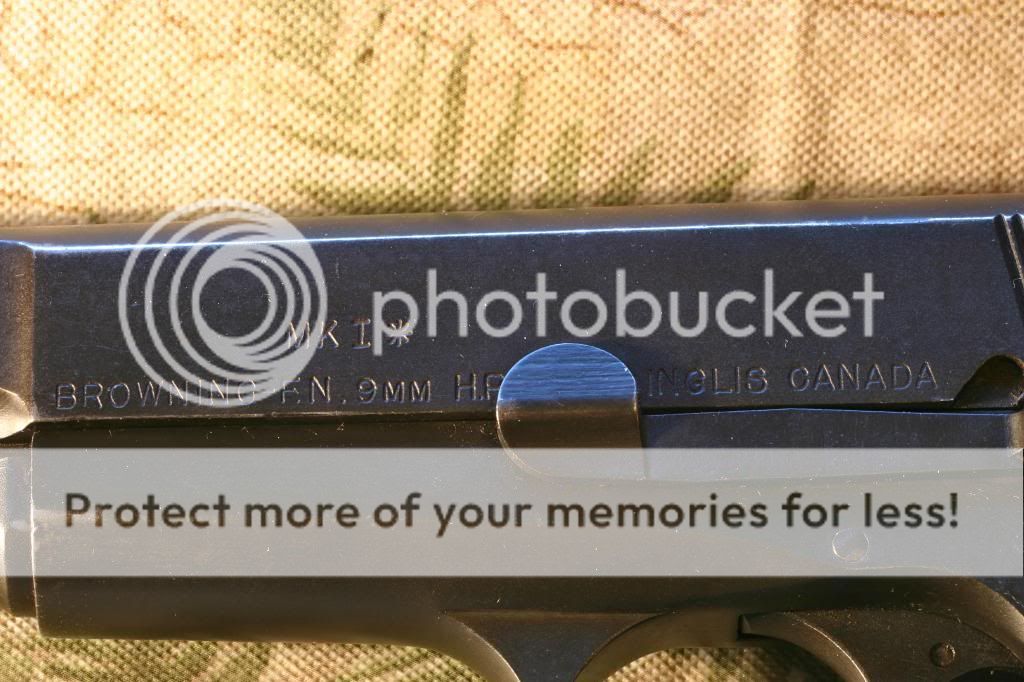
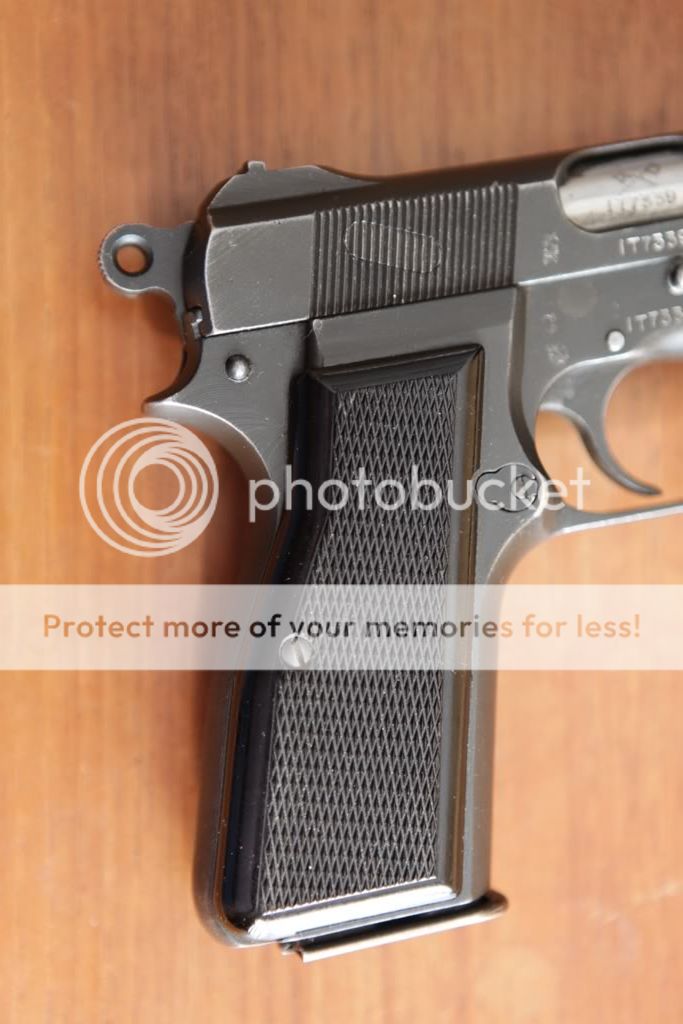
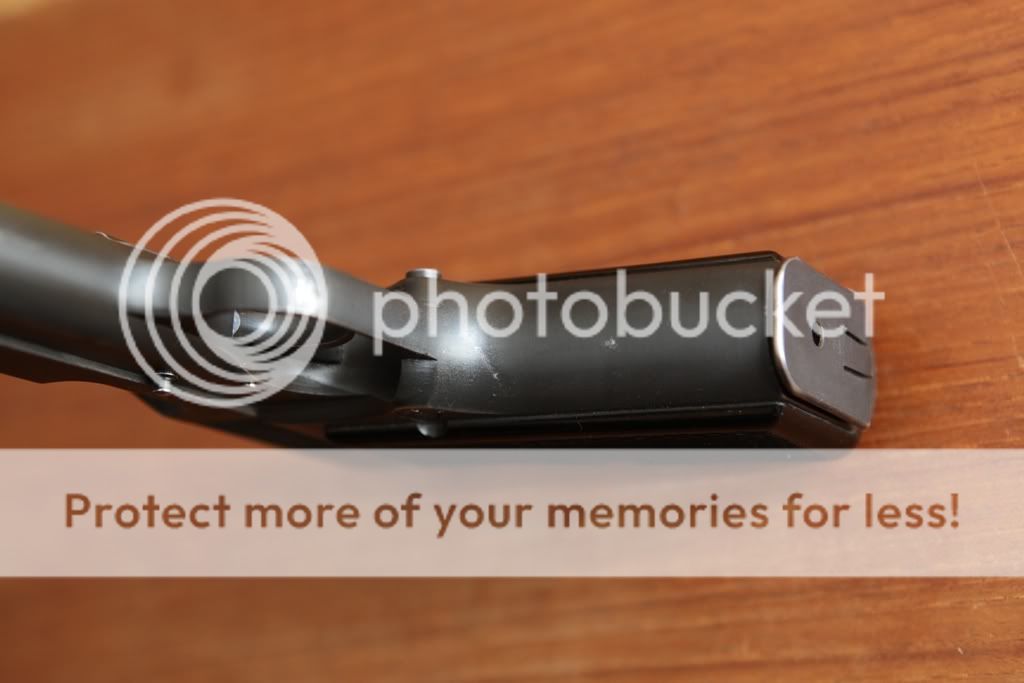
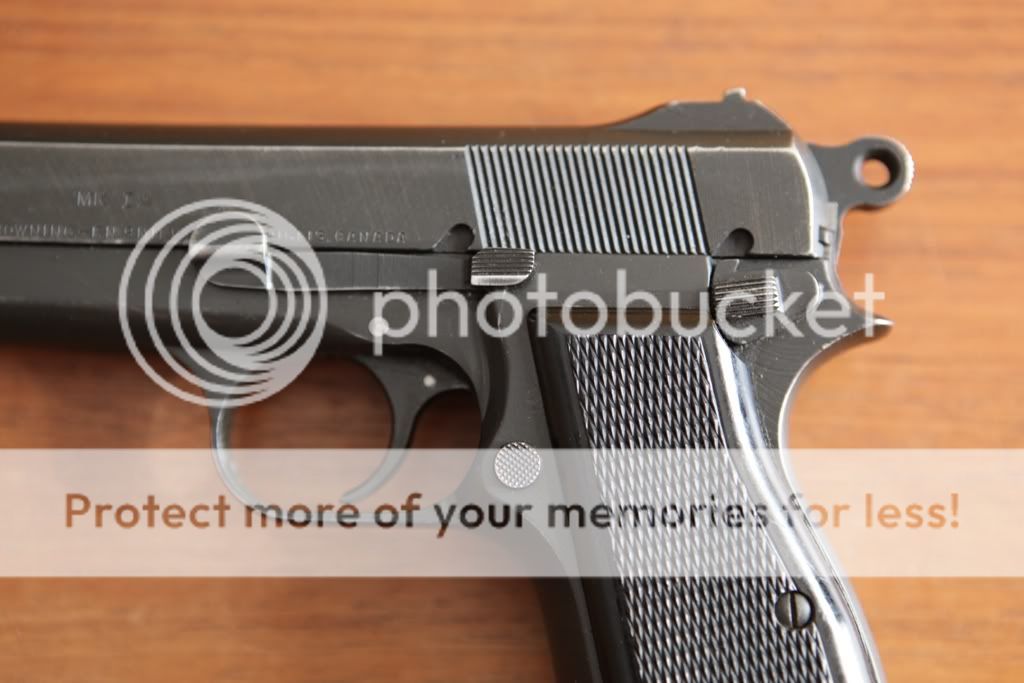
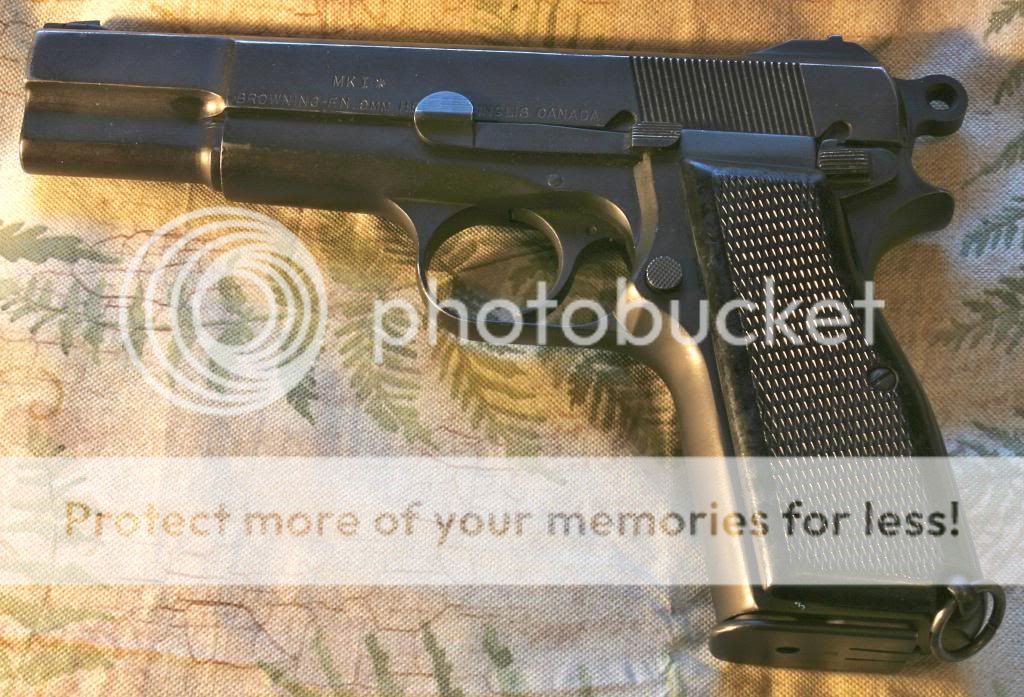
First, here is the pistol:
IMG_6094_zpse40925e8.jpg

IMG_6093_zps190a2acc.jpg

IMG_6091_zps015e5528.jpg


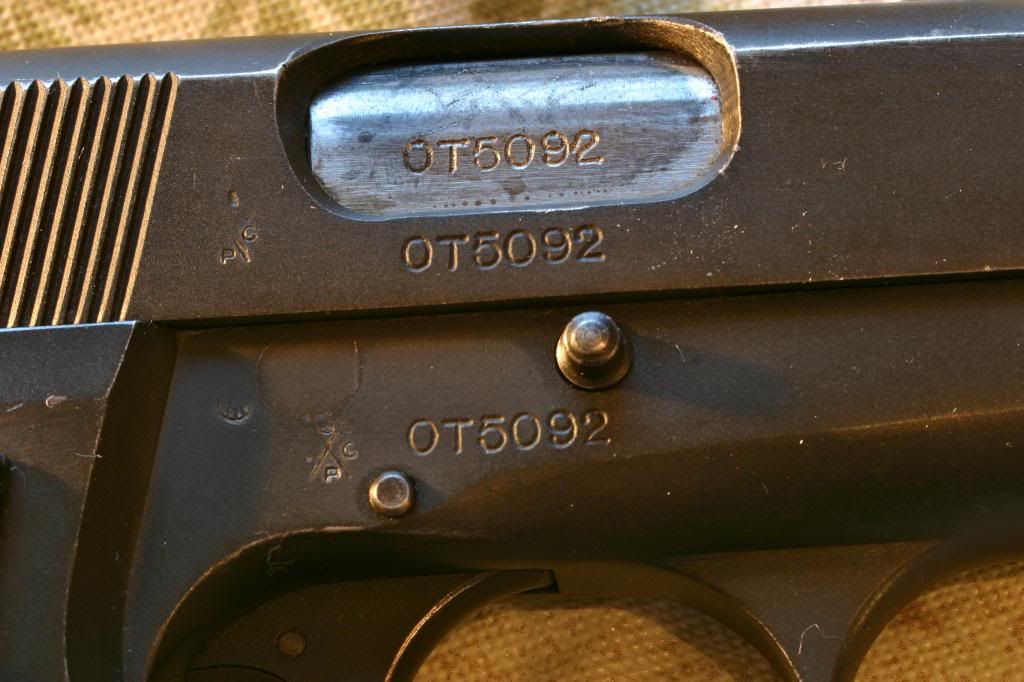
My first question is about the finish. In person it appears to be a dark gray parkerized finish with a slightly green tint. The previous owner is sure that it is original and it certainly looks it to me. However my research leads me to question this because the serial numbers appear to be parkerized and not stamped after finishing. Were there any Inglis pistols that were stamped prior to finishing in the factory?

My next question is about the serial number. Would this number date to approx June or July of 1944?

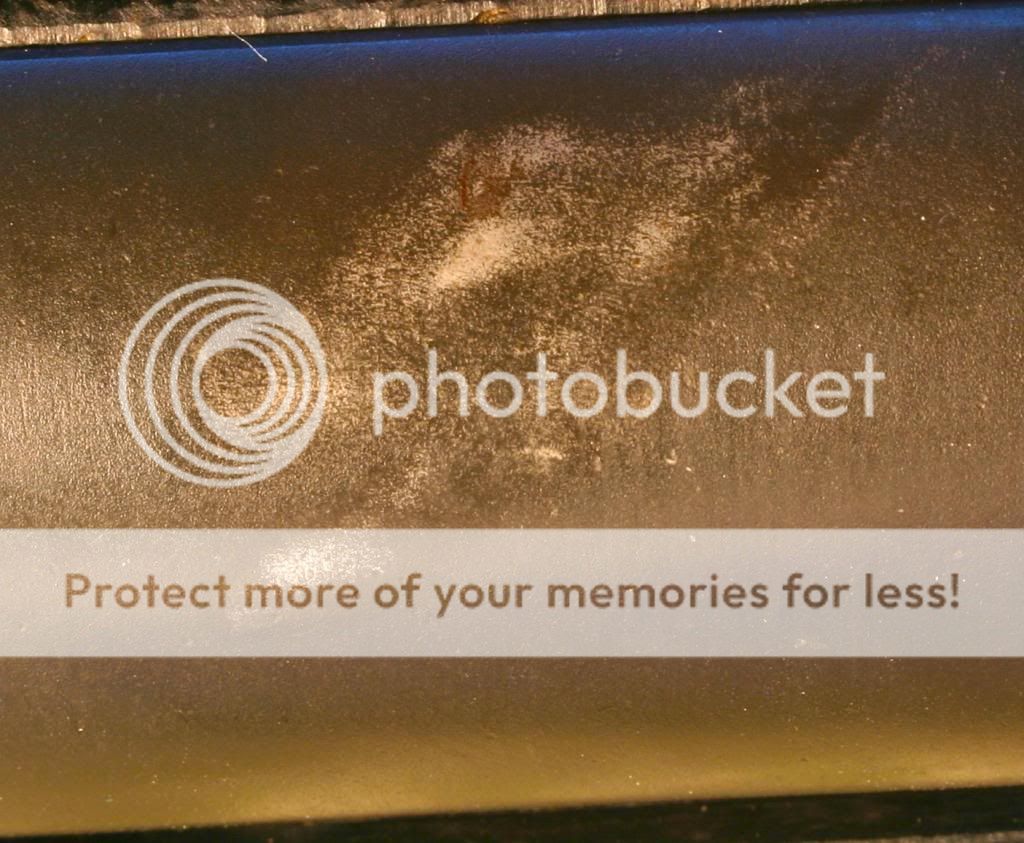
I recognize the partial Dominion of Canada Proof mark on the slide and frame, but what are the other marks? There appears to be a stamped circle with some other marks inside it and a large round discolouration that I have seen on other Inglis pistols, but have not ever been able to identify.

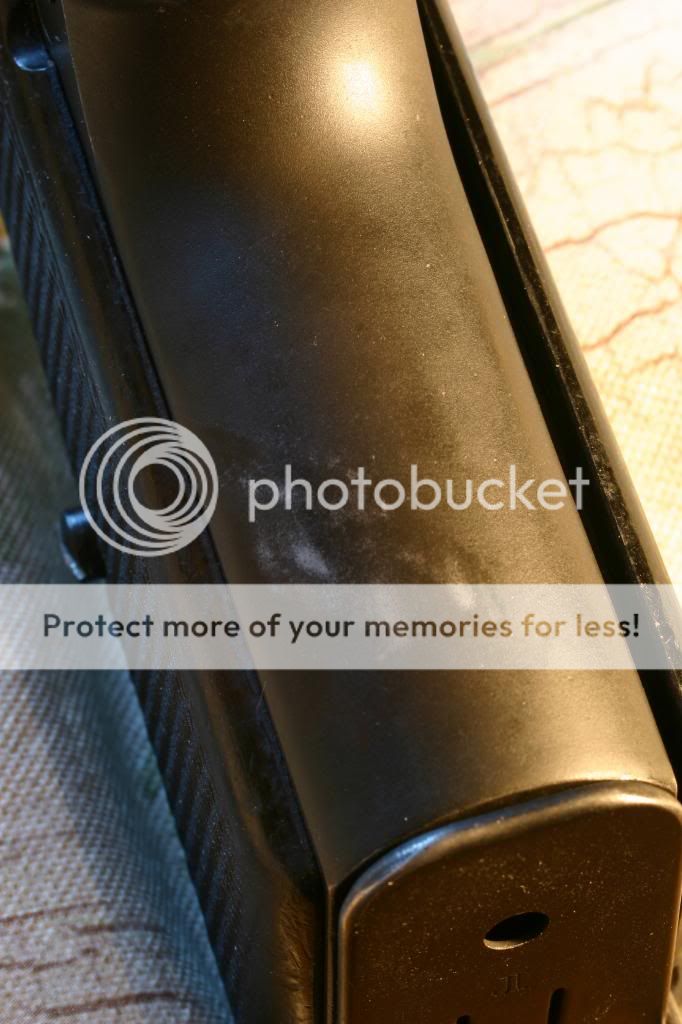
Last question: Is it possible that the strange marks on the front of the grip are remnants of the original sticker? I don't know how well the photo shows it, but there is a faint red character near the right grip panel (top of the lower photo below).
IMG_6088_zpsdf26ddc8.jpg

IMG_6090_zps4e5cb129.jpg


Thanks for any help or comments
Cheers
TEG
 
Last edited:
The stamped circle is the "C broad arrow" mark signifying Canadian military use or acceptance
The pistol looks to have been refinished based on the filled in serial numbers as you mention. I will try and find my Clive Law book to see if there were any anomalies but we just moved and it may be a while.
As for the decal I don't see anything.
 
Last edited:
100% it has been refinished. Anyone claiming otherwise is either lying or does not know inglis pistols very well. The original manufacturing process was to engrave the pistol AFTER it was completed using a pantograph machine.

The marks on the front strap are from shooting by a ring wearer. The decal was bead blasted off before the refinish, assuming anything was left of it, whish is unlikely. They came off if you looked at them too hard.
 
100% it has been refinished. Anyone claiming otherwise is either lying or does not know inglis pistols very well. The original manufacturing process was to engrave the pistol AFTER it was completed using a pantograph machine.

The marks on the front strap are from shooting by a ring wearer. The decal was bead blasted off before the refinish, assuming anything was left of it, whish is unlikely. They came off if you looked at them too hard.
Well I am not surprised, I bought the pistol assuming it had been refinished. But I must admit, when I saw the marks on the front of the grip, I was hopeful it could be the original finish. Thanks for the info.
 
The stamped circle is the "C broad arrow" mark signifying Canadian military use or acceptance
The pistol looks to have been remarked based on the filled in serial numbers as you mention.
As for the decal I don't see anything.

That makes sense, I thought I was seeing a circle, but now I can see it is a C. Thanks
 
100% it has been refinished. Anyone claiming otherwise is either lying or does not know inglis pistols very well. The original manufacturing process was to engrave the pistol AFTER it was completed using a pantograph machine.

The marks on the front strap are from shooting by a ring wearer. The decal was bead blasted off before the refinish, assuming anything was left of it, whish is unlikely. They came off if you looked at them too hard.

Hi Ron,

The finish on this pistol is in fact the original factory phosphate. In this case, it's more complicated than simply checking to see if the serial number is in the white.

This was an early production 0T series Inglis that the factory upgraded to MK 1*. I have talked to Clive Law about this serial range and consulted his book Inglis Diamond and the other limited resources available on the subject.

For this serial range with upgrade, it's acceptable for the serial number to be parkerizerd. I have seen 0T series Inglis's upgraded to MK 1* with parkerized serial number that still have the factory mutual aid decal on the front strap. On Tom E Gun's example the silhoutte of the decal is still visible, which I would expect in one in high condition pistol like this. Tom E Gun is 100% correct in guessing this is original factory phosphate with signs of where the decal was.

If this was 1T or past, I would agree that it's either been refinished by the arsenal or out of the military.

This is a nice condition early production Inglis that is definitely collectible. I doubt I would bring this one to the range, it's of interest to collectors and I wouldn't want to do anything that would add additional wear.

Congrats to the OP on a great original pistol. I have a friend who talked with a veteran of 1 CAN PARA who said all their Inglis's that saw combat in WWII were 0T series upgrades to MK 1* and I wouldn't be surprised if a veteran liberated this pistol at some point from the military.

Now, try finding a 0T that has not been upgraded to MK 1* and that would be EXTREMELY rare ;)

Cheers,
-Steve
 
Last edited:
Interesting Steve - I defer to your keener interest and knowledge of these. I have Clive's book, but don't recall seeing anything about parked serials on 0T guns. The lowest serial I have owned (I've had maybe 6 of these), was a 1T with serials in the white.
 
Interesting Steve - I defer to your keener interest and knowledge of these. I have Clive's book, but don't recall seeing anything about parked serials on 0T guns. The lowest serial I have owned (I've had maybe 6 of these), was a 1T with serials in the white.

Ron, yes this is an exception to the rule of serial numbers in the white. From 1T and forward you're absolutely correct, must be in the white, and it makes things very easy to tell.

These pistols have been refurbished and upgraded, but it was by the factory prior to them being issued and they went out the door like this with decals just like the others.

I have only seen one 0T Inglis with serial number in the white, it's photographed in Clive's book, 0T6 and it was not upgraded. I have been searching for a 0T in the white without upgrade to MK1* and have never had a chance to buy one. The good news is when these upgraded 0T's come on the market people usually sell them for a re-finished price because the sellers don't know it's factory phosphate. There was one on FAC for a while that had about 50% original decal still - it may have sold by now.

I have seen other 0T's that were later again arsenal re-finished and needed to relie on other clues to tell if it's the original phosphate or not. In this case the silhoutte of the decal is still visible on the front strap and the overall look tells me it's definitely original.

This topic is not really covered in detail anywhere I know of. Clive's book does however talk about the need to upgrade the 0T's to MK1*.

I like the OP's pistol. That is Inglis #5092, good early example! I think a dedicated Inglis collector would need to have one example of a 0T upgraded to MK1* as it was part of the early production story.

-Steve
 
"...a dark gray parkerized finish with..." That'd be the original finish that has spent a long time stored. The green tint comes from long term storage in cosmoline. However, the CF did black phosphate 'em long after W.W. II.
"...the original sticker..." Not likely. The 'stickers' were decals and wouldn't survive the re-finishing. That looks more like wear to me.
 
Steve1987:
Man you have made my day:)
I spent my entire drive to work this morning trying to figure out why someone would repark a pistol that has no wear. By that I mean that there are no imperfections that have been parkerized over. The pictures really do not do this pistol justice, I used a harsh side lighting to emphasize the markings. Alot of what looks like wear on edges is just highlights. It just did not add up to me, the only anomoly was the parkerized serial numbers.
Thanks again Steve1987!

ps: Do you have any idea what the large circle is above the proof mark on the frame? I have seen this on several other Inglis pistols. It looks kind of like residue from a sticker, but does not clean off.
TEG
 
Last edited:

"...a dark gray parkerized finish with..." That'd be the original finish that has spent a long time stored. The green tint comes from long term storage in cosmoline. However, the CF did black phosphate 'em long after W.W. II.

Thanks sunray, now you mention it, I have read the same thing about Garands having a green tint from cosmoline.
Cheers
TEG
 
Just so everyone can see what I'm talking about in regards to the ghost of the original decal as one indicator of original finish on a 0T series, here it is:


As to what the white stuff is on yours, it could be smeered decal, paint, wear, I'm not sure. It *might* even be remnants of the original pre-upgrade decal that was not fully removed - I don't know about that though.

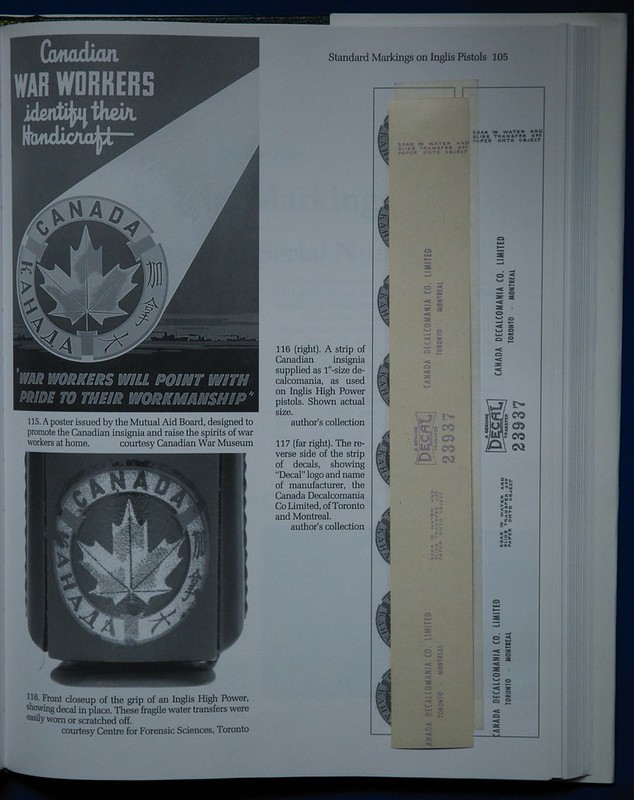
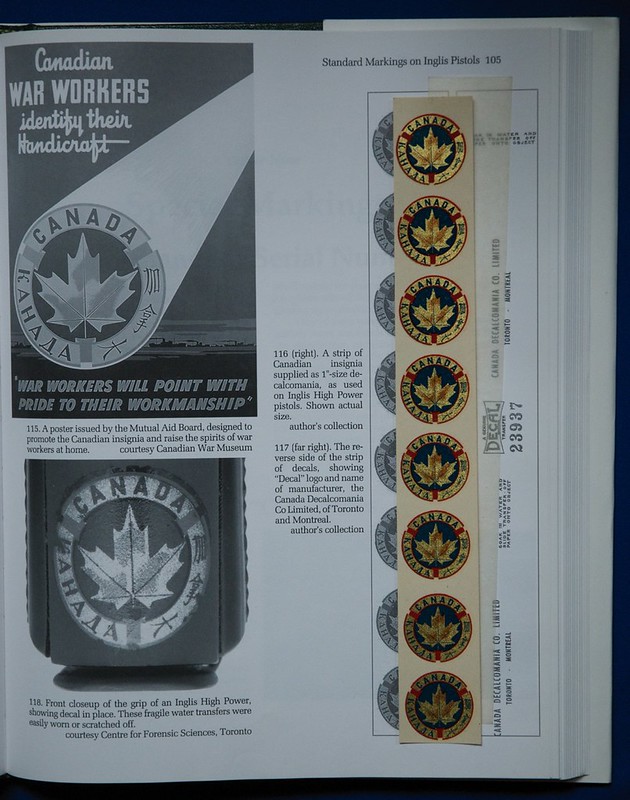
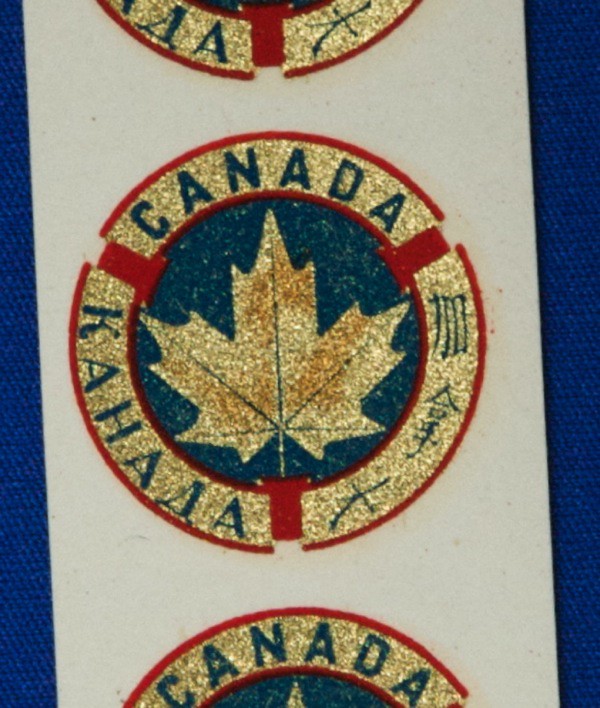
I have a strip of the original decals from the factory I was lucky to get from a serious Inglis collector that is shown in the book Inglis Diamond, here's what they looked like prior to application:


Unfortunately it's hard to see the carrier film in my photo but this is what an original decal looks like.

As you can see in my signature I'm looking for a 100% decal example myself. I suppose I could make eight of them some using my decal sheet...just kidding ;)

-Steve
 
They were all stolen, none were ever sold to the public. I have a "new" slide sitting in my a class lock up waiting to get stamped so i can assemble the pistol. Its pretty.


Well, I don't know about that. Several thousand of them were sold into the surplus markets in the US.

From what I recall, they were all new in their boxes.

Same goes for the RCMP M&P pistols.

Charlton Arms, in Nebraska was offering them as a basis for target revolvers.
 
Tom E Gun,
I suspect you will find that the large circle above the proof mark on the frame is the locking shoulder for the barrel. If you strip the pistol down, there should be a corresponding oblong circle on the left side under the slide lock lever, and will be the other side of the (rivited through the frame) locking shoulder. This was/is a fairly critical inspection point for weapons techs, as a loose locking shoulder could lead to signifigant frame problems. Inspection involved stripping the pistol, then lightly rotating the locking shoulder with round nose pliers to check for play, however oil displacement around the riveted sides was not a criteria to determine looseness. If found to be loose, and it was fairly obvious if it was loose, the pistol was to be backloaded for repair to 3rd line. If I recall correctly, we had so many unused pistols in supply we would simply backload the entire weapon. I also recall trying a small open end wrench for the inspection, rather than risk damage with pliers. Sorry, I cannot remember what size. It's been awhile since I had to inspect 25 or so in a weapons lockup.
 
Back
Top Bottom