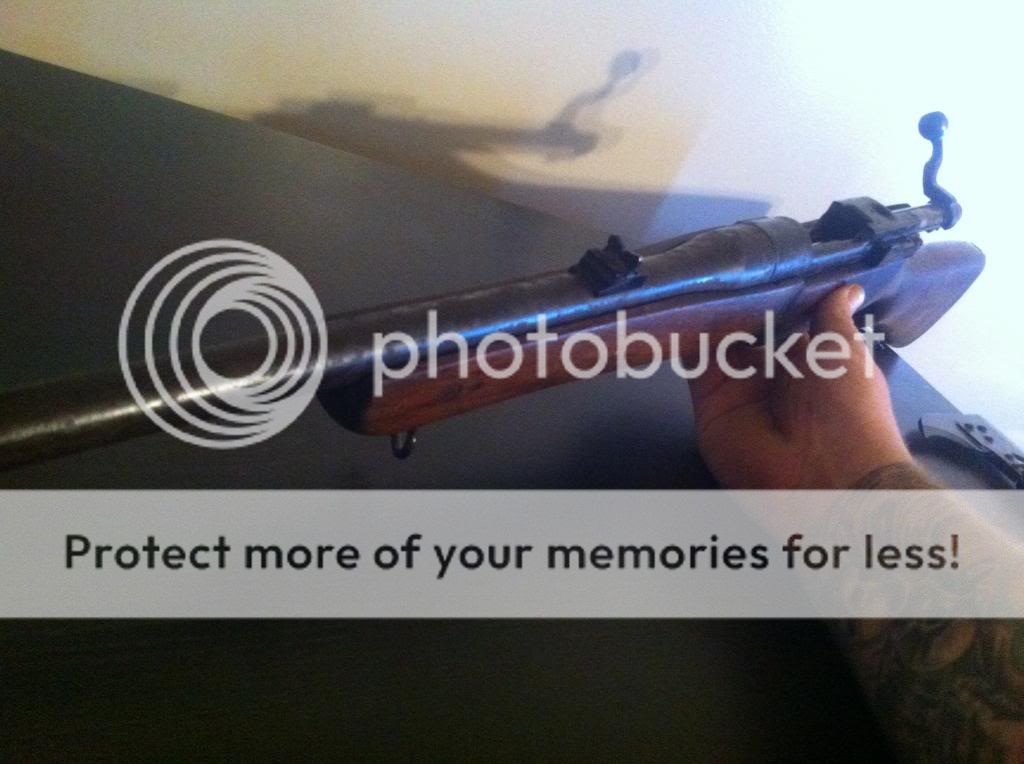
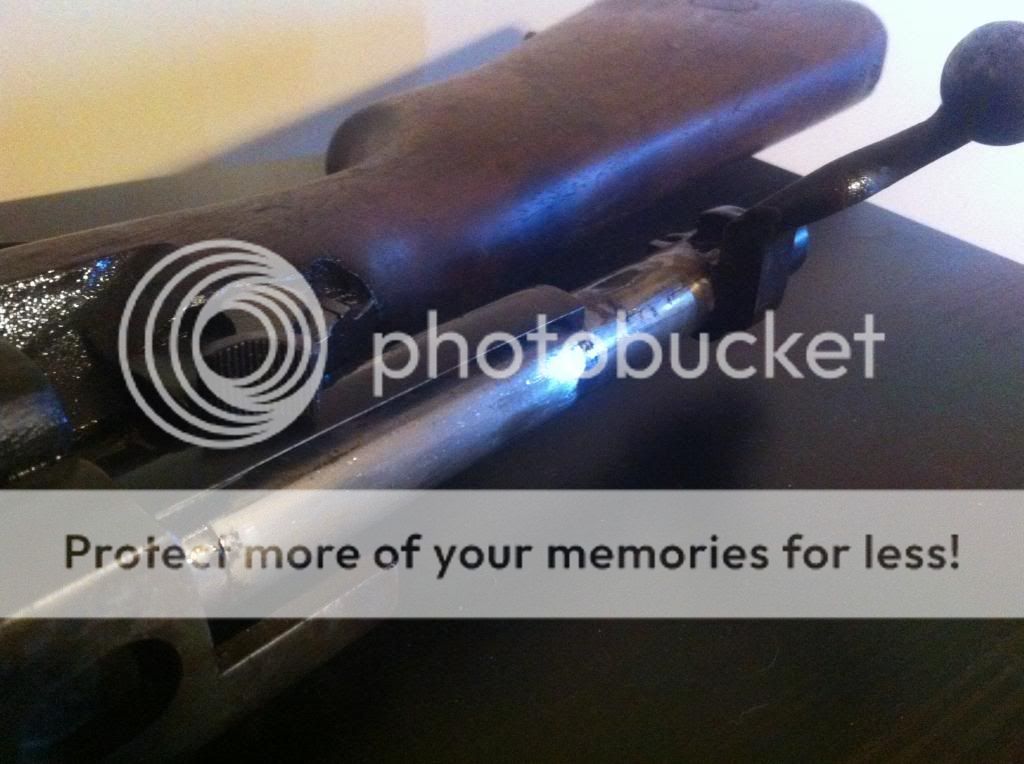
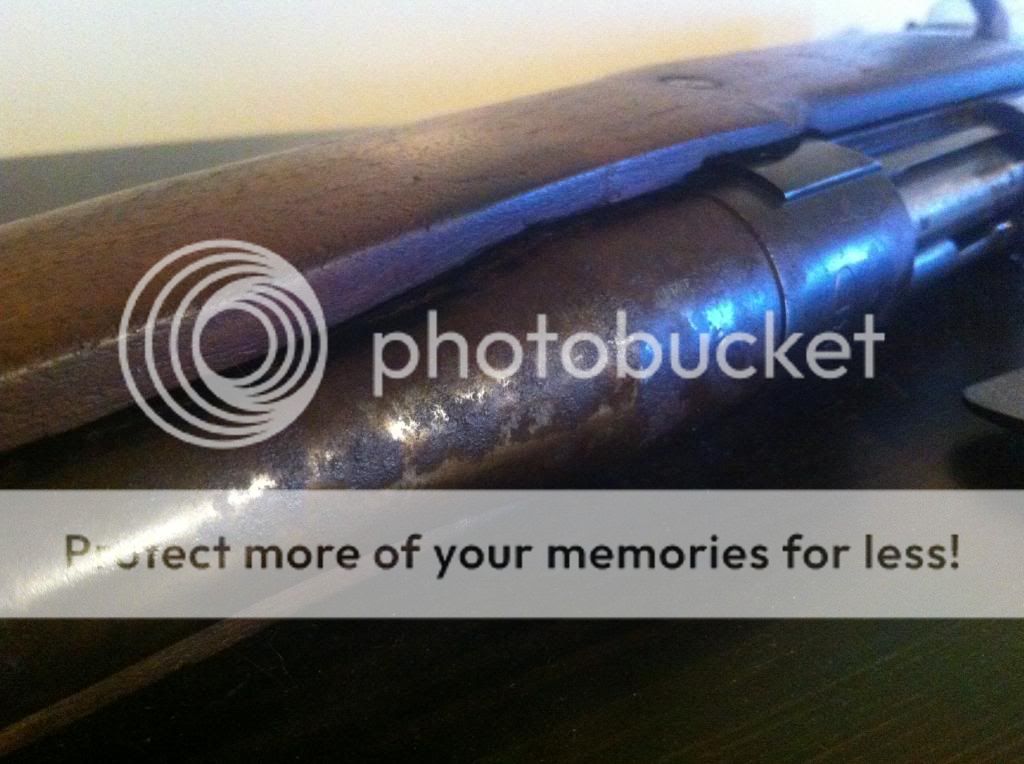
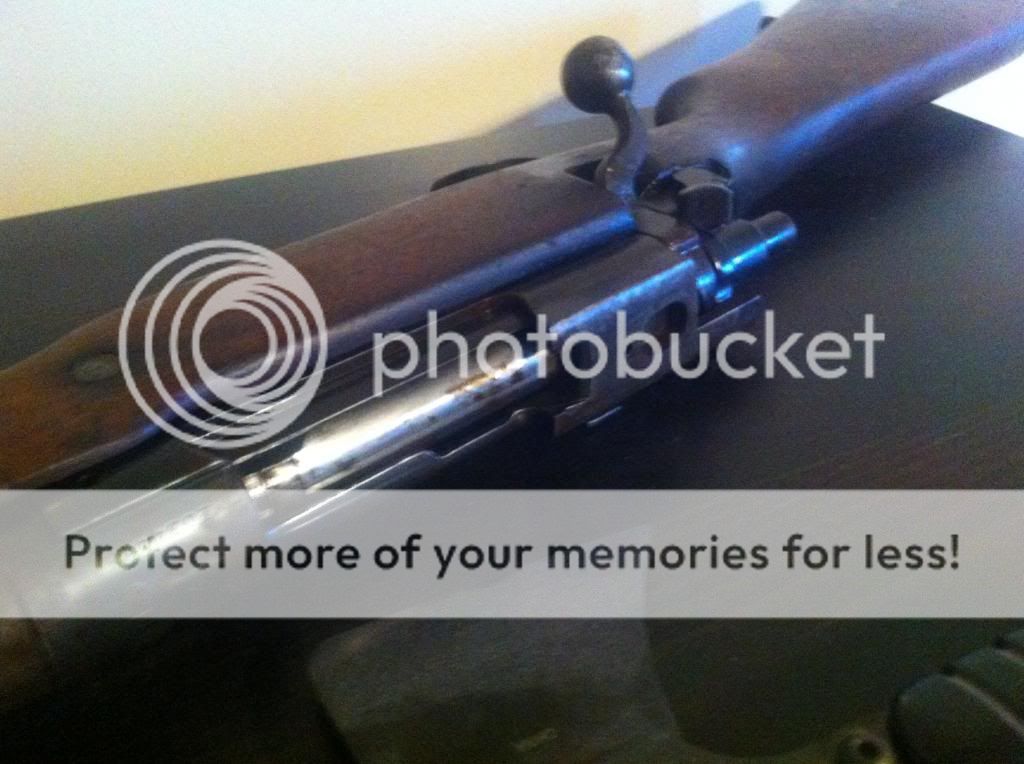
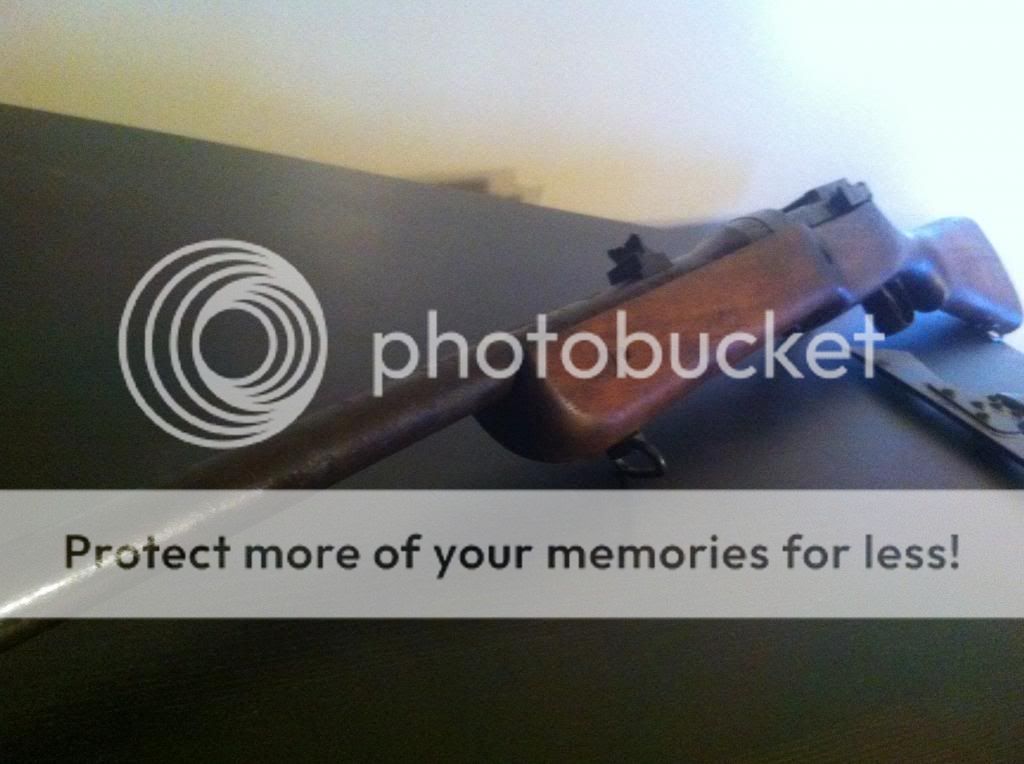
Enfield P14------really bad rust..

Nitroxrunsthrume

Regular
EE Expired
Rating - 100%
9   0   0
So a friend at work brought me a box of rusty parts and a barrel and walnut stock, he did not know what type of rifle it was, i soaked it in some oil and cleaned it up enough to reassemble it and i think its a sported enfield P14, How do i remove heavy rust, Soak it, steel wool, elbow grease and re blue it?
i'm not sure if i can bring it all the way back or if it will be a wall hanger, ill get pics asap! i think it will be a fun learning experience for me and im looking forward to the attempt
 
Check the bore before putting any serious effort into it...no bore, no point in doing much.

Without pics, it's hard to see how badly off it is. I have had some rifles that looked as if they were stored in the Atlantic, but came out ok with steel wool n' work. Lots of work... You can at least see what might need more attention. Once you've buffed off what you can, you can evaluate how best to continue (from re-blue straight through to spray-bomb tremclad).
 
Mix a solution of 1 part molasses, 7 parts water and soak the rusty parts for 3 weeks. Do it outside or in a shed, it will give off a slight odour. I used a piece of 4 inch abs pipe with a cap on the bottom for the barrel and put the smaller parts down beside it. You can place a loose cap or bucket on top to keep anythimg else out.
 
IMG_0034_zpsc2aee920.jpg

IMG_0033_zps1436143e.jpg

IMG_0031_zps76778ada.jpg

IMG_0030_zpsd92372e3.jpg

IMG_0028_zps06062092.jpg

IMG_0026_zpsc892cbb8.jpg

IMG_0025_zps9fa89924.jpg

IMG_0024_zps95a41b99.jpg
IMG_0023_zps66116ae6.jpg

IMG_0022_zps2940b103.jpg
 
Mix a solution of 1 part molasses, 7 parts water and soak the rusty parts for 3 weeks. Do it outside or in a shed, it will give off a slight odour. I used a piece of 4 inch abs pipe with a cap on the bottom for the barrel and put the smaller parts down beside it. You can place a loose cap or bucket on top to keep anythimg else out.

Have you actually done this? It strikes me that immersion in water with an organic "primer" would only cause more oxidization. From the looks of it there is nothing to be lost by cleaning up the exterior on a wire wheel. The action has been sporterized, but might be salvageable. The bore is no doubt toast.
 
Electrolysis - lots of info on the 'net. I've used this on antiques with success. It's a very effective way to remove ALL the rust, including the bore (must be done separately, carefully), with no elbow grease or abrasives.

For parts and the exterior, fill up a tub with warm water & washing soda (not baking soda), although I've used dishwasher tablets, they work too.

Suspend the parts you want to clean with conductive wire, immersed in the solution in a non-conductive container. [edit] place a steel anode, isolated from the parts you want to clean, in the solution. Again, lots of good tutorials out there. Then hook it up to a battery charger on LOW Now...POLARITY is crucial here, so I'm not off the top of my head going to say what side the +/- goes to, but - goes (I believe) to the parts you are cleaning; + to the anode (CHECK THAT I don't have my notes in front of me, although I've done this a few times now). Look into this, it works very well - even for finding rifling in 125+ year old rifles. Note that a pitted bore can still be shootable, even still accurate. Plenty of examples running around, some in my safe. Best of all - NO ABRASION MARKS from sandpaper or wire wheels.

Wish I'd known this when I started rebuilding old engines - would have saved me untold hours.

Side note - do this in a well ventilated area and be aware the water fizzes and your container must be large enough to contain it, or you end up with a brown slurry all over the place.

Good luck

 
Last edited:
If the barrel and bolt face are ok(barrel very likely is not, but isn't likely terminally bad either.), that's not as far gone as you think. Rusted and a bit pitted, but not teminal. A light touch with a fine, brass, wire wheel in a bench grinder(doesn't leave any marks) would be best. No magic dipping/soaking solutions are required. Eye protection is though. As is replacing that rear sight. Or not. It's not an issue sight, but it might work just fine for a truck gun.
 
Thnx for posting pics...

Sure is a touch of pitting, but nothing too crazy. May not be pretty, but functional is still well within reach (check your bore!). There are p14's that have chased deer longer than I have that look quite a bit worse, yet still manage to fill freezers.
 
Electrolysis - lots of info on the 'net. I've used this on antiques with success. It's a very effective way to remove ALL the rust, including the bore (must be done separately, carefully), with no elbow grease or abrasives.

For parts and the exterior, fill up a tub with warm water & washing soda (not baking soda), although I've used dishwasher tablets, they work too.

Suspend the parts you want to clean with conductive wire, immersed in the solution in a non-conductive container. [edit] place a steel anode, isolated from the parts you want to clean, in the solution. Again, lots of good tutorials out there. Then hook it up to a battery charger on LOW Now...POLARITY is crucial here, so I'm not off the top of my head going to say what side the +/- goes to, but - goes (I believe) to the parts you are cleaning; + to the anode (CHECK THAT I don't have my notes in front of me, although I've done this a few times now). Look into this, it works very well - even for finding rifling in 125+ year old rifles. Note that a pitted bore can still be shootable, even still accurate. Plenty of examples running around, some in my safe. Best of all - NO ABRASION MARKS from sandpaper or wire wheels.

Wish I'd known this when I started rebuilding old engines - would have saved me untold hours.

Side note - do this in a well ventilated area and be aware the water fizzes and your container must be large enough to contain it, or you end up with a brown slurry all over the place.

Good luck

WOW cool thank you very much, this should be fun
 
WOW cool thank you very much, this should be fun

No problem - It is fun, very neat to watch the old rust disappear

Works great on old tools, oddball screws, classic car parts, etc

Good luck

BTW I think I first got put onto this by a thread in the BP & Antiques forum, can't remember who posted it. But having used this now a few times with success, I'm convinced. Just to give credit where it's due...
 
if the bore is mint ? i'd plug n tape up the end muzzle and use a tight fitting wood dowel in place of the bolt .... then bead blast the barrel
- should smooth over the pitts n take out the rust

then clean up the action by hand and sand paper

and later have fun, putzing around with cold blue's that give lack luster results

you'd be surprised, sometimes these turn out to be real gems !
 
Mix a solution of 1 part molasses, 7 parts water and soak the rusty parts for 3 weeks. Do it outside or in a shed, it will give off a slight odour. I used a piece of 4 inch abs pipe with a cap on the bottom for the barrel and put the smaller parts down beside it. You can place a loose cap or bucket on top to keep anythimg else out.

Molasses..?? that's a new one to me :)
 
Electrolysis - lots of info on the 'net. I've used this on antiques with success. It's a very effective way to remove ALL the rust, including the bore (must be done separately, carefully), with no elbow grease or abrasives.

For parts and the exterior, fill up a tub with warm water & washing soda (not baking soda), although I've used dishwasher tablets, they work too.

Suspend the parts you want to clean with conductive wire, immersed in the solution in a non-conductive container. [edit] place a steel anode, isolated from the parts you want to clean, in the solution. Again, lots of good tutorials out there. Then hook it up to a battery charger on LOW Now...POLARITY is crucial here, so I'm not off the top of my head going to say what side the +/- goes to, but - goes (I believe) to the parts you are cleaning; + to the anode (CHECK THAT I don't have my notes in front of me, although I've done this a few times now). Look into this, it works very well - even for finding rifling in 125+ year old rifles. Note that a pitted bore can still be shootable, even still accurate. Plenty of examples running around, some in my safe. Best of all - NO ABRASION MARKS from sandpaper or wire wheels.

Wish I'd known this when I started rebuilding old engines - would have saved me untold hours.

Side note - do this in a well ventilated area and be aware the water fizzes and your container must be large enough to contain it, or you end up with a brown slurry all over the place.

Good luck

Good tip, thanks.
 
I originally dismissed electrolysis as a restoration tool until recently. Then Tinman204 got his Snider..... nice gun but the Barrel was complete and utter TOAST.

Tinman built an improvised electrolysis tank and did that Barrel. Next time I saw it, it showed only a few MINOR pits.

Right now, he is shooting that Snider daily..... and I am getting myself an electrolysis tank.

You are never too old to learn.

Get this rifle fixed up and it will fill freezers for ANOTHER 98 years. Or double. They are an excellent rifle.
 
I originally dismissed electrolysis as a restoration tool until recently. Then Tinman204 got his Snider..... nice gun but the Barrel was complete and utter TOAST.

Tinman built an improvised electrolysis tank and did that Barrel. Next time I saw it, it showed only a few MINOR pits.

Right now, he is shooting that Snider daily..... and I am getting myself an electrolysis tank.

You are never too old to learn.

Get this rifle fixed up and it will fill freezers for ANOTHER 98 years. Or double. They are an excellent rifle.

Ah it was Tinman's thread that originally tipped me off to this (note I referenced that above in past #14, but couldn't remember WHO). Thanks Smellie

Yes it works great, scary really.
 
Back

Top Bottom