Sightron scopes for LR hunting

canoetrpr

CGN frequent flyer
Rating - 100%
13   0   0
I'm still trying to figure out what the perfect scope will be for my upcoming Cooper 280AI.

A few folks have told me how good of a deal Sightron is but I find their website notoriously difficult to navigate and get details from.

I'd like to get an FFP scope with target turrets and preferably a zero stop. Ideally I'd like to dial elevation but hold-over for wind. I'd prefer a 4-16x magnification range.

Sightron seems to have only the 3.5-10x (and then jumps to 6-24x) in the SIII scope and the SIII seems to be the one I ought to get.

I don't plan on shooting at a game animal past 500 yards if that but I would like to practice and build my skill past that at the range.

Any suggestions on whether there is Sightron scope that might be appropriate?
 
Only FFP is SIII6-24X50. This is a superb scope and will serve you very well in both field and target.

No Sightron scope has zero stop and if you learn how to use your scope, none needed.

the LRMOA or MRAD picket fence reticle will let you dope windage very easily.

In time, a 3.5-10 may be made but nothing on the books at this time.

You know that a FFP scope is not needed? there are far more options if you will learn to use a SFP scope.

Jerry
 
Jerry, forgive the ignorance but can you expand upon the "if you learn how to use your scope, none needed" part.

I only have scopes with the hunting capped turrets. When I zero my scope, I uncap and move the turrets to the appropriate point where impact is where I am aiming the scope and cap the turrets. If I wanted to shoot at a different range and dial, I take the caps off, decide how many MOA I want to move up or down, count the clicks. On my current scopes, I have to remember how many clicks I dialed up or down from zero and then do the reverse to return back to zero.

It is my understanding that a zero stop would eliminate the need to remember and if I forgot to write down, it would allow me to move back to my zero by stopping the turret where my zero is.

Do I understand this correctly?

Is there anything on the Sightron scope that helps me get back to zero if I don't recall how many clicks I am away from it and in what direction?
 
Call me old school but i have a 10X50X60 Sightron lll and i dont need 2FFP... My way is to shoot my rifle, in that case a 257Wty at predetermined distance... The rifle is zero @ 300 metres every 50 metres with actual shooting i get the # at each distance and all those # are just tape on my stock...
Let say my coyote is at 550 metres, since windage and elevation turrets are both @ zero @ 300 metres, i look in my range finder, see 550 metres look at my tape cardboard and it say 550 metres 32 click elevation, my self estimation of the wind, i will find out the windage with the distance and my estimation, this is a proven method, when i move position, i just bring back my turrets to zero, and do it all over from another position...
This is why the LRTD of the Sightron is my favorite reticule, it is almost fullproof since it was tried @ all distances previously not virtually calculated... JP.
 
Jerry, forgive the ignorance but can you expand upon the "if you learn how to use your scope, none needed" part.

I only have scopes with the hunting capped turrets. When I zero my scope, I uncap and move the turrets to the appropriate point where impact is where I am aiming the scope and cap the turrets. If I wanted to shoot at a different range and dial, I take the caps off, decide how many MOA I want to move up or down, count the clicks. On my current scopes, I have to remember how many clicks I dialed up or down from zero and then do the reverse to return back to zero.

It is my understanding that a zero stop would eliminate the need to remember and if I forgot to write down, it would allow me to move back to my zero by stopping the turret where my zero is.

Do I understand this correctly?

Is there anything on the Sightron scope that helps me get back to zero if I don't recall how many clicks I am away from it and in what direction?
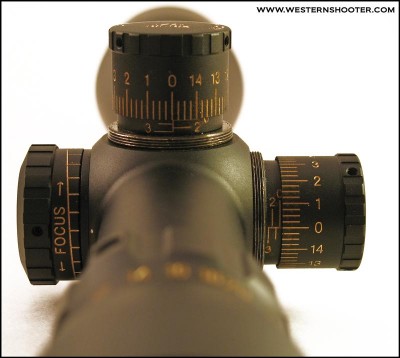
Zero Stop will do what you are asking. However, as Jerry stated it is not necessary. I pulled this picture from the internet. Underneath the elevation turret you will see horizontal lines. These are index markings. Basically all you need to do is remember how many lines are showing below your elevation turret when you zero your scope. You can dial up and down on your turret all day long, as long as you know which line/how many lines were showing underneath your elevation turret you can put it back to zero. The same lines are on the windage turret and it works the same way. Zero Stop is a mechanical stop so your turret essentially "bottoms out" when you reach your zero. This feature is really beneficial in night time where going by feeling is much more easier than seeing. Index lines work just fine.
Sightron-SIII-Target-Turrets-7-400x358.jpg
 
Well you learn something new every day. So it seems you are telling me that zeroing my scope when I have these target reticles involves some physical operation on the turret that aligns the "0" position on the turret with the index line on the thingy below?

Well I'll be darned!

I have 4 rifles now and all the scopes on them are the ones that have caps on the turrets. To me "zeroing" my scope is simply about bore sighting it and then sending a projectile down range and adjusting the elevation and windage till the reticle is pointing where the projectile hit the target. Followed by putting the caps on.

Forgive the ignorance again but what is this feature called? Adjustable zero? Do all scopes with the exposed turret have a adjustable zero like this?
 
Well you learn something new every day. So it seems you are telling me that zeroing my scope when I have these target reticles involves some physical operation on the turret that aligns the "0" position on the turret with the index line on the thingy below?

Well I'll be darned!

I have 4 rifles now and all the scopes on them are the ones that have caps on the turrets. To me "zeroing" my scope is simply about bore sighting it and then sending a projectile down range and adjusting the elevation and windage till the reticle is pointing where the projectile hit the target. Followed by putting the caps on.

Forgive the ignorance again but what is this feature called? Adjustable zero? Do all scopes with the exposed turret have a adjustable zero like this?
Most scopes with exposed turrets, and even some with capped turrets have this feature. That particular model I showed has small set screws around the top of the turret that allows you to reset your zero on your turret. You still sight in the rifle and adjust the turrets like you normally would. When you are done you just unscrew the turret screws, lift it up so the splines of the turret housing and turret aren't engaged (so it won't click/adjust the POI when you turn it) and turn it to zero and push down. Then your 0 mark on your turret is aligned at the center. This picture of a Bushnell tactical turret might help clarify.

Elite-Tactical-10x40-scope-turret-adjustment1.jpg
 
Jerry, forgive the ignorance but can you expand upon the "if you learn how to use your scope, none needed" part.


He means he has no product that fits your needs, but he will sell you one and you have to learn how to use it.

He further insulted you by saying you should learn how to use SFP.

No FFP, No Zero-Stop and none in the Mag. you want.....but he wants you to Learn how to use a scope


I would not consider a Sigtron scope. They were a new kid on the block with lower pricing, but the marriage is over and people have moved on. Stick with those that have the Proven Track Record and dealers that support their customers with real product options and not insults and a sales pitch.

One shot, Wolverine, Alberta Tactical, etc.

NightForce @ Wolverine
 
Last edited:
Zero Stop will do what you are asking. However, as Jerry stated it is not necessary. I pulled this picture from the internet. Underneath the elevation turret you will see horizontal lines. These are index markings. Basically all you need to do is remember how many lines are showing below your elevation turret when you zero your scope. You can dial up and down on your turret all day long, as long as you know which line/how many lines were showing underneath your elevation turret you can put it back to zero.

And with zero stop you don't need to do that, you can actually check to make sure the turret hasn't moved without having to look at the scope, all you need is to remember which direction it stops at. Something which is handy in a hunting scope as things get bumped or rubbed against clothing. It seems many of you guys are assuming hunting is the same as shooting from a bench or competition.
And to the OP, if all your shots are 500 and under, I would stay away from a turret type scope altogether and have a look at the various ballistic reticles. I've had Nightforce, S&B, Vortex,etc. with turrets and the only system I've found that actually works well for hunting is the Swarovski BT system which is zero stop, elevation only, and color coded for quick use.
 
Bearkilr, certainly interested in your thoughts. I don't expect to take a shot past 500 yards. Long range to me is between 300-500 yards.

My thoughts were that at that distance I'd have time to get into a comfortable position with my shooting sticks or prone, have time to range and using turrets would not be a huge deal wrt time. I don't think holding over for elavation would be confusing but I think do so both for elevation and wind sounds error prone for me. Obviously there are more then enough people hunting accurately every year with this method. For me, I turn turrets at the range and holdover for wind. I figure I should use the same method for hunting.

I think the Swaro Z3 and Z5 with BT and 4W reticle are close to the top of my list. Also thinking about the NightForce 2-10x as the 3-15x is heavy. Wish the Z3 had a parallax turret; I'd appreciate it at the range. The Nightforce sounds like a solid scope but I have difficult in spending that much and not getting the very best optics. I'm think at the end of the day while the illuminated reticle is neat, good optics are probably the best place to spend the cash.
 
And with zero stop you don't need to do that, you can actually check to make sure the turret hasn't moved without having to look at the scope, all you need is to remember which direction it stops at. Something which is handy in a hunting scope as things get bumped or rubbed against clothing. It seems many of you guys are assuming hunting is the same as shooting from a bench or competition.
And to the OP, if all your shots are 500 and under, I would stay away from a turret type scope altogether and have a look at the various ballistic reticles. I've had Nightforce, S&B, Vortex,etc. with turrets and the only system I've found that actually works well for hunting is the Swarovski BT system which is zero stop, elevation only, and color coded for quick use.
I'm not sure why you're quoting my post and making the comment about hunting, nowhere did I mention the assumption that hunting and shooting from a bench or competition is the same. However, what I am saying is that a zero stop function is one feature that does not hold as much value in my opinion as others. It's funny how you recommend a zero stop function yet recommend a ballistic reticle which of course has nothing to do with zero stop turrets. Moreover, you are recommending a less precise method for placing shots. It is much easier to dial a tenth mil, for example then to estimate it in a reticle without a lot of practice.

To the OP. If you are used to dialing for your elevation I think that is a fine method to use. If you know how much your bullet will drop at a particular range it is very quick to dial that turret.
 
I have the fch 10-50x sightron. Saved over $200 after shipping/taxes using 4scopes.com!
Please shop around, some business have higher margins than others!!!
 
Bearkilr, certainly interested in your thoughts. I don't expect to take a shot past 500 yards. Long range to me is between 300-500 yards.

My thoughts were that at that distance I'd have time to get into a comfortable position with my shooting sticks or prone, have time to range and using turrets would not be a huge deal wrt time. I don't think holding over for elavation would be confusing but I think do so both for elevation and wind sounds error prone for me. Obviously there are more then enough people hunting accurately every year with this method. For me, I turn turrets at the range and holdover for wind. I figure I should use the same method for hunting.

I think the Swaro Z3 and Z5 with BT and 4W reticle are close to the top of my list. Also thinking about the NightForce 2-10x as the 3-15x is heavy. Wish the Z3 had a parallax turret; I'd appreciate it at the range. The Nightforce sounds like a solid scope but I have difficult in spending that much and not getting the very best optics. I'm think at the end of the day while the illuminated reticle is neat, good optics are probably the best place to spend the cash.

I think it really boils down to what you're primary use is going to be. If hunting, there may not be too many situations where you'll have time to fiddle with the rangefinder and turrets, something that may also not be necessary with a 280 AI at a max distance of 500 yards, your drops are not that severe to require major adjustments. Add to that wind calculations all the while keeping an eye on a likely moving target.

I think some of the guys on here giving advice are target/competitive shooters. You often just don't have the time to constantly adjust and check distance,wind,etc. Many times if I'm in a stand, I'll range various landmarks, brush piles, large trees, points, etc. so I don't have to actually dig out the rangefinder when an animal appears.

I would also strongly suggest to go with a scope that has great glass, rather than one with all the bells and whistles. Nightforce does have good glass, but I find the reticles too busy for hunting, though this is personal preference. I want something where my eyes find the center of the reticle immediately. This is probably one of the reasons I'm not really a fan of ballistic reticles either, though I'd choose them over conventional turrets for hunting. The downside is that they usually only work on a set magnification. The Swarovski with the BT's just has a regular plex reticle. For most instances, it's just a regular duplex scope, but the quick adjust turrets are there, preset for 400 yds (Green),500(yellow) and 600(red). Caliber is 264 WinMag.

I don't do any competitive shooting, but have steel gongs at 400,500 and 600 yards and the scope works as advertised.
 
I'm not really a fan of ballistic reticles either, though I'd choose them over conventional turrets for hunting. The downside is that they usually only work on a set magnification.

Why is that a downside?

To the OP....500 yards really isn't long-range these days.....having used both ballistic reticles and turrets extensively.....for ranges to 500 yards the ballistic reticle is a no brainer for me. When things get past 700-800 yards, then yes definitely the nod goes to the turrets.
 
Last edited:
Why is that a downside?

To the OP....500 yards really isn't long-range these days.....having used both ballistic reticles and turrets extensively.....for ranges to 500 yards the ballistic reticle is a no brainer for me. When things get past 700-800 yards, then yes definitely the nod goes to the turrets.

Because that expensive variable scope's ballistic reticle is only functional at a predetermined fixed power. I call that a downside, but hey, whatever floats your boat.
 
I fail to see your point...the system works perfectly at long range with nothing to turn or remember and magnification is fully variable at ranges under 250 yards....In a hunting situation to 500 yards I can't really see a downside. Why wouldn't I want my scope near or at max magnification at long range?
 
Back
Top Bottom